| [1] |
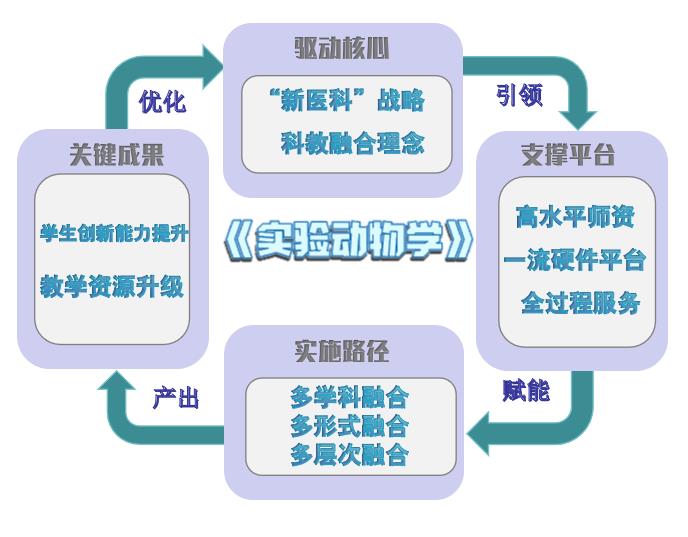
苏小华, 那顺巴雅尔, 冯香婷, 等. "新医科"背景下医学拔尖创新人才培养模式探究: 以"实验动物学"课程教学与实践为例[J]. 科技风, 2024(23): 37-39. DOI: 10.19392/j.cnki.1671-7341.202423013 .
|
|
SU X H, Nashunbayaer, FENG X T, et al. Exploration on the training mode of top-notch innovative medical talents under the background of ″new medicine″: Taking the teaching and practice of ″laboratory animal science″ as an example[J]. Technol Wind, 2024(23): 37-39. DOI: 10.19392/j.cnki.1671-7341.202423013 .
|
| [2] |
姚乐野. 以学科交叉融合赋能本科创新人才培养[J]. 四川大学学报(哲学社会科学版), 2021(6): 14-19. DOI: 10.3969/j.issn.1006-0766.2021.06.003 .
|
|
YAO L Y. Empowering the cultivation of undergraduate innovative talents with interdisciplinary integration[J]. J Sichuan Univ Philos Soc Sci Ed, 2021(6): 14-19. DOI: 10.3969/j.issn.1006-0766.2021.06.003 .
|
| [3] |
秦川. 中国实验动物学科发展40年[J]. 科技导报, 2017, 35(24): 20-26. DOI: 10.3981/j.issn.1000-7857.2017.24.001.QIN C. Laboratory animal science in China during the past 40 years [J]. Sci Technol Rev, 2017, 35(24): 20-26. DOI: 10.3981/j.issn.1000-7857.2017.24.001 .[4] 谢飞, 李传根, 赵清远, 等. 从学生需求的角度思考如何提高实验动物学教学质量[J]. 医学动物防制, 2024, 40(12): 1219-1222.
|
|
XIE F, LI C G, ZHAO Q Y, et al. Thinking about how to improve the teaching quality of laboratory animal science from the perspective of students′needs[J]. J Med Pest Control, 2024, 40(12): 1219-1222.
|
| [5] |
王蓉, 赵四海, 白亮, 等. 实验动物学教学科研助力新质创新人才培养的探讨[J]. 中国比较医学杂志, 2025, 35(6): 93-98. DOI: 10.3969/j.issn.1671-7856.2025.06.010 .
|
|
WANG R, ZHAO S H, BAI L, et al. Teaching and research of laboratory animal science support the cultivation of new quality and innovative talents[J]. Chin J Comp Med, 2025, 35(6): 93-98. DOI: 10.3969/j.issn.1671-7856.2025.06.010 .
|
| [6] |
魏盛, 耿希文, 徐凯勇, 等. 小动物神经行为学实验平台规划设计原则及施工建设要求[J]. 中国比较医学杂志, 2022, 32(4): 107-115. DOI: 10.3969/j.issn.1671-7856.2022.04.015 .
|
|
WEI S, GENG X W, XU K Y, et al. Planning and design principles and construction requirements of small animal neurobehavior experiment platform[J]. Chin J Comp Med, 2022, 32(4): 107-115. DOI: 10.3969/j.issn.1671-7856.2022.04.015 .
|
| [7] |
袁进, 吴清洪, 田雨光, 等. 科研动物实验室建设体会及管理模式探讨[J]. 实验室科学, 2021, 24(6): 147-152. DOI: 10.3969/j.issn.1672-4305.2021.06.037 .
|
|
YUAN J, WU Q H, TIAN Y G, et al. Discussion on the construction and management mode of scientific research animal laboratory in medical colleges and universities[J]. Lab Sci, 2021, 24(6): 147-152. DOI: 10.3969/j.issn.1672-4305.2021.06.037 .
|
| [8] |
魏强. 动物生物安全实验室管理和技术要点[J]. 中国比较医学杂志, 2020, 30(3): 94-97. DOI: 10.3969/j.issn.1671-7856.2020.03.016 .
|
|
WEI Q. Issues of animal experiments in biosafety laboratories[J]. Chin J Comp Med, 2020, 30(3): 94-97. DOI: 10.3969/j.issn.1671-7856.2020.03.016 .
|
| [9] |
李冰洋, 黄开胜, 艾德生. 世界一流大学实验室安全管理理念及清华大学实践[J]. 实验室研究与探索, 2022, 41(1): 299-305. DOI: 10.19927/j.cnki.syyt.2022.01.061 .
|
|
LI B Y, HUANG K S, AI D S. The concept of laboratory safety management in world-class universities and its practice in tsinghua university[J]. Res Explor Lab, 2022, 41(1): 299-305. DOI: 10.19927/j.cnki.syyt.2022.01.061 .
|
| [10] |
XU L J, WANG S F, SUI X, et al. Mesenchymal stem cell-seeded regenerated silk fibroin complex matrices for liver regeneration in an animal model of acute liver failure[J]. ACS Appl Mater Interfaces, 2017, 9(17): 14716-14723. DOI: 10.1021/acsami.7b02805 .
|
| [11] |
WU R S, LAM I I, CLAY H, et al. A rapid method for directed gene knockout for screening in G0 zebrafish[J]. Dev Cell, 2018, 46(1): 112-125.e4. DOI: 10.1016/j.devcel.2018.06.003 .
|
| [12] |
HOSHIJIMA K, JURYNEC M J, KLATT SHAW D, et al. Highly efficient CRISPR-Cas9-based methods for generating deletion mutations and F0 embryos that lack gene function in zebrafish[J]. Dev Cell, 2019, 51(5): 645-657.e4. DOI: 10.1016/j.devcel.2019.10.004 .
|
| [13] |
GHOSH K K, BURNS L D, COCKER E D, et al. Miniaturized integration of a fluorescence microscope[J]. Nat Methods, 2011, 8(10): 871-878. DOI: 10.1038/nmeth.1694 .
|
| [14] |
AHANONU B, CROWTHER A, KANIA A, et al. Long-term optical imaging of the spinal cord in awake behaving mice[J]. Nat Methods, 2024, 21(12): 2363-2375. DOI: 10.1038/s41592-024-02476-3 .
|
| [15] |
林超, 高妍, 丁瑜, 等. 实验动物学课程思政的探索与实践[J]. 呼伦贝尔学院学报, 2025, 33(2): 128-134. DOI: 10.3969/j.issn.1009-4601.2025.02.023 .
|
|
LIN C, GAO Y, DING Y, et al. Exploration and practice of ideological and political education in experimental zoology course[J]. J Hulunbuir Univ, 2025, 33(2): 128-134. DOI: 10.3969/j.issn.1009-4601.2025.02.023 .
|
| [16] |
赵亚, 张彩勤, 孟寒, 等. 课程思政视域下实验动物学教学实践探索[J]. 实验动物与比较医学, 2023, 43(6): 641-646. DOI: 10.12300/j.issn.1674-5817.2023.109 .
|
|
ZHAO Y, ZHANG C Q, MENG H, et al. Exploration of laboratory animal science teaching practice from perspectives of curriculum ideology and politics[J]. Lab Anim Comp Med, 2023, 43(6): 641-646. DOI: 10.12300/j.issn.1674-5817.2023.109 .
|
| [17] |
章敏, 刘雁云, 顾欣, 等. 中医药院校实验动物学的特色创新教育[J]. 中国比较医学杂志, 2024, 34(5): 100-105. DOI: 10.3969/j.issn.1671-7856.2024.05.011 .
|
|
ZHANG M, LIU Y Y, GU X, et al. Characteristics and innovations in education of laboratory animal science in Traditional Chinese Medicine Colleges and Universities[J]. Chin J Comp Med, 2024, 34(5): 100-105. DOI: 10.3969/j.issn.1671-7856.2024.05.011 .
|
| [18] |
徐云浩, 王洋, 丁珊珊, 等. 中医科研现代化的系统反思[J]. 中华中医药杂志, 2023, 38(1): 34-38.
|
|
XU Y H, WANG Y, DING S S, et al. Systematic reflection on the modernization of traditional Chinese medicine scientific research[J]. China J Tradit Chin Med Pharm, 2023, 38(1): 34-38.
|
| [19] |
杜利莉, 章丹宁, 薛梅, 等. 中医证候动物模型建立及评价方法研究[J]. 南京中医药大学学报, 2025, 41(1): 11-18. DOI: 10.14148/j.issn.1672-0482.2025.0011 .
|
|
DU L L, ZHANG D N, XUE M, et al. Research on establishment and evaluation methods of animal model of TCM syndromes[J]. J Nanjing Univ Tradit Chin Med, 2025, 41(1): 11-18. DOI: 10.14148/j.issn.1672-0482.2025.0011 .
|
| [20] |
王庭君, 罗浩, 陈琦. 基于人工智能的实验动物中心信息化升级及应用实践[J]. 实验动物与比较医学, 2025, 45(4): 473-482. DOI: 10.12300/j.issn.1674-5817.2024.181 .
|
|
WANG T J, LUO H, CHEN Q. Discussion on AI-based digital upgrade and application practice of laboratory animal centers[J]. Lab Anim Comp Med, 2025, 45(4): 473-482. DOI: 10.12300/j.issn.1674-5817.2024.181 .
|
| [21] |
胡恒, 包容, 高卫. 虚拟仿真在医学实验动物学教学中的应用与挑战[J]. 医学新知, 2025, 35(10): 1235-1241. DOI: 10.12173/j.issn.1004-5511.202505110 .
|
|
HU H, BAO R, GAO W. Application and challenges of virtual simulation in the teaching of medical experimental animal science[J]. New Med, 2025, 35(10): 1235-1241. DOI: 10.12173/j.issn.1004-5511.202505110 .
|
| [22] |
孙洪计, 沙蕊, 王惠, 等. 高校实验动物信息化管理平台和虚拟仿真实验教学中心建设构想[J]. 医学动物防制, 2023, 39(10): 981-984. DOI: 10.7629/yxdwfz202310014 .
|
|
SUN H J, SHA R, WANG H, et al. Conception of laboratory animal information management platform and virtual simulation experiment teaching center construction in colleges and universities[J]. J Med Pest Control, 2023, 39(10): 981-984. DOI: 10.7629/yxdwfz202310014 .
|



 ), 刘珊2, 孙伟1, 赵峰1, 魏盛3, 李琴1, 徐凯勇1(