



实验动物与比较医学 ›› 2024, Vol. 44 ›› Issue (3): 251-258.DOI: 10.12300/j.issn.1674-5817.2024.014
刘芸, 冯婷婷, 佟巍, 郭智, 李夏, 孔琪, 向志光( )(
 )
收稿日期:2024-01-23
修回日期:2024-04-12
出版日期:2024-06-25
发布日期:2024-06-25
通讯作者:
向志光(1980—),男,博士,副研究员,研究方向:免疫学。E-mail: xiangzg@cnilas.org。ORCID: 0000-0002-9317-7766作者简介:刘芸(1996—),女,硕士研究生,研究方向:免疫学。E-mail: liuyun@cnilas.org
基金资助:
Yun LIU, Tingting FENG, Wei TONG, Zhi GUO, Xia LI, Qi KONG, Zhiguang XIANG()()
Received:2024-01-23
Revised:2024-04-12
Published:2024-06-25
Online:2024-06-25
Correspondence to:
XIANG Zhiguang (ORCID: 0000-0002-9317-7766), E-mail: xiangzg@cnilas.org摘要:
目的 通过小鼠肺炎病毒(pneumonia virus of mice,PVM)感染近交系BALB/c小鼠建立病毒感染肺炎动物模型,观察PVM感染过程中促炎症警报素分子高迁移率族蛋白B1(high mobility group box 1,HMGB1)的变化,以及HMGB1抑制剂甘草酸(glycyrrhizic acid,GA)对小鼠肺脏感染损伤的在体干预作用。 方法 将3周龄的雌性BALB/c小鼠随机分为3组,每组6只。一组未经PVM感染,作为对照组(Control);另外两组先以1×104半数组织培养感染剂量(50% tissue culture infective dose,TCID50)/25 μL剂量滴鼻接种PVM,然后分别给予GA生理盐水溶液灌胃(GA组)或单纯生理盐水灌胃(normal saline,NS组)处理,连续15 d。其间,观察并记录各组小鼠体重、外观等改变。在实验终点采集各组小鼠的肺脏组织样本,通过苏木精-伊红染色和免疫组织化学法检测小鼠肺脏组织内PVM和HMGB1蛋白的分布情况;通过实时荧光定量PCR法检测小鼠肺脏组织中HMGB1、Toll样受体4(Toll-like receptor 4,TLR-4)、晚期糖基化终产物特异性受体(advanced glycosylation end-product-specific receptor,AGER),以及白细胞介素(interleukin,IL)-1β、IL-2和肿瘤坏死因子α(tumor necrosis factor-α,TNF-α)等炎症因子的表达水平。 结果 与Control组相比,NS组小鼠6 d后体重显著下降(P<0.05),组织病理学结果显示其肺脏有明显的炎症病变,免疫组织化学结果显示HMGB1从细胞核释放至细胞质,实时荧光定量PCR结果显示HMGB1、IL-1β和IL-2的表达水平均显著上调(P<0.05);GA干预组的临床症状和体重无明显变化。而与NS组相比,GA干预组肺组织的病理损伤明显减轻,且肺组织中HMGB1、IL-1β、IL-2和干扰素γ(interferon-γ,IFN-γ)的表达水平显著下降(P<0.05),但AGER的表达水平显著增高(P<0.05)。 结论 PVM感染能引起明显的小鼠肺部炎症性病理损伤,而GA能有效减轻其损伤,其作用机制可能与激活HMGB1信号通路相关。
中图分类号:
刘芸,冯婷婷,佟巍,等. 甘草酸能减轻小鼠肺炎病毒引起的小鼠肺脏损伤[J]. 实验动物与比较医学, 2024, 44(3): 251-258. DOI: 10.12300/j.issn.1674-5817.2024.014.
Yun LIU,Tingting FENG,Wei TONG,et al. Glycyrrhizic Acid Showed Therapeutic Effects on Severe Pulmonary Damages in Mice Induced by Pneumonia Virus of Mice Infection[J]. Laboratory Animal and Comparative Medicine, 2024, 44(3): 251-258. DOI: 10.12300/j.issn.1674-5817.2024.014.
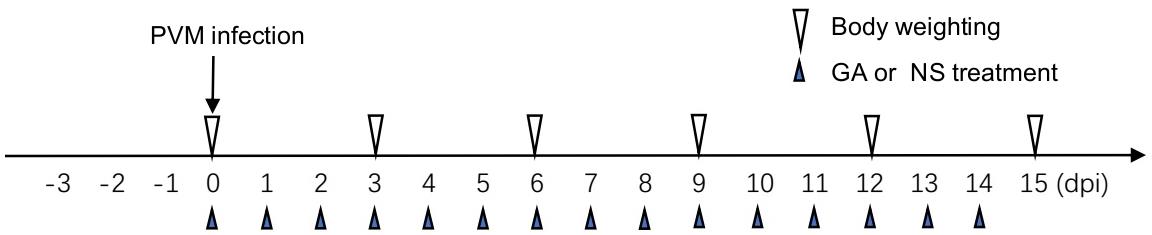
图1 动物实验时间表
Figure 1 Animal experiment timeline
目的基因 Target gene | 上游引物(5’-3’) Forward primer | 下游引物(5’-3’) Reverse primer |
|---|---|---|
| PVM | GCCTGCATCAACACAGTGTGT | GCCTGATGTGGCAGTGCTT |
| TLR-4 | ATGGCATGGCTTACACCACC | GAGGCCAATTTTGTCTCCACA |
| AGER | ACATGTGTGTCTGAGGGAAGC | AGCTCTGACCGCAGTGTAAAG |
| HMGB1 | CTTCGGCCTTCTTCTTGTTCT | GGCAGCTTTCTTCTCATAGGG |
| IL-2 | CCCAAGCAGGCCACAGAATTGAAA | AGTCAAATCCAGAACATGCCGCAG |
| IFN-γ | AGAGGATGGTTTGCATCTGGGTCA | ACAACGCTATGCAGCTTGTTCGTG |
| CCL2 | GGCTCAGCCAGATGCAGTTAA | CCTACTCATTGGGATCATCTTGCT |
| TNF-α | GACAAGGCTGCCCCGACTA | TTTCTCCTGGTATGAGATAGCAAATC |
| IL-1β | ATGAGGACATGAGCACCT TC | CATTGAGTTGGAGAGCTTTC |
| IL-6 | GACTTCCATCCAGTTGCCTTC TT | TCCACGATTTCCCAGAGAACA |
表1 引物序列
Table 1 Primer Sequence
目的基因 Target gene | 上游引物(5’-3’) Forward primer | 下游引物(5’-3’) Reverse primer |
|---|---|---|
| PVM | GCCTGCATCAACACAGTGTGT | GCCTGATGTGGCAGTGCTT |
| TLR-4 | ATGGCATGGCTTACACCACC | GAGGCCAATTTTGTCTCCACA |
| AGER | ACATGTGTGTCTGAGGGAAGC | AGCTCTGACCGCAGTGTAAAG |
| HMGB1 | CTTCGGCCTTCTTCTTGTTCT | GGCAGCTTTCTTCTCATAGGG |
| IL-2 | CCCAAGCAGGCCACAGAATTGAAA | AGTCAAATCCAGAACATGCCGCAG |
| IFN-γ | AGAGGATGGTTTGCATCTGGGTCA | ACAACGCTATGCAGCTTGTTCGTG |
| CCL2 | GGCTCAGCCAGATGCAGTTAA | CCTACTCATTGGGATCATCTTGCT |
| TNF-α | GACAAGGCTGCCCCGACTA | TTTCTCCTGGTATGAGATAGCAAATC |
| IL-1β | ATGAGGACATGAGCACCT TC | CATTGAGTTGGAGAGCTTTC |
| IL-6 | GACTTCCATCCAGTTGCCTTC TT | TCCACGATTTCCCAGAGAACA |
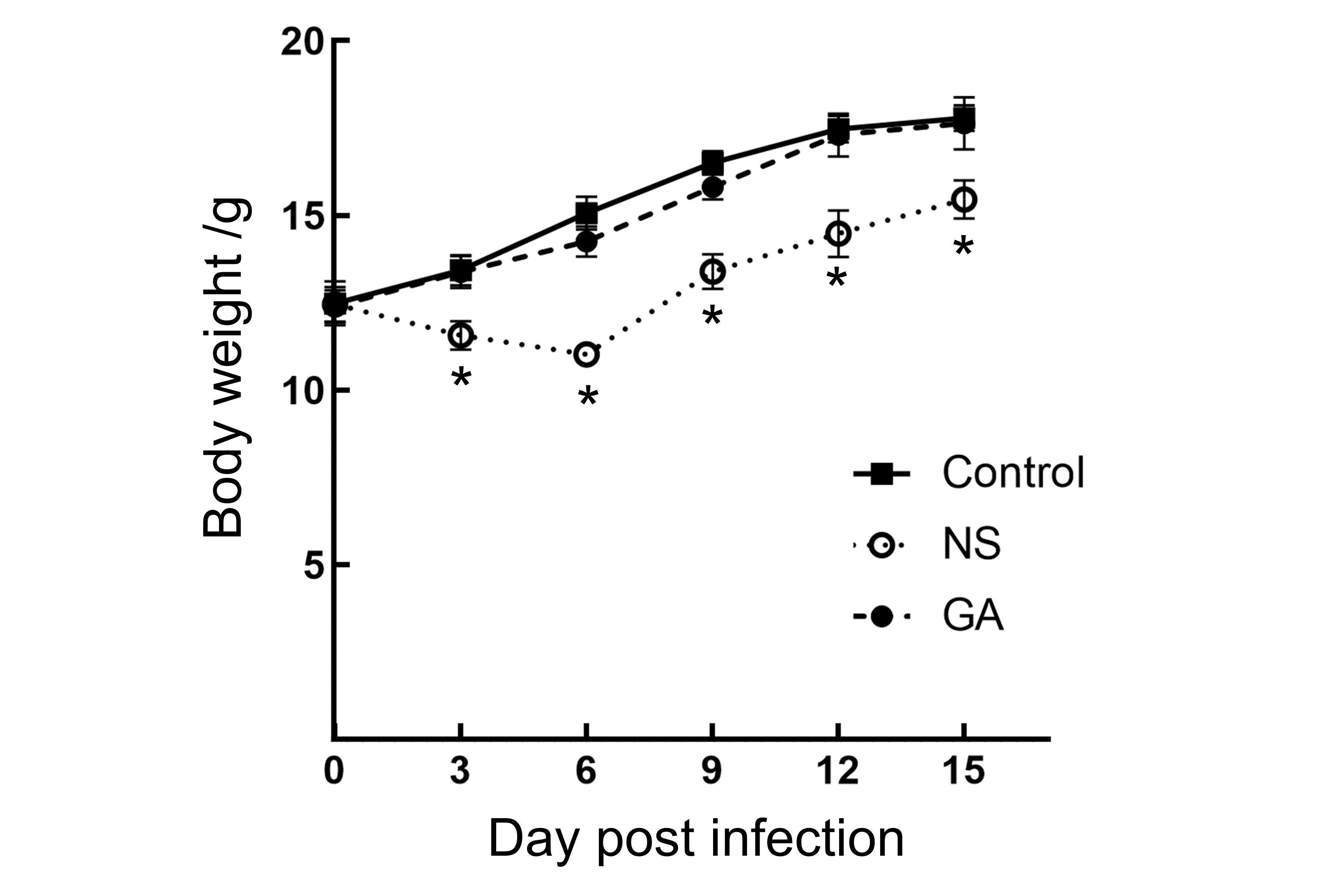
图2 PVM感染后小鼠生长曲线
Figure 2 Body weight curves of mice after PVM infection
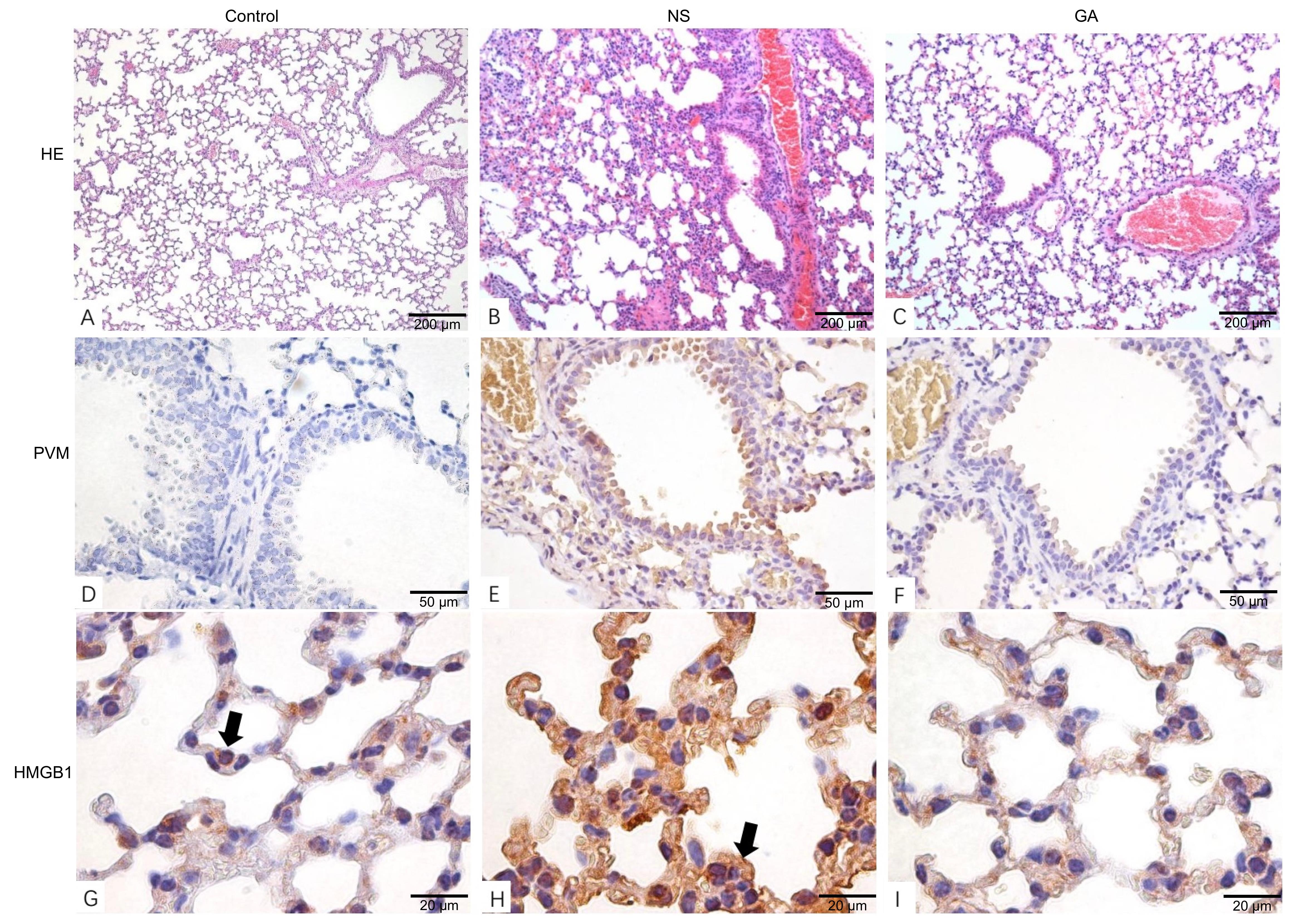
图3 PVM感染后小鼠肺部病理变化
Figure 3 Pathological changes in the lungs of mice after PVM infection in three groups
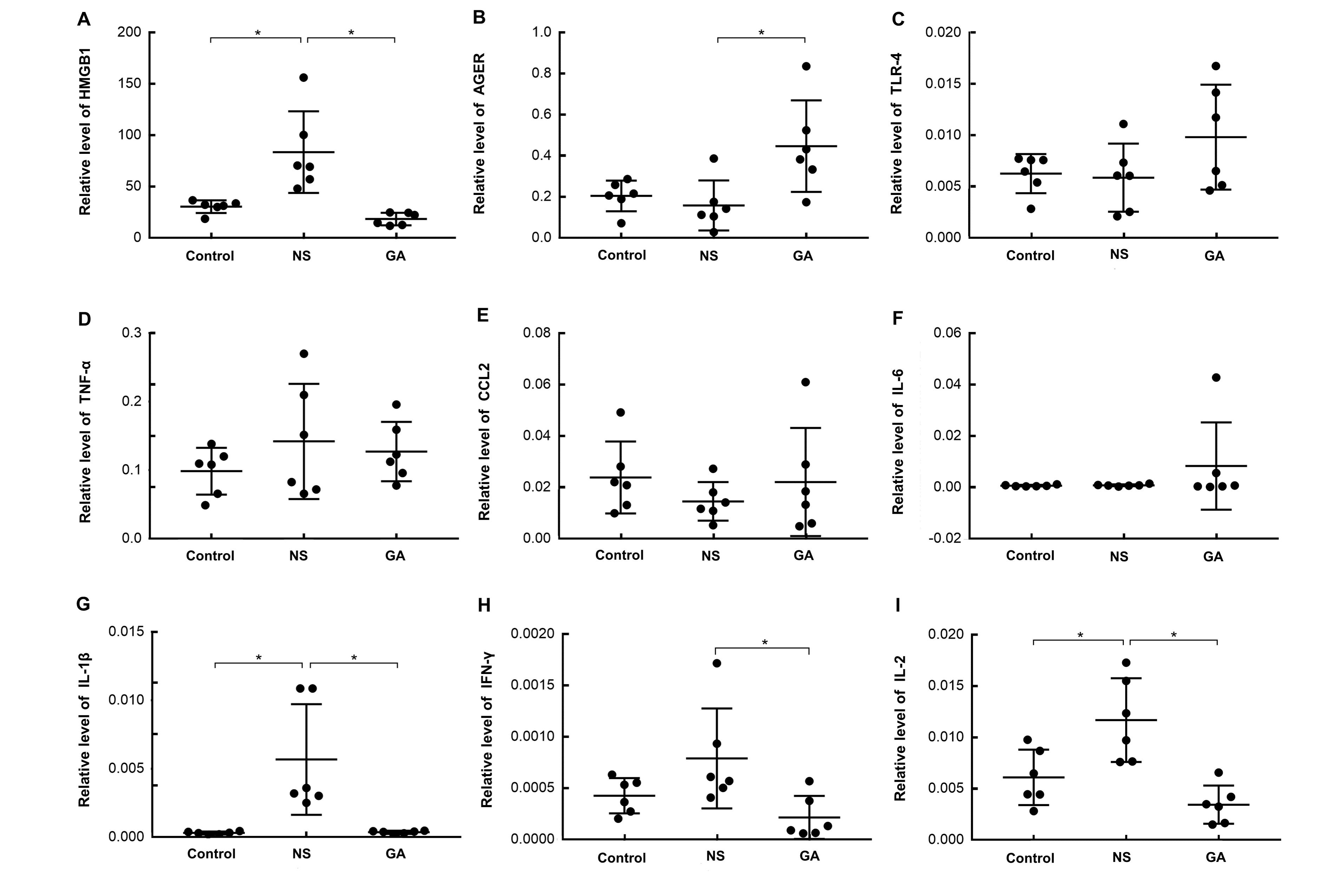
图4 PVM感染后小鼠肺组织中炎症因子与警报素HMGB1及其受体AGER的表达
Figure 4 Expression of inflammatory factors and the alarmin HMGB1 and its receptor AGER after PVM infection in pulmonary tissue
| 1 | ARANDA S S, POLACK F P. Prevention of pediatric respiratory syncytial virus lower respiratory tract illness: perspectives for the next decade[J]. Front Immunol, 2019, 10:1006. DOI: 10.3389/fimmu.2019.01006 . |
| 2 | 侯长春, 赵海金, 蔡绍曦, 等. 呼吸道合胞病毒增加小鼠肺组织的高迁移率族蛋白B1的表达和释放[J]. 南方医科大学学报, 2010, 30(4):700-703. DOI: 10.12122/j.issn.1673-4254.2010.04.010 . |
| HOU C C, ZHAO H J, CAI S X, et al. Respiratory syncytial virus increases the expression and release of high mobility group Box-1 protein in the lung tissue of mice[J]. J South Med Univ, 2010, 30(4):700-703. DOI: 10.12122/j.issn.1673-4254.2010.04.010 . | |
| 3 | RAYAVARA K, KUROSKY A, STAFFORD S J, et al. Proinflammatory effects of respiratory syncytial virus-induced epithelial HMGB1 on human innate immune cell activation[J]. J Immunol, 2018, 201(9):2753-2766. DOI: 10.4049/jimmunol.1800558 . |
| 4 | EASTON A J, DOMACHOWSKE J B, ROSENBERG H F. Animal pneumoviruses: molecular genetics and pathogenesis[J]. Clin Microbiol Rev, 2004, 17(2):390-412. DOI: 10.1128/cmr.17.2.390-412.2004 . |
| 5 | TAYLOR G. Animal models of respiratory syncytial virus infection[J]. Vaccine, 2017, 35(3):469-480. DOI: 10.1016/j.vaccine.2016.11.054 . |
| 6 | DYER K D, GARCIA-CRESPO K E, GLINEUR S, et al. The Pneumonia Virus of Mice (PVM) model of acute respiratory infection[J]. Viruses, 2012, 4(12):3494-3510. DOI: 10.3390/v4123494 . |
| 7 | ALTAMIRANO-LAGOS M J, DÍAZ F E, MANSILLA M A, et al. Current animal models for understanding the pathology caused by the respiratory syncytial virus[J]. Front Microbiol, 2019, 10:873. DOI: 10.3389/fmicb.2019.00873 . |
| 8 | SCAFFIDI P, MISTELI T, BIANCHI M E. Release of chromatin protein HMGB1 by necrotic cells triggers inflammation[J]. Nature, 2002, 418(6894):191-195. DOI: 10.1038/nature00858 . |
| 9 | LI G Q, LIANG X Y, LOTZE M T. HMGB1: the central cytokine for all lymphoid cells[J]. Front Immunol, 2013, 4:68. DOI: 10.3389/fimmu.2013.00068 . |
| 10 | LOTZE M T, TRACEY K J. High-mobility group box 1 protein (HMGB1): nuclear weapon in the immune arsenal[J]. Nat Rev Immunol, 2005, 5(4):331-342. DOI: 10.1038/nri1594 . |
| 11 | WANG L Q, YANG R, YUAN B C, et al. The antiviral and antimicrobial activities of licorice, a widely-used Chinese herb[J]. Acta Pharm Sin B, 2015, 5(4):310-315. DOI: 10.1016/j.apsb.2015.05.005 . |
| 12 | GOWDA P, PATRICK S, JOSHI S D, et al. Glycyrrhizin prevents SARS-CoV-2 S1 and Orf3a induced high mobility group box 1 (HMGB1) release and inhibits viral replication[J]. Cytokine, 2021, 142:155496. DOI: 10.1016/j.cyto.2021.155496 . |
| 13 | UTSUNOMIYA T, KOBAYASHI M, POLLARD R B, et al. Glycyrrhizin, an active component of licorice roots, reduces morbidity and mortality of mice infected with lethal doses of influenza virus[J]. Antimicrob Agents Chemother, 1997, 41(3):551-556. DOI: 10.1128/AAC.41.3.551 . |
| 14 | DENG Q P, WANG M J, ZENG X, et al. Effects of glycyrrhizin in a mouse model of lung adenocarcinoma[J]. Cell Physiol Biochem, 2017, 41(4):1383-1392. DOI: 10.1159/000467897 . |
| 15 | YAO D C, BROWNLEE M. Hyperglycemia-induced reactive oxygen species increase expression of the receptor for advanced glycation end products (RAGE) and RAGE ligands[J]. Diabetes, 2010, 59(1):249-255. DOI: 10.2337/db09-0801 . |
| 16 | SHARMA P, SHARMA A, VISHWAKARMA A L, et al. Host lung immunity is severely compromised during tropical pulmonary eosinophilia: role of lung eosinophils and macrophages[J]. J Leukoc Biol, 2016, 99(4):619-628. DOI: 10.1189/jlb.4A0715-309RR . |
| 17 | JANG S S, KIM H G, LEE J S, et al. Melatonin reduces X-ray radiation-induced lung injury in mice by modulating oxidative stress and cytokine expression[J]. Int J Radiat Biol, 2013, 89(2):97-105. DOI: 10.3109/09553002.2013.734943 . |
| 18 | DEANE R, SINGH I, SAGARE A P, et al. A multimodal RAGE-specific inhibitor reduces amyloid β-mediated brain disorder in a mouse model of Alzheimer disease[J]. J Clin Invest, 2012, 122(4):1377-1392. DOI: 10.1172/jci58642 . |
| 19 | ORSATTI C L, MISSIMA F, PAGLIARONE A C, et al. Th1/Th2 cytokines' expression and production by propolis-treated mice[J]. J Ethnopharmacol, 2010, 129(3):314-318. DOI: 10.1016/j.jep.2010.03.030 . |
| 20 | TRACEY L, PÉREZ-ROSADO A, ARTIGA M J, et al. Expression of the NF-kappaB targets BCL2 and BIRC5/Survivin characterizes small B-cell and aggressive B-cell lymphomas, respectively[J]. J Pathol, 2005, 206(2):123-134. DOI: 10.1002/path.1768 . |
| 21 | HOU C H, FONG Y C, TANG C H. HMGB-1 induces IL-6 production in human synovial fibroblasts through c-Src, Akt and NF-κB pathways[J]. J Cell Physiol, 2011, 226(8):2006-2015. DOI: 10.1002/jcp.22541 . |
| 22 | CHEN R C, KANG R, TANG D L.The mechanism of HMGB1 secretion and release[J].Exp Mol Med, 2022, 54(2):91-102. DOI:10.1038/s12276-022-00736-w . |
| 23 | MAGNA M, PISETSKY D S.The role of HMGB1 in the pathogenesis of inflammatory and autoimmune diseases[J]. Mol Med, 2014, 20(1):138-146. DOI:10.2119/molmed.2013.00164 . |
| 24 | NI Y F, KUAI J K, LU Z F, et al. Glycyrrhizin treatment is associated with attenuation of lipopolysaccharide-induced acute lung injury by inhibiting cyclooxygenase-2 and inducible nitric oxide synthase expression[J]. J Surg Res, 2011, 165(1): e29-e35. DOI: 10.1016/j.jss.2010.10.004 . |
| 25 | SITIA G, IANNACONE M, MÜLLER S, et al. Treatment with HMGB1 inhibitors diminishes CTL-induced liver disease in HBV transgenic mice[J]. J Leukoc Biol, 2007, 81(1):100-107. DOI: 10.1189/jlb.0306173 . |
| 26 | INGRAHAM N E, LOTFI-EMRAN S, THIELEN B K, et al. Immunomodulation in COVID-19[J]. Lancet Respir Med, 2020, 8(6):544-546. DOI: 10.1016/S2213-2600(20)30226-5 . |
| 27 | MURCK H. Symptomatic protective action of glycyrrhizin (licorice) in COVID-19 infection?[J]. Front Immunol, 2020, 11:1239. DOI: 10.3389/fimmu.2020.01239 . |
| 28 | SEO E H, SONG G Y, KWAK B O, et al. Effects of glycyrrhizin on the differentiation of myeloid cells of the heart and lungs in lipopolysaccharide-induced septic mice[J]. Shock, 2017, 48(3):371-376. DOI: 10.1097/SHK.0000000000000850 . |
| 29 | YU Z Q, OHTAKI Y, KAI K Z, et al. Critical roles of platelets in lipopolysaccharide-induced lethality: effects of glycyrrhizin and possible strategy for acute respiratory distress syndrome[J]. Int Immunopharmacol, 2005, 5(3):571-580. DOI: 10.1016/j.intimp.2004.11.004 . |
| [1] | 王娟, 徐佳慧, 田韵远, 张萌萌, 李敏, 王四旺, 李瑶. 两种雌性小鼠溃疡性结肠炎模型的比较与行为学观察[J]. 实验动物与比较医学, 2026, 46(3): 332-343. |
| [2] | 李龙雪, 万崇凡, 张琦, 雷茹婷, 王潇玥, 程乐妍, 赖琦, 刘荣华, 刘漩, 徐铁龙. 基于miRNA测序分析清肺排毒汤防治小鼠急性肺损伤的分子机制研究[J]. 实验动物与比较医学, 2026, 46(3): 311-320. |
| [3] | 王丹, 张晓璐, 王妍, 傅博, 王文栋, 刘京, 张甦寅, 武怡荷, 吴德国, 杜小燕, 战大伟, 章秀林, 李长龙. Big-BALB/c小鼠亚系选育前后的抗体制备效率比较研究[J]. 实验动物与比较医学, 2023, 43(6): 612-618. |
| [4] | 程继帅, 牟唐维, 柳蕾, 吴化叶, 李琦涵. BALB/c小鼠经不同途径感染单纯疱疹病毒Ⅱ型的病理学比较分析[J]. 实验动物与比较医学, 2020, 40(1): 15-21. |
| [5] | 雷山, 刘强, 黄维金, 王佑春. 小鼠品系、性别和被毛对可视化假病毒感染模型的影响[J]. 实验动物与比较医学, 2019, 39(6): 423-428. |
| [6] | 邹芦, 戴天娥, 卢晓, 艾晓杰. 替来他明/唑拉西泮联合右美托咪定对BALB/c小鼠麻醉效果观察[J]. 实验动物与比较医学, 2019, 39(4): 310-313. |
| [7] | 李迎, 杜小燕, 崔晓霞, 马兰芝, 尚世臣, 赵志兵, 赵权, 李桂军, 王冬平, 陈振文. CMU/1和CMU/2长爪沙鼠与F344大鼠及BALB/c小鼠4项凝血指标分析[J]. 实验动物与比较医学, 2018, 38(1): 57-59. |
| [8] | 顾剑洁, 葛蓉, 徐伟超, 刘丽均. 不同超排卵方案对BALB/c小鼠超排卵效果的影响[J]. 实验动物与比较医学, 2017, 37(6): 482-484. |
| [9] | 邵宝珠, 唐其凤, 曹丽丽. BALB/c小鼠不同体质量范围对重组人促红素注射液体内活性测定的影响[J]. 实验动物与比较医学, 2016, 36(3): 216-218. |
| [10] | 陈美莲, 赖国祥, 柳德灵, 卓惠长. 沙丁胺醇对老年大鼠呼吸机相关肺损伤的干预作用[J]. 实验动物与比较医学, 2014, 34(4): 283-287. |
| [11] | 卢光新, 吕飞, 杜勇, 杨艳果, 周春芳, 金灵莉, 杨建业. 复方甘草酸苷对溃疡性结肠炎大鼠结肠组织NF-κB p65及COX-2表达的影响[J]. 实验动物与比较医学, 2014, 34(2): 98-101. |
| [12] | 郑海明, 赵航, 郑萍. 葡聚糖硫酸钠和偶氮氧甲烷建立小鼠溃疡性结肠炎癌变模型[J]. 实验动物与比较医学, 2012, 32(1): 47-50. |
| [13] | 李吉达,徐守振,王建琳,尹燕博. 猪高致病性蓝耳病病毒诱发病毒性肺损伤动物模型初探[J]. 实验动物与比较医学, 2010, 30(5): 340-343. |
| [14] | 武珊珊1,刘吉福1,梁海龙1,张宪成2,黄春倩2,赵建2. 全氟异丁烯诱发大鼠急性肺损伤的初步观察[J]. 实验动物与比较医学, 2010, 30(4): 257-260. |
| [15] | 顾卫忠1,王晓东1,鲍世民2,邢正弘1,陈国强1. 玩具对小鼠生长繁育性能影响初探[J]. 实验动物与比较医学, 2008, 28(2): 131-132. |
| 阅读次数 | ||||||
|
全文 |
|
|||||
|
摘要 |
|
|||||
