





实验动物与比较医学 ›› 2026, Vol. 46 ›› Issue (1): 81-93.DOI: 10.12300/j.issn.1674-5817.2025.047
陈子宜1,2, 孙红燕2,3, 康品方2,3, 武文娟1( )
)
收稿日期:2025-03-24
修回日期:2025-07-27
出版日期:2026-02-25
发布日期:2026-02-14
通讯作者:
武文娟(1973—),女,硕士,教授,研究方向:分子诊断学。E-mail:0600032@bbmu.edu.cn。ORCID:0009-0000-5196-7949
作者简介:陈子宜(2000—),女,硕士研究生,研究方向:肺动脉高压。E-mail:3211227658@qq.com
基金资助:
CHEN Ziyi1,2, SUN Hongyan2,3, KANG Pinfang2,3, WU Wenjuan1()
Received:2025-03-24
Revised:2025-07-27
Published:2026-02-25
Online:2026-02-14
Correspondence to:
WU Wenjuan (ORCID: 0009-0000-5196-7949), E-mail: 0600032@bbmu.edu.cn摘要:
肺动脉高压(pulmonary hypertension,PH)是一种以肺动脉压力持续升高为特征,致使右心室负荷加重,最终可能引发右心衰竭的疾病。PH发病机制涉及多个维度,包括血管内皮功能障碍、血管平滑肌增殖、炎性反应、血栓形成及遗传因素等多个方面。动物模型作为研究PH发病机制和开发治疗策略的核心工具,其不同类型均有各自的独特优势与局限性。单剂量注射野百合碱(monocrotaline,MCT)诱导模型是最常用的实验性PH动物模型之一,被广泛应用于PH的机制研究、药物筛选与疗效评价。该模型操作简便、成本较低,可以在短时间内诱导出PH,但其病理生理机制与人类特发性PH存在一定差异。相比之下,Sugen5416联合慢性低氧诱导的PH模型能较好地模拟PH的发生发展过程,该模型通过将动物置于低氧环境中发生肺血管收缩及重塑,但其造模周期较长,且低氧程度对结果影响较大。除以上2种常用的模型构建方法外,还有多种新兴技术应用于PH研究,如基因编辑工程可以精准探究特定基因在PH中的功能;诱导多能干细胞结合3D类器官技术可以依托个体化建模,保留患者遗传信息,从而打造精准临床转化。每种模型或技术都能从不同层面模拟人类PH的病理过程,其研究成果为理解PH疾病本质提供了关键线索,也为新型治疗靶点的研发提供了重要平台。本文对PH研究用多种动物模型及其新兴技术进行综合性描述,深入分析了各模型/技术的特点、应用场景及局限性,以期为研发新治疗策略和药物提供实验技术支持。
中图分类号:
陈子宜,孙红燕,康品方,等. 肺动脉高压动物模型构建方法及新型技术研究进展[J]. 实验动物与比较医学, 2026, 46(1): 81-93. DOI: 10.12300/j.issn.1674-5817.2025.047.
CHEN Ziyi,SUN Hongyan,KANG Pinfang,et al. Research Advances in Construction Methods and Novel Technologies for Animal Models of Pulmonary Hypertension[J]. Laboratory Animal and Comparative Medicine, 2026, 46(1): 81-93. DOI: 10.12300/j.issn.1674-5817.2025.047.
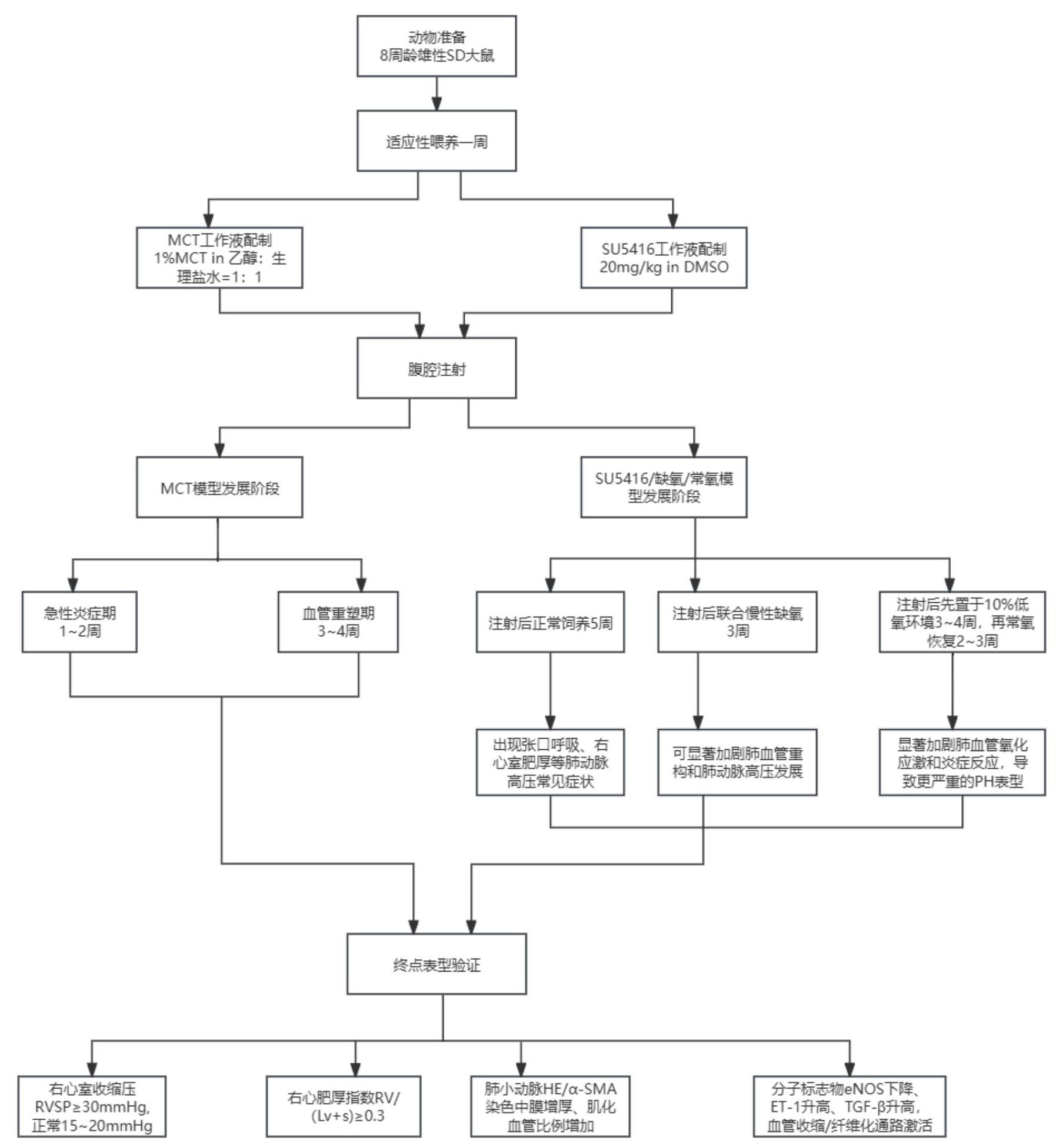
图1 MCT与Sugen5416诱导肺动脉高压模型纵向构建流程图
Figure 1 Flowchart of MCT- and SuHx-induced PAH model establishment
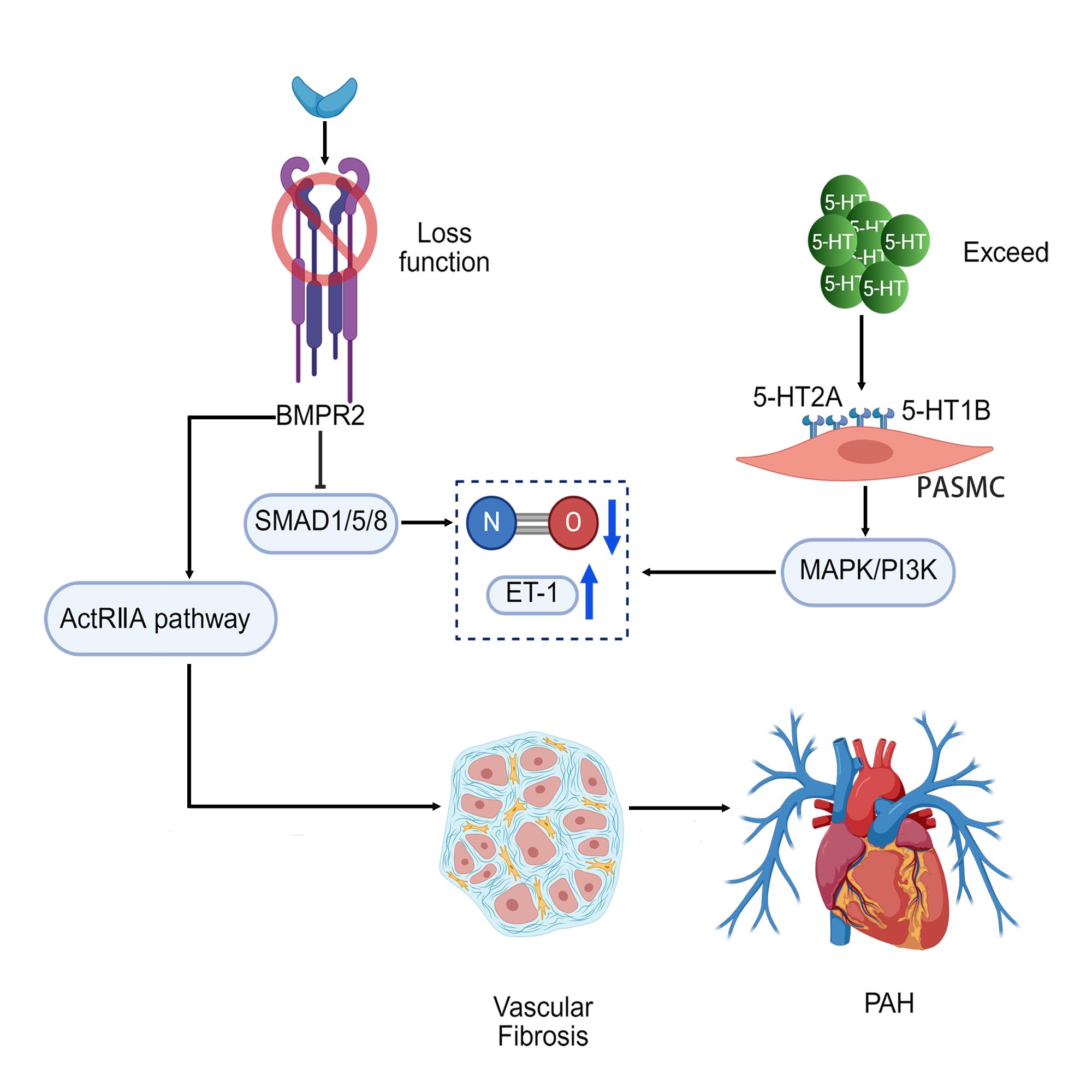
图2 基因工程细胞模型机制图
Figure 2 Mechanism diagram of genetically engineered cell models.
模型类型 Model Type | MCT诱导 | SuHx复合 | 基因编辑 | 体肺分流术 | 栓塞性模型 | iPSC类器官 |
|---|---|---|---|---|---|---|
机制 Mechanism | 内皮损伤、平滑肌增殖、炎症反应 | VEGFR2抑制缺氧诱导炎症反应 | BMPR2突变、HTT上调、血管重构 | 血流增加、mPAP升高、右心负荷 | 血管阻塞、血流动力学改变 | 细胞分化、类器官形成、基因编辑 |
最适动物 Optimal Species | 大鼠 | 大鼠 | 小鼠 | 幼年羊/猪 | 大鼠 | 小鼠 |
造模方法 Modeling Approach | 60~80mg/kg | 20mg/kg | 位点突变/敲除 | 导管覆膜支架 | 血栓栓塞 微球颗粒 外科手术 | 重编程技术 3D类器官 |
病理特征匹配度 Pathological Fidelity | 中 (血管重构) | 高 (多机制) | 高 (位点突变) | 中 (外科手术) | 低 (机械阻塞) | 超高 (个性化) |
周期 Timeframe | 4周 | 8周 | 持续 | 4~16周 | 2周 | 6~8周 |
死亡率 Mortality Rate | 15~20% | 30~40% | <5% | 15~25% | 20~25% | 0% |
临床相关性 Clinical Relevance | 中 | 高 | 中 | 中 | 低 | 精准 |
| 适应研究场景Applicable Research Context | 药物急性筛选 | 慢性病程机制研究 | 遗传机制解析 | 药物筛选和治疗评估 | 急性栓塞干预机制 | 个体化治疗策略开发 |
优缺点 Advantages and Limitations | 建模快 症状明显 操作简单 多器官损伤 特异性低 个体差异大 | 临床相关性高 机制全面 表型稳定 操作复杂 周期较长 风险较高 | 靶向精准 稳定可靠 机制明确 技术复杂 环境局限 推广受限 | 改善氧合 减轻负荷 模拟局限 操作复杂 风险较高 | 稳定可靠 快速建模 创伤较大 技术要求高 恢复期长 | 仿生性强 个体化准 动态模拟 成本高昂 异质性大 功能不全 |
表 1 肺动脉高压模型横向对比图
Table 1 Comparative Analysis of Pulmonary Hypertension Models
模型类型 Model Type | MCT诱导 | SuHx复合 | 基因编辑 | 体肺分流术 | 栓塞性模型 | iPSC类器官 |
|---|---|---|---|---|---|---|
机制 Mechanism | 内皮损伤、平滑肌增殖、炎症反应 | VEGFR2抑制缺氧诱导炎症反应 | BMPR2突变、HTT上调、血管重构 | 血流增加、mPAP升高、右心负荷 | 血管阻塞、血流动力学改变 | 细胞分化、类器官形成、基因编辑 |
最适动物 Optimal Species | 大鼠 | 大鼠 | 小鼠 | 幼年羊/猪 | 大鼠 | 小鼠 |
造模方法 Modeling Approach | 60~80mg/kg | 20mg/kg | 位点突变/敲除 | 导管覆膜支架 | 血栓栓塞 微球颗粒 外科手术 | 重编程技术 3D类器官 |
病理特征匹配度 Pathological Fidelity | 中 (血管重构) | 高 (多机制) | 高 (位点突变) | 中 (外科手术) | 低 (机械阻塞) | 超高 (个性化) |
周期 Timeframe | 4周 | 8周 | 持续 | 4~16周 | 2周 | 6~8周 |
死亡率 Mortality Rate | 15~20% | 30~40% | <5% | 15~25% | 20~25% | 0% |
临床相关性 Clinical Relevance | 中 | 高 | 中 | 中 | 低 | 精准 |
| 适应研究场景Applicable Research Context | 药物急性筛选 | 慢性病程机制研究 | 遗传机制解析 | 药物筛选和治疗评估 | 急性栓塞干预机制 | 个体化治疗策略开发 |
优缺点 Advantages and Limitations | 建模快 症状明显 操作简单 多器官损伤 特异性低 个体差异大 | 临床相关性高 机制全面 表型稳定 操作复杂 周期较长 风险较高 | 靶向精准 稳定可靠 机制明确 技术复杂 环境局限 推广受限 | 改善氧合 减轻负荷 模拟局限 操作复杂 风险较高 | 稳定可靠 快速建模 创伤较大 技术要求高 恢复期长 | 仿生性强 个体化准 动态模拟 成本高昂 异质性大 功能不全 |
| [1] | MOCUMBI A, HUMBERT M, SAXENA A, et al. Pulmonary hypertension[J]. Nat Rev Dis Primers, 2024, 10(1):1. DOI:10.1038/s41572-023-00486-7 . |
| [2] | BOUCHERAT O, AGRAWAL V, LAWRIE A, et al. The latest in animal models of pulmonary hypertension and right ventricular failure[J]. Circ Res, 2022, 130(9):1466-1486. DOI:10.1161/CIRCRESAHA.121.319971 . |
| [3] | QIU F, MIAO H R, HUI H L, et al. MHCIIhiLYVE1loCCR2hi interstitial macrophages promote medial fibrosis in pulmonary arterioles and contribute to pulmonary hypertension[J]. Circ Res, 2025, 137(1):46-66. DOI:10.1161/CIRCRESAHA.125.326173 . |
| [4] | ZHAO Y T, DING C M, SU H L, et al. Single test-based diagnosis and subtyping of pulmonary hypertension caused by fibrosing mediastinitis using plasma metabolic analysis[J]. Adv Sci, 2025, 12(17):1-9. DOI:10.1002/advs.202416454 . |
| [5] | RIVERA-LEBRON B N, CRUZ MOREL K J, RISBANO M G. Postural changes from ventilatory gas exchange in pulmonary hypertension: Is it a practical solution to a complex question?[J]. Respirology, 2020, 25(4):354-355. DOI:10.1111/resp.13691 . |
| [6] | CHANG M C J, GRIEDER F B. The continued importance of animals in biomedical research[J]. Lab Anim, 2024, 53(11):295-297. DOI:10.1038/s41684-024-01458-4 . |
| [7] | CARMAN B L, PREDESCU D N, MACHADO R, et al. Plexiform arteriopathy in rodent models of pulmonary arterial hypertension[J]. Am J Pathol, 2019, 189(6):1133-1144. DOI:10.1016/j.ajpath.2019.02.005 . |
| [8] | LUO A, HAO R R, ZHOU X, et al. Transcriptomic profiling highlights cell proliferation in the progression of experimental pulmonary hypertension in rats[J]. Sci Rep, 2024, 14(1):1-11. DOI:10.1038/s41598-024-64251-w . |
| [9] | SUN X Q, KLOUDA T, BARNASCONI S, et al. Pneumonectomy combined with SU5416 or monocrotaline pyrrole does not cause severe pulmonary hypertension in mice[J]. Am J Physiol Lung Cell Mol Physiol, 2024, 327(2): L250-L257. DOI:10.1152/ajplung.00105.2024 . |
| [10] | UKITA R, STOKES J W, WU W K, et al. A large animal model for pulmonary hypertension and right ventricular failure: left pulmonary artery ligation and progressive main pulmonary artery banding in sheep[J]. J Vis Exp, 2021(173): 1-23. DOI:10.3791/62694 . |
| [11] | WU X H, MA J L, DING D, et al. Experimental animal models of pulmonary hypertension: Development and challenges[J]. Animal Model Exp Med, 2022, 5(3):207-216. DOI:10.1002/ame2.12220 . |
| [12] | ZIMMER A, TEIXEIRA R B, CONSTANTIN R L, et al. The progression of pulmonary arterial hypertension induced by monocrotaline is characterized by lung nitrosative and oxidative stress, and impaired pulmonary artery reactivity[J]. Eur J Pharmacol, 2021, 891:173699. DOI:10.1016/j.ejphar. 2020. 173699 . |
| [13] | Sun J, Lin J, Yin D, et al. Androgen receptor inhibitor ameliorates pulmonary arterial hypertension by enhancing the apoptosis level through suppressing the Notch3/Hes5 pathway[J]. Front Pharmacol, 2025, 16:1572489. DOI:10.3389/fphar.2025.1572489 . |
| [14] | MORALES-CANO D, IZQUIERDO-GARCÍA J L, BARREIRA B, et al. Impact of a TAK-1 inhibitor as a single or as an add-on therapy to riociguat on the metabolic reprograming and pulmonary hypertension in the SUGEN5416/hypoxia rat model[J]. Front Pharmacol, 2023, 14:1021535. DOI:10.3389/fphar.2023.1021535 . |
| [15] | CAI Z Y, LI J, ZHUANG Q, et al. miR-125a-5p ameliorates monocrotaline-induced pulmonary arterial hypertension by targeting the TGF-β1 and IL-6/STAT3 signaling pathways[J]. Exp Mol Med, 2018, 50(4):45. DOI:10.1038/s12276-018-0068-3 . |
| [16] | 俞佳慧, 巩倩, 庄乐南. 肺动脉高压动物模型及其在药物研究中的应用进展[J]. 实验动物与比较医学, 2023, 43(4):381-397. DOI:10.12300/j.issn.1674-5817.2023.048 . |
| YU J H, GONG Q, ZHUANG L N. Animal models of pulmonary arterial hypertension and their application in drug research[J]. Lab Anim Comp Med, 2023, 43(4):381-397. DOI:10.12300/j.issn.1674-5817.2023.048 . | |
| [17] | JIANG H X, DING D D, HE Y Z, et al. Xbp1s-Ddit3 promotes MCT-induced pulmonary hypertension[J]. Clin Sci, 2021, 135(21):2467-2481. DOI:10.1042/CS20210612 . |
| [18] | 谢锦程, 肖梦媛, 邓少东, 等. 肺动脉高压实验模型的研究进展[J]. 中国比较医学杂志, 2023, 33(9):79-89. DOI:10.3969/j.issn.1671-7856.2023.09.010 . |
| XIE J C, XIAO M Y, DENG S D, et al. Research progress in experimental models of pulmonary arterial hypertension[J]. Chin J Comp Med, 2023, 33(9):79-89. DOI:10.3969/j.issn.1671-7856.2023.09.010 . | |
| [19] | ROGER THOMPSON A A, LAWRIE A. Targeting vascular remodeling to treat pulmonary arterial hypertension[J]. Trends Mol Med, 2017, 23(1):31-45. DOI:10.1016/j.molmed. 2016.11.005 . |
| [20] | CHEN X J, YU X, LIAN G L, et al. Canagliflozin inhibits PASMCs proliferation via regulating SGLT1/AMPK signaling and attenuates artery remodeling in MCT-induced pulmonary arterial hypertension[J]. Biomed Pharmacother, 2024, 174:116505. DOI:10.1016/j.biopha.2024.116505 . |
| [21] | FLORES C V, CHAN S Y. Therapeutic targets for pulmonary arterial hypertension: insights into the emerging landscape[J]. Expert Opin Ther Targets, 2025, 29(6):327-343. DOI:10.1080/14728222.2025.2507034 . |
| [22] | GAO G F, CHEN A, YAN Y, et al. Role of insulin signaling dysregulation in pulmonary vascular remodeling in rats with monocrotaline-induced pulmonary arterial hypertension[J]. Front Cardiovasc Med, 2025, 12:1543319. DOI:10.3389/fcvm.2025.1543319 . |
| [23] | HONG J, ARNESON D, UMAR S, et al. Single-cell study of two rat models of pulmonary arterial hypertension reveals connections to human pathobiology and drug repositioning[J]. Am J Respir Crit Care Med, 2021, 203(8):1006-1022. DOI:10.1164/rccm.202006-2169OC . |
| [24] | CAHYONO A, IRWANTO, RAHMAN M A, et al. Progression of pulmonary arterial hypertension: a study in model[J]. Open Vet J, 2024, 14(12):3498-3504. DOI:10.5455/OVJ.2024.v14.i12.33 . |
| [25] | WANG F, XIAO W, LI J W, et al. p16INK4a promoted progress of MCT induced pulmonary hypertension via maintaining redox balance and autophagy pathway[J]. Biochem Biophys Res Commun, 2025, 749:151385. DOI:10.1016/j.bbrc.2025.151385 . |
| [26] | TATSUOKA Y, HE Z L, LIN H M, et al. The role of right ventricular systolic pressure and ARISCAT score in perioperative pulmonary risk assessment[J]. Braz J Anesthesiol, 2025, 75(2):844597. DOI:10.1016/j.bjane.2025.844597 . |
| [27] | YI S W, QU T G, WU H L, et al. Knockdown of PLOD2 inhibits pulmonary artery smooth muscle cell glycolysis under chronic intermittent hypoxia via PI3K/AKT signal[J]. Exp Cell Res, 2025, 446(1):114453. DOI:10.1016/j.yexcr.2025.114453 . |
| [28] | TASCA S, TÜRCK P, DROSDOWSKI D, et al. Melatonin improves adverse vascular remodelling and redox homeostasis in monocrotaline-induced pulmonary arterial hypertension[J]. Arch Physiol Biochem, 2025, 131(3):455-466. DOI:10.1080/13813455.2024.2446822 . |
| [29] | FU G H, QIU L, WANG J, et al. Genome-wide characterization of circular RNAs in three rat models of pulmonary hypertension reveals distinct pathological patterns[J]. BMC Genomics, 2025, 26(1):127. DOI:10.1186/s12864-025-11239-z . |
| [30] | ZHENG R X, XU T T, LIN Y, et al. Are endothelial cell proliferation and mesenchymal transition as distinguishing characteristics of 3-week Sugen5416/hypoxia mice model?[J]. Cardiovasc Res, 2023, 119(8): e140-e141. DOI:10.1093/cvr/cvad074 . |
| [31] | ISHIBASHI T, INAGAKI T, OKAZAWA M, et al. IL-6/gp130 signaling in CD4+ T cells drives the pathogenesis of pulmonary hypertension[J]. Proc Natl Acad Sci USA, 2024, 121(16): e2315123121. DOI:10.1073/pnas.2315123121 . |
| [32] | CHEN C N, HAJJI N, YEH F C, et al. Restoration of Foxp3+ regulatory T cells by HDAC-dependent epigenetic modulation plays a pivotal role in resolving pulmonary arterial hypertension pathology[J]. Am J Respir Crit Care Med, 2023, 208(8):879-895. DOI:10.1164/rccm.202301-0181OC . |
| [33] | 李新雨, 任周新, 赵鹏. 基于肺动脉高压的肺血管丛状病变的鼠类模型的研究进展[J]. 中国比较医学杂志, 2025, 35(4):135-149. DOI:10.3969/j.issn.1671-7856.2025.04.013 . |
| LI X Y, REN Z X, ZHAO P. Progress in murine models of pulmonary vascular plexiform lesions of pulmonary arterial hypertension[J]. Chin J Comp Med, 2025, 35(4):135-149. DOI:10.3969/j.issn.1671-7856.2025.04.013 . | |
| [34] | DAI J J, CHEN H Y, FANG J D, et al. Vascular remodeling: the multicellular mechanisms of pulmonary hypertension[J]. Int J Mol Sci, 2025, 26(9):4265. DOI:10.3390/ijms26094265 . |
| [35] | BENZA R L, GRÜNIG E, SANDNER P, et al. The nitric oxide-soluble guanylate cyclase-cGMP pathway in pulmonary hypertension: from PDE5 to soluble guanylate cyclase[J]. Eur Respir Rev, 2024, 33(171):230183. DOI:10.1183/16000617.0183-2023 . |
| [36] | SUMI M P, TUPTA B, SONG K, et al. Expression of soluble guanylate cyclase (sGC) and its ability to form a functional heterodimer are crucial for reviving the NO-sGC signaling in PAH[J]. Free Radic Biol Med, 2024, 225:846-855. DOI:10.1016/j.freeradbiomed.2024.11.009 . |
| [37] | BIKOU O, SASSI Y. The sugen/hypoxia rat model for pulmonary hypertension and right heart failure[J]. Methods Mol Biol, 2024, 2803:163-172. DOI:10.1007/978-1-0716-3846-0_12 . |
| [38] | HALL I F, KISHTA F, XU Y, et al. Endothelial to mesenchymal transition: at the axis of cardiovascular health and disease[J]. Cardiovasc Res, 2024, 120(3):223-236. DOI:10.1093/cvr/cvae021 . |
| [39] | LIU Y, MA X P, LEI L L, et al. Smooth muscle cell–specific LKB1 protects against sugen 5416/hypoxia-induced pulmonary hypertension through inhibition of BMP4[J]. Am J Respir Cell Mol Biol, 2025, 72(2):169-180. DOI:10.1165/rcmb. 2023-0430oc . |
| [40] | VISWANATHAN G, KIRSHNER H F, NAZO N, et al. Single-cell analysis reveals distinct immune and smooth muscle cell populations that contribute to chronic thromboembolic pulmonary hypertension[J]. Am J Respir Crit Care Med, 2023, 207(10):1358-1375. DOI:10.1164/rccm.202203-0441OC . |
| [41] | KARPOV A A, VAULINA D D, SMIRNOV S S, et al. Rodent models of pulmonary embolism and chronic thromboembolic pulmonary hypertension[J]. Heliyon, 2022, 8(3): e09014. DOI:10.1016/j.heliyon.2022.e09014 . |
| [42] | LIU W J, ZHANG Y M, LU L W, et al. Expression and correlation of hypoxia-inducible factor-1α (HIF-1α) with pulmonary artery remodeling and right ventricular hypertrophy in experimental pulmonary embolism[J]. Med Sci Monit, 2017, 23:2083-2088. DOI:10.12659/msm.900354 . |
| [43] | NETO-NEVES E M, BROWN M B, ZARETSKAIA M V, et al. Chronic embolic pulmonary hypertension caused by pulmonary embolism and vascular endothelial growth factor inhibition[J]. Am J Pathol, 2017, 187(4):700-712. DOI:10.1016/j.ajpath.2016.12.004 . |
| [44] | SINGH S, HOUNG A, REED G L. Releasing the brakes on the fibrinolytic system in pulmonary emboli: unique effects of plasminogen activation and α2-antiplasmin inactivation[J]. Circulation, 2017, 135(11):1011-1020. DOI:10.1161/CIRCULATIONAHA.116.024421 . |
| [45] | CHEN L D, CHEN X, HUANG Y H, et al. Establishment of mouse models for severe pulmonary hypertension through 'double-hit' strategies[J]. Exp Physiol, 2024, 109(12):2026-2030. DOI:10.1113/EP091833 . |
| [46] | TEERAPUNCHAROEN K, BAG R. Chronic thromboembolic pulmonary hypertension[J]. Lung, 2022, 200(3):283-299. DOI:10.1007/s00408-022-00539-w . |
| [47] | 杨振文, 王宙明, 李晟, 等. 慢性血栓栓塞性肺动脉高压的治疗进展[J]. 中国心血管杂志, 2024, 29(3):278-282. DOI:10.3969/j.issn.1007-5410.2024.03.016 . |
| YANG Z W, WANG Z M, LI S, et al. Treatment progress on chronic thromboembolic pulmonary hypertension[J]. Chin J Cardiovasc Med, 2024, 29(3):278-282. DOI:10.3969/j.issn.1007-5410.2024.03.016 . | |
| [48] | AHN C M, HIROMI M. Chronic thromboembolic pulmonary hypertension: endovascular treatment[J]. Korean Circ J, 2019, 49(3):214-222. DOI:10.4070/kcj.2018.0380 . |
| [49] | MAHMUD E, MADANI M M, KIM N H, et al. Chronic thromboembolic pulmonary hypertension: evolving therapeutic approaches for operable and inoperable disease[J]. J Am Coll Cardiol, 2018, 71(21):2468-2486. DOI:10.1016/j.jacc.2018.04.009 . |
| [50] | GHOFRANI H A, KIM N H. Medical and interventional therapies for inoperable CTEPH: a necessary combination?[J]. Lancet Respir Med, 2022, 10(10):926-927. DOI:10.1016/S2213-2600(22)00227-2 . |
| [51] | MANDRAS S A, MEHTA H S, VAIDYA A. Pulmonary hypertension: a brief guide for clinicians[J]. Mayo Clin Proc, 2020, 95(9):1978-1988. DOI:10.1016/j.mayocp.2020.04.039 . |
| [52] | PRICE L C, MARTINEZ G, BRAME A, et al. Perioperative management of patients with pulmonary hypertension undergoing non-cardiothoracic, non-obstetric surgery: a systematic review and expert consensus statement[J]. Br J Anaesth, 2021, 126(4):774-790. DOI:10.1016/j.bja.2021.01.005 . |
| [53] | GRADY R M, CANTER M W, WAN F, et al. Pulmonary-to-systemic arterial shunt to treat children with severe pulmonary hypertension[J]. J Am Coll Cardiol, 2021, 78(5):468-477. DOI:10.1016/j.jacc.2021.05.039 . |
| [54] | MYERS J W, GHANAYEM N S, CAO Y M, et al. Outcomes of systemic to pulmonary artery shunts in patients weighing less than 3 kg: analysis of shunt type, size, and surgical approach[J]. J Thorac Cardiovasc Surg, 2014, 147(2):672-677. DOI:10.1016/j.jtcvs.2013.09.055 . |
| [55] | MENG L K, YUAN W, CHI H J, et al. Genetic deletion of CMG2 exacerbates systemic-to-pulmonary shunt-induced pulmonary arterial hypertension[J]. FASEB J, 2021, 35(4): e21421. DOI:10.1096/fj.202000299R . |
| [56] | SENGSIM J, VIJARNSORN C, CHANTHONG P, et al. Survival comparison in adults with congenital systemic to pulmonary shunt and borderline elevated pulmonary vascular resistance versus Eisenmenger syndrome[J]. Sci Rep, 2024, 14:29891. DOI:10.1038/s41598-024-81834-9 . |
| [57] | SAVALE L, BENAZZO A, CORRIS P, et al. Transplantation, bridging, and support technologies in pulmonary hypertension[J]. Eur Respir J, 2024, 64(4):2401193. DOI:10.1183/13993003.01193-2024 . |
| [58] | XIONG M, YAO J P, WU Z K, et al. Fibrosis of pulmonary vascular remodeling in carotid artery-jugular vein shunt pulmonary artery hypertension model of rats[J]. Eur J Cardiothorac Surg, 2012, 41(1):162-166. DOI:10.1016/j.ejcts. 2011.04.031 . |
| [59] | LATUS H, KARANATSIOS G, BASAN U, et al. Clinical and prognostic value of endothelin-1 and big endothelin-1 expression in children with pulmonary hypertension[J]. Heart, 2016, 102(13):1052-1058. DOI:10.1136/heartjnl-2015-308743 . |
| [60] | LINDER A N, HSIA J, KRISHNAN S V, et al. Management of systemic to pulmonary shunts and elevated pulmonary vascular resistance[J]. ERJ Open Res, 2023, 9(6). DOI:10.1183/23120541.00271-2023 . |
| [61] | ZHANG J, GU X, CHENG T L, et al. ASH2L deficiency in smooth muscle drives pulmonary vascular remodeling[J]. Circ Res, 2025, 136(7):719-734. DOI:10.1161/CIRCRESAHA.124. 325539 . |
| [62] | LI M F, CHEN D D, FAN J N, et al. The efficacy, safety and clinical feasibility of a percutaneous atrial septal shunt device for pulmonary arterial hypertension: a single-center cohort study[J]. Respir Res, 2025, 26(1):67. DOI:10.1186/s12931-025-03159-z . |
| [63] | MITCHELL S, GOMEZ-ROJAS O, MATHAVAN A, et al. Development of new intrapulmonary shunts in pulmonary arterial hypertension patients treated with sotatercept[J]. Am J Respir Crit Care Med, 2025, 211(7):1300-1302. DOI:10.1164/rccm.202501-0056RL . |
| [64] | UDDIN F, RUDIN C M, SEN T. CRISPR gene therapy: applications, limitations, and implications for the future[J]. Front Oncol, 2020, 10:1387. DOI:10.3389/fonc.2020.01387 . |
| [65] | SEKAR D, LAKSHMANAN G, M B. Implications of CRISPR/Cas9 system in Hypertension and its related diseases[J]. J Hum Hypertens, 2021, 35(7):642-644. DOI:10.1038/s41371-020-0378-5 . |
| [66] | BISSERIER M, MATHIYALAGAN P, ZHANG S H, et al. Regulation of the methylation and expression levels of the BMPR2 gene by SIN3a as a novel therapeutic mechanism in pulmonary arterial hypertension[J]. Circulation, 2021, 144(1):52-73. DOI:10.1161/CIRCULATIONAHA.120.047978 . |
| [67] | WANG L L, MOONEN J R, CAO A Q, et al. Dysregulated smooth muscle cell BMPR2-ARRB2 axis causes pulmonary hypertension[J]. Circ Res, 2023, 132(5):545-564. DOI:10.1161/CIRCRESAHA.121.320541 . |
| [68] | 刘赛利, 艾可龙, 胡长平. 一氧化氮与肺动脉高压及基于一氧化氮信号通路的肺动脉高压治疗药物研究进展[J]. 中国药理学与毒理学杂志, 2023, 37(10):792-797. DOI:10.3867/j.issn.1000-3002.2023.10.009 . |
| LIU S L, AI K L, HU C P. Advances in nitric oxide and pulmonary hypertension and therapeutic drugs based on nitric oxide signaling pathway[J]. Chin J Pharmacol Toxicol, 2023, 37(10):792-797. DOI:10.3867/j.issn.1000-3002.2023.10.009 . | |
| [69] | DOGGRELL S A. Is sotatercept, which traps activins and growth differentiation factors, a new dawn in treating pulmonary arterial hypertension (PAH)?[J]. Expert Opin Biol Ther, 2023, 23(7):589-593. DOI:10.1080/14712598.2023.2221784 . |
| [70] | EDDAHIBI S, MORRELL N, D'ORTHO M P, et al. Pathobiology of pulmonary arterial hypertension[J]. Eur Respir J, 2002, 20(6):1559-1572. DOI:10.1183/09031936.02.00081302 . |
| [71] | DEVENDRAN A, KAR S, BAILEY R, et al. The role of bone morphogenetic protein receptor type 2 (BMPR2) and the prospects of utilizing induced pluripotent stem cells (iPSCs) in pulmonary arterial hypertension disease modeling[J]. Cells, 2022, 11(23):3823. DOI:10.3390/cells11233823 . |
| [72] | WANG T, DUAN Y, LIU D, et al. The effect of transglutaminase-2 inhibitor on pulmonary vascular remodeling in rats with pulmonary arterial hypertension[J]. Clin Exp Hypertens, 2022, 44(2):167-174. DOI:10.1080/10641963.2021.2013493 . |
| [73] | 韩新源, 王顺达, 雍志军, 等. 5-羟色胺通过5-羟色胺2A受体对肺动脉成纤维细胞的激活作用[J]. 山西医科大学学报, 2021, 52(12):1558-1562. DOI:10.13753/j.issn.1007-6611.2021.12.008 . |
| HAN X Y, WANG S D, YONG Z J, et al. Activation effect of serotonin on pulmonary artery adventitial fibroblasts through 5-HT2A receptor[J]. J Shanxi Med Univ, 2021, 52(12):1558-1562. DOI:10.13753/j.issn.1007-6611.2021.12.008 . | |
| [74] | FUJIWARA M, YAGI H, MATSUOKA R, et al. Analysis of genetic mutation and modifier genes in pulmonary arterial hypertension[J]. Nihon Rinsho, 2008, 66(11):2071-2075. |
| [75] | JIAO Y R, WANG W, LEI P C, et al. 5-HTT, BMPR2, EDN1, ENG, KCNA5 gene polymorphisms and susceptibility to pulmonary arterial hypertension: a meta-analysis[J]. Gene, 2019, 680:34-42. DOI:10.1016/j.gene.2018.09.020 . |
| [76] | ZHOU K J, ZHAO Z, LI S W, et al. A new glioma grading model based on histopathology and bone morphogenetic protein 2 mRNA expression[J]. Sci Rep, 2020, 10:18420. DOI:10.1038/s41598-020-75574-9 . |
| [77] | LIU C, YUAN B, CHEN H Y, et al. Effects of miR-375-BMPR2 as a key factor downstream of BMP15/GDF9 on the Smad1/5/8 and Smad2/3 signaling pathways[J]. Cell Physiol Biochem, 2018, 46(1):213-225. DOI:10.1159/000488424 . |
| [78] | POPP S, SCHMITT-BÖHRER A, LANGER S, et al. 5-HTT deficiency in male mice affects healing and behavior after myocardial infarction[J]. J Clin Med, 2021, 10(14):3104. DOI:10.3390/jcm10143104 . |
| [79] | CHEN Y F, MA P, BO L, et al. Isorhamnetin alleviates symptoms and inhibits oxidative stress levels in rats with pulmonary arterial hypertension[J]. Iran J Basic Med Sci, 2024, 27(12):1616-1623. DOI:10.22038/ijbms.2024.75860.16421 . |
| [80] | ZHANG J, JIA Z X, PAN H X, et al. From induced pluripotent stem cell (iPSC) to universal immune cells: literature review of advances in a new generation of tumor therapies[J]. Transl Cancer Res, 2025, 14(4):2495-2507. DOI:10.21037/tcr-24-1087 . |
| [1] | 何苗, 张旭兴, 吴刚, 周毅, 饶豪, 胡翔宇. 基于中西医临床病证特点的腰椎管狭窄症动物模型分析[J]. 实验动物与比较医学, 2026, 46(4): 541-552. |
| [2] | 王璐, 王青杰, 杨春弘, 张一鉴. 动物替代新方法学在生物医学领域的应用及其对“3R”原则的践行[J]. 实验动物与比较医学, 2026, 46(4): 573-582. |
| [3] | 杜红枝, 范瑾, 魏晓露, 王连嵋, 刘艳, 陈韡亚, 陈腾飞, 高云航, 宋玲, 张广平, 侯红平. 多技术联合评估缺氧性肺动脉高压小鼠模型[J]. 实验动物与比较医学, 2026, 46(4): 476-486. |
| [4] | 潘林琴, 邓向亮, 罗云霞. 缺血性脑卒中动物模型的中西医整合转化研究进展[J]. 实验动物与比较医学, 2026, 46(3): 344-356. |
| [5] | 中国研究型医院学会医学动物实验专家委员会, 中国医药生物技术协会再生医学分会, 韩发彬, 陈琳, 陈志国, 卢明, 李英俊. 帕金森病药物和干细胞治疗临床前动物实验模型选择指南(2026年版)[J]. 实验动物与比较医学, 2026, 46(2): 153-177. |
| [6] | 李慧. 生物语言学动物模型研究进展[J]. 实验动物与比较医学, 2026, 46(2): 297-305. |
| [7] | 杨琳, 金梦, 吴汗青, 李顺, 周晓辉. 痘苗病毒天坛株感染AG6小鼠脑病模型的建立与初步分析[J]. 实验动物与比较医学, 2026, 46(1): 3-10. |
| [8] | 廖望钥, 雷爽, 李璇, 郭闵, 周若然. 注意缺陷多动障碍动物模型文献分析及效度评价[J]. 实验动物与比较医学, 2026, 46(1): 66-80. |
| [9] | 杨韵蓉, 吴文郁, 谭跃, 严国锋, 李垚, 卢今. 脑卒中动物模型构建与评价方法评述[J]. 实验动物与比较医学, 2026, 46(1): 94-106. |
| [10] | 刘松, 莫倩茹, 王瑾, 崔颖, 田铃. 黑水虻的主要生物学特性及其作为模式生物的开发应用前景[J]. 实验动物与比较医学, 2025, 45(6): 803-809. |
| [11] | 雷林蓓, 万小娟, 谢婧, 刘雨新, 邹节新, 谢宪兵. 无菌蜜蜂在生物医学研究中的应用、优势与挑战[J]. 实验动物与比较医学, 2025, 45(6): 784-793. |
| [12] | 王笑铭, 孟晨晨, 范鹿, 李艳阳, 张军平, 吕仕超. 中医证候类动物模型构建方法概述[J]. 实验动物与比较医学, 2025, 45(5): 596-610. |
| [13] | 高超奇, 祝志波, 孙显东. 大鼠血管重构模型的应用进展与分类分析[J]. 实验动物与比较医学, 2025, 45(5): 542-550. |
| [14] | 刘子琪, 李云英, 李钦, 李元涵, 何芳雁, 温伟波. 脾胃虚寒型胃溃疡动物模型研究进展[J]. 实验动物与比较医学, 2025, 45(5): 574-585. |
| [15] | 刘洋, 程来洋, 郭中坤. 中医病症结合的围绝经期综合征动物模型研究进展[J]. 实验动物与比较医学, 2025, 45(5): 586-595. |
| 阅读次数 | ||||||
|
全文 |
|
|||||
|
摘要 |
|
|||||
