


Laboratory Animal and Comparative Medicine ›› 2026, Vol. 46 ›› Issue (3): 332-343.DOI: 10.12300/j.issn.1674-5817.2025.105
• Animal Models of Human Diseases • Previous Articles Next Articles
WANG Juan1( ), XU Jiahui1, TIAN Yunyuan2, ZHANG Mengmeng1, LI Min1, WANG Siwang2, LI Yao1()(
 )
)
Received:2025-07-02
Revised:2025-12-09
Online:2026-06-25
Published:2026-06-19
Correspondence to:
LI Yao
CLC Number:
WANG Juan,XU Jiahui,TIAN Yunyuan,et al. Comparison and Behavioral Observation of Two Female Mice Models of Ulcerative Colitis[J]. Laboratory Animal and Comparative Medicine, 2026, 46(3): 332-343. DOI: 10.12300/j.issn.1674-5817.2025.105.
Add to citation manager EndNote|Ris|BibTeX
URL: https://www.slarc.org.cn/dwyx/EN/10.12300/j.issn.1674-5817.2025.105
评分 Score | 体重下降率/% Weight loss rate/% | 粪便性状 Stool consistency | 粪便隐血检查 Fecal occult blood test |
|---|---|---|---|
| 0 | 无丢失 | 正常 | 阴性(-) |
| 1 | 1~5 | 介于正常与稀便 | 弱阳性(+) |
| 2 | 6~10 | 稀便 | 阳性(++) |
| 3 | 11~20 | 介于稀便与腹泻 | 强阳性(+++) |
| 4 | >20 | 腹泻 | 肉眼血便 |
Table 1 Scoring criteria of disease activity index for ulcerative colitis mice
评分 Score | 体重下降率/% Weight loss rate/% | 粪便性状 Stool consistency | 粪便隐血检查 Fecal occult blood test |
|---|---|---|---|
| 0 | 无丢失 | 正常 | 阴性(-) |
| 1 | 1~5 | 介于正常与稀便 | 弱阳性(+) |
| 2 | 6~10 | 稀便 | 阳性(++) |
| 3 | 11~20 | 介于稀便与腹泻 | 强阳性(+++) |
| 4 | >20 | 腹泻 | 肉眼血便 |
评分 Score | 炎症严重程度Inflammation severity | 炎症范围 Extent of inflammation | 病变深度 Depth of lesion | 隐窝破坏 Crypt destruction |
|---|---|---|---|---|
| 0 | 无 | 0% | 无 | 无 |
| 1 | 浅显炎症 | 0%~10% | 黏膜层 | 基底层1/3 |
| 2 | 轻微炎症 | 11%~25% | 黏膜下层 | 基底层2/3 |
| 3 | 明显炎症 | 26%~50% | 肌层 | 仅上皮完整 |
| 4 | / | 51%~100% | 全层 | 上皮和基底层均被破坏 |
Table 2 Scoring criteria of colonic pathological histology for ulcerative colitis mice
评分 Score | 炎症严重程度Inflammation severity | 炎症范围 Extent of inflammation | 病变深度 Depth of lesion | 隐窝破坏 Crypt destruction |
|---|---|---|---|---|
| 0 | 无 | 0% | 无 | 无 |
| 1 | 浅显炎症 | 0%~10% | 黏膜层 | 基底层1/3 |
| 2 | 轻微炎症 | 11%~25% | 黏膜下层 | 基底层2/3 |
| 3 | 明显炎症 | 26%~50% | 肌层 | 仅上皮完整 |
| 4 | / | 51%~100% | 全层 | 上皮和基底层均被破坏 |
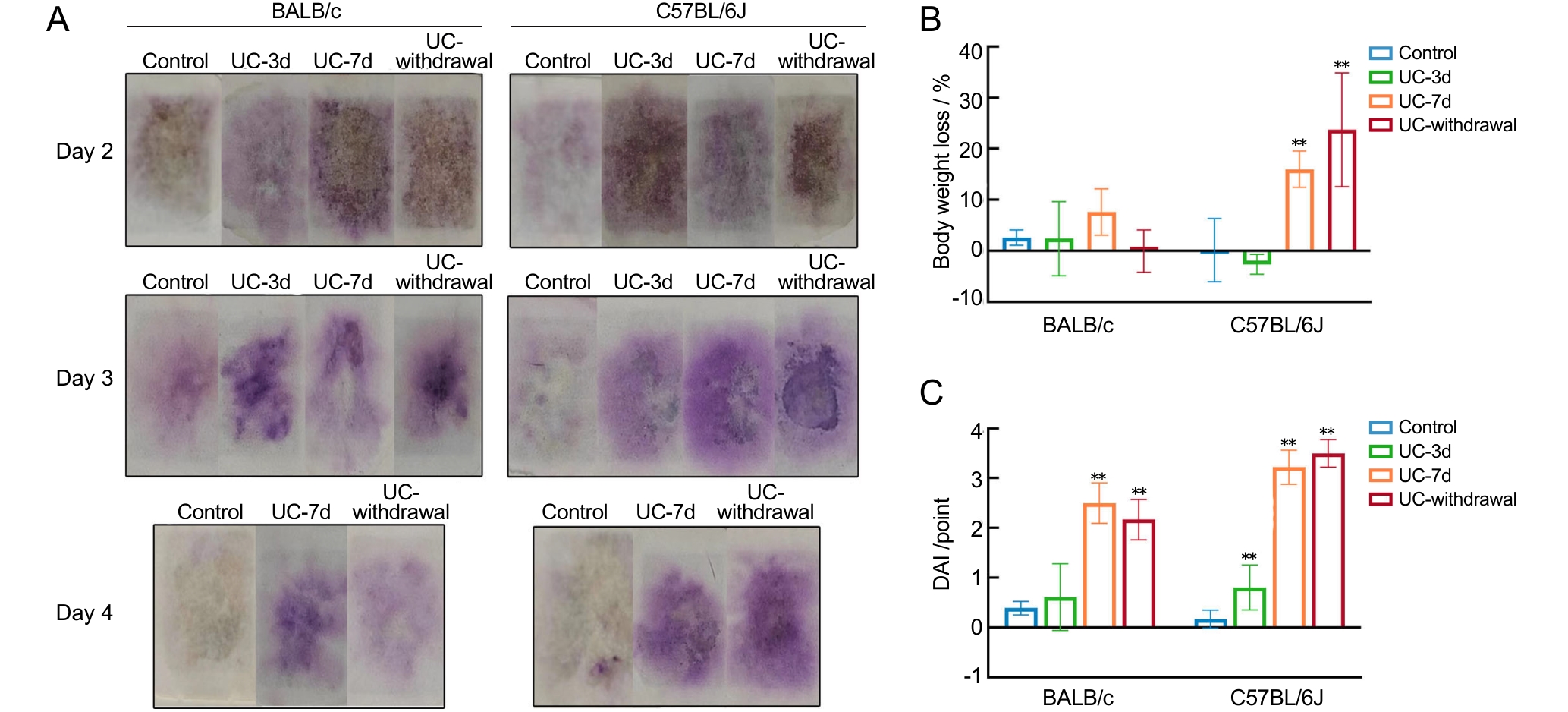
Figure 1 General pathological parameters in female mice of different strains with the DSS-induced ulcerative colitis model
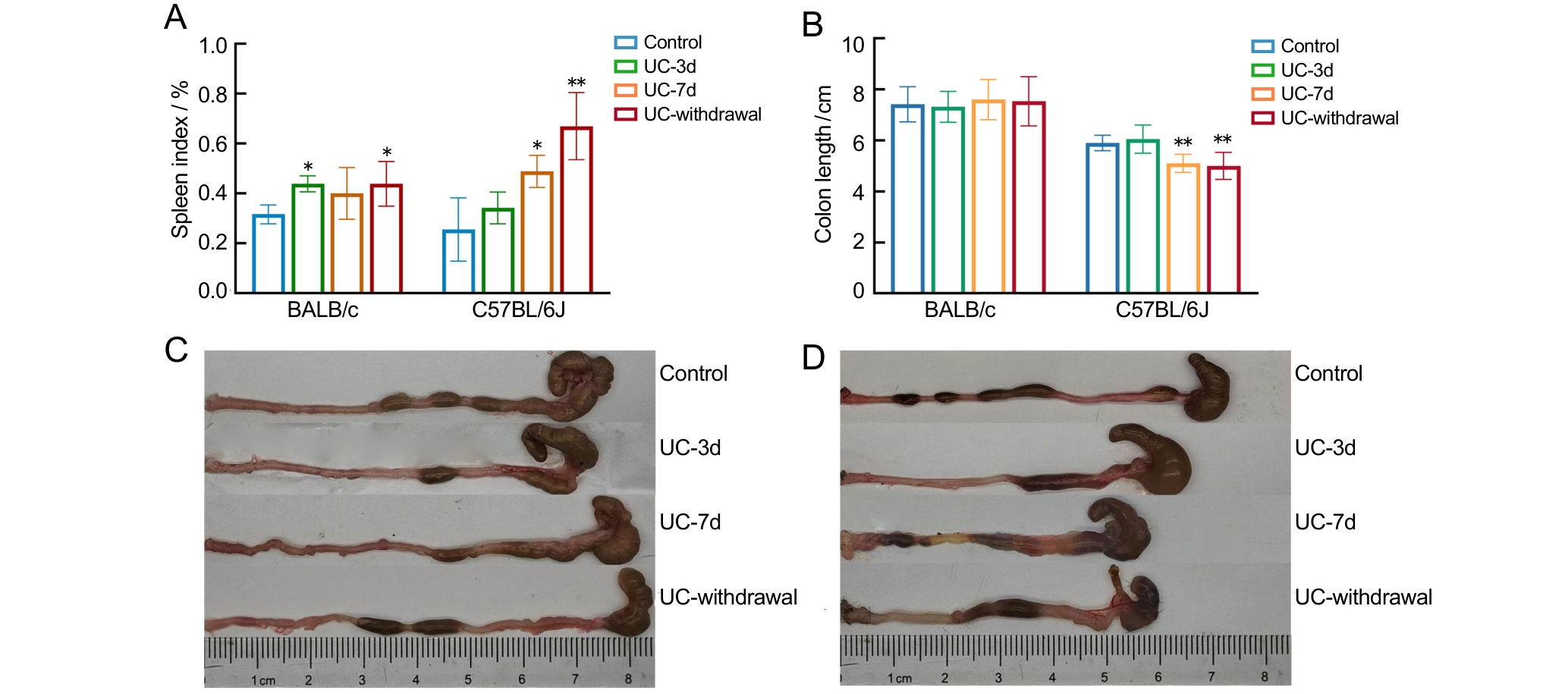
Figure 2 Organ Changes in female mice of different strains with the DSS-induced ulcerative colitis model
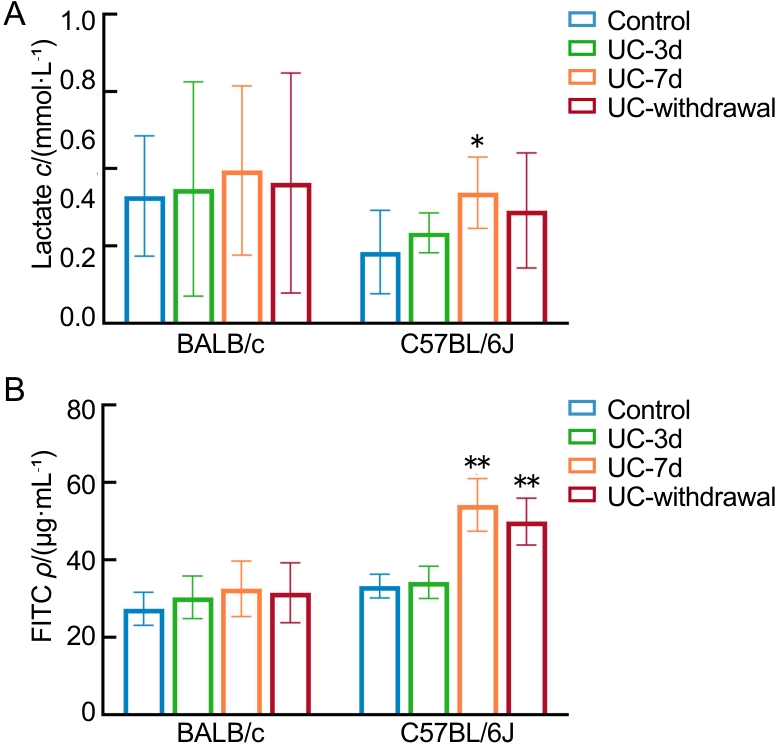
Figure 3 Intestinal permeability changes in female mice of different strains with the DSS-induced ulcerative colitis model
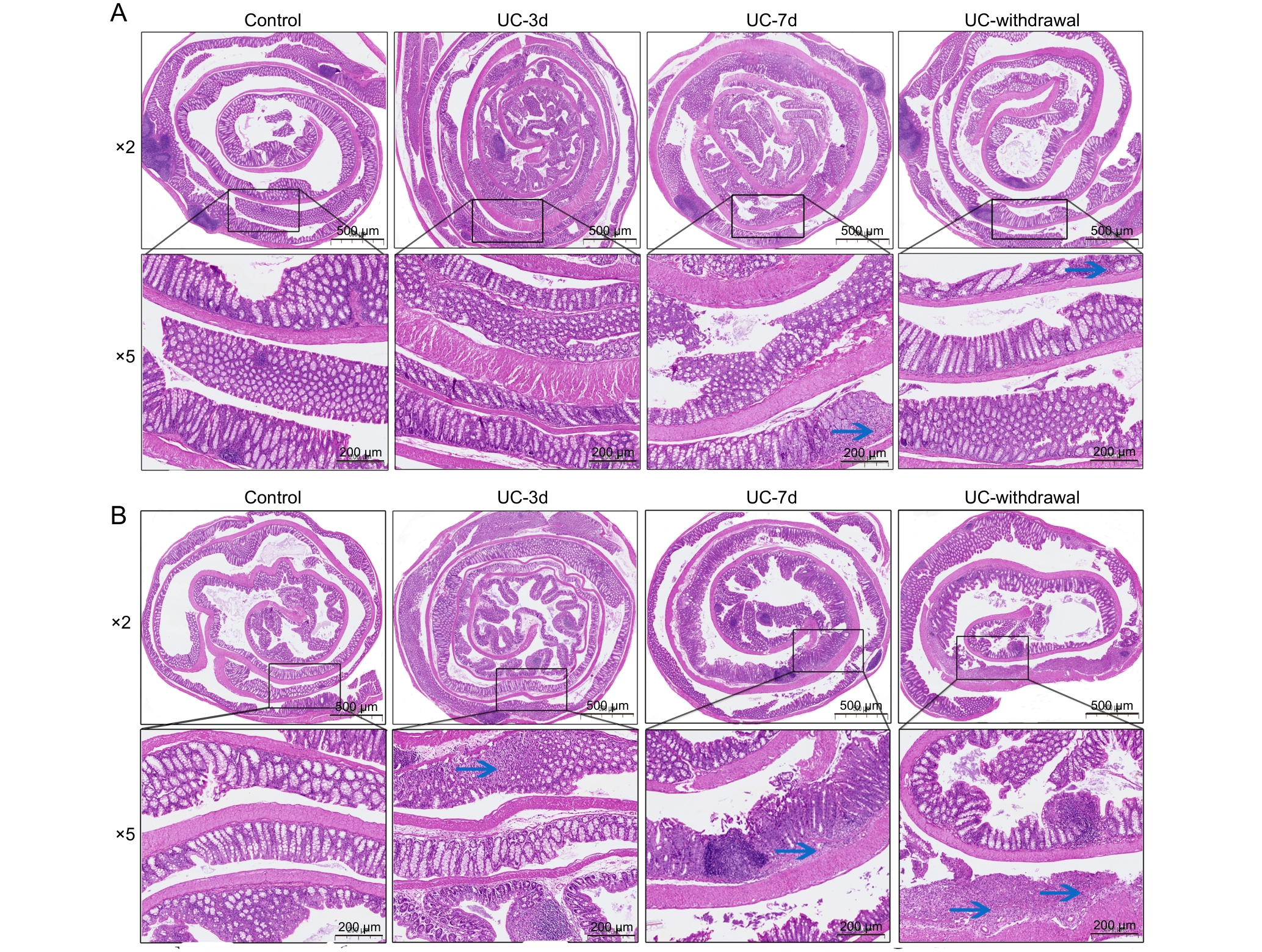
Figure 4 HE staining of colon tissues from female mice of different strains in DSS-induced ulcerative colitis (UC) models
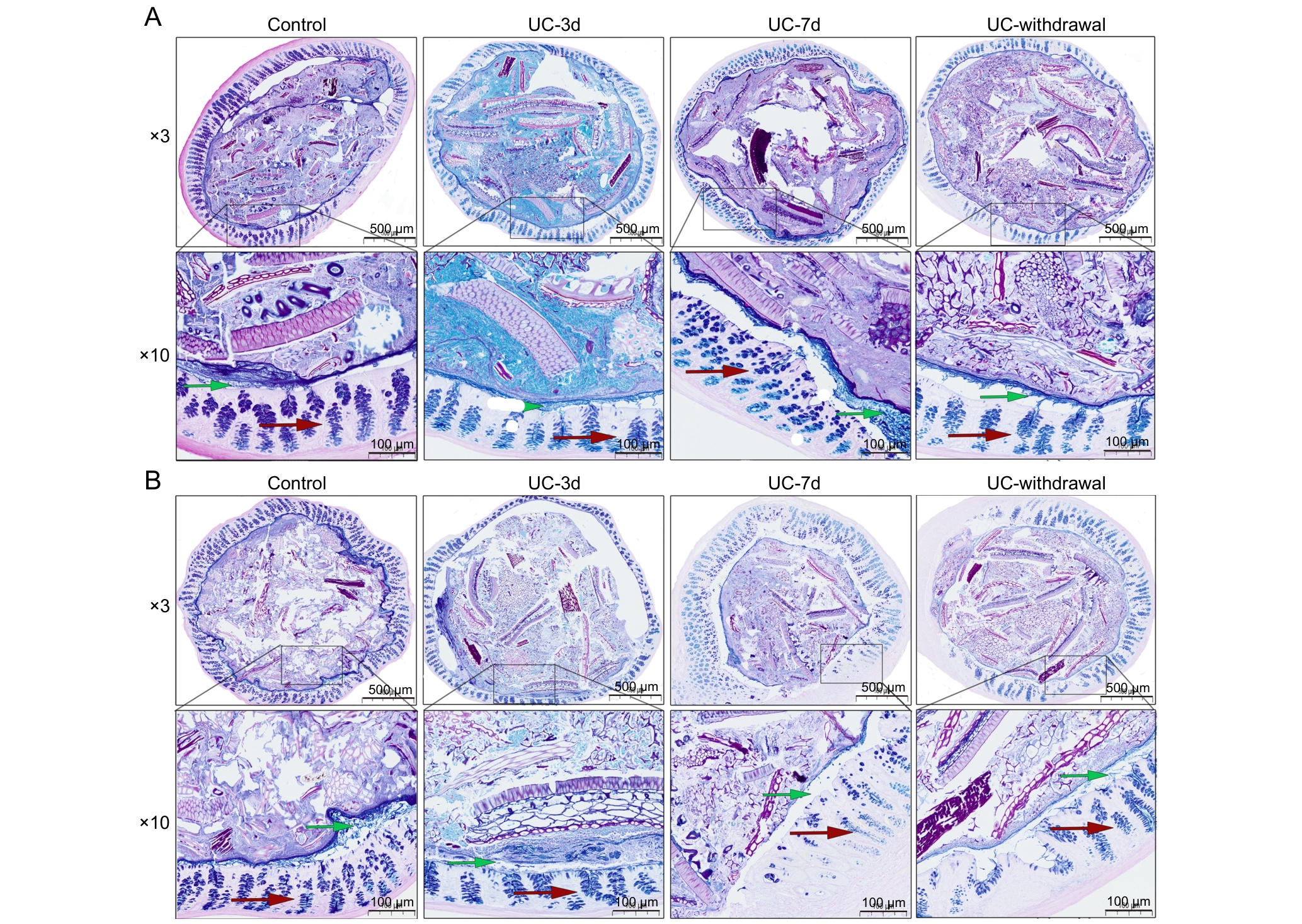
Figure 5 Alcian blue-periodic acid-Schiff staining (AB-PAS) of colon tissues from female mice of different strains in DSS-induced ulcerative colitis (UC) models
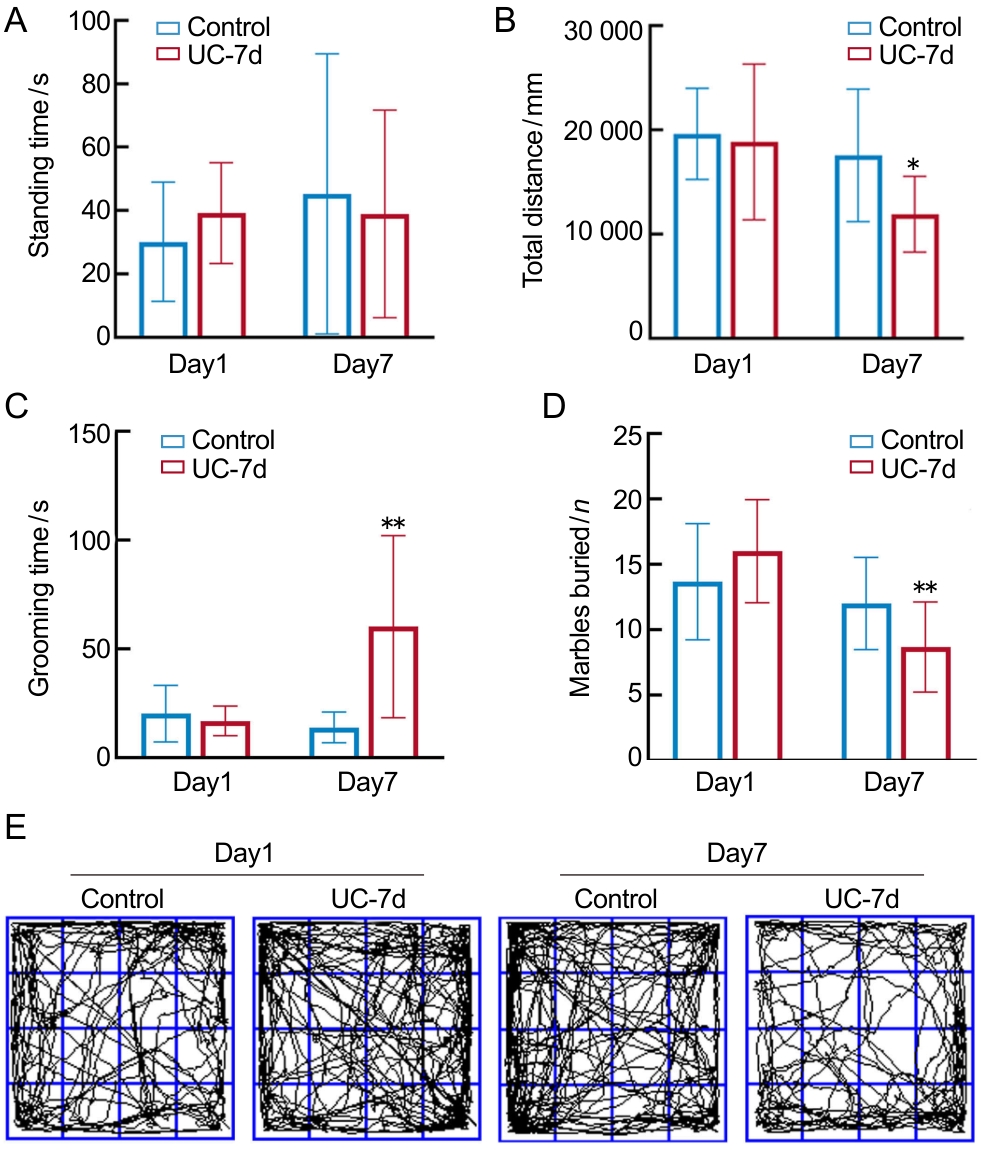
Figure 6 Anxiety/depression-like behaviors in DSS-induced ulcerative colitis (UC) models of female C57BL/6J mice
| [1] | 李文晓, 陈江, 何志成, 等. 加味薏苡附子败酱散对溃疡性结肠炎大鼠肠黏膜通透性和AQP3、AQP4表达的影响[J]. 中国中药杂志, 2025, 50(14): 3962-3968. DOI: 10.19540/j.cnki.cjcmm.20250311.401 . |
| LI W X, CHEN J, HE Z C, et al. Effect of modified Yiyi Fuzi Baijiang powder on intestinal mucosal permeability and expression of AQP3, AQP4 in ulcerative colitis rats[J]. China J Chin Mater Med, 2025, 50(14): 3962-3968. DOI: 10.19540/j.cnki.cjcmm.20250311.401 . | |
| [2] | 张新杰, 倪红, 楼鹏飞, 等. 基于真实世界研究中药物灌肠治疗后溃疡性结肠炎复发率的meta分析[J].中国中西医结合消化杂志,2026,34(01):51-58. DOI: 10.3969/j.issn.1671-038X.2026.01.09 . |
| ZHANG X J, NI H, LOU P F, et al. Real-world studies on the recurrence rate of ulcerative colitis after drug enema treatment: a meta-analysis[J]. Chin J Integr Tradit West Med Dig, 2026, 34(1): 51-58. DOI: 10.3969/j.issn.1671-038X.2026.01.09 . | |
| [3] | 张敬宜, 李林轩, 姜再勖, 等. 炎症性肠病动物模型的研发现状[J]. 中国实验诊断学, 2025, 29(5): 615-621. DOI: 10.3969/j.issn.1007-4287.2025.05.020 . |
| ZHANG J Y, LI L X, JIANG Z X, et al. Current situation and prospect of animal model of inflammatory bowel disease[J]. Chin J Lab Diagn, 2025, 29(5): 615-621. DOI: 10.3969/j.issn.1007-4287.2025.05.020 . | |
| [4] | 李萌, 马富智, 唐泽惟, 等. C57BL/6小鼠急性溃疡性结肠炎动物模型的对比及优化[J]. 河南师范大学学报(自然科学版), 2025, 53(4): 124-132. DOI: 10.16366/j.cnki.1000-2367.2024.03.27.0002 . |
| LI M, MA F Z, TANG Z W, et al. Comparison and optimization of acute ulcerative colitis animal models induced in C57BL/6 mice[J]. J Henan Norm Univ (Nat Sci Ed), 2025, 53(4): 124-132. DOI: 10.16366/j.cnki.1000-2367.2024.03.27.0002 . | |
| [5] | 吴志浩, 沈宸, 殷俊, 等. 肝螺杆菌感染对葡聚糖硫酸钠诱导小鼠慢性结肠炎模型的影响[J]. 实验动物与比较医学, 2021, 41(3): 226-231. DOI: 10.12300/j.issn.1674-5817.2020.136 . |
| WU Z H, SHEN C, YIN J, et al. Effect of Helicobacter hepaticus infection on chronic colitis induced by dextran sulfate sodium[J]. Lab Anim Comp Med, 2021, 41(3): 226-231. DOI: 10.12300/j.issn.1674-5817.2020.136 . | |
| [6] | 赵亚妮, 李瑶, 张妍, 等. 葡聚糖硫酸钠不同给药方式建立小鼠溃疡性结肠炎模型[J]. 实验动物与比较医学, 2021, 41(1): 33-39. DOI: 10.12300/j.issn.1674-5817.2020.090 . |
| ZHAO Y N, LI Y, ZHANG Y, et al. Establishment of ulcerative colitis model in mice by different drug delivery methods of dextran sodium sulfate[J]. Lab Anim Comp Med, 2021, 41(1): 33-39. DOI: 10.12300/j.issn.1674-5817.2020.090 . | |
| [7] | BÁBÍČKOVÁ J, TÓTHOVÁ Ľ, LENGYELOVÁ E, et al. Sex differences in experimentally induced colitis in mice: a role for estrogens[J]. Inflammation, 2015, 38(5): 1996-2006. DOI: 10.1007/s10753-015-0180-7 . |
| [8] | WIRTZ S, POPP V, KINDERMANN M, et al. Chemically induced mouse models of acute and chronic intestinal inflammation[J]. Nat Protoc, 2017, 12(7): 1295-1309. DOI: 10.1038/nprot.2017.044 . |
| [9] | BARBERIO B, ZAMANI M, BLACK C J, et al. Prevalence of symptoms of anxiety and depression in patients with inflammatory bowel disease: a systematic review and meta-analysis[J]. Lancet Gastroenterol Hepatol, 2021, 6(5): 359-370. DOI: 10.1016/S2468-1253(21)00014-5 . |
| [10] | YUAN X M, CHEN B Q, DUAN Z L, et al. Depression and anxiety in patients with active ulcerative colitis: crosstalk of gut microbiota, metabolomics and proteomics[J]. Gut Microbes, 2021, 13(1): 1987779. DOI: 10.1080/19490976. 2021.1987779 . |
| [11] | 赵鹏, 王弋, 刘若轩, 等. 肠炎清合剂通过抑制JNK信号通路防治大鼠溃疡性结肠炎的作用研究[J]. 中国中西医结合消化杂志, 2025, 33(4): 439-446. DOI: 10.3969/j.issn.1671-038X.2025.04.13 . |
| ZHAO P, WANG G, LIU R X, et al. The effect of Changyanqing mixture on preventing and treating ulcerative colitis in rats by inhibiting JNK signaling pathway[J]. Chin J Integr Tradit West Med Dig, 2025, 33(4): 439-446. DOI: 10.3969/j.issn.1671-038X.2025.04.13 . | |
| [12] | 胡佳艳, 李军祥, 王木源, 等. 临床运用对药、角药和串药治疗溃疡性结肠炎经验举隅[J]. 中国中西医结合消化杂志, 2025, 33(9): 849-854. DOI: 10.3969/j.issn.1671-038X.2025.09.06 . |
| HU J Y, LI J X, WANG M Y, et al. Clinical application of paired herbs, triangular herbs, and stringed herbs in the treatment of ulcerative colitis: a discussion of experiences[J]. Chin J Integr Tradit West Med Dig, 2025, 33(9): 849-854. DOI: 10.3969/j.issn.1671-038X.2025.09.06 . | |
| [13] | ZHAO M, FENG R, BEN-HORIN S, et al. Systematic review with meta-analysis: environmental and dietary differences of inflammatory bowel disease in Eastern and Western populations[J]. Aliment Pharmacol Ther, 2022, 55(3): 266-276. DOI: 10.1111/apt.16703 . |
| [14] | 杨翠萍, 陈平. 全球炎症性肠病的流行趋势分析及诊治现状[J]. 诊断学理论与实践, 2025, 24(4): 373-382. DOI: 10.16150/j.1671-2870.2025.04.003 . |
| YANG C P, CHEN P. Analysis of global trends and current status of diagnosis and treatment of inflammatory bowel diseas[J]. J Diagn Concepts Pract, 2025, 24(4): 373-382. DOI: 10.16150/j.1671-2870.2025.04.003 . | |
| [15] | TSHIKUDI D M, BERNSTEIN C N, MISHRA S, et al. Influence of biological sex in inflammatory bowel diseases[J]. Nat Rev Gastroenterol Hepatol, 2025, 22(6): 415-437. DOI: 10.1038/s41575-025-01038-y . |
| [16] | WITTIG R, ALBERS L, KOLETZKO S, et al. Pediatric chronic inflammatory bowel disease in a German statutory health INSURANCE-incidence rates from 2009 to 2012[J]. J Pediatr Gastroenterol Nutr, 2019, 68(2): 244-250. DOI: 10.1097/MPG.0000000000002162 . |
| [17] | EICHELE D D, KHARBANDA K K. Dextran sodium sulfate colitis murine model: an indispensable tool for advancing our understanding of inflammatory bowel diseases pathogenesis[J]. World J Gastroenterol, 2017, 23(33): 6016-6029. DOI: 10.3748/wjg.v23.i33.6016 . |
| [18] | 周欣欣, 刘茜茜, 任珍, 等. 溃疡性结肠炎动物模型的特点及应用分析[J]. 中国实验动物学报, 2023, 31(7): 896-904. |
| ZHOU X X, LIU X X, REN Z, et al. Characteristics and application analysis of animal models of ulcerative colitis[J]. Acta Lab Anim Sci Sin, 2023, 31(7): 896-904. | |
| [19] | KOSTAS-POLSTON E A, BEVANS M, SHEA T L, et al. Ensuring accountability for consideration of sex as a biological variable in research[J]. Nurs Outlook, 2024, 72(4): 102194. DOI: 10.1016/j.outlook.2024.102194 . |
| [20] | MÄHLER M, BRISTOL I J, LEITER E H, et al. Differential susceptibility of inbred mouse strains to dextran sulfate sodium-induced colitis[J]. Am J Physiol, 1998, 274(3): G544-G551. DOI: 10.1152/ajpgi.1998.274.3.G544 . |
| [21] | MELGAR S, KARLSSON A, MICHAËLSSON E. Acute colitis induced by dextran sulfate sodium progresses to chronicity in C57BL/6 but not in BALB/c mice: correlation between symptoms and inflammation[J]. Am J Physiol Gastrointest Liver Physiol, 2005, 288(6): G1328-G1338. DOI:10.1152/ajpgi. 00467.2004 . |
| [22] | 张博, 李勇, 董娟, 等. 基于线粒体功能障碍对肠道屏障的影响的炎症性肠病机制[J]. 中国组织化学与细胞化学杂志, 2025, 34(2): 184-189, 194. DOI: 10.16705/j.cnki.1004-1850.2025.02.013 . |
| ZHANG B, LI Y, DONG J, et al. Mechanism of inflammatory bowel disease based on the impact of mitochondrial dysfunction on the intestinal barrier[J]. Chin J Histochem Cytochem, 2025, 34(2): 184-189, 194. DOI: 10.16705/j.cnki.1004-1850.2025.02.013 . | |
| [23] | 胡子朝, 王睿, 李一芳, 等. 小檗碱治疗溃疡性结肠炎作用机制研究进展[J]. 甘肃中医药大学学报, 2025, 42(3): 73-79. DOI: 10.16841/j.issn1003-8450.2025.03.12 . |
| HU Z Z, WANG R, LI Y F, et al. Study on the mechanism of berberine in the treatment of ulcerative colitis[J]. J Gansu Univ Chin Med, 2025, 42(3): 73-79. DOI: 10.16841/j.issn1003-8450.2025.03.12 . | |
| [24] | PAONE P, CANI P D. Mucus barrier, mucins and gut microbiota: the expected slimy partners?[J]. Gut, 2020, 69(12): 2232-2243. DOI: 10.1136/gutjnl-2020-322260 . |
| [25] | CAMILLERI M, VELLA A. What to do about the leaky gut[J]. Gut, 2022, 71(2): 424-435. DOI: 10.1136/gutjnl-2021-325428 . |
| [26] | BISGAARD T H, ALLIN K H, KEEFER L, et al. Depression and anxiety in inflammatory bowel disease: epidemiology, mechanisms and treatment[J]. Nat Rev Gastroenterol Hepatol, 2022, 19(11): 717-726. DOI: 10.1038/s41575-022-00634-6 . |
| [27] | CARLONI S, BERTOCCHI A, MANCINELLI S, et al. Identification of a choroid plexus vascular barrier closing during intestinal inflammation[J]. Science, 2021, 374(6566): 439-448. DOI: 10.1126/science.abc6108 . |
| [28] | FRACAS E, COSTANTINO A, VECCHI M, et al. Depressive and anxiety disorders in patients with inflammatory bowel diseases: are there any gender differences?[J]. Int J Environ Res Public Health, 2023, 20(13): 6255. DOI: 10.3390/ijerph 20136255 . |
| [29] | 张雪, 蔡星辰, 王二嫚, 等. 炎症性肠病患者焦虑抑郁相关影响因素分析[J]. 中国实用医药, 2025, 20(4): 29-33. DOI: 10.14163/j.cnki.11-5547/r.2025.04.007 . |
| ZHANG X, CAI X C, WANG E M, et al. Analysis of related influencing factors of anxiety and depression in patients with inflammatory bowel diseases[J]. China Pract Med, 2025, 20(4): 29-33. DOI: 10.14163/j.cnki.11-5547/r.2025.04.007 . | |
| [30] | 徐靖宣, 时浩洋, 王栋, 等. 基于情志致病理论探讨从肝论治炎症性肠病的研究进展[J]. 中国中西医结合消化杂志, 2023, 31(12): 990-996. DOI: 10.3969/j.issn.1671-038X.2023.12.15 . |
| XU J X, SHI H Y, WANG D, et al. Research progress in the treatment of inflammatory bowel disease from the liver based on the theory of emotional pathogenesis[J]. Chin J Integr Tradit West Med Dig, 2023, 31(12): 990-996. DOI: 10.3969/j.issn.1671-038X.2023.12.15 . | |
| [31] | 贺冰洁, 刘志科, 沈鹏, 等. 2011—2020年宁波市鄞州区炎症性肠病发病的流行病学研究[J]. 北京大学学报(医学版), 2022, 54(3): 511-519. DOI: 10.19723/j.issn.1671-167X.2022.03.017 . |
| HE B J, LIU Z K, SHEN P, et al. Epidemiological study on the incidence of inflammatory bowel disease in Yinzhou District, Ningbo City from 2011 to 2020[J]. J Peking Univ (Health Sci), 2022, 54(3): 511-519. DOI: 10.19723/j.issn.1671-167X.2022.03.017 . | |
| [32] | BERCIK P, PARK A J, SINCLAIR D, et al. The anxiolytic effect of Bifidobacterium longum NCC3001 involves vagal pathways for gut-brain communication[J]. Neurogastroenterol Motil, 2011, 23(12): 1132-1139. DOI: 10.1111/j.1365-2982.2011.01796.x . |
| [1] | AI Xiufeng, ZHANG Lizong, FANG Mingsun, LÜ Dongying, CHEN Chu, CAI Zhaowei, WANG Dejun. Analysis of Differences in the Intestinal Flora of Rats and Mice after Drinking Chlorinated Water Based on 16S rRNA Sequencing [J]. Laboratory Animal and Comparative Medicine, 2026, 46(3): 437-445. |
| [2] | WU Xianwen, LIU Lili, CHEN Ye, XU Guoheng. Optimization of Cage-Changing Intervals and Wood Shavings Usage for Mice During the Growth Phase in Breeding Systems [J]. Laboratory Animal and Comparative Medicine, 2026, 46(2): 251-260. |
| [3] | RONG Wenshuang, NIU Yuanfei, LIU Meiting, YANG Mengyuan, CUI Shuang, MA Lina, FU Yao, WANG Lianmei, CAO Junling. Influence of Antigen Type on the Establishment of an Induced Sjögren Syndrome Mouse Model [J]. Laboratory Animal and Comparative Medicine, 2026, 46(2): 178-190. |
| [4] | XU Yingtao, WANG Mengmeng, LIN Ping, CHI Haitao, WANG Yi, BAI Ying. Exosomes Treat Ischemic Stroke by Regulation of Ferroptosis Through the NRF2/SLC7A11/GPX4 Pathway in Mice [J]. Laboratory Animal and Comparative Medicine, 2026, 46(1): 20-31. |
| [5] | Yun LIU, Tingting FENG, Wei TONG, Zhi GUO, Xia LI, Qi KONG, Zhiguang XIANG. Glycyrrhizic Acid Showed Therapeutic Effects on Severe Pulmonary Damages in Mice Induced by Pneumonia Virus of Mice Infection [J]. Laboratory Animal and Comparative Medicine, 2024, 44(3): 251-258. |
| [6] | Yisu ZHANG, Xinru LIU, Ruojie WU, Rui LIU, Hong OUYANG, Xiaohong LI. Establishment and Evaluation of Mouse Model of Pregnancy Pain-depression Comorbidity Induced by Chronic Unpredictable Stress, Complete Freund's Adjuvant and Formalin [J]. Laboratory Animal and Comparative Medicine, 2024, 44(3): 259-269. |
| [7] | Min LIANG, Yang GUO, Jinjin WANG, Mengyan ZHU, Jun CHI, Yanjuan CHEN, Chengji WANG, Zhilan YU, Ruling SHEN. Construction of Dmd Gene Mutant Mice and Phenotype Verification in Muscle and Immune Systems [J]. Laboratory Animal and Comparative Medicine, 2024, 44(1): 42-51. |
| [8] | Dan WANG, Xiaolu ZHANG, Yan WANG, Bo FU, Wendong WANG, Jing LIU, Suyin ZHANG, Yihe WU, Deguo WU, Xiaoyan DU, Dawei ZHAN, Xiulin ZHANG, Changlong LI. Study on the Antibody Production Efficiency in Modified Big-BALB/c Mice [J]. Laboratory Animal and Comparative Medicine, 2023, 43(6): 612-618. |
| [9] | Han LI, Xiaorui ZHANG, Chengfang ZHANG. Mechanism of Intermittent Fasting in Improving Olanzapine-induced Metabolic Disorders in Mice [J]. Laboratory Animal and Comparative Medicine, 2023, 43(1): 3-10. |
| [10] | Yu HU, Yunxi LAN, Xiaoxiao CHEN, Wei XIONG, Songqi TANG, Bo JIA, Wei HUANG. Research Progress in Animal Models of Ulcerative Colitis [J]. Laboratory Animal and Comparative Medicine, 2022, 42(3): 220-228. |
| [11] | LI Zifa, ZHANG Hao, REN Meng, XU Kaiyong, HU Minghui, ZHOU Miaomiao, WANG Kezhou. Protective Effect of Quercetin on Lipid Metabolism Disorder in Mice Livers Caused by Cadmium [J]. Laboratory Animal and Comparative Medicine, 2021, 41(4): 305-312. |
| [12] | ZHAO Yani, LI Yao, ZHANG Yan, WANG Siwang, AN Junming. Establishment of Ulcerative Colitis Model in Mice by Different Drug Delivery Methods of Dextran Sodium Sulfate [J]. Laboratory Animal and Comparative Medicine, 2021, 41(1): 33-39. |
| [13] | CHENG Jishuai, MOU Tangwei, LIU Lei, WU Huaye, LI Qihan. Comparative Pathological Analysis of Herpes Simplex Virus Type 2 Infection in BALB/c Mice by Different Routes [J]. Laboratory Animal and Comparative Medicine, 2020, 40(1): 15-21. |
| [14] | LEI Shan, LIU Qiang, HUANG Wei-jin, WANG You-chun. Influence of Strain, Gender and Hair Coat of Mice on Establishing Bioluminescent Imaging Pseudovirus Mouse Model [J]. Laboratory Animal and Comparative Medicine, 2019, 39(6): 423-428. |
| [15] | YANG Hua, ZHAO Ya-Juan, OU Qiang. Establishment of Nonalcoholic Fatty Liver Fibrosis Model and Expression of Inflammatory Factors in Mice [J]. Laboratory Animal and Comparative Medicine, 2017, 37(1): 20-24. |
| Viewed | ||||||
|
Full text |
|
|||||
|
Abstract |
|
|||||
