



Laboratory Animal and Comparative Medicine ›› 2026, Vol. 46 ›› Issue (3): 416-425.DOI: 10.12300/j.issn.1674-5817.2025.136
• Facilities and Management for Laboratory Animals • Previous Articles Next Articles
BU Jiwen1( )(
)( ), HUA Ye2, JIN Shirong2, REN Ningxin1, LI Funing1, DU Jiulin1
Received:2025-08-19
Revised:2025-12-05
Online:2026-06-25
Published:2026-06-19
Correspondence to:
BU Jiwen
CLC Number:
BU Jiwen,HUA Ye,JIN Shirong,et al. Automated Management of Zebrafish Strains and Zebrafish Facilities[J]. Laboratory Animal and Comparative Medicine, 2026, 46(3): 416-425. DOI: 10.12300/j.issn.1674-5817.2025.136.
Add to citation manager EndNote|Ris|BibTeX
URL: https://www.slarc.org.cn/dwyx/EN/10.12300/j.issn.1674-5817.2025.136
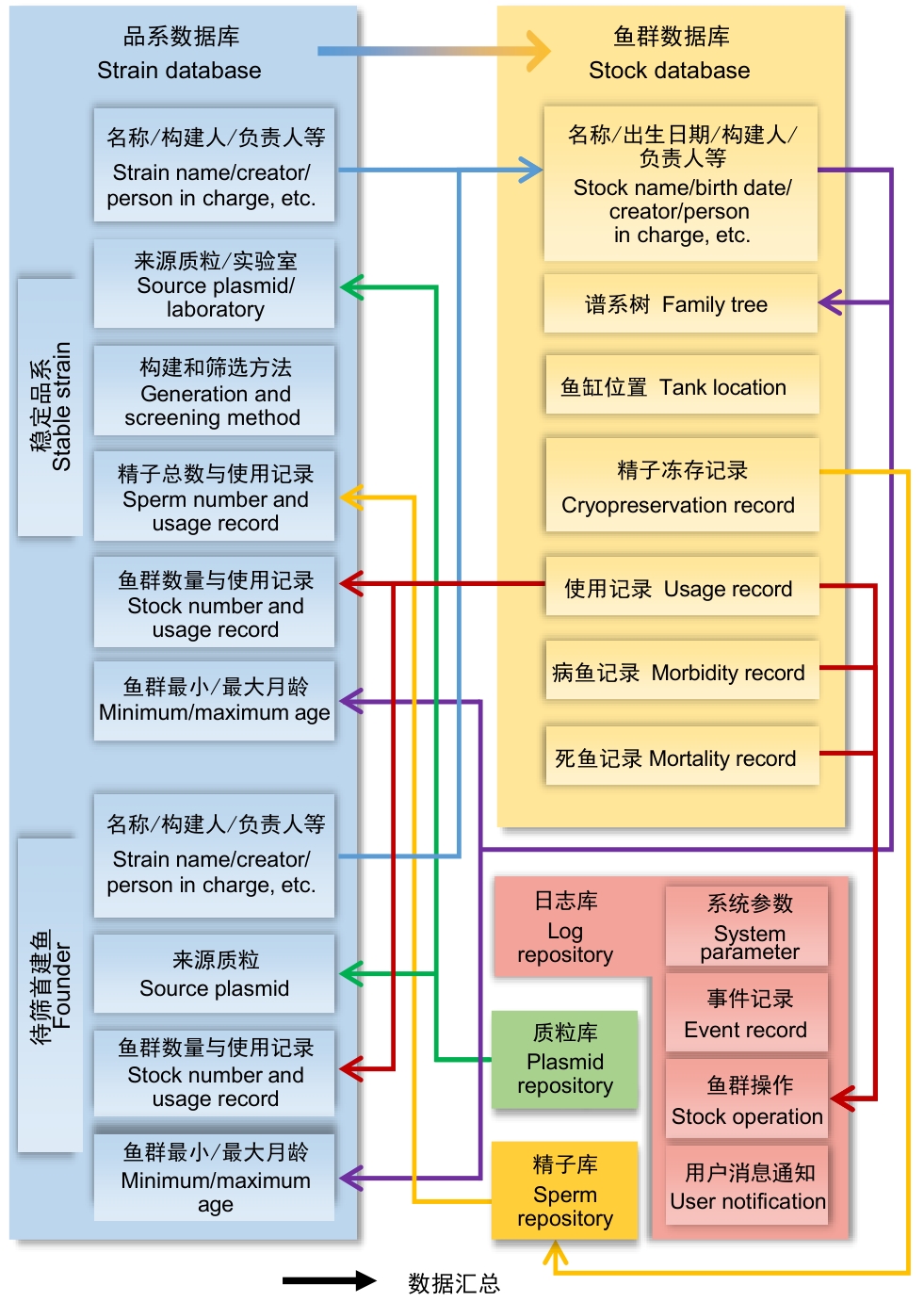
Figure 1 Schematic diagram of data architecture for the zebrafish facility big data system, Center for Excellence in Brain Science and Intelligence Technology (CEBSIT), Chinese Academy of Sciences (CAS)
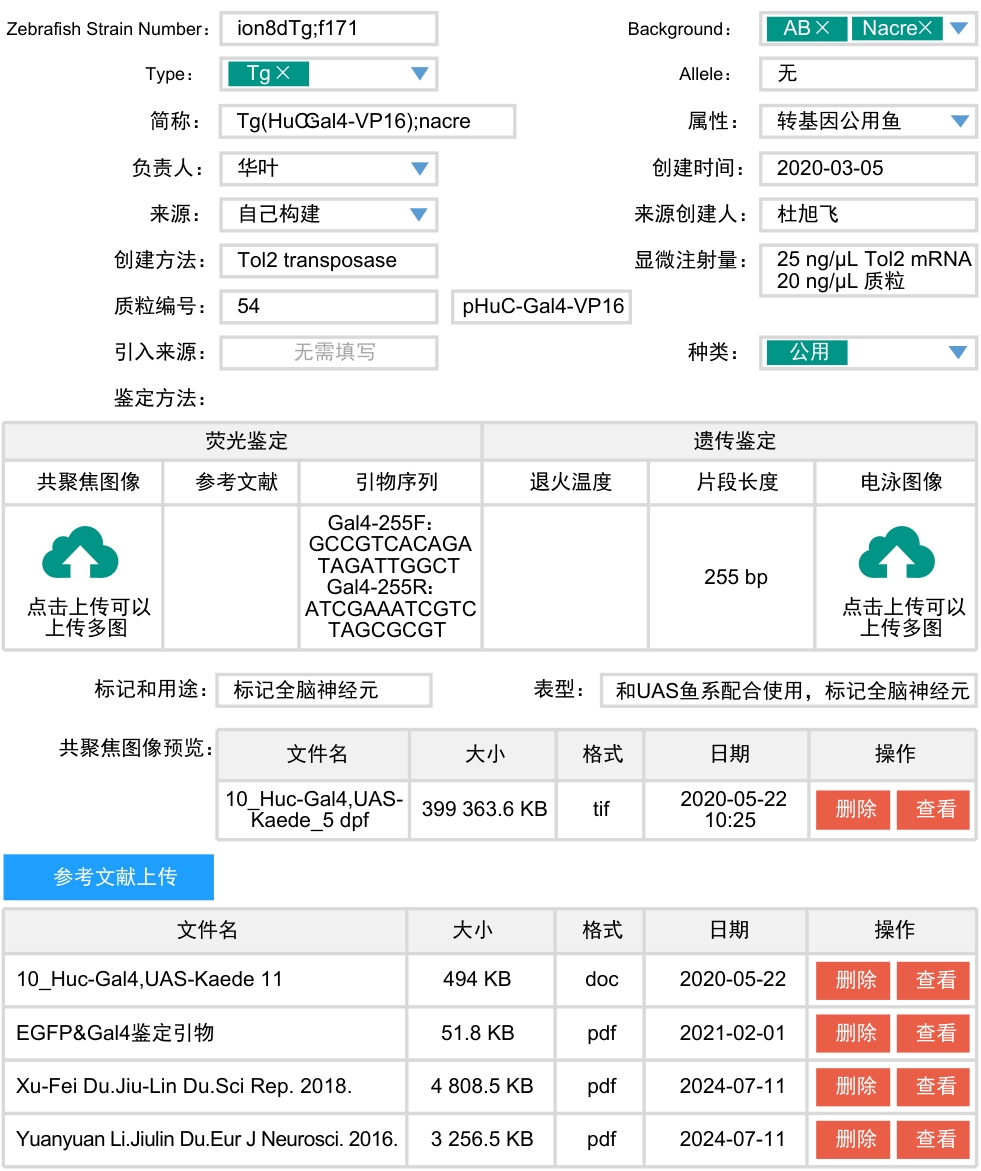
Figure 2 Screenshot of the entry interface of the zebrafish strain digital archiving system (strain information page)
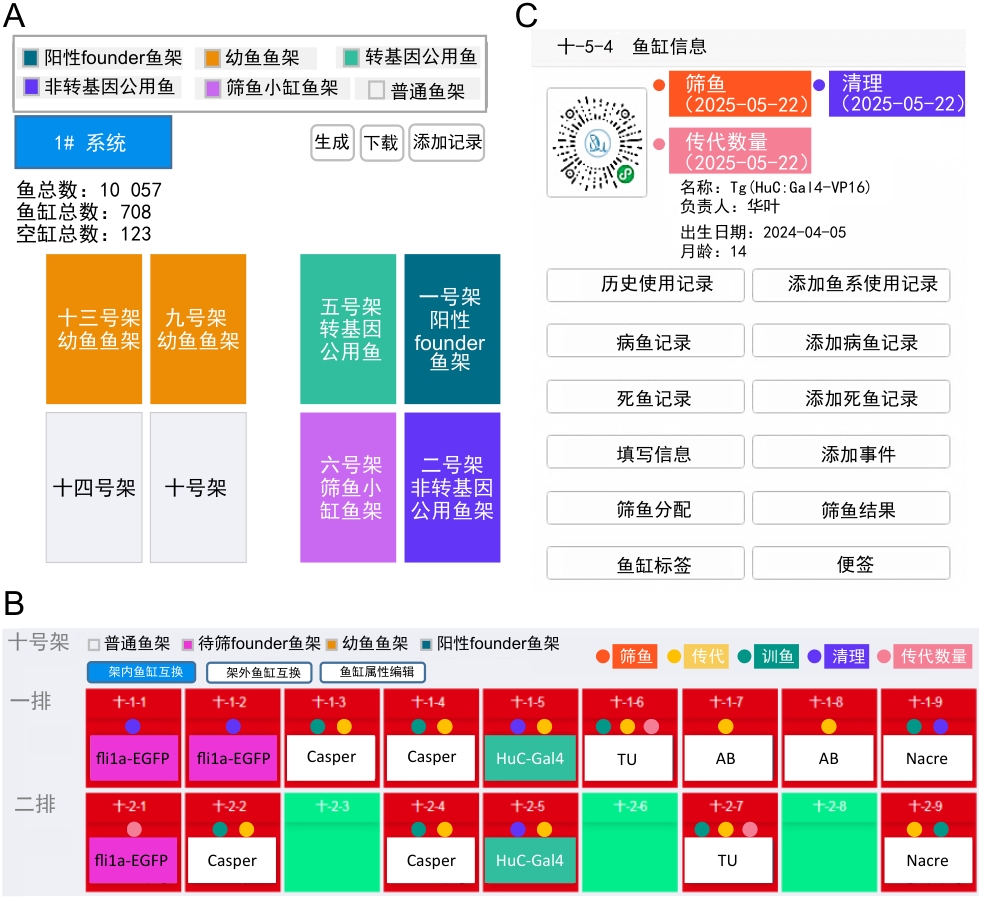
Figure 3 Screenshot of the three-level interface of 3D digital zebrafish facilities (from fish room to rack to tank, showing fish group information at the tank level)
信息类别 Information category | 核心内容 Core content | 查看与录入 View and entry | 各模块关联整合情况 Inter-module connectivity and integration | 自动统计功能 Auto-statistics function |
|---|---|---|---|---|
鱼群基本信息 Basic information of the fish stock | 品系/Stock唯一编号、出生日期、传代人、负责人、鱼总数、鱼缸位置、亲本信息等 | 查看方式:(1)Stock板块搜索;(2)线下扫描鱼缸二维码;(3)在三维数字斑马鱼鱼房点击鱼缸 录入方式:(1)Stock板块“新建”;(2)Stock板块“复制”;(3)在三维数字鱼房点击鱼缸“新建” | (1)关联品系信息,可一键导入基本信息; (2)关联“三维数字斑马鱼鱼房”,通过三维快速定位查找鱼群; (3)关联“精子数据库”,进行精子冻存、取用操作; (4)关联“死鱼/病鱼记录”,自动更新鱼群数量; (5)关联“谱系树” | 根据死鱼/病鱼记录,自动核减鱼群中鱼的数量 |
鱼群使用记录 Fish stock operation records | 使用人、使用时间、用途、交配对象 | 查看方式:(1)Stock板块搜索;(2)线下扫描鱼缸二维码;(3)在三维数字鱼房点击鱼缸 录入方式:(1)线下扫描鱼缸二维码;(2)在三维数字斑马鱼鱼房点击鱼缸 | 关联“三维数字斑马鱼鱼房”,通过三维快速定位查找鱼群 | 自动统计鱼群累计使用频次,以数据决策繁殖计划,优化种群数量 |
健康事件记录 Health event record | 死鱼记录(时间、数量、症状) 病鱼记录(时间、数量、症状) | 查看方式:(1)Stock、Founder板块搜索;(2)线下扫描鱼缸二维码;(3)在三维数字斑马鱼鱼房点击鱼缸 录入方式:(1)线下扫描鱼缸二维码;(2)在三维数字斑马鱼鱼房点击鱼缸 | (1)关联“三维数字斑马鱼鱼房”,通过三维快速定位查找鱼群; (2)关联“事件”板块,可查看整个斑马鱼鱼房各循环系统死鱼/病鱼的总体情况 | 数据实时汇总,可按照年/月/系统实时查询死鱼/病鱼数量,并生成比例统计图 |
鱼群预定 Fish stock order | 申请人、用途、所需数量、需用日期 | 查看方式:在三维数字斑马鱼鱼房鱼缸上显示 录入方式:在三维数字斑马鱼鱼房点击鱼缸 | 关联“数字斑马鱼鱼房”,通过三维快速定位查看 | 自动与使用记录联动,自动监测鱼群使用情况 |
鱼群谱系树 Fish stock family tree | 父本、母本及子代的血缘关系图谱(谱系树) | 查看方式:“谱系树”板块,根据位置、鱼系名称搜索查看 交互操作:点击谱系树中任意节点鱼群、生成该鱼群的谱系树 | 关联“三维数字斑马鱼鱼房”,通过三维快速定位查找鱼群 | 便于研究其遗传背景、种质和谱系关系 |
Table 1 Contents of the five major information modules in fish stock database and their integrative associations: inter-module connections, as well as linkages with zebrafish strain information, 3D digital fish room, and sperm database
信息类别 Information category | 核心内容 Core content | 查看与录入 View and entry | 各模块关联整合情况 Inter-module connectivity and integration | 自动统计功能 Auto-statistics function |
|---|---|---|---|---|
鱼群基本信息 Basic information of the fish stock | 品系/Stock唯一编号、出生日期、传代人、负责人、鱼总数、鱼缸位置、亲本信息等 | 查看方式:(1)Stock板块搜索;(2)线下扫描鱼缸二维码;(3)在三维数字斑马鱼鱼房点击鱼缸 录入方式:(1)Stock板块“新建”;(2)Stock板块“复制”;(3)在三维数字鱼房点击鱼缸“新建” | (1)关联品系信息,可一键导入基本信息; (2)关联“三维数字斑马鱼鱼房”,通过三维快速定位查找鱼群; (3)关联“精子数据库”,进行精子冻存、取用操作; (4)关联“死鱼/病鱼记录”,自动更新鱼群数量; (5)关联“谱系树” | 根据死鱼/病鱼记录,自动核减鱼群中鱼的数量 |
鱼群使用记录 Fish stock operation records | 使用人、使用时间、用途、交配对象 | 查看方式:(1)Stock板块搜索;(2)线下扫描鱼缸二维码;(3)在三维数字鱼房点击鱼缸 录入方式:(1)线下扫描鱼缸二维码;(2)在三维数字斑马鱼鱼房点击鱼缸 | 关联“三维数字斑马鱼鱼房”,通过三维快速定位查找鱼群 | 自动统计鱼群累计使用频次,以数据决策繁殖计划,优化种群数量 |
健康事件记录 Health event record | 死鱼记录(时间、数量、症状) 病鱼记录(时间、数量、症状) | 查看方式:(1)Stock、Founder板块搜索;(2)线下扫描鱼缸二维码;(3)在三维数字斑马鱼鱼房点击鱼缸 录入方式:(1)线下扫描鱼缸二维码;(2)在三维数字斑马鱼鱼房点击鱼缸 | (1)关联“三维数字斑马鱼鱼房”,通过三维快速定位查找鱼群; (2)关联“事件”板块,可查看整个斑马鱼鱼房各循环系统死鱼/病鱼的总体情况 | 数据实时汇总,可按照年/月/系统实时查询死鱼/病鱼数量,并生成比例统计图 |
鱼群预定 Fish stock order | 申请人、用途、所需数量、需用日期 | 查看方式:在三维数字斑马鱼鱼房鱼缸上显示 录入方式:在三维数字斑马鱼鱼房点击鱼缸 | 关联“数字斑马鱼鱼房”,通过三维快速定位查看 | 自动与使用记录联动,自动监测鱼群使用情况 |
鱼群谱系树 Fish stock family tree | 父本、母本及子代的血缘关系图谱(谱系树) | 查看方式:“谱系树”板块,根据位置、鱼系名称搜索查看 交互操作:点击谱系树中任意节点鱼群、生成该鱼群的谱系树 | 关联“三维数字斑马鱼鱼房”,通过三维快速定位查找鱼群 | 便于研究其遗传背景、种质和谱系关系 |
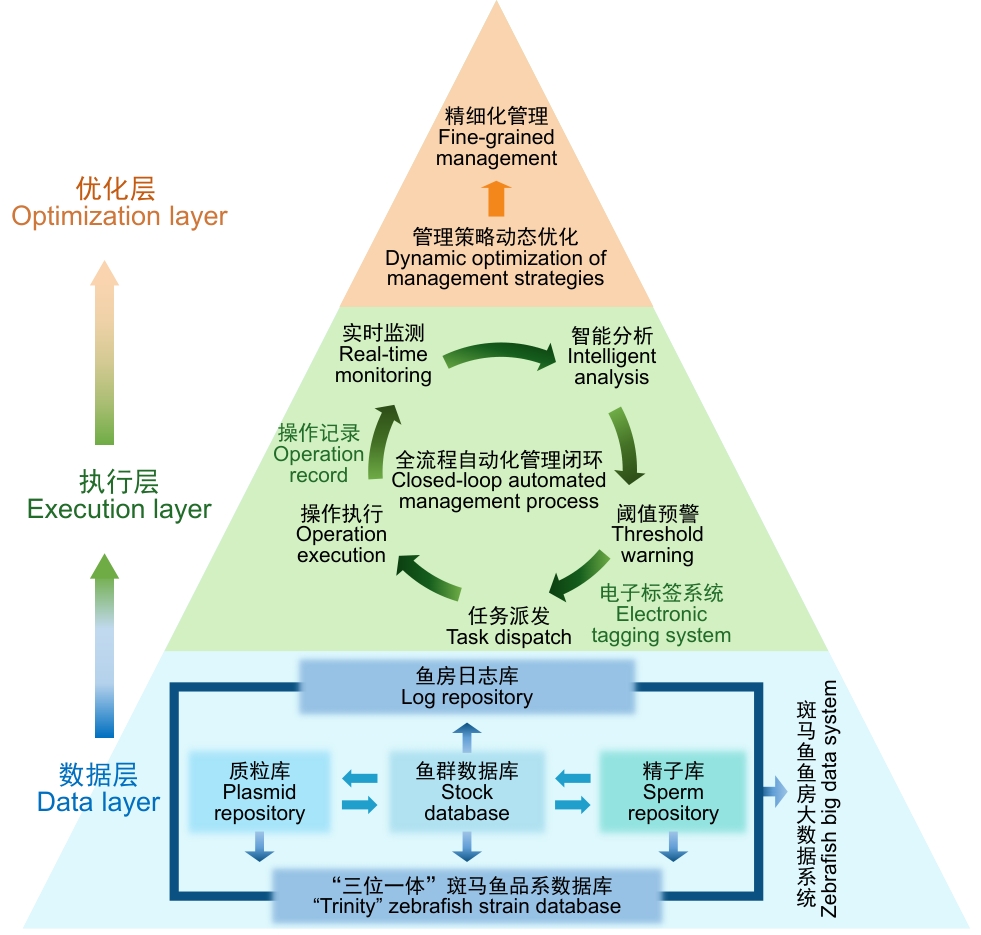
Figure 4 Framework model diagram of automated management for zebrafish facilities based on big data analytics
指令大类 Major categories of command | 指令小类 Sub-categories of command | 监测目标 Monitoring target | 预警触发条件 Alert trigger condition | 系统响应与操作 System response and action | 执行要求与流程 System execution requirements and procedure |
|---|---|---|---|---|---|
资源库监控指令 Resource repository monitoring command | 质粒库监控 | 质粒库存量 | <5 µL | 自动发送预警提醒 | 需及时补充库存,系统追踪补充进度,直至恢复安全库存 |
精子库监控 | 品系冻存精子总数 | <3管 | 自动发送预警提醒 | 需立即进行精子采集与冻存,系统追踪补充进度,直至恢复安全库存 | |
| 鱼群库监控 | 同一品系下活体鱼总数及月龄 | 鱼总数<10条,或所有鱼月龄≥14月 | 自动发送传代繁殖指令,挂载传代电子标签 | 需立即启动繁殖计划,系统追踪进度,直至恢复安全水平 | |
信息录入规范指令 Data entry standardization command | 新建品系 | 自构建品系 | 构建品系用质粒未入库 | 系统提示无法创建新品系 | 需提前将该未入库质粒录入质粒库 |
| 外部引入品系(已发表) | 未上传参考文献 | 系统提示无法创建新品系 | 需完善论文发表信息 | ||
| 新建鱼群 | 新建鱼群所属的品系 | 没有建立品系;未填父母本信息 | 系统提示品系未建立;系统提示父母本信息缺失 | 需提前创建品系;需选择父母本 | |
| 新建质粒 | 质粒信息 | 已发表质粒缺失参考文献 | 系统提示无参考文献无法新建质粒 | 需补充文献信息 | |
交配用鱼指导指令 Mating fish command | 交配间隔 | 品系交配记录 | 交配间隔<7 d | 系统禁止使用,提示繁殖间隔不足 | 需等待≥7 d后才可再次交配 |
| 定期交配鱼 | 品系交配记录 | 3~4个月内无交配使用记录 | 自动发送交配鱼指令 | 需完成交配鱼并提交使用记录 | |
品系传代指令 Fish line propagation command | 常规传代 | 品系最年轻鱼群月龄 | ≥14月龄 | 自动发送传代指令,挂载传代电子标签 | 30 d内完成新增鱼群登记,系统每日监测进度直至完成 |
| 应急传代 | 新引入或濒危品系 | 由管理员手动启动 | 挂载传代电子标签 | 30 d内完成新增鱼群登记,系统每日监测进度直至完成 | |
空间轮转指令 Space rotation command | 小鱼属性鱼架 | 小鱼月龄 | ≥2月龄 | 自动发送挪缸指令,挂载挪缸电子标签 | 5 d内挪至普通鱼架,按成鱼方案喂养 |
| 筛鱼小缸鱼架 | 单条鱼放置时长 | 放置时间≥10 d | 自动发送挪缸指令,挂载挪缸电子标签 | 14 d内完成筛选,严禁长时间占用筛鱼小缸 |
Table 2 Five major instruction sets of the zebrafish facility automated management system
指令大类 Major categories of command | 指令小类 Sub-categories of command | 监测目标 Monitoring target | 预警触发条件 Alert trigger condition | 系统响应与操作 System response and action | 执行要求与流程 System execution requirements and procedure |
|---|---|---|---|---|---|
资源库监控指令 Resource repository monitoring command | 质粒库监控 | 质粒库存量 | <5 µL | 自动发送预警提醒 | 需及时补充库存,系统追踪补充进度,直至恢复安全库存 |
精子库监控 | 品系冻存精子总数 | <3管 | 自动发送预警提醒 | 需立即进行精子采集与冻存,系统追踪补充进度,直至恢复安全库存 | |
| 鱼群库监控 | 同一品系下活体鱼总数及月龄 | 鱼总数<10条,或所有鱼月龄≥14月 | 自动发送传代繁殖指令,挂载传代电子标签 | 需立即启动繁殖计划,系统追踪进度,直至恢复安全水平 | |
信息录入规范指令 Data entry standardization command | 新建品系 | 自构建品系 | 构建品系用质粒未入库 | 系统提示无法创建新品系 | 需提前将该未入库质粒录入质粒库 |
| 外部引入品系(已发表) | 未上传参考文献 | 系统提示无法创建新品系 | 需完善论文发表信息 | ||
| 新建鱼群 | 新建鱼群所属的品系 | 没有建立品系;未填父母本信息 | 系统提示品系未建立;系统提示父母本信息缺失 | 需提前创建品系;需选择父母本 | |
| 新建质粒 | 质粒信息 | 已发表质粒缺失参考文献 | 系统提示无参考文献无法新建质粒 | 需补充文献信息 | |
交配用鱼指导指令 Mating fish command | 交配间隔 | 品系交配记录 | 交配间隔<7 d | 系统禁止使用,提示繁殖间隔不足 | 需等待≥7 d后才可再次交配 |
| 定期交配鱼 | 品系交配记录 | 3~4个月内无交配使用记录 | 自动发送交配鱼指令 | 需完成交配鱼并提交使用记录 | |
品系传代指令 Fish line propagation command | 常规传代 | 品系最年轻鱼群月龄 | ≥14月龄 | 自动发送传代指令,挂载传代电子标签 | 30 d内完成新增鱼群登记,系统每日监测进度直至完成 |
| 应急传代 | 新引入或濒危品系 | 由管理员手动启动 | 挂载传代电子标签 | 30 d内完成新增鱼群登记,系统每日监测进度直至完成 | |
空间轮转指令 Space rotation command | 小鱼属性鱼架 | 小鱼月龄 | ≥2月龄 | 自动发送挪缸指令,挂载挪缸电子标签 | 5 d内挪至普通鱼架,按成鱼方案喂养 |
| 筛鱼小缸鱼架 | 单条鱼放置时长 | 放置时间≥10 d | 自动发送挪缸指令,挂载挪缸电子标签 | 14 d内完成筛选,严禁长时间占用筛鱼小缸 |
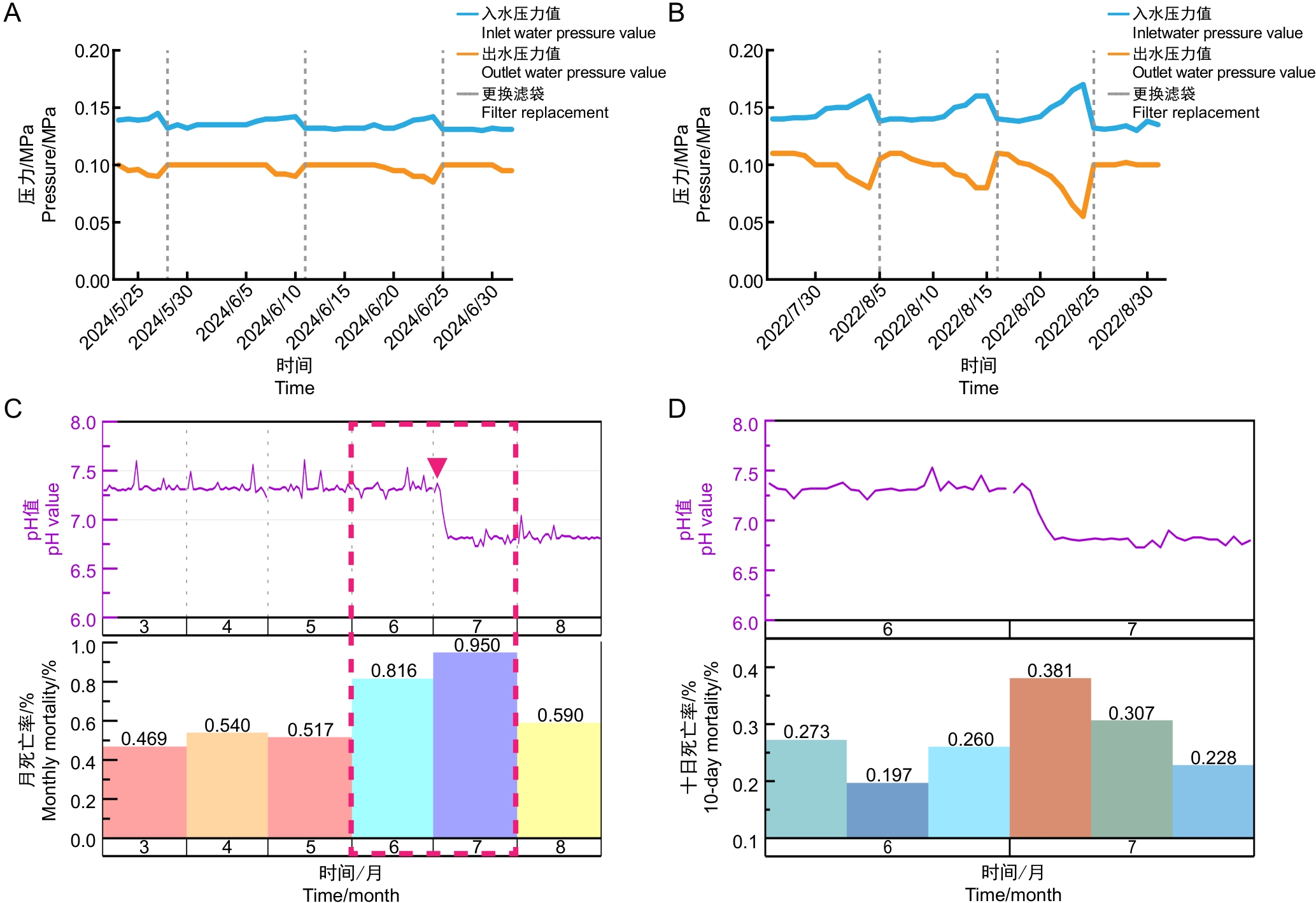
Figure 5 Water pressure monitoring curves of the zebrafish recirculating aquaculture system (A-B) and the relationship between zebrafish mortality and system water pH (C-D)
维度 Category | 评估问题描述 Assessment item | 平均分/分 Average score/score | 标准差 Standard deviation |
|---|---|---|---|
数据系统性和完整性维度 Data systematicity and integrity dimension | 数据录入完整性——系统的强制填写项保证了记录数据的完整性 | 4.79 | 0.42 |
| 数据录入规范性——系统的标准化选项保证了数据录入的规范性 | 4.89 | 0.31 | |
| 数据录入准确性——系统关键字段的“一键导入”功能避免了手动输入的错误,确保数据准确 | 4.86 | 0.36 | |
| 数据可追溯性——系统中每个品系和每缸鱼都建立了完整的“终身档案”,可随时查看全部历史记录 | 4.89 | 0.31 | |
效率维度 Efficiency dimension | 数据录入效率——系统关键字段“一键导入”和“一键操作”等功能减少了手动输入的时间,操作简易直观,极大地提高了效率 | 4.86 | 0.36 |
| 数据查询效率——所有功能模块深度互相关联,可任意点击快速导航至相关信息 | 4.86 | 0.36 | |
| 库存盘点和计划效率——所有鱼系、质粒、精子的库存和数量动态自动统计,进行全资源盘点可以减少人力投入,帮助我更容易地制定和跟踪品系的繁殖计划 | 4.71 | 0.53 | |
| 现场效率——可以在鱼房工作现场使用手持设备完成信息的查询和录入 | 4.68 | 0.61 | |
安全和稳定性维度 Safety and stability dimension | 实时预警——系统的预警功能(如需要传代、小鱼挪缸、定期交配鱼、清理、精子库存不足等)能及时、有效地提醒我避免出现潜在问题和失误,保障资源安全 | 4.46 | 0.69 |
| 预见性决策——系统自动统计循环系统的pH值参数,电导率,水压参数,温度等详情,可以实时观测变化曲线,支持我做出更好的日常管理决策,确保养殖系统稳定 | 4.89 | 0.31 | |
整体印象与接受度 Overall impression and acceptance | 整体效率——总体而言,该系统提高了使用者在斑马鱼鱼房工作的效率 | 4.89 | 0.31 |
| 整体信任——使用者信任该系统中所记录数据的准确性 | 4.75 | 0.44 | |
| 整体满意——总的来说,使用者对该系统的体验感到满意 | 4.86 | 0.36 | |
| 整体推荐——使用者会毫不犹豫地向其他斑马鱼研究人员推荐该系统 | 4.89 | 0.32 |
Table 3 User satisfaction survey scale for the automated management system of zebrafish facilities and zebrafish strains
维度 Category | 评估问题描述 Assessment item | 平均分/分 Average score/score | 标准差 Standard deviation |
|---|---|---|---|
数据系统性和完整性维度 Data systematicity and integrity dimension | 数据录入完整性——系统的强制填写项保证了记录数据的完整性 | 4.79 | 0.42 |
| 数据录入规范性——系统的标准化选项保证了数据录入的规范性 | 4.89 | 0.31 | |
| 数据录入准确性——系统关键字段的“一键导入”功能避免了手动输入的错误,确保数据准确 | 4.86 | 0.36 | |
| 数据可追溯性——系统中每个品系和每缸鱼都建立了完整的“终身档案”,可随时查看全部历史记录 | 4.89 | 0.31 | |
效率维度 Efficiency dimension | 数据录入效率——系统关键字段“一键导入”和“一键操作”等功能减少了手动输入的时间,操作简易直观,极大地提高了效率 | 4.86 | 0.36 |
| 数据查询效率——所有功能模块深度互相关联,可任意点击快速导航至相关信息 | 4.86 | 0.36 | |
| 库存盘点和计划效率——所有鱼系、质粒、精子的库存和数量动态自动统计,进行全资源盘点可以减少人力投入,帮助我更容易地制定和跟踪品系的繁殖计划 | 4.71 | 0.53 | |
| 现场效率——可以在鱼房工作现场使用手持设备完成信息的查询和录入 | 4.68 | 0.61 | |
安全和稳定性维度 Safety and stability dimension | 实时预警——系统的预警功能(如需要传代、小鱼挪缸、定期交配鱼、清理、精子库存不足等)能及时、有效地提醒我避免出现潜在问题和失误,保障资源安全 | 4.46 | 0.69 |
| 预见性决策——系统自动统计循环系统的pH值参数,电导率,水压参数,温度等详情,可以实时观测变化曲线,支持我做出更好的日常管理决策,确保养殖系统稳定 | 4.89 | 0.31 | |
整体印象与接受度 Overall impression and acceptance | 整体效率——总体而言,该系统提高了使用者在斑马鱼鱼房工作的效率 | 4.89 | 0.31 |
| 整体信任——使用者信任该系统中所记录数据的准确性 | 4.75 | 0.44 | |
| 整体满意——总的来说,使用者对该系统的体验感到满意 | 4.86 | 0.36 | |
| 整体推荐——使用者会毫不犹豫地向其他斑马鱼研究人员推荐该系统 | 4.89 | 0.32 |
| [1] | HOWE K, CLARK M D, TORROJA C F, et al. The zebrafish reference genome sequence and its relationship to the human genome[J]. Nature, 2013, 496(7446): 498-503. DOI: 10.1038/nature12111 . |
| [2] | ASTELL K R, SIEGER D. Zebrafish in vivo models of cancer and metastasis[J]. Cold Spring Harb Perspect Med, 2020, 10(8): a037077. DOI: 10.1101/cshperspect.a037077 . |
| [3] | BAUER B, MALLY A, LIEDTKE D. Zebrafish embryos and larvae as alternative animal models for toxicity testing[J]. Int J Mol Sci, 2021, 22(24): 13417. DOI: 10.3390/ijms222413417 . |
| [4] | BIAN C Y, MA D Y, LIU F. The future of zebrafish research: highlights from the 18th International Zebrafish Conference[J]. J Genet Genomics, 2025, 52(1): 1-3. DOI: 10.1016/j.jgg. 2024. 09.006 . |
| [5] | DE ABREU M S, GENARIO R, GIACOMINI A C V V, et al. Zebrafish as a model of neurodevelopmental disorders[J]. Neuroscience, 2020, 445: 3-11. DOI: 10.1016/j.neuroscience. 2019.08.034 . |
| [6] | KANUNGO J. Special issue "zebrafish: a model organism for human health and disease"[J]. Int J Mol Sci, 2025, 26(10): 4624. DOI: 10.3390/ijms26104624 . |
| [7] | SANTOS ROSA J G, LIMA C, LOPES-FERREIRA M. Zebrafish larvae behavior models as a tool for drug screenings and pre-clinical trials: a review[J]. Int J Mol Sci, 2022, 23(12): 6647. DOI: 10.3390/ijms23126647 . |
| [8] | SERTORI R, ZHANG Y, WIEST D L. Zebrafish: a tractable model for analysis of T cell development[J]. Methods Mol Biol, 2023, 2580: 355-377. DOI: 10.1007/978-1-0716-2740-2_22 . |
| [9] | 李玲璐, 刘涛, 柳力月, 等. 斑马鱼实验动物福利讨论[J]. 水生生物学报, 2026, 50(2): 211-222. DOI: 10.3724/1000-3207.2025.2025.0172 . |
| LI L L, LIU T, LIU L Y, et al. Discussion on the animal welfare in zebrafish[J]. Acta Hydrobiol Sin, 2026, 50(2): 211-222. DOI: 10.3724/1000-3207.2025.2025.0172 . | |
| [10] | AVDESH A, CHEN M Q, MARTIN-IVERSON M T, et al. Regular care and maintenance of a zebrafish (Danio rerio) laboratory: an introduction[J]. J Vis Exp, 2012(69): e4196. DOI: 10.3791/4196 . |
| [11] | ALESTRÖM P, D'ANGELO L, MIDTLYNG P J, et al. Zebrafish: housing and husbandry recommendations[J]. Lab Anim, 2020, 54(3): 213-224. DOI: 10.1177/0023677219869037 . |
| [12] | COLLYMORE C, CRIM M J, LIEGGI C. Recommendations for health monitoring and reporting for zebrafish research facilities[J]. Zebrafish, 2016, 13(): S138-S148. DOI: 10. 1089/zeb.2015.1210 . |
| [13] | LAWRENCE C. Advances in zebrafish husbandry and management[M]//The Zebrafish: Genetics, Genomics and Informatics. Amsterdam: Elsevier, 2011: 429-451. DOI: 10.1016/b978-0-12-374814-0.00023-9 . |
| [14] | LAWRENCE C, MASON T. Zebrafish housing systems: a review of basic operating principles and considerations for design and functionality[J]. ILAR J, 2012, 53(2): 179-191. DOI: 10.1093/ilar.53.2.179 . |
| [15] | PARKER M, HILLMAN C, FONTANA B, et al. Housing and husbandry factors affecting zebrafish (Danio rerio) novel tank test responses: a global multi-laboratory study[J]. Res Sq, 2024, 54(6): rs.3.rs-4849877. DOI: 10.21203/rs.3.rs-4849877/v1 . |
| [16] | 李阔宇, 潘鲁湲, 孙永华. 斑马鱼鱼房和养殖系统建设标准[J]. 中国比较医学杂志, 2020, 30(6): 121-127. DOI: 10.3969/j.issn.1671-7856.2020.06.018 . |
| LI K Y, PAN L Y, SUN Y H. Standards for constructing zebrafish houses and breeding systems[J]. Chin J Comp Med, 2020, 30(6): 121-127. DOI: 10.3969/j.issn.1671-7856.2020.06.018 . | |
| [17] | 金仕容, 华叶, 訾化星, 等. 一种显著提高实验用斑马鱼繁殖效率和使用寿命的优化养殖方案[J]. 实验动物与比较医学, 2023, 43(3): 297-306. DOI: 10.12300/j.issn.1674-5817.2023.004 . |
| JIN S R, HUA Y, ZI H X, et al. An optimized experimental zebrafish breeding scheme for significantly enhancing reproductive efficiency and service life[J]. Lab Anim Comp Med, 2023, 43(3): 297-306. DOI: 10.12300/j.issn.1674-5817.2023.004 . |
| [1] | WANG Chen, LI Xuebo, HE Donghua, CHANG Liangtang. Design and Application of an Information Management System for Experimental Marmosets [J]. Laboratory Animal and Comparative Medicine, 2026, 46(2): 231-241. |
| [2] | ZHAO Xin, WANG Chenxi, SHI Wenqing, LOU Yuefen. Advances in the Application of Zebrafish in the Research of Inflammatory Bowel Disease Mechanisms and Drug Development [J]. Laboratory Animal and Comparative Medicine, 2025, 45(4): 422-431. |
| [3] | Jinxing LIN, Xindong WANG, Xuebing BAI, Liping FENG, Shuwu XIE, Qiusheng CHEN. Fine Structure of the Trunk Kidney and Distribution of Its Secreted Exosomes in the Adult Zebrafish [J]. Laboratory Animal and Comparative Medicine, 2023, 43(5): 531-540. |
| [4] | Jinxian YANG, Shujuan WANG, Jinyun ZHAI, Shunxing ZHU. Downregulation of Micall2a Gene Expression Inhibited Vascular Development in Zebrafish [J]. Laboratory Animal and Comparative Medicine, 2023, 43(3): 282-287. |
| [5] | Zhigang TAN, Jinxin LIU, Chuya ZHENG, Wenfeng LIAO, Luping FENG, Hongli PENG, Xiu YAN, Zhenjian ZHUO. Advances and Applications in Animal Models of Neuroblastoma [J]. Laboratory Animal and Comparative Medicine, 2023, 43(3): 288-296. |
| [6] | Shirong JIN, Ye HUA, Huaxing ZI, Xufei DU, Jiwen BU. An Optimized Experimental Zebrafish Breeding Scheme for Significantly Enhancing Reproductive Efficiency and Service Life [J]. Laboratory Animal and Comparative Medicine, 2023, 43(3): 297-306. |
| [7] | Yong LI, Liang ZHOU, Yong HE, Zhifeng YAN, Haijiang WANG. Preliminary Exploration of Information Supervison System for Harmless Disposal of Laboratory Animal Carcasses and Related Wastes [J]. Laboratory Animal and Comparative Medicine, 2022, 42(2): 122-126. |
| [8] | JIANG Xia, QIAN Haojie, WEI Xun, ZHENG Yuxuan, ZHOU Zhengyu. Research Progress in Construction and Application of Diabetes Model in Zebrafish [J]. Laboratory Animal and Comparative Medicine, 2020, 40(6): 547-552. |
| [9] | DI Yanan, ZHU Liying, QIAN Wen, PAN Wei. Application of Zebrafish as A Model Animal in Research of Human Eye Diseases [J]. Laboratory Animal and Comparative Medicine, 2020, 40(5): 440-. |
| [10] | WANG Xue, LIU Kechun, YANG Xueliang, MA Yukui, ZHANG Yun. Impacts of Okadaic Acid on Neurological Function and Behavior of Zebrafish Larvae#br# [J]. Laboratory Animal and Comparative Medicine, 2020, 40(3): 190-. |
| [11] | Li Ying-niang, Dai Wei, Sheng Jian. Analysis of Goiter in Zebrafish [J]. Laboratory Animal and Comparative Medicine, 2019, 39(6): 462-466. |
| [12] | WANG Li-mei, ZHANG Jian, LIU Zhong-hua, YANG Wei. Research Progress on Zebrafish Model of Retinoblastoma and rb1 Gene [J]. Laboratory Animal and Comparative Medicine, 2019, 39(3): 244-248. |
| [13] | ZHOU Bin, SHENG Zhe-jin, FENG Chen-zhuo, LI Li-mei. A Melanoma Zebrafish Model for Real-time Imaging in vivo [J]. Laboratory Animal and Comparative Medicine, 2018, 38(1): 22-28. |
| [14] | TIAN Fang, WANG Yu-zhu, XIA Min-jie, SUN Bing, DING Xun-cheng, LI Wei-hua, XU Hui-hui, HU Jing-ying. Optimization on Methodology of Histopathological Examination in Adult Zebrafish Visceral Tissues [J]. Laboratory Animal and Comparative Medicine, 2017, 37(6): 465-469. |
| [15] | JIN Lu, LI Yan, LI Zhi-cao, WU Xi-jun, ZHOU Yan-hua, HE Zhi-xu, SHU Li-ping. Effects of Irx5a Gene Overexpression on Early Hematopoietic in Zebrafish Embryos [J]. Laboratory Animal and Comparative Medicine, 2017, 37(4): 309-314. |
| Viewed | ||||||
|
Full text |
|
|||||
|
Abstract |
|
|||||
