




Laboratory Animal and Comparative Medicine ›› 2026, Vol. 46 ›› Issue (1): 46-54.DOI: 10.12300/j.issn.1674-5817.2025.044
• Animal Models of Human Diseases • Previous Articles Next Articles
LIU Chang1,2, XIANG Xuesong1, HE Huihuang1, CHEN Xiaoqing1, QIU Wenhong1( )(
)( )
)
Received:2025-03-20
Revised:2025-09-10
Online:2026-02-25
Published:2026-02-14
Correspondence to:
QIU Wenhong
CLC Number:
LIU Chang,XIANG Xuesong,HE Huihuang,et al. Establishment and Evaluation of an Oxidative Stress Model of Atopic Dermatitis Induced by 2,4-dinitrofluorobenzene[J]. Laboratory Animal and Comparative Medicine, 2026, 46(1): 46-54. DOI: 10.12300/j.issn.1674-5817.2025.044.
Add to citation manager EndNote|Ris|BibTeX
URL: https://www.slarc.org.cn/dwyx/EN/10.12300/j.issn.1674-5817.2025.044
引物名称 Primer names | 引物序列 Sequences(5'→ 3') |
|---|---|
| RAGE-F | ACCGAGTCCGTGTCTACCGTAAG |
| RAGE-R | ATGAGGCCAGTGGAAGTCAGAGG |
| NLRP3-F | CGGTGGAGTGTCGGAGAAGAG |
| NLRP3-R | GATGCTGTCATTGTCCTGGTGTC |
| Caspase-1-F | GATGGCGATACACTCAGAGAACAC |
| Caspase-1-R | CAAGGAGGCAACTGGAGGAATG |
| IL-1β-F | CGAGGCACAAGGCACAACAG |
| IL-1β-R | ACAAAGAGGCAGAGAGACAGAGAG |
| GAPDH-F | AATTCCATGGCACCGTCAAG |
| GAPDH-R | AGCATCGCCCCACTTGATTT |
Table 1 Primer sequences for quantitative real-time PCR
引物名称 Primer names | 引物序列 Sequences(5'→ 3') |
|---|---|
| RAGE-F | ACCGAGTCCGTGTCTACCGTAAG |
| RAGE-R | ATGAGGCCAGTGGAAGTCAGAGG |
| NLRP3-F | CGGTGGAGTGTCGGAGAAGAG |
| NLRP3-R | GATGCTGTCATTGTCCTGGTGTC |
| Caspase-1-F | GATGGCGATACACTCAGAGAACAC |
| Caspase-1-R | CAAGGAGGCAACTGGAGGAATG |
| IL-1β-F | CGAGGCACAAGGCACAACAG |
| IL-1β-R | ACAAAGAGGCAGAGAGACAGAGAG |
| GAPDH-F | AATTCCATGGCACCGTCAAG |
| GAPDH-R | AGCATCGCCCCACTTGATTT |
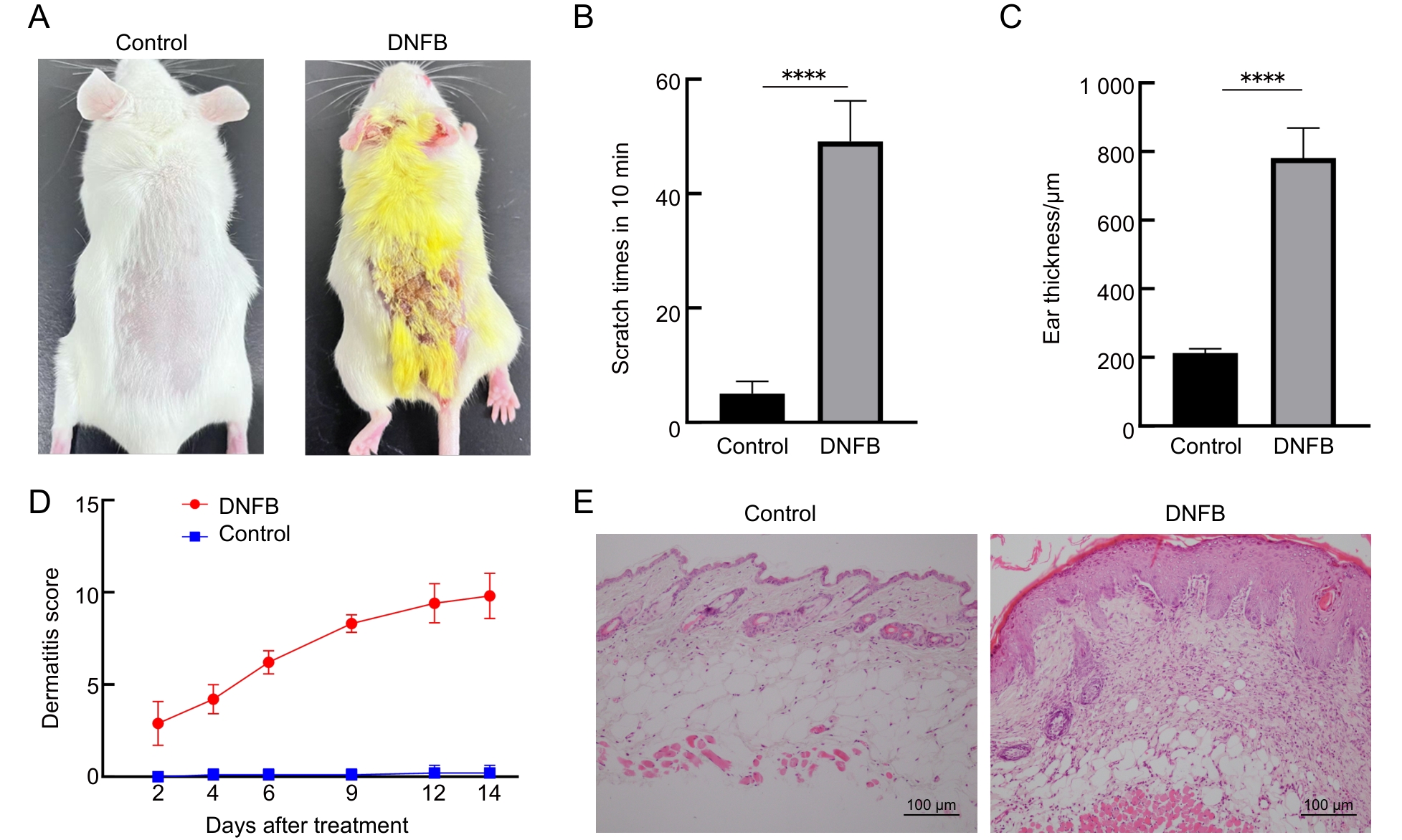
Figure 1 Assessment of skin inflammation and injury in a DNFB-induced mouse model of atopic dermatitis
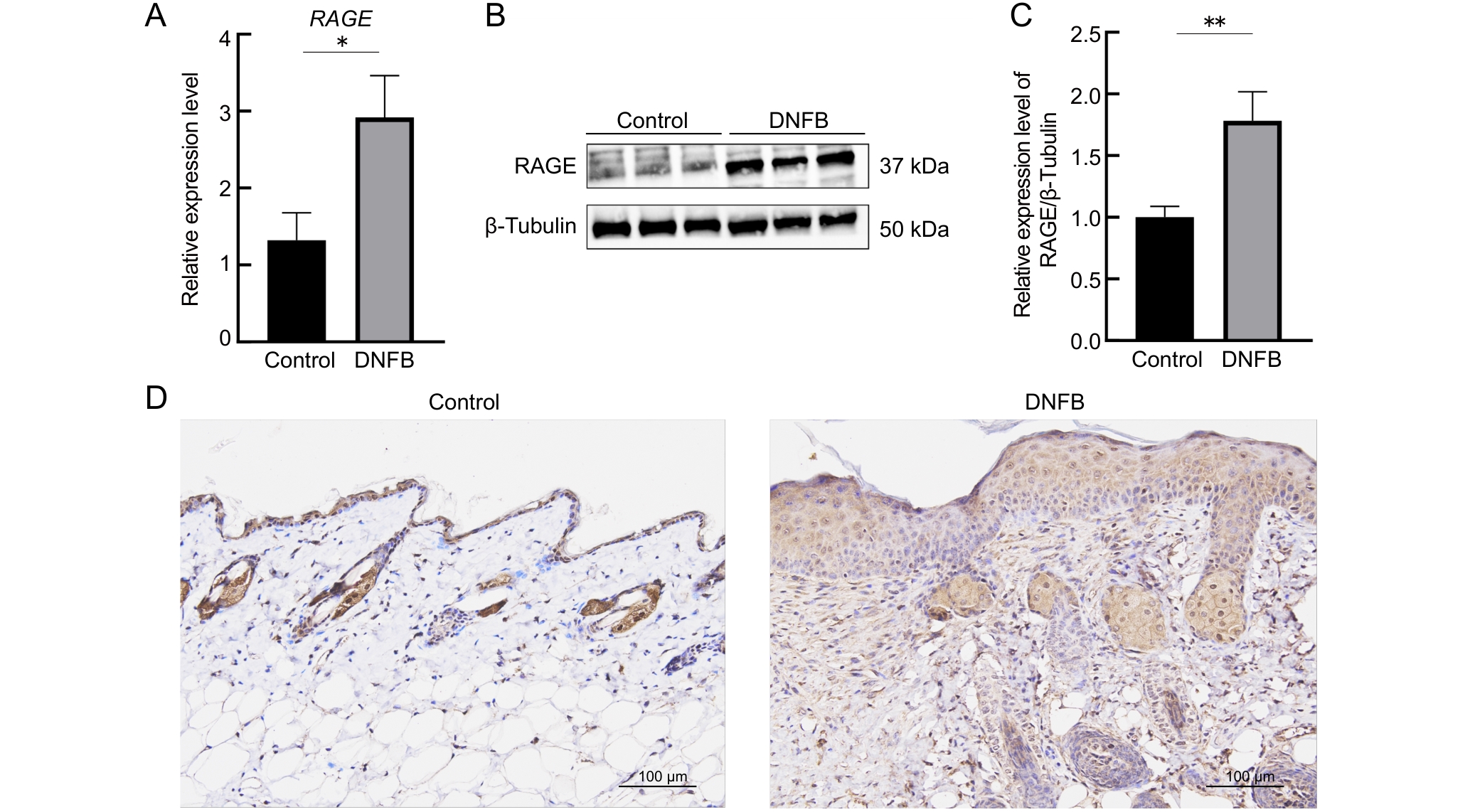
Figure 2 Changes in RAGE expression levels in skin tissues of mice in the DNFB-induced atopic dermatitis mouse model
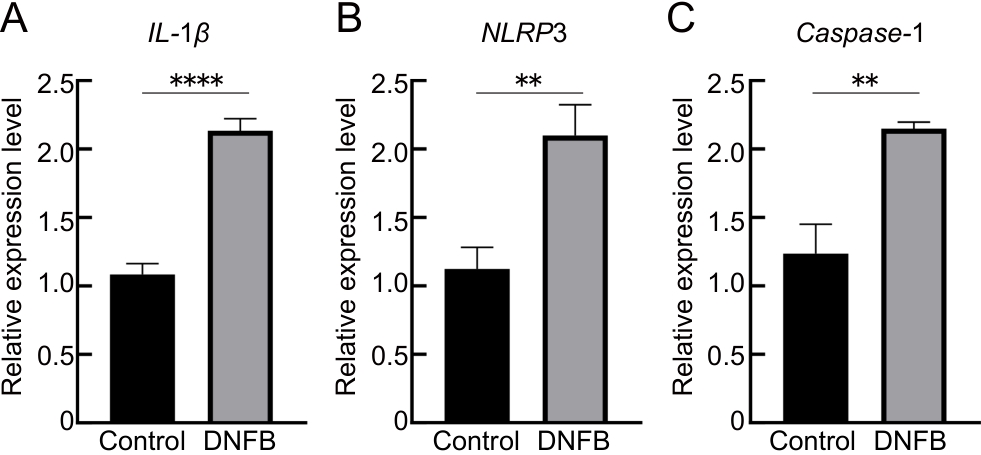
Figure 3 Changes in mRNA levels of IL-1β,NLRP3, and caspase-1 in skin tissues of atopic dermatitis mice induced by DNFB
| [1] | CHIRICOZZI A, MAURELLI M, CALABRESE L, et al. Overview of atopic dermatitis in different ethnic groups[J]. J Clin Med, 2023, 12(7):2701. DOI:10.3390/jcm12072701 . |
| [2] | BOOTHE W D, TARBOX J A, TARBOX M B. Atopic dermatitis: pathophysiology[M]//Management of Atopic Dermatitis: Methods and Challenges. Cham: Springer International Publishing, 2024: : 21-35. DOI:10.1007/978-3-031-54513-9_3 . |
| [3] | ITO T, NAKAMURA Y. The skin barrier and microbiome in infantile atopic dermatitis development: can skincare prevent onset?[J]. Int Immunol, 2024, 36(11):579-584. DOI:10.1093/intimm/dxae038 . |
| [4] | PUPPELS G J, HOURIHANE J O, NICO C, et al. Highly accurate, noninvasive early identification of infants with a filaggrin loss-of-function mutation by in vivo Raman spectroscopy, followed from birth to 12 months[J]. Ann Allergy Asthma Immunol, 2025, 134(4):457-464. DOI:10.1016/j.anai.2025.01.010 . |
| [5] | DEL DUCA E, HE H, LIU Y, et al. Intrapatient comparison of atopic dermatitis skin transcriptome shows differences between tape-strips and biopsies[J]. Allergy, 2024, 79(1):80-92. DOI:10.1111/all.15845 . |
| [6] | SAVVA M, PAPADOPOULOS N G, GREGORIOU S, et al. Recent advancements in the atopic dermatitis mechanism[J]. Front Biosci, 2024, 29(2):84. DOI:10.31083/j.fbl2902084 . |
| [7] | BANGERT C, ALKON N, CHENNAREDDY S, et al. Dupilumab-associated head and neck dermatitis shows a pronounced type 22 immune signature mediated by oligoclonally expanded T cells[J]. Nat Commun, 2024, 15(1):2839. DOI:10.1038/s41467-024-46540-0 . |
| [8] | WANG Z H, ZHANG H R, QI C H, et al. Ursolic acid ameliorates DNCB-induced atopic dermatitis-like symptoms in mice by regulating TLR4/NF-κB and Nrf2/HO-1 signaling pathways[J]. Int Immunopharmacol, 2023, 118:110079. DOI:10.1016/j.intimp.2023.110079 . |
| [9] | CHANG Q X, LYU J L, WU P Y, et al. Coffea arabica extract attenuates atopic dermatitis-like skin lesions by regulating NLRP3 inflammasome expression and skin barrier functions[J]. Int J Mol Sci, 2023, 24(15):12367. DOI:10.3390/ijms241512367 . |
| [10] | NIEHUES T, VON HARDENBERG S, VELLEUER E. Rapid identification of primary atopic disorders (PAD) by a clinical landmark-guided, upfront use of genomic sequencing[J]. Allergol Select, 2024, 8:304-323. DOI:10.5414/ALX02520E . |
| [11] | CHOI H, KIM S, KIM H J, et al. Sphingosylphosphorylcholine down-regulates filaggrin gene transcription through NOX5-based NADPH oxidase and cyclooxygenase-2 in human keratinocytes[J]. Biochem Pharmacol, 2010, 80(1):95-103. DOI:10.1016/j.bcp.2010.03.009 . |
| [12] | GAO J F, TANG L, LUO F, et al. Myricetin treatment has ameliorative effects in DNFB-induced atopic dermatitis mice under high-fat conditions[J]. Toxicol Sci, 2023, 191(2):308-320. DOI:10.1093/toxsci/kfac138 . |
| [13] | WANG Y, ZHANG Y, PENG G, et al. Glycyrrhizin ameliorates atopic dermatitis-like symptoms through inhibition of HMGB1[J]. Int Immunopharmacol, 2018, 60:9-17. DOI:10.1016/j.intimp.2018.04.029 . |
| [14] | ZHAO W, YU H H, MENG W W, et al. Icariin restrains NLRP3 inflammasome-mediated Th2 immune responses and ameliorates atopic dermatitis through modulating a novel lncRNA MALAT1/miR-124-3p axis[J]. Pharm Biol, 2023, 61(1):1249-1259. DOI:10.1080/13880209.2023.2244004 . |
| [15] | MU Z L, ZHAO Y, LIU X J, et al. Molecular biology of atopic dermatitis[J]. Clin Rev Allergy Immunol, 2014, 47(2):193-218. DOI:10.1007/s12016-014-8415-1 . |
| [16] | YIN T Y, FENG S, ZHU H, et al. Therapeutic potential of plasma-treated solutions in atopic dermatitis[J]. Free Radic Biol Med, 2024, 225:482-493. DOI:10.1016/j.freeradbiomed. 2024.10.290 . |
| [17] | MAJEWSKA-SZCZEPANIK M, ASKENASE P W, LOBO F M, et al. Epicutaneous immunization with ovalbumin and CpG induces TH1/TH17 cytokines, which regulate IgE and IgG2a production[J]. J Allergy Clin Immunol, 2016, 138(1):262-273.e6. DOI:10.1016/j.jaci.2015.11.018 . |
| [18] | XUE M L, LIN H Y, ZHAO R L, et al. Activated protein C protects against murine contact dermatitis by suppressing protease-activated receptor 2[J]. Int J Mol Sci, 2022, 23(1):516. DOI:10.3390/ijms23010516 . |
| [19] | ZHANG S, FANG X K, XU B L, et al. Comprehensive analysis of phenotypes and transcriptome characteristics reveal the best atopic dermatitis mouse model induced by MC903[J]. J Dermatol Sci, 2024, 114(3):104-114. DOI:10.1016/j.jdermsci. 2024.05.003 . |
| [20] | PÉNZES Z, HORVÁTH D, MOLNÁR P, et al. Anandamide modulation of monocyte-derived Langerhans cells: implications for immune homeostasis and skin inflammation[J]. Front Immunol, 2024, 15:1423776. DOI:10.3389/fimmu. 2024.1423776 . |
| [21] | KARACA O, AKARAS N, ŞIMŞEK H, et al. Therapeutic potential of rosmarinic acid in tramadol-induced hepatorenal toxicity: Modulation of oxidative stress, inflammation, RAGE/NLRP3, ER stress, apoptosis, and tissue functions parameters[J]. Food Chem Toxicol, 2025, 197:115275. DOI:10.1016/j.fct.2025.115275 . |
| [22] | SYED D N, ALJOHANI A, WASEEM D, et al. Ousting RAGE in melanoma: a viable therapeutic target?[J]. Semin Cancer Biol, 2018, 49:20-28. DOI:10.1016/j.semcancer.2017.10.008 . |
| [23] | DE OLIVEIRA I M, CHAVES M M. The NLRP3 Inflammasome in inflammatory diseases: Cellular dynamics and role in granuloma formation[J]. Cell Immunol, 2025, 411-412:104961. DOI:10.1016/j.cellimm.2025.104961 . |
| [24] | DE SIMONI E, CANDELORA M, BELLEGGIA S, et al. Role of antioxidants supplementation in the treatment of atopic dermatitis: a critical narrative review[J]. Front Nutr, 2024, 11:1393673. DOI:10.3389/fnut.2024.1393673 . |
| [25] | ZOU C C, LIU L, HUANG C Q, et al. Baiying qingmai formulation ameliorates thromboangiitis obliterans by inhibiting HMGB1/RAGE/NF-κB signaling pathways[J]. Front Pharmacol, 2022, 13:1018438. DOI:10.3389/fphar.2022.1018438 . |
| [26] | YU W Z, TAO M R, ZHAO Y L, et al. 4'-methoxyresveratrol alleviated AGE-induced inflammation via RAGE-mediated NF-κB and NLRP3 inflammasome pathway[J]. Molecules, 2018, 23(6):1447. DOI:10.3390/molecules23061447 . |
| [1] | LI Longxue, WAN Chongfan, ZHANG Qi, LEI Ruting, WANG Xiaoyue, CHENG Leyan, LAI Qi, LIU Ronghua, LIU Xuan, XU Tielong. Molecular Mechanisms of Qingfei Paidu Decoction in the Prevention and Treatment of Acute Lung Injury in Mice Based on miRNA Sequencing [J]. Laboratory Animal and Comparative Medicine, 2026, 46(3): 311-320. |
| [2] | LI Jiafei, ZHANG Zhenhao, WANG Shuo, TIAN Ge, WEN Shuang, YAN Yuxue, CUI Ran, YE Zhen, CUI Yongchun. Effects of Autonomic Neuromodulators on Atrial Electrical Remodeling and Histopathological Changes in a Rat Model of Atrial Fibrillation [J]. Laboratory Animal and Comparative Medicine, 2026, 46(3): 321-331. |
| [3] | Jianhua ZHENG, Yunzhi FA, Qiaoyan DONG, Yefeng QIU, Jingqing CHEN. Construction and Evaluation of a Mouse Model with Intestinal Injury by Acute Hypoxic Stress in Plateau [J]. Laboratory Animal and Comparative Medicine, 2024, 44(1): 31-41. |
| [4] | Han LI, Xiaorui ZHANG, Chengfang ZHANG. Mechanism of Intermittent Fasting in Improving Olanzapine-induced Metabolic Disorders in Mice [J]. Laboratory Animal and Comparative Medicine, 2023, 43(1): 3-10. |
| [5] | Huiyan QIN, Huafeng CHEN, Hui YANG, Hailan LUO, Weizhong FU, Qingbo LI, Jiehong ZHANG. The Capacity of Silkworm Cocoon Water to Mitigate the Level of Oxidative Stress in Aged Rats [J]. Laboratory Animal and Comparative Medicine, 2022, 42(5): 393-400. |
| [6] | LI Hongbo, HUANG Rui, DAI Jiang, ZHONG Zhendong. Mechanism of Protective Effect of Raddeanin A on Hepatic Ischemia-reperfusion in Rats [J]. Laboratory Animal and Comparative Medicine, 2021, 41(1): 55-60. |
| [7] | SHUI Yunhua, ZHANG Lan, LEI Guanglei, ZHU Yuanjiang, LI Peiyu. Effects of Ozonated Autohemotherapy on Melatonin and Oxidative Stress in Rats with Sleep Deprivation [J]. Laboratory Animal and Comparative Medicine, 2020, 40(2): 110-115. |
| [8] | JIA Huan-huan, ZENG Ye-wen, LUO Ting, GONG Bao-yong, MAI Dong-mei, PAN Ying-chun, ZHAO Wei-bo. Effects of Different Concentrations of Chromium-containing Bedding Materials on Toxity of Blood and Organs in BALB/c Nude Mice and KM Mice [J]. Laboratory Animal and Comparative Medicine, 2019, 39(6): 454-461. |
| [9] | JI Lian, MA Tie, DI Zheng-hong, Liu Dong-yan. Establishment of Atopic Dermatitis Mouse Model [J]. Laboratory Animal and Comparative Medicine, 2018, 38(4): 267-271. |
| [10] | WANG Hong, WEI Jie, LI Xiao-bo, GONG Wei, YUE Bing-fei. Application of Biochemical Markers on Analysis of Population Genetic Structure in KM mice [J]. Laboratory Animal and Comparative Medicine, 2017, 37(2): 144-149. |
| [11] | LIU Xue-xu, YANG Wen, DING Yun-ping. Mouse Model for Fetal Growth Restriction in Pregnant Metaphase by Limited Feeding [J]. Laboratory Animal and Comparative Medicine, 2015, 35(6): 453-457. |
| [12] | ZENG Xian-cheng, MA Jing, CHANG Yan, LIU Quan-hai. Progress on Monitoring Methods of Oxidative Stress after Stress in Laboratory Animals [J]. Laboratory Animal and Comparative Medicine, 2012, 32(6): 549-552. |
| [13] | XU Xiao-ping, PAN Yong-ming, CHEN Liang, XU Jian-qin, WANG De-jun, ZHU Ke-yan, YANG Yu-wei, CHEN Min-li. Observation on Oxidative Stress in Chronic Myocardial Ischemia in Mini-pig [J]. Laboratory Animal and Comparative Medicine, 2012, 32(5): 401-406. |
| [14] | LU Xiao-cong1,LIN Qiao2, WANG Yu-E2,WANG You-Wei1. Changes of Immune Function in Closed Colony of KM Mice after Biocleaning [J]. Laboratory Animal and Comparative Medicine, 2004, 24(1): 23-25. |
| [15] | SHI Mei-lian1,ZHU Dong-qin2, GU Jian-zhong2, LIU Li-jun1,BAO Shi-min1 MAO Jia-xian2, SHI En1, ZHANG Rui-zhong2, CHEN Guo-qiang2 MAO Jia-xian2, ZHAO Guo-ji1, FU Jie2,XIE En2, XU Ping1. Measurement for Organ Weight of KM Mice from 6 Colonies in China [J]. Laboratory Animal and Comparative Medicine, 2001, 21(3): 143-146. |
| Viewed | ||||||
|
Full text |
|
|||||
|
Abstract |
|
|||||
