
Laboratory Animal and Comparative Medicine ›› 2026, Vol. 46 ›› Issue (3): 311-320.DOI: 10.12300/j.issn.1674-5817.2025.203
• Animal Models of Human Diseases • Next Articles
LI Longxue1( ), WAN Chongfan2, ZHANG Qi2, LEI Ruting2, WANG Xiaoyue3, CHENG Leyan2, LAI Qi2, LIU Ronghua4()(
 ), LIU Xuan1()(), XU Tielong5()()
Received:2025-12-10
Revised:2026-04-12
Online:2026-06-25
Published:2026-06-19
Contact:
LIU Ronghua, LIU Xuan, XU Tielong
CLC Number:
LI Longxue,LI Longxue,WAN Chongfan,et al. Molecular Mechanisms of Qingfei Paidu Decoction in the Prevention and Treatment of Acute Lung Injury in Mice Based on miRNA Sequencing[J]. Laboratory Animal and Comparative Medicine, 2026, 46(3): 311-320. DOI: 10.12300/j.issn.1674-5817.2025.203.
Add to citation manager EndNote|Ris|BibTeX
URL: https://www.slarc.org.cn/dwyx/EN/10.12300/j.issn.1674-5817.2025.203
组别 Group | 初始体重/g Initial body weight/g | 终末体重/g Final body weight/g | 肺系数/% Lung coefficient/% | TNF-α ρ/(pg·mL-¹) | IL-1β ρ/(pg·mL-¹) | IL-6 ρ/(pg·mL-¹) |
|---|---|---|---|---|---|---|
对照组 Control group | 23.3±1.0 | 28.9±1.5 | 0.57±0.03 | 118.3±8.9 | 19.8±4.4 | 18.2±3.6 |
模型组 Model group | 23.3±1.4 | 28.1±1.9 | 0.75±0.07∗∗ | 148.6±13.4∗∗ | 24.6±3.3 | 29.5±7.7∗∗ |
QFPDD 组 QFPDD group | 23.4±0.8 | 28.4±1.9 | 0.73±0.07 | 131.3±16.9# | 22.2±6.4 | 21.8±5.0# |
Table 1 Comparisons of body weight, lung coefficient, and serum inflammatory factors in different groups of mice
组别 Group | 初始体重/g Initial body weight/g | 终末体重/g Final body weight/g | 肺系数/% Lung coefficient/% | TNF-α ρ/(pg·mL-¹) | IL-1β ρ/(pg·mL-¹) | IL-6 ρ/(pg·mL-¹) |
|---|---|---|---|---|---|---|
对照组 Control group | 23.3±1.0 | 28.9±1.5 | 0.57±0.03 | 118.3±8.9 | 19.8±4.4 | 18.2±3.6 |
模型组 Model group | 23.3±1.4 | 28.1±1.9 | 0.75±0.07∗∗ | 148.6±13.4∗∗ | 24.6±3.3 | 29.5±7.7∗∗ |
QFPDD 组 QFPDD group | 23.4±0.8 | 28.4±1.9 | 0.73±0.07 | 131.3±16.9# | 22.2±6.4 | 21.8±5.0# |
组别 Group | 初始体重/g Initial body weight/g | 终末体重/g Final body weight/g | 肺系数/% Lung coefficient/% | TNF-α ρ/(pg·mL-¹) | IL-1β ρ/(pg·mL-¹) | IL-6 ρ/(pg·mL-¹) |
|---|---|---|---|---|---|---|
对照组 Control group | 23.3±1.0 | 28.9±1.5 | 0.57±0.03 | 118.3±8.9 | 19.8±4.4 | 18.2±3.6 |
模型组 Model group | 23.3±1.4 | 28.1±1.9 | 0.75±0.07∗∗ | 148.6±13.4∗∗ | 24.6±3.3 | 29.5±7.7∗∗ |
QFPDD 组 QFPDD group | 23.4±0.8 | 28.4±1.9 | 0.73±0.07 | 131.3±16.9# | 22.2±6.4 | 21.8±5.0# |
Table 1 Comparisons of body weight, lung coefficient, and serum inflammatory factors in different groups of mice
组别 Group | 初始体重/g Initial body weight/g | 终末体重/g Final body weight/g | 肺系数/% Lung coefficient/% | TNF-α ρ/(pg·mL-¹) | IL-1β ρ/(pg·mL-¹) | IL-6 ρ/(pg·mL-¹) |
|---|---|---|---|---|---|---|
对照组 Control group | 23.3±1.0 | 28.9±1.5 | 0.57±0.03 | 118.3±8.9 | 19.8±4.4 | 18.2±3.6 |
模型组 Model group | 23.3±1.4 | 28.1±1.9 | 0.75±0.07∗∗ | 148.6±13.4∗∗ | 24.6±3.3 | 29.5±7.7∗∗ |
QFPDD 组 QFPDD group | 23.4±0.8 | 28.4±1.9 | 0.73±0.07 | 131.3±16.9# | 22.2±6.4 | 21.8±5.0# |
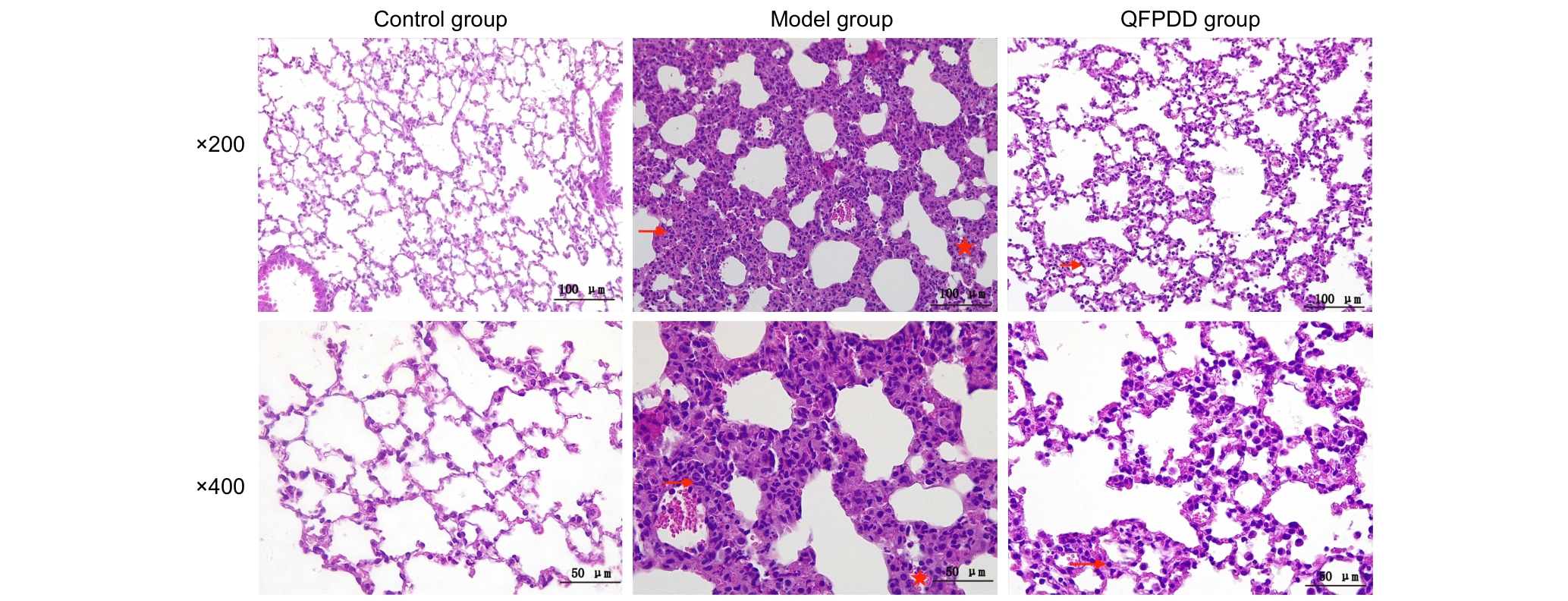
Figure 1 HE staining of lung tissues from mice in different groups
Figure 1 HE staining of lung tissues from mice in different groups
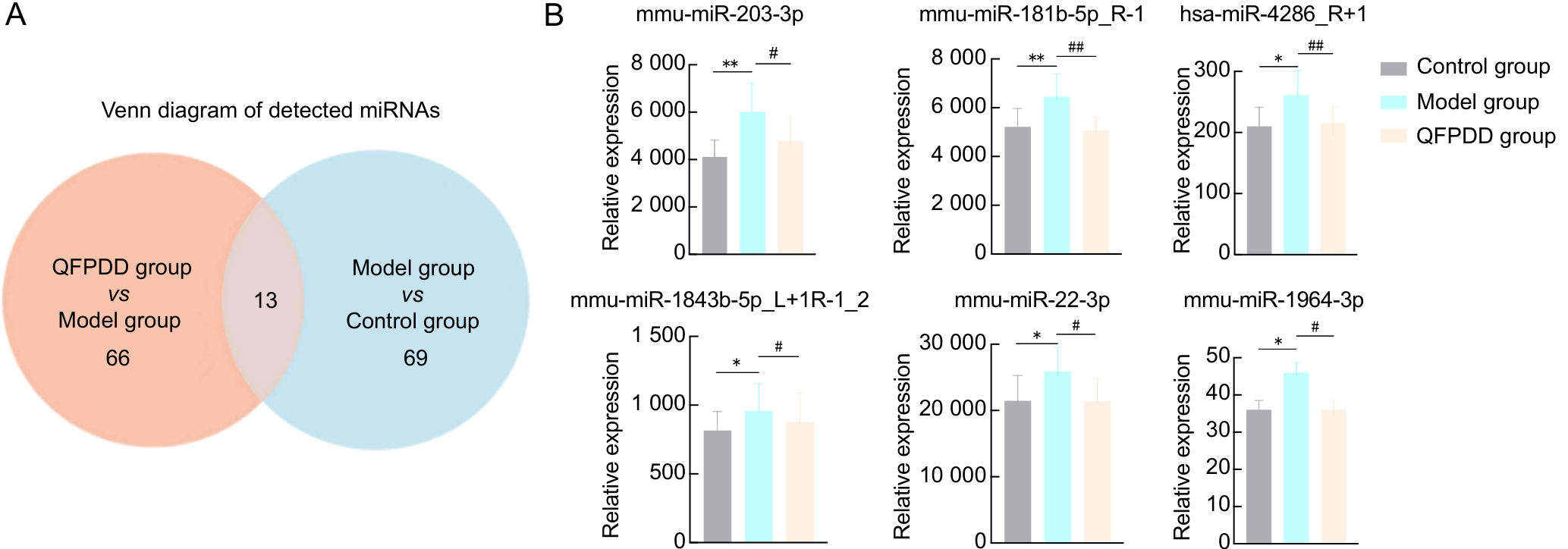
Figure 2 Differentially expressed miRNAs in lung tissues of mice among groups detected by miRNA sequencing
Figure 2 Differentially expressed miRNAs in lung tissues of mice among groups detected by miRNA sequencing
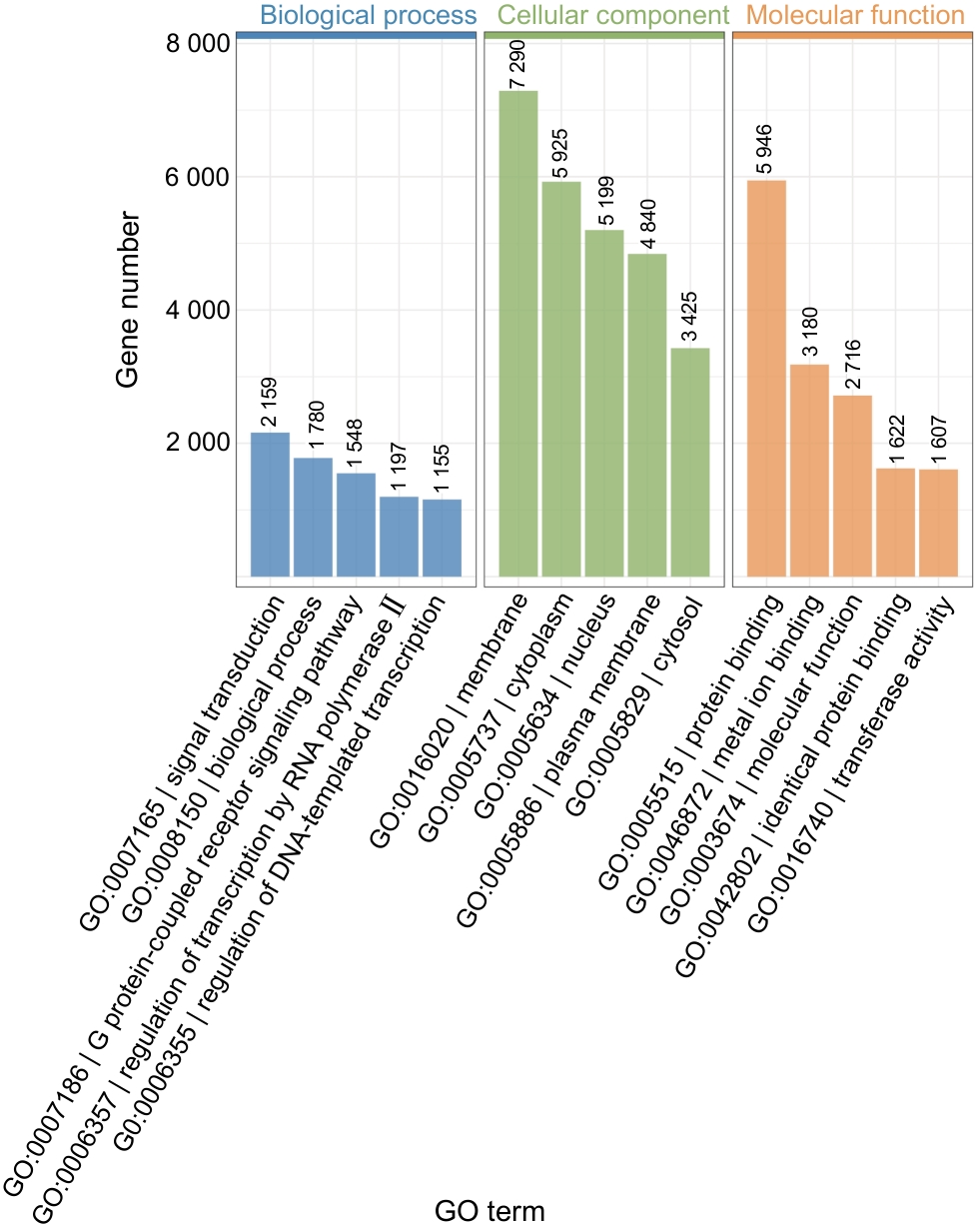
Figure 3 GO enrichment analysis of target genes of differentially expressed miRNAs
Figure 3 GO enrichment analysis of target genes of differentially expressed miRNAs
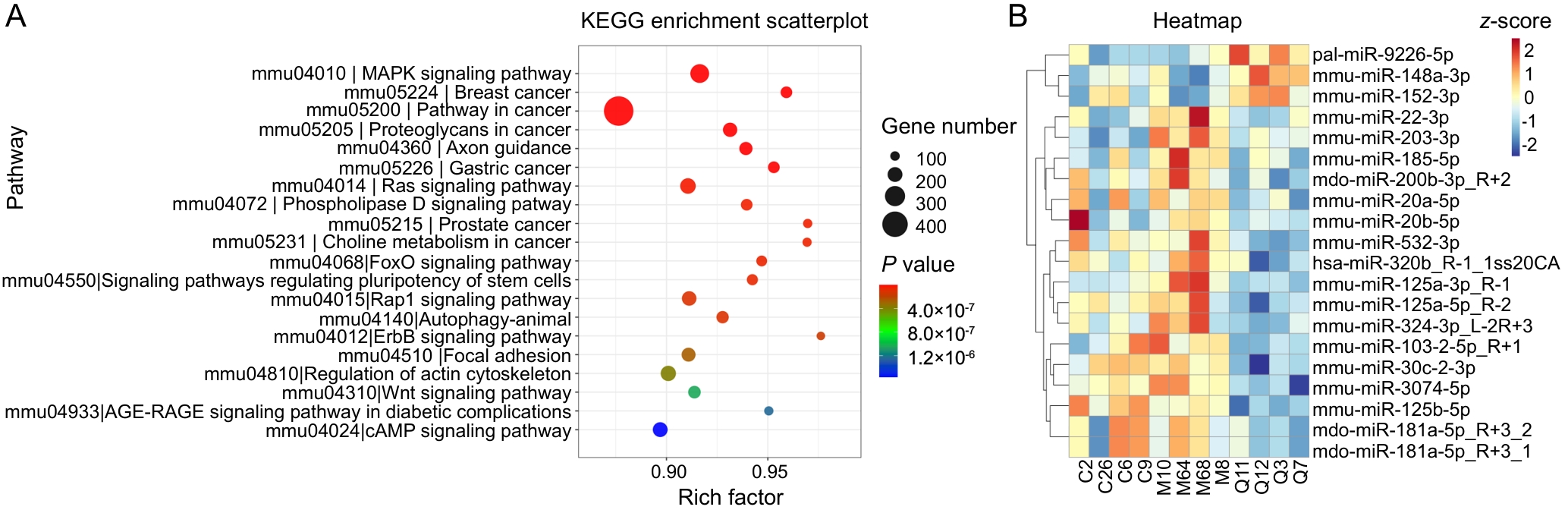
Figure 4 KEGG enrichment analysis of target genes for differentially expressed miRNAs
Figure 4 KEGG enrichment analysis of target genes for differentially expressed miRNAs
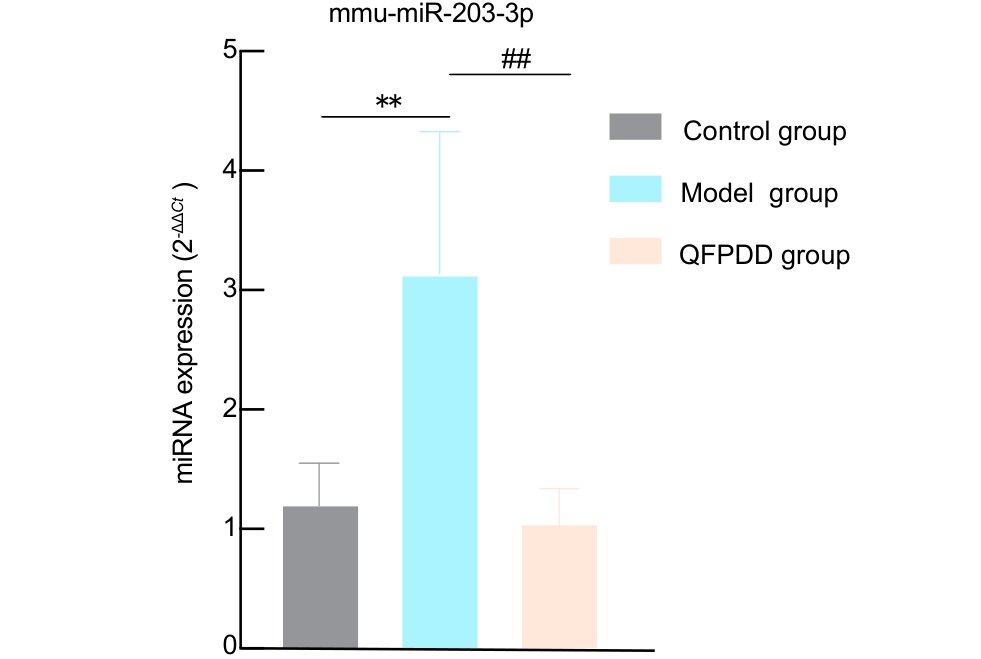
Figure 5 Validation of differential expression of mmu-miR-203-3p by quantitative real-time PCR
Figure 5 Validation of differential expression of mmu-miR-203-3p by quantitative real-time PCR
| [1] | LIU H Q, DONG J L, XU C L, et al. Acute lung injury: pathogenesis and treatment[J]. J Transl Med, 2025, 23(1): 926. DOI: 10.1186/s12967-025-06994-2 . |
| LIU H Q, DONG J L, XU C L, et al. Acute lung injury: pathogenesis and treatment[J]. J Transl Med, 2025, 23(1): 926. DOI: 10.1186/s12967-025-06994-2 . | |
| [2] | VERMA N, HOCHHEGGER B, MUKHOPADHYAY S, et al. Acute lung injury[J]. J Thorac Imag, 2025, 40(3): e0820. DOI: 10.1097/rti.0000000000000820 . |
| VERMA N, HOCHHEGGER B, MUKHOPADHYAY S, et al. Acute lung injury[J]. J Thorac Imag, 2025, 40(3): e0820. DOI: 10.1097/rti.0000000000000820 . | |
| [3] | 国家卫生健康委, 国家中医药局. 新型冠状病毒感染诊疗方案(试行第十版)[J]. 传染病信息, 2023, 36(1): 18-25. DOI: 10.3760/j.issn.1673-4777.2023.02.001 . |
| 国家卫生健康委, 国家中医药局. 新型冠状病毒感染诊疗方案(试行第十版)[J]. 传染病信息, 2023, 36(1): 18-25. DOI: 10.3760/j.issn.1673-4777.2023.02.001 . | |
| National Health Commission of the PRC, National Administration of Traditional Chinese Medicine. Guideline on diagnosis and treatment of novel coronavirus pneumonia(interim 10th edition)[J]. Infect Dis Inf, 2023, 36(1): 18-25. DOI: 10.3760/j.issn.1673-4777.2023.02.001 . | |
| National Health Commission of the PRC, National Administration of Traditional Chinese Medicine. Guideline on diagnosis and treatment of novel coronavirus pneumonia(interim 10th edition)[J]. Infect Dis Inf, 2023, 36(1): 18-25. DOI: 10.3760/j.issn.1673-4777.2023.02.001 . | |
| [4] | LU J N, TANG Y, LI H T, et al. Exploring anti-SARS-CoV-2 natural products: dual-viral target inhibition by delphinidin and the anti-coronaviral efficacy of deapio platycodin D[J]. Nat Prod Bioprospect, 2025, 15(1): 39. DOI: 10.1007/s13659-025-00523-w . |
| LU J N, TANG Y, LI H T, et al. Exploring anti-SARS-CoV-2 natural products: dual-viral target inhibition by delphinidin and the anti-coronaviral efficacy of deapio platycodin D[J]. Nat Prod Bioprospect, 2025, 15(1): 39. DOI: 10.1007/s13659-025-00523-w . | |
| [5] | REN W, MA Y, WANG R Q, et al. Research advance on Qingfei Paidu decoction in prescription principle, mechanism analysis and clinical application[J]. Front Pharmacol, 2021, 11: 589714. DOI: 10.3389/fphar.2020.589714 . |
| REN W, MA Y, WANG R Q, et al. Research advance on Qingfei Paidu decoction in prescription principle, mechanism analysis and clinical application[J]. Front Pharmacol, 2021, 11: 589714. DOI: 10.3389/fphar.2020.589714 . | |
| [6] | YE X L, TIAN S S, TANG C C, et al. Cytokine storm in acute viral respiratory injury: role of Qing-Fei-Pai-Du decoction in inhibiting the infiltration of neutrophils and macrophages through TAK1/IKK/NF-κB pathway[J]. Am J Chin Med, 2023, 51(5): 1153-1188. DOI: 10.1142/s0192415x23500532 . |
| YE X L, TIAN S S, TANG C C, et al. Cytokine storm in acute viral respiratory injury: role of Qing-Fei-Pai-Du decoction in inhibiting the infiltration of neutrophils and macrophages through TAK1/IKK/NF-κB pathway[J]. Am J Chin Med, 2023, 51(5): 1153-1188. DOI: 10.1142/s0192415x23500532 . | |
| [7] | 张平, 潘广涛. 清肺排毒汤改善新型冠状病毒肺炎危重型患者炎性细胞因子的临床研究[J]. 世界科学技术-中医药现代化, 2021, 23(2): 391-395. DOI: 10.11842/wst.20200416003 . |
| 张平, 潘广涛. 清肺排毒汤改善新型冠状病毒肺炎危重型患者炎性细胞因子的临床研究[J]. 世界科学技术-中医药现代化, 2021, 23(2): 391-395. DOI: 10.11842/wst.20200416003 . | |
| ZHANG P, PAN G T. Clinical study on the improvement of inflammatory cytokines in critically ill patients with COVID-19 treated by Qingfei Paidu decoction[J]. Mod Tradit Chin Med Mater Med World Sci Technol, 2021, 23(2): 391-395. DOI: 10.11842/wst.20200416003 . | |
| ZHANG P, PAN G T. Clinical study on the improvement of inflammatory cytokines in critically ill patients with COVID-19 treated by Qingfei Paidu decoction[J]. Mod Tradit Chin Med Mater Med World Sci Technol, 2021, 23(2): 391-395. DOI: 10.11842/wst.20200416003 . | |
| [8] | ZHANG X, YU Y, NING Y, et al. Advances in microRNA promoting gene expression[J]. Hereditas, 2025, 47(7): 729-741. DOI: 10.16288/j.yczz.24-374 . |
| ZHANG X, YU Y, NING Y, et al. Advances in microRNA promoting gene expression[J]. Hereditas, 2025, 47(7): 729-741. DOI: 10.16288/j.yczz.24-374 . | |
| [9] | OLIVETO S, MANFRINI N, BIFFO S. The power of microRNA regulation: insights into immunity and metabolism[J]. FEBS Lett, 2025, 599(13): 1821-1851. DOI: 10.1002/1873-3468.70039 . |
| OLIVETO S, MANFRINI N, BIFFO S. The power of microRNA regulation: insights into immunity and metabolism[J]. FEBS Lett, 2025, 599(13): 1821-1851. DOI: 10.1002/1873-3468.70039 . | |
| [10] | MCGEARY S E, LIN K S, SHI C Y, et al. The biochemical basis of microRNA targeting efficacy[J]. Science, 2019, 366(6472): eaav1741. DOI: 10.1126/science.aav1741 . |
| MCGEARY S E, LIN K S, SHI C Y, et al. The biochemical basis of microRNA targeting efficacy[J]. Science, 2019, 366(6472): eaav1741. DOI: 10.1126/science.aav1741 . | |
| [11] | BARTEL D P. microRNA genomics, biogenesis, mechanism, and function[J]. Cell, 2004, 116(2): 281-297. DOI: 10.1016/S0092-8674(04)00045-5 . |
| BARTEL D P. microRNA genomics, biogenesis, mechanism, and function[J]. Cell, 2004, 116(2): 281-297. DOI: 10.1016/S0092-8674(04)00045-5 . | |
| [12] | ARTIMOVIČ P, ŠPAKOVÁ I, MACEJKOVÁ E, et al. The ability of microRNAs to regulate the immune response in ischemia/reperfusion inflammatory pathways[J]. Genes Immun, 2024, 25(4): 277-296. DOI: 10.1038/s41435-024-00283-6 . |
| ARTIMOVIČ P, ŠPAKOVÁ I, MACEJKOVÁ E, et al. The ability of microRNAs to regulate the immune response in ischemia/reperfusion inflammatory pathways[J]. Genes Immun, 2024, 25(4): 277-296. DOI: 10.1038/s41435-024-00283-6 . | |
| [13] | LI Y, PENG B, LI Y, et al. MiR-203a-3p/153-3p improves cognitive impairments induced by ischemia/reperfusion via blockade of SRC-mediated MAPK signaling pathway in ischemic stroke[J]. Chem Biol Interact, 2022, 358:109900. DOI: 10.1016/j.cbi.2022.109900 . |
| LI Y, PENG B, LI Y, et al. MiR-203a-3p/153-3p improves cognitive impairments induced by ischemia/reperfusion via blockade of SRC-mediated MAPK signaling pathway in ischemic stroke[J]. Chem Biol Interact, 2022, 358:109900. DOI: 10.1016/j.cbi.2022.109900 . | |
| [14] | DENG A X, ZHAO L, RUZE A, et al. Application of ultrasound in assessment of acute lung injury in mice[J]. PLoS One, 2025, 20(10): e0332912. DOI: 10.1371/journal.pone.0332912 . |
| DENG A X, ZHAO L, RUZE A, et al. Application of ultrasound in assessment of acute lung injury in mice[J]. PLoS One, 2025, 20(10): e0332912. DOI: 10.1371/journal.pone.0332912 . | |
| [15] | ZHANG M Q, SHANG L R, ZHOU F Y, et al. Dachengqi decoction dispensing granule ameliorates LPS-induced acute lung injury by inhibiting PANoptosis in vivo and in vitro [J]. J Ethnopharmacol, 2025, 336: 118699. DOI: 10.1016/j.jep.2024.118699 . |
| ZHANG M Q, SHANG L R, ZHOU F Y, et al. Dachengqi decoction dispensing granule ameliorates LPS-induced acute lung injury by inhibiting PANoptosis in vivo and in vitro [J]. J Ethnopharmacol, 2025, 336: 118699. DOI: 10.1016/j.jep.2024.118699 . | |
| [16] | LIU H Y, LIU Y Q, LIN X X, et al. Mitoxantrone attenuates lipopolysaccharide-induced acute lung injury via inhibition of NEDD8 activating enzyme[J]. Int Immunopharmacol, 2024, 143: 113605. DOI: 10.1016/j.intimp.2024.113605 . |
| LIU H Y, LIU Y Q, LIN X X, et al. Mitoxantrone attenuates lipopolysaccharide-induced acute lung injury via inhibition of NEDD8 activating enzyme[J]. Int Immunopharmacol, 2024, 143: 113605. DOI: 10.1016/j.intimp.2024.113605 . | |
| [17] | ZHANG H, WANG Y, WANG S H, et al. Tangeretin alleviates sepsis-induced acute lung injury by inhibiting ferroptosis of macrophage via Nrf2 signaling pathway[J]. Chin Med, 2025, 20(1): 11. DOI: 10.1186/s13020-025-01063-8 . |
| ZHANG H, WANG Y, WANG S H, et al. Tangeretin alleviates sepsis-induced acute lung injury by inhibiting ferroptosis of macrophage via Nrf2 signaling pathway[J]. Chin Med, 2025, 20(1): 11. DOI: 10.1186/s13020-025-01063-8 . | |
| [18] | LI D D, PAN L Y, CHEN M J, et al. TREM2 protects against LPS-induced murine acute lung injury through suppressing macrophage ferroptosis[J]. Int Immunopharmacol, 2025, 150: 114247. DOI: 10.1016/j.intimp.2025.114247 . |
| LI D D, PAN L Y, CHEN M J, et al. TREM2 protects against LPS-induced murine acute lung injury through suppressing macrophage ferroptosis[J]. Int Immunopharmacol, 2025, 150: 114247. DOI: 10.1016/j.intimp.2025.114247 . | |
| [19] | MA W T, ZHOU J X, QIAN Y, et al. Transcriptomics reveals the underlying mechanism of Prostaglandin E1 in improving severe pneumonia[J]. BMC Pulm Med, 2025, 25(1): 389. DOI: 10.1186/s12890-025-03847-y . |
| MA W T, ZHOU J X, QIAN Y, et al. Transcriptomics reveals the underlying mechanism of Prostaglandin E1 in improving severe pneumonia[J]. BMC Pulm Med, 2025, 25(1): 389. DOI: 10.1186/s12890-025-03847-y . | |
| [20] | FU J M, LIU Z L, FENG Z Y, et al. Platycodon grandiflorum exosome-like nanoparticles: the material basis of fresh Platycodon grandiflorum optimality and its mechanism in regulating acute lung injury[J]. J Nanobiotechnology, 2025, 23(1): 270. DOI: 10.1186/s12951-025-03331-z . |
| FU J M, LIU Z L, FENG Z Y, et al. Platycodon grandiflorum exosome-like nanoparticles: the material basis of fresh Platycodon grandiflorum optimality and its mechanism in regulating acute lung injury[J]. J Nanobiotechnology, 2025, 23(1): 270. DOI: 10.1186/s12951-025-03331-z . | |
| [21] | ZHOU M, MENG L, HE Q K, et al. Valsartan attenuates LPS-induced ALI by modulating NF-κB and MAPK pathways[J]. Front Pharmacol, 2024, 15: 1321095. DOI: 10.3389/fphar.2024. 1321095 . |
| ZHOU M, MENG L, HE Q K, et al. Valsartan attenuates LPS-induced ALI by modulating NF-κB and MAPK pathways[J]. Front Pharmacol, 2024, 15: 1321095. DOI: 10.3389/fphar.2024. 1321095 . | |
| [22] | LI S F, LI L P, LI J L, et al. miR-203, fine-tunning neuroinflammation by juggling different components of NF-κB signaling[J]. J Neuroinflammation, 2022, 19(1): 84. DOI: 10.1186/s12974-022-02451-9 . |
| LI S F, LI L P, LI J L, et al. miR-203, fine-tunning neuroinflammation by juggling different components of NF-κB signaling[J]. J Neuroinflammation, 2022, 19(1): 84. DOI: 10.1186/s12974-022-02451-9 . | |
| [23] | JURČIĆ V, BOLHA L, MATJAŠIČ A, et al. Association between histopathological changes and expression of selected microRNAs in skin of adult patients with IgA vasculitis[J]. Histopathology, 2019, 75(5): 683-693. DOI: 10.1111/his.13927 . |
| JURČIĆ V, BOLHA L, MATJAŠIČ A, et al. Association between histopathological changes and expression of selected microRNAs in skin of adult patients with IgA vasculitis[J]. Histopathology, 2019, 75(5): 683-693. DOI: 10.1111/his.13927 . | |
| [24] | CAI Z X, LI K P, YANG K S, et al. Suppression of miR-203-3p inhibits lipopolysaccharide induced human intervertebral disc inflammation and degeneration through upregulating estrogen receptor α[J]. Gene Ther, 2020, 27(9): 417-426. DOI: 10.1038/s41434-019-0118-z . |
| CAI Z X, LI K P, YANG K S, et al. Suppression of miR-203-3p inhibits lipopolysaccharide induced human intervertebral disc inflammation and degeneration through upregulating estrogen receptor α[J]. Gene Ther, 2020, 27(9): 417-426. DOI: 10.1038/s41434-019-0118-z . | |
| [25] | ZHANG W, LIU H T. MAPK signal pathways in the regulation of cell proliferation in mammalian cells[J]. Cell Res, 2002, 12(1): 9-18. DOI: 10.1038/sj.cr.7290105 . |
| ZHANG W, LIU H T. MAPK signal pathways in the regulation of cell proliferation in mammalian cells[J]. Cell Res, 2002, 12(1): 9-18. DOI: 10.1038/sj.cr.7290105 . | |
| [26] | HONG H W, LOU S Y, ZHENG F L, et al. Hydnocarpin D attenuates lipopolysaccharide-induced acute lung injury via MAPK/NF-κB and Keap1/Nrf2/HO-1 pathway[J]. Phyto-medicine, 2022, 101: 154143. DOI: 10.1016/j.phymed.2022. 154143 . |
| HONG H W, LOU S Y, ZHENG F L, et al. Hydnocarpin D attenuates lipopolysaccharide-induced acute lung injury via MAPK/NF-κB and Keap1/Nrf2/HO-1 pathway[J]. Phyto-medicine, 2022, 101: 154143. DOI: 10.1016/j.phymed.2022. 154143 . | |
| [27] | NGUYEN T T, DENG Z, GUO R Y, et al. Periplaneta americana extract ameliorates LPS-induced acute lung injury via reducing inflammation and oxidative stress[J]. Curr Med Sci, 2023, 43(3): 445-455. DOI: 10.1007/s11596-023-2723-8 . |
| NGUYEN T T, DENG Z, GUO R Y, et al. Periplaneta americana extract ameliorates LPS-induced acute lung injury via reducing inflammation and oxidative stress[J]. Curr Med Sci, 2023, 43(3): 445-455. DOI: 10.1007/s11596-023-2723-8 . | |
| [28] | HE X D, SHI J Y, BU L N, et al. Ursodeoxycholic acid alleviates fat embolism syndrome-induced acute lung injury by inhibiting the p38 MAPK/NF-κB signalling pathway through FXR[J]. Biochem Pharmacol, 2024, 230: 116574. DOI: 10.1016/j.bcp.2024.116574 . |
| HE X D, SHI J Y, BU L N, et al. Ursodeoxycholic acid alleviates fat embolism syndrome-induced acute lung injury by inhibiting the p38 MAPK/NF-κB signalling pathway through FXR[J]. Biochem Pharmacol, 2024, 230: 116574. DOI: 10.1016/j.bcp.2024.116574 . |
| [1] | LIU Chang, XIANG Xuesong, HE Huihuang, CHEN Xiaoqing, QIU Wenhong. Establishment and Evaluation of an Oxidative Stress Model of Atopic Dermatitis Induced by 2,4-dinitrofluorobenzene [J]. Laboratory Animal and Comparative Medicine, 2026, 46(1): 46-54. |
| [2] | LIU Zhiwei, YANG Ran, LIAN Hao, ZHANG Yu, JIN Lilun. Cartilage Protection and Anti-Inflammatory Effects of Fraxetin on Monosodium Iodoacetate-Induced Rat Model of Osteoarthritis [J]. Laboratory Animal and Comparative Medicine, 2025, 45(3): 259-268. |
| [3] | YIN Yulian, MA Lina, TU Siyuan, CHEN Ling, YE Meina, CHEN Hongfeng. Establishment and Evaluation of a Rat Model of Non-Puerperal Mastitis [J]. Laboratory Animal and Comparative Medicine, 2024, 44(6): 587-596. |
| [4] | Wenwen GUO, Ya ZHAO, Yinghua WANG, Ke LIU, Xu GE, Yanying ZHANG, Yongfeng WANG, Changhong SHI. Repairing Effects of Ginsenoside Rg1 on Traumatic Brain Injury in Mice [J]. Laboratory Animal and Comparative Medicine, 2023, 43(3): 243-252. |
| [5] | LU Dengcheng, SHI Anhua, CHEN Shuai, WEI ShanShan. Microglia and Anxiety: The Key Role and Mechanism [J]. Laboratory Animal and Comparative Medicine, 2020, 40(1): 80-86. |
| [6] | JIA Huan-huan, ZENG Ye-wen, LUO Ting, GONG Bao-yong, MAI Dong-mei, PAN Ying-chun, ZHAO Wei-bo. Effects of Different Concentrations of Chromium-containing Bedding Materials on Toxity of Blood and Organs in BALB/c Nude Mice and KM Mice [J]. Laboratory Animal and Comparative Medicine, 2019, 39(6): 454-461. |
| [7] | LI Jian-bo, YU Chen-huan, WANG Zhi-yuan, FAN Jie, YING Hua-zhong. Therapeutic Effects and Mechanisms of Quercetin on Non-alcoholic Steatohepatitis in Rats [J]. Laboratory Animal and Comparative Medicine, 2017, 37(2): 83-88. |
| [8] | WANG Hong, WEI Jie, LI Xiao-bo, GONG Wei, YUE Bing-fei. Application of Biochemical Markers on Analysis of Population Genetic Structure in KM mice [J]. Laboratory Animal and Comparative Medicine, 2017, 37(2): 144-149. |
| [9] | HUANG Chao, GONG Yi-juan, TIAN Fang, WANG Yu-zhu, SUN Bing, ZHI Rui-na, IA Min-jie, DING Xun-cheng, ZHOU Xin-chu, LI Wei-hua. Establishment of Vaginal Mucosal Immuno-inflammatory Response Model in Minipig [J]. Laboratory Animal and Comparative Medicine, 2016, 36(2): 81-86. |
| [10] | LIU Xue-xu, YANG Wen, DING Yun-ping. Mouse Model for Fetal Growth Restriction in Pregnant Metaphase by Limited Feeding [J]. Laboratory Animal and Comparative Medicine, 2015, 35(6): 453-457. |
| [11] | LIN Li-fang, XIAO Bang, ZHAO Shan-min, TANG Qiu, YU Chen-lin, SUN Wei, ZHANG Lu, CAI Li-ping, XU Chen, CHENG Ji-shuai, CUI Shu-fang. The Effect of Poly I:C on Autophagy of Naked Mole Rat [J]. Laboratory Animal and Comparative Medicine, 2014, 34(5): 411-416. |
| [12] | ZHOU Li, LUO Yong-wei, WANG Yong, WANG Rong, JIA Yu-ling, CHEN Ying, LIU Xiang-yun, SUN Zu-yue. The Research on Inflammation Marker of Prostatitis Induced by Carrageenan in Rats [J]. Laboratory Animal and Comparative Medicine, 2014, 34(4): 266-271. |
| [13] | YIN Xiu-hua, JIANG Zhen, LIU Tian-yun, PANG Ping, QIN Ting, XIA Chun-lin, SUN Mao-min. Expression of Inflammatory Cytokines in the Brain, Blood Serum and Periodontal Tissue in Alzheimer's Disease Rat Model Induced by a Combined Treatment Procedure [J]. Laboratory Animal and Comparative Medicine, 2013, 33(6): 439-443. |
| [14] | LIU Zhi-hua, CHEN Min-li. Advances in Research on Relationship between 5-LO/FLAP and Coronary Artery Disease [J]. Laboratory Animal and Comparative Medicine, 2012, 32(2): 170-174. |
| [15] | SHEN Long-hai1,AN Yong-tong1,MENG Qing-tao2,CAO Yu2,YAN Yong-gao1. Research on Pharmacodynamic Action of Guo Heng Extract [J]. Laboratory Animal and Comparative Medicine, 2010, 30(5): 372-376. |
| Viewed | ||||||
|
Full text |
|
|||||
|
Abstract |
|
|||||
