


Laboratory Animal and Comparative Medicine ›› 2026, Vol. 46 ›› Issue (3): 446-455.DOI: 10.12300/j.issn.1674-5817.2025.159
• Educational and Teaching Practice • Previous Articles Next Articles
WANG Xiuran, LI Hao, CHEN Zhengtao, YU Yang, ZHANG Suying, TAO Ru, WANG Kezhou( )(
)( )
)
Received:2025-09-19
Revised:2026-02-06
Online:2026-06-25
Published:2026-06-19
Correspondence to:
WANG Kezhou
CLC Number:
WANG Xiuran,LI Hao,CHEN Zhengtao,et al. Innovation and Practice in the Construction of "Three-in-one" Talent Training Systems for Laboratory Animal Professionals in Medical Colleges[J]. Laboratory Animal and Comparative Medicine, 2026, 46(3): 446-455. DOI: 10.12300/j.issn.1674-5817.2025.159.
Add to citation manager EndNote|Ris|BibTeX
URL: https://www.slarc.org.cn/dwyx/EN/10.12300/j.issn.1674-5817.2025.159
毕业要求 Graduation requirement | 培养目标 Training objective | |||||
|---|---|---|---|---|---|---|
序号 Number | 具体内容 Content | 人文素养 Humanistic quality | 专业能力 Professional skill | 创新能力 Innovation capability | 社会发展 Ability to adapt to social development | 专业特长及职业发展 Professional expertise and career development capabilities |
| 1 | 思想品德 | √ | √ | √ | √ | |
| 2 | 学科知识 | √ | √ | √ | √ | |
| 3 | 实践能力 | √ | √ | √ | √ | √ |
| 4 | 逻辑思维 | √ | √ | √ | √ | √ |
| 5 | 创新能力 | √ | √ | √ | √ | |
| 6 | 信息能力 | √ | √ | √ | √ | |
| 7 | 沟通表达 | √ | √ | √ | √ | √ |
| 8 | 团队合作 | √ | √ | √ | ||
| 9 | 国际视野 | √ | √ | √ | √ | √ |
| 10 | 终身学习 | √ | √ | √ | √ | √ |
Table 1 Supporting relationship of courses in talent training plan to graduation requirements and training objectives
毕业要求 Graduation requirement | 培养目标 Training objective | |||||
|---|---|---|---|---|---|---|
序号 Number | 具体内容 Content | 人文素养 Humanistic quality | 专业能力 Professional skill | 创新能力 Innovation capability | 社会发展 Ability to adapt to social development | 专业特长及职业发展 Professional expertise and career development capabilities |
| 1 | 思想品德 | √ | √ | √ | √ | |
| 2 | 学科知识 | √ | √ | √ | √ | |
| 3 | 实践能力 | √ | √ | √ | √ | √ |
| 4 | 逻辑思维 | √ | √ | √ | √ | √ |
| 5 | 创新能力 | √ | √ | √ | √ | |
| 6 | 信息能力 | √ | √ | √ | √ | |
| 7 | 沟通表达 | √ | √ | √ | √ | √ |
| 8 | 团队合作 | √ | √ | √ | ||
| 9 | 国际视野 | √ | √ | √ | √ | √ |
| 10 | 终身学习 | √ | √ | √ | √ | √ |
课程编码 Course code |
实践项目名称 Practical project name |
英文名称 English name |
学分/分 Credit/points |
学时或 教学周 Teaching hours or teaching weeks |
建议修读学期 Recommended semester |
开课学院 Offering college |
对应毕业要求 Graduation requirement |
|---|---|---|---|---|---|---|---|
| 总计 Total | 30.5 | ||||||
| 090404S101 | 入学教育 | Orientation | 0 | 1周 | 1 | 实验动物学院 | 1,2,4,8,9,10 |
| 2022T1006a | 思政课综合实践 | Ideological and political education comprehensive practical course | 1 | 32学时 | 4 | 马克思主义学院 | 1,2,4,8,9,10 |
| 2022T1018a | 军事技能 | Military skill | 1 | 2周 | 1 | 学生工作部 | 1 |
| 101002S106 | 实验动物质量检测实践 | Practice of laboratory animal quality testing | 1 | 1周 | 3 | 实验动物学院 | 1,2,3,4,5,7,8,10 |
101002S107 |
动物实验平台管理和服务实践 | Management and service practice of animal experiment platform | 1 |
1周 |
4 |
实验动物学院 |
1,2,3,4,5,7,8,10 |
| 101002S108 | 实验动物生产与管理实习 | Internship in laboratory animal production and management | 1 | 1周 | 5 | 实验动物学院 | 1,2,3,4,5,7,8,10 |
| 101002S109 | 综合实践培训 | Comprehensive practical training | 1.5 | 48学时 | 7 | 实验动物学院 | 1,2,3,4,5,7,8,10 |
| 101002S110 | 毕业实习/毕业设计(论文) | Professional internship/Graduation design | 24 | 24周 | 8 | 实验动物学院 | 1,2,3,4,5,7,8,10 |
Table 2 Required courses with intensive practice and their information in the talent cultivation plan
Note: The numbers 1,2,3,4,5,7,8,9, and 10 in the rightmost column of the table correspond to the serial numbers of the graduation
requirements in Table 1.
课程编码 Course code |
实践项目名称 Practical project name |
英文名称 English name |
学分/分 Credit/points |
学时或 教学周 Teaching hours or teaching weeks |
建议修读学期 Recommended semester |
开课学院 Offering college |
对应毕业要求 Graduation requirement |
|---|---|---|---|---|---|---|---|
| 总计 Total | 30.5 | ||||||
| 090404S101 | 入学教育 | Orientation | 0 | 1周 | 1 | 实验动物学院 | 1,2,4,8,9,10 |
| 2022T1006a | 思政课综合实践 | Ideological and political education comprehensive practical course | 1 | 32学时 | 4 | 马克思主义学院 | 1,2,4,8,9,10 |
| 2022T1018a | 军事技能 | Military skill | 1 | 2周 | 1 | 学生工作部 | 1 |
| 101002S106 | 实验动物质量检测实践 | Practice of laboratory animal quality testing | 1 | 1周 | 3 | 实验动物学院 | 1,2,3,4,5,7,8,10 |
101002S107 |
动物实验平台管理和服务实践 | Management and service practice of animal experiment platform | 1 |
1周 |
4 |
实验动物学院 |
1,2,3,4,5,7,8,10 |
| 101002S108 | 实验动物生产与管理实习 | Internship in laboratory animal production and management | 1 | 1周 | 5 | 实验动物学院 | 1,2,3,4,5,7,8,10 |
| 101002S109 | 综合实践培训 | Comprehensive practical training | 1.5 | 48学时 | 7 | 实验动物学院 | 1,2,3,4,5,7,8,10 |
| 101002S110 | 毕业实习/毕业设计(论文) | Professional internship/Graduation design | 24 | 24周 | 8 | 实验动物学院 | 1,2,3,4,5,7,8,10 |
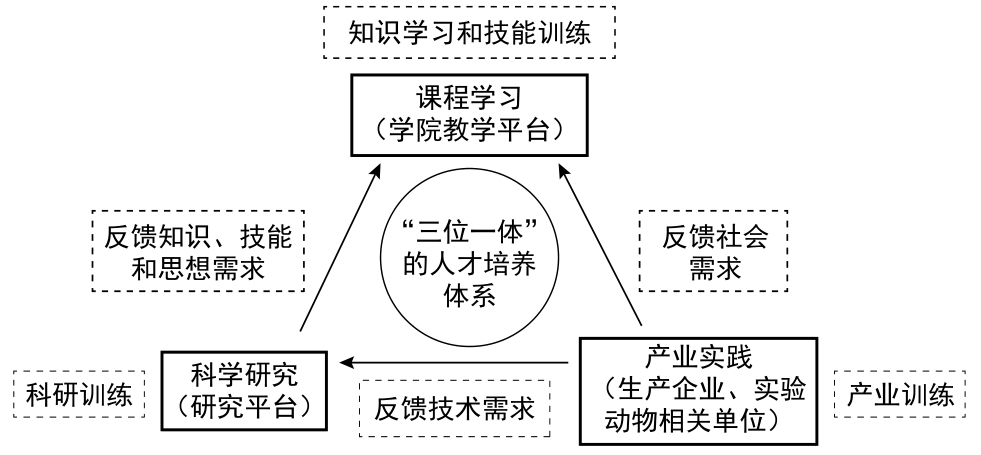
Figure 1 Schematic diagram of the "three-in-one" talent cultivation system integrating industry, education, and research in School of Laboratory Animal
课程 性质 Nature of the course |
课程编码 Course code |
课程名称 Course name |
学分/分 Credit/points |
学时数/h Study hours/h |
开设 学期 Semester |
开课学院 Offering college |
对应毕业要求 Graduation requirement |
||
|---|---|---|---|---|---|---|---|---|---|
总计 Total |
理论 Theoretical study |
实验/见习/课外 Practical training |
|||||||
专业基础必修课程 Major foundationcourses |
101002X101D | 无机化学 | 3 | 58 | 38 | 20 | 1 | 化学与制药工程学院 | 1,2,3,7,8,10 |
| 101002X102D | 人体解剖学 | 3.5 | 78 | 50 | 28 | 1 | 基础医学院 | 1,2,3,7,8,10 | |
| 101002X103D | 组织学与胚胎学 | 2.5 | 64 | 32 | 32 | 1 | 基础医学院 | 1,2,3,7,8,10 | |
| 101002X104D | 细胞生物学 | 2 | 40 | 24 | 16 | 1 | 生命科学学院 | 1,2,3,7,8,10 | |
| 101002X105D | 动物学 | 2 | 36 | 24 | 12 | 1 | 实验动物学院 | 1,2,3,4,5,7,8,10 | |
| 101002X106D | 有机化学 | 4 | 72 | 48 | 24 | 2 | 化学与制药工程学院 | 1,2,3,7,8,10 | |
| 101002X107D | 动物生理学 | 5 | 90 | 60 | 30 | 2 | 实验动物学院 | 1,2,3,7,8,10 | |
| 101002X108D | 预防医学概论 | 1 | 24 | 24 | 0 | 2 | 公共卫生与健康管理学院 | 1,2,3,7,8,10 | |
| 101002X109D | 分析化学 | 4 | 86 | 54 | 32 | 3 | 化学与制药工程学院 | 1,2,3,7,8,10 | |
| 101002X110D | 生物化学与分子生物学 | 5 | 90 | 60 | 30 | 3 | 基础医学院 | 1,2,3,7,8,10 | |
| 101002X111D | 病理学 | 4 | 72 | 48 | 24 | 3 | 基础医学院 | 1,2,3,7,8,10 | |
| 101002X112D | 病原生物学 | 3 | 56 | 32 | 24 | 3 | 基础医学院 | 1,2,3,7,8,10 | |
| 101002X113D | 兽医学概论 | 1 | 24 | 24 | 0 | 4 | 实验动物学院 | 1,2,3,7,8,10 | |
| 101002X114D | 生物材料检验 | 2.5 | 48 | 32 | 16 | 4 | 公共卫生与健康管理学院 | 1,2,3,4,5,7,8,10 | |
| 101002X115D | 药理学 | 2.5 | 48 | 32 | 16 | 4 | 药学院 | 1,2,3,7,8,10 | |
| 101002X116D | 医学免疫学 | 2 | 36 | 24 | 12 | 4 | 基础医学院 | 1,2,3,4,5,7,8,10 | |
| 101002X117D | 卫生统计学 | 2.5 | 48 | 36 | 12 | 5 | 公共卫生与健康管理学院 | 1,2,3,4,5,6,7,8,10 | |
| 101002X118D | 生物信息学 | 1 | 16 | 16 | 0 | 5 | 公共卫生与健康管理学院 | 1,2,3,4,5,6,7,8,10 | |
| 总计 Total | 50.5 | 986 | 658 | 328 | |||||
专业课程 Major courses |
101002Z101D | 实验动物学 | 3 | 64 | 32 | 32 | 2 | 实验动物学院 | 1,2,3,4,5,7,8,9,10 |
| 101002Z102D | 实验动物解剖与组织胚胎学 | 2.5 | 48 | 32 | 16 | 2 | 实验动物学院 | 1,2,3,4,5,7,8,10 | |
| 101002Z103D | 动物实验技术 | 2 | 64 | 16 | 48 | 3 | 实验动物学院 | 1,2,3,4,5,6,7,8,9,10 | |
| 101002Z104D | 实验动物营养学 | 2 | 36 | 24 | 12 | 5 | 实验动物学院 | 1,2,3,4,5,7,8,10 | |
| 101002Z105D | 实验动物环境卫生学 | 2 | 36 | 24 | 12 | 5 | 实验动物学院 | 1,2,3,4,5,7,8,10 | |
| 101002Z106D | 实验动物微生物控制学 | 2 | 36 | 24 | 12 | 5 | 实验动物学院 | 1,2,3,4,5,7,8,10 | |
| 101002Z107D | 实验动物寄生虫学 | 1 | 24 | 14 | 10 | 6 | 实验动物学院 | 1,2,3,4,5,7,8,10 | |
| 101002Z108D | 实验动物遗传与繁殖学 | 2 | 48 | 16 | 32 | 6 | 实验动物学院 | 1,2,3,4,5,7,8,10 | |
| 101002Z109D | 实验动物胚胎操作与基因编辑技术 | 2 | 48 | 16 | 32 | 6 | 实验动物学院 | 1,2,3,4,5,6,7,8,9,10 | |
| 101002Z110D | 实验动物法规及福利 | 1.5 | 24 | 24 | 0 | 6 | 实验动物学院 | 1,2,3,7,8,10 | |
| 101002Z111D | 实验动物专业发展前沿讲座 | 1 | 18 | 18 | 0 | 6 | 实验动物学院 | 1,2,3,5,6,7,8,9,10 | |
| 101002Z112D | 人类疾病动物模型制作技术 | 2 | 48 | 16 | 32 | 7 | 实验动物学院 | 1,2,3,4,5,6,7,8,10 | |
| 101002Z113D | 医学毒理学 | 2 | 40 | 24 | 16 | 7 | 实验动物学院 | 1,2,3,4,5,7,8,10 | |
| 总计 Total | 25 | 534 | 280 | 254 | |||||
专业限选课程 Major restricted elective courses |
101002Z201D | 文献检索 | 2 | 32 | 32 | 0 | 1 | 图书馆 | 1,2,3,4,5,6,7,8,10 |
| 101002Z202D | 卫生法规 | 1 | 16 | 16 | 0 | 1 | 马克思主义学院 | 1,2,3,6,7,8,9,10 | |
| 101002Z203D | 实验室安全与管理 | 15 | 24 | 24 | 0 | 2 | 基础医学院 | 1,2,3,7,8,9,10 | |
| 101002Z204D | 科研导航 | 1 | 16 | 16 | 0 | 2 | 实验动物学院 | 1,2,3,4,5,6,7,8,10 | |
| 101002Z205D | Python语言基础 | 1.5 | 24 | 24 | 0 | 3 | 医学信息工程学院 | 1,2,3,6,7,8,10 | |
| 101002Z206D | 大型分析仪器原理及应用 | 2.5 | 48 | 24 | 24 | 3 | 实验动物学院 | 1,2,3,7,8,10 | |
| 101002Z207D | 实验动物专业英语 | 2 | 36 | 36 | 0 | 4 | 实验动物学院 | 1,2,3,4,5,6,7,8,10 | |
| 101002Z208D | 医学遗传学 | 1 | 24 | 24 | 0 | 4 | 实验动物学院 | 1,2,3,7,8,10 | |
| 101002Z209D | 医学发育生物学 | 1 | 24 | 24 | 0 | 5 | 实验动物学院 | 1,2,3,5,7,8,10 | |
| 总计 Total | 13.5 | 244 | 220 | 24 | |||||
Table 3 Distribution and information of professional education courses in the talent cultivation planNote: The numbers 1,2,3,4,5,6,7,8,9, and 10 in the rightmost column of the table correspond to the serial numbers of the graduation requirements in Table 1.
课程 性质 Nature of the course |
课程编码 Course code |
课程名称 Course name |
学分/分 Credit/points |
学时数/h Study hours/h |
开设 学期 Semester |
开课学院 Offering college |
对应毕业要求 Graduation requirement |
||
|---|---|---|---|---|---|---|---|---|---|
总计 Total |
理论 Theoretical study |
实验/见习/课外 Practical training |
|||||||
专业基础必修课程 Major foundationcourses |
101002X101D | 无机化学 | 3 | 58 | 38 | 20 | 1 | 化学与制药工程学院 | 1,2,3,7,8,10 |
| 101002X102D | 人体解剖学 | 3.5 | 78 | 50 | 28 | 1 | 基础医学院 | 1,2,3,7,8,10 | |
| 101002X103D | 组织学与胚胎学 | 2.5 | 64 | 32 | 32 | 1 | 基础医学院 | 1,2,3,7,8,10 | |
| 101002X104D | 细胞生物学 | 2 | 40 | 24 | 16 | 1 | 生命科学学院 | 1,2,3,7,8,10 | |
| 101002X105D | 动物学 | 2 | 36 | 24 | 12 | 1 | 实验动物学院 | 1,2,3,4,5,7,8,10 | |
| 101002X106D | 有机化学 | 4 | 72 | 48 | 24 | 2 | 化学与制药工程学院 | 1,2,3,7,8,10 | |
| 101002X107D | 动物生理学 | 5 | 90 | 60 | 30 | 2 | 实验动物学院 | 1,2,3,7,8,10 | |
| 101002X108D | 预防医学概论 | 1 | 24 | 24 | 0 | 2 | 公共卫生与健康管理学院 | 1,2,3,7,8,10 | |
| 101002X109D | 分析化学 | 4 | 86 | 54 | 32 | 3 | 化学与制药工程学院 | 1,2,3,7,8,10 | |
| 101002X110D | 生物化学与分子生物学 | 5 | 90 | 60 | 30 | 3 | 基础医学院 | 1,2,3,7,8,10 | |
| 101002X111D | 病理学 | 4 | 72 | 48 | 24 | 3 | 基础医学院 | 1,2,3,7,8,10 | |
| 101002X112D | 病原生物学 | 3 | 56 | 32 | 24 | 3 | 基础医学院 | 1,2,3,7,8,10 | |
| 101002X113D | 兽医学概论 | 1 | 24 | 24 | 0 | 4 | 实验动物学院 | 1,2,3,7,8,10 | |
| 101002X114D | 生物材料检验 | 2.5 | 48 | 32 | 16 | 4 | 公共卫生与健康管理学院 | 1,2,3,4,5,7,8,10 | |
| 101002X115D | 药理学 | 2.5 | 48 | 32 | 16 | 4 | 药学院 | 1,2,3,7,8,10 | |
| 101002X116D | 医学免疫学 | 2 | 36 | 24 | 12 | 4 | 基础医学院 | 1,2,3,4,5,7,8,10 | |
| 101002X117D | 卫生统计学 | 2.5 | 48 | 36 | 12 | 5 | 公共卫生与健康管理学院 | 1,2,3,4,5,6,7,8,10 | |
| 101002X118D | 生物信息学 | 1 | 16 | 16 | 0 | 5 | 公共卫生与健康管理学院 | 1,2,3,4,5,6,7,8,10 | |
| 总计 Total | 50.5 | 986 | 658 | 328 | |||||
专业课程 Major courses |
101002Z101D | 实验动物学 | 3 | 64 | 32 | 32 | 2 | 实验动物学院 | 1,2,3,4,5,7,8,9,10 |
| 101002Z102D | 实验动物解剖与组织胚胎学 | 2.5 | 48 | 32 | 16 | 2 | 实验动物学院 | 1,2,3,4,5,7,8,10 | |
| 101002Z103D | 动物实验技术 | 2 | 64 | 16 | 48 | 3 | 实验动物学院 | 1,2,3,4,5,6,7,8,9,10 | |
| 101002Z104D | 实验动物营养学 | 2 | 36 | 24 | 12 | 5 | 实验动物学院 | 1,2,3,4,5,7,8,10 | |
| 101002Z105D | 实验动物环境卫生学 | 2 | 36 | 24 | 12 | 5 | 实验动物学院 | 1,2,3,4,5,7,8,10 | |
| 101002Z106D | 实验动物微生物控制学 | 2 | 36 | 24 | 12 | 5 | 实验动物学院 | 1,2,3,4,5,7,8,10 | |
| 101002Z107D | 实验动物寄生虫学 | 1 | 24 | 14 | 10 | 6 | 实验动物学院 | 1,2,3,4,5,7,8,10 | |
| 101002Z108D | 实验动物遗传与繁殖学 | 2 | 48 | 16 | 32 | 6 | 实验动物学院 | 1,2,3,4,5,7,8,10 | |
| 101002Z109D | 实验动物胚胎操作与基因编辑技术 | 2 | 48 | 16 | 32 | 6 | 实验动物学院 | 1,2,3,4,5,6,7,8,9,10 | |
| 101002Z110D | 实验动物法规及福利 | 1.5 | 24 | 24 | 0 | 6 | 实验动物学院 | 1,2,3,7,8,10 | |
| 101002Z111D | 实验动物专业发展前沿讲座 | 1 | 18 | 18 | 0 | 6 | 实验动物学院 | 1,2,3,5,6,7,8,9,10 | |
| 101002Z112D | 人类疾病动物模型制作技术 | 2 | 48 | 16 | 32 | 7 | 实验动物学院 | 1,2,3,4,5,6,7,8,10 | |
| 101002Z113D | 医学毒理学 | 2 | 40 | 24 | 16 | 7 | 实验动物学院 | 1,2,3,4,5,7,8,10 | |
| 总计 Total | 25 | 534 | 280 | 254 | |||||
专业限选课程 Major restricted elective courses |
101002Z201D | 文献检索 | 2 | 32 | 32 | 0 | 1 | 图书馆 | 1,2,3,4,5,6,7,8,10 |
| 101002Z202D | 卫生法规 | 1 | 16 | 16 | 0 | 1 | 马克思主义学院 | 1,2,3,6,7,8,9,10 | |
| 101002Z203D | 实验室安全与管理 | 15 | 24 | 24 | 0 | 2 | 基础医学院 | 1,2,3,7,8,9,10 | |
| 101002Z204D | 科研导航 | 1 | 16 | 16 | 0 | 2 | 实验动物学院 | 1,2,3,4,5,6,7,8,10 | |
| 101002Z205D | Python语言基础 | 1.5 | 24 | 24 | 0 | 3 | 医学信息工程学院 | 1,2,3,6,7,8,10 | |
| 101002Z206D | 大型分析仪器原理及应用 | 2.5 | 48 | 24 | 24 | 3 | 实验动物学院 | 1,2,3,7,8,10 | |
| 101002Z207D | 实验动物专业英语 | 2 | 36 | 36 | 0 | 4 | 实验动物学院 | 1,2,3,4,5,6,7,8,10 | |
| 101002Z208D | 医学遗传学 | 1 | 24 | 24 | 0 | 4 | 实验动物学院 | 1,2,3,7,8,10 | |
| 101002Z209D | 医学发育生物学 | 1 | 24 | 24 | 0 | 5 | 实验动物学院 | 1,2,3,5,7,8,10 | |
| 总计 Total | 13.5 | 244 | 220 | 24 | |||||
| [1] | 秦川. 中国实验动物科学技术发展现状、存在问题及对策的探讨[R]. 南宁: 第12届中国实验动物学年会, 2016. |
| QIN C. Discussion on the current status, problems and countermeasures of laboratory animal science and technology in China[R]. Nanning: The 12th Annual Meeting of the Chinese Society for Laboratory Animal Science, 2016. | |
| [2] | 中华人民共和国教育部. 教育部关于公布2017年度普通高等学校本科专业备案和审批结果的通知(教高函〔2018〕4号)[A/OL]. (2018-03-21)[2025-08-06]. http://www.moe.gov.cn/srcsite/A08/moe_1034/s4930/201803/t20180321_330874.html. |
| Ministry of Education of the People's Republic of China. Notice on announcing the results of the 2017 registration and approval of undergraduate programs in regular institutions of higher education (Jiao Gao Han [2018]No. 4)[EB/OL]. (2018-03-21)[2025-08-06]. http://www.moe.gov.cn/srcsite/A08/moe_1034/s4930/201803/t20180321_330874.html. | |
| [3] | 付彬, 郭中坤. 山东第一医科大学实验动物学院(山东省实验动物中心)[J]. 实验动物与比较医学, 2023, 43(6): 671-672. DOI: 10.12300/j.issn.1674-5817.2023-122 . |
| FU B, GUO Z K. Shandong first Medical University Laboratory Animal College (Shandong Laboratory Animal Center)[J]. Lab Anim Comp Med, 2023, 43(6): 671-672. DOI: 10.12300/j.issn.1674-5817.2023-122 . | |
| [4] | 秦川, 孔琪, 钱军, 等. 实验动物科学技术是生命科学和健康中国建设的基础支撑条件[J]. 科技导报, 2017, 35(11): 10-14. DOI: CNKI:SUN:KJDB.0.2017-11-004 . |
| QIN C, KONG Q, QIAN J, et al. Laboratory animal science and technology is strategically important to life science and health China construction[J]. Sci Technol Rev, 2017, 35(11): 10-14. DOI: CNKI:SUN:KJDB.0.2017-11-004 . | |
| [5] | Swiss Federal Food Safety and Veterinary Office. Report Animal Experimentation Statistics 2024[EB/OL]. (2024-09-18)[2025-08-06]. https://www.blv.admin.ch/blv/en/home/tiere/tierversuche/bericht-tierversuchsstatistik.html. |
| [6] | Government of the United Kingdom. Annual statistics of scientific procedures on living animals, Great Britain 2024[A/OL]. (2025-10-23)[2025-11-06]. https://www.gov.uk/government/statistics/scientific-procedures-on-living-animals-great-britain-2024/annual-statistics-of-scientific-procedures-on-living-animals-great-britain-2024. |
| [7] | Federal Institute for Risk Assessment (BfR). Animal testing: decline of previous years clearly continues[EB/OL]. (2024-12-12)[2025-08-06]. https://www.bfr.bund.de/en/press-release/animal-testing-decline-of-previous-years-clearly-continues/. |
| [8] | 张秀花, 汪晓娟, 秦中立. "双一流"背景下医学院实验动物学教学改革探讨[J]. 教育进展, 2023(12): 10449-10454. DOI: 10.12677/AE.2023.13121610 . |
| ZHANG X H, WANG X J, QIN Z L. Exploration on teaching reform of laboratory animal science in medical colleges under the background of "double first-class"[J]. Adv Educ, 2023(12): 10449-10454. DOI: 10.12677/AE.2023.13121610 . | |
| [9] | 秦川. 中国实验动物学科发展的关键问题与对策的思考[J]. 科学通报, 2017, 62(30): 3413-3419. DOI: CNKI:SUN:KXTB.0.2017-30-003 . |
| QIN C. Problem and countermeasure for development of laboratory animal science in China[J]. Chin Sci Bull, 2017, 62(30): 3413-3419. DOI: CNKI:SUN:KXTB.0.2017-30-003 . | |
| [10] | 首都医科大学基础医学院. 医学实验技术专业[EB/OL]. (2023-11-02)[2025-08-06]. https://bmss.ccmu.edu.cn/jyjx_13333/zyjs_13369/yxsyjszy_13377/99a0dc5831ae4cd18efa037c0e2042af.htm. |
| Capital Medical University School of Basic Medical Sciences. Medical laboratory technology[EB/OL]. (2023-11-02)[2025-08-06]. https://bmss.ccmu.edu.cn/jyjx_13333/zyjs_13369/yxsyjszy_13377/99a0dc5831ae4cd18efa037c0e2042af.htm. | |
| [11] | 山东第一医科大学(山东省医学科学院). 学校简介[EB/OL]. [2025-08-06]. https://www.sdfmu.edu.cn/xxgk1/xxjj.htm. |
| Shandong First Medical University (Shandong Academy of Medical Sciences). School profile[EB/OL]. [2025-08-06]. https://www.sdfmu.edu.cn/xxgk1/xxjj.htm. | |
| [12] | 教育部. 教育部关于印发«普通高等学校本科专业目录(2012年)»«普通高等学校本科专业设置管理规定»等文件的通知(教高〔2012〕9号)[A/OL]. (2012-09-18)[2025-08-06]. http://www.moe.gov.cn/srcsite/A08/moe_1034/s3882/201209/t20120918_143152.html. |
| Ministry of Education of the People's Republic of China. Notice on Issuing the "Catalogue of Undergraduate Majors in Regular Institutions of Higher Learning (2012)" and the "Regulations on the Management of Undergraduate Major Settings in Regular Institutions of Higher Learning" (Jiao Gao Han [2012] No. 9)[A/OL]. (2012-09-18)[2025-08-06]. http://www.moe.gov.cn/srcsite/A08/moe_1034/s3882/201209/t20120918_143152.html. | |
| [13] | 教育部高等学校教学指导委员会. 普通高等学校本科专业类教学质量国家标准(下)[M]. 北京: 高等教育出版社, 2018. |
| Ministry of Education's Steering Committee for Undergraduate Education in Higher Education Institutions. National standards for teaching quality of undergraduate majors in regular institutions of higher learning (volume 2)[M]. Beijing: Higher Education Press, 2018. | |
| [14] | 习近平. 因地制宜发展新质生产力[EB/OL]. (2025-11-15)[2025-12-06]. https://www.qstheory.cn/20251114/1eaed05f562144a3948dd858f25bbcf7/c.html. |
| XI J P. Developing new types of productive forces in accordance with local conditions [EB/OL]. (2025-11-15)[2025-12-06]. https://www.qstheory.cn/20251114/1eaed05f562144a3948dd858f25bbcf7/c.html. | |
| [15] | 新华网. 国务院常务会议解读|我国将深入推进高等教育综合改革试点工作[EB/OL]. (2025-01-17)[2025-08-06]. https://www.news.cn/20250117/9ea593451639489d8d3e378b7b6ce697/c.html. |
| Xinhua News Agency. Interpretation of the State Council Executive Meeting|China will further advance the pilot program for comprehensive reform of higher education[EB/OL]. (2025-01-17)[2025-08-06]. https://www.news.cn/20250117/9ea593451639489d8d3e378b7b6ce697/c.html. | |
| [16] | 马小洁. 提升高校服务科技创新和产业创新融合发展的质效[J]. 红旗文稿, 2025(8): 4-8. |
| MA X J. Improve the quality and efficiency of the integrated development of service science and technology innovation and industrial innovation in colleges and universities[J]. Red Flag Manuscr, 2025(8): 4-8. | |
| [17] | 扬州大学兽医学院(比较医学研究院). 实验动物学专业培养方案2021年版[EB/OL]. (2017-06-16)[2025-08-06]. https://syxy.yzu.edu.cn/info/1040/1257.htm. |
| College of Veterinary Medicine, Yangzhou University(Institute of Comparative Medicine). Laboratory animal science curriculum (2021 edition)[EB/OL]. (2017-06-16)[2025-08-06]. https://syxy.yzu.edu.cn/info/1040/1257.htm. | |
| [18] | 辽宁中医药大学. 辽宁中医药大学专业人才培养方案:2021版(修订版)[Z]. 沈阳:辽宁中医药大学,2024. |
| Liaoning University of Traditional Chinese Medicine. Liaoning University of Traditional Chinese Medicine professional talent training program: 2021 edition (revised version)[Z]. Shenyang: Liaoning University of Traditional Chinese Medicine, 2024. | |
| [19] | 贵州中医药大学招生信息网. 【动物医学类】实验动物学专业介绍[EB/OL]. (2024-06-11)[2025-08-06]. https://zs.gzy.edu.cn/info/1116/1711.htm. |
| Guizhou University of Traditional Chinese Medicine Admissions Information Website. Introduction to laboratory animal science (veterinary medicine)[EB/OL]. (2024-06-11)[2025-08-06]. https://zs.gzy.edu.cn/info/1116/1711.htm. | |
| [20] | 吉林大学动物科学学院. 2018版 本科培养方案修订版[EB/OL]. (2019-05-17)[2025-08-06]. https://dwkx.jlu.edu.cn/info/1076/3019.htm. |
| College of Animal Science, Jilin University. 2018 undergraduate training program (revised version)[EB/OL]. (2019-05-17)[2025-08-06]. https://dwkx.jlu.edu.cn/info/1076/3019.htm. |
| [1] | LI Zifa, LIU Shan, SUN Wei, ZHAO Feng, WEI Sheng, LI Qin, XU Kaiyong. Reflections on Building a Science-Education Integration System for Laboratory Animal Science: A Case Study of Shandong University of Traditional Chinese Medicine [J]. Laboratory Animal and Comparative Medicine, 2026, 46(4): 604-610. |
| [2] | LI Xiaoqin, YU Wenlan, DUAN Yizhu, LIU Zhonghua, WU Guodong, SHI Wenqi, FU Hongkun. Construction of Laboratory Animal Science and Technology Ethics Governance System in China and Its Preliminary Practice in Guangdong Province [J]. Laboratory Animal and Comparative Medicine, 2026, 46(1): 127-137. |
| [3] | ZHAO Ya, ZHANG Caiqin, MENG Han, QIN Jing, BAI Bing, ZHAO Yong, GE Xu, SHI Changhong. Exploration of Laboratory Animal Science Teaching Practice from Perspectives of Curriculum Ideology and Politics [J]. Laboratory Animal and Comparative Medicine, 2023, 43(6): 641-646. |
| [4] | QIAO Wei-wei, ZHAO Xian-zhe. Application of Problem-based Learning with Case-based Teaching for Junior College Students in Laboratory Animal Science Experiment [J]. Laboratory Animal and Comparative Medicine, 2015, 35(3): 245-248. |
| [5] | WEI Sheng, LI Zi-fa, SONG Chun-hong, XU Kai-yong. Application of Concept Map in Laboratory Animal Science Teaching [J]. Laboratory Animal and Comparative Medicine, 2015, 35(2): 129-132. |
| [6] | HU Ying, YANG Fei, YU Yi-jun, GAO Cheng. Development of Self-learning System for Laboratory Animal Science [J]. Laboratory Animal and Comparative Medicine, 2012, 32(3): 228-233. |
| Viewed | ||||||
|
Full text |
|
|||||
|
Abstract |
|
|||||
