


Laboratory Animal and Comparative Medicine ›› 2026, Vol. 46 ›› Issue (3): 378-387.DOI: 10.12300/j.issn.1674-5817.2025.149
• Quality Control of Laboratory Animals • Previous Articles Next Articles
GAO Yilong( )(
)( ), HE Xingliang, ZHOU Xiaopeng, LI Dawei, BAO Xijun, LI Laiyou
Received:2025-09-10
Revised:2025-10-17
Online:2026-06-25
Published:2026-06-19
Correspondence to:
GAO Yilong
CLC Number:
GAO Yilong,HE Xingliang,ZHOU Xiaopeng,et al. Mining Candidate Genes for Litter Size Traits in English Springer Spaniel Bitches Based on Whole Genome Resequencing[J]. Laboratory Animal and Comparative Medicine, 2026, 46(3): 378-387. DOI: 10.12300/j.issn.1674-5817.2025.149.
Add to citation manager EndNote|Ris|BibTeX
URL: https://www.slarc.org.cn/dwyx/EN/10.12300/j.issn.1674-5817.2025.149
组别 Group | 总产仔数 Total number of litter size | 总活仔数 Total number of live offspring |
|---|---|---|
| 高产组High-litter-size group | 7.41±1.27a | 7.06±1.10b |
| 低产组Low-litter-size group | 3.82±1.20 | 3.67±1.11 |
Table 1 Comparison of litter size trait between high-litter-size and low-litter-size groups of English Springer Spaniel breeding bitches
组别 Group | 总产仔数 Total number of litter size | 总活仔数 Total number of live offspring |
|---|---|---|
| 高产组High-litter-size group | 7.41±1.27a | 7.06±1.10b |
| 低产组Low-litter-size group | 3.82±1.20 | 3.67±1.11 |
样本编号 Sample number | 质控后有效测序段数/条 Number of effective sequencing segments after quality control/reads | 比对数/条 Comparison quantity/reads | 比对率/% Comparison rate/% | 平均测序深度/倍 Mean sequencing depth/fold | Q20/% | Q30/% | GC碱基比例/% GC content/% |
|---|---|---|---|---|---|---|---|
| JCS-01-DC | 49 701 009 | 49 495 473 | 99.59 | 3.015 7 | 96.84 | 91.44 | 40.31 |
| JCS-02-GC | 57 569 978 | 57 424 899 | 99.75 | 3.500 8 | 96.94 | 91.66 | 40.50 |
| JCS-06-DC | 50 170 943 | 50 035 322 | 99.73 | 3.048 7 | 96.91 | 91.60 | 40.44 |
| JCS-11-GC | 56 648 593 | 56 504 709 | 99.75 | 3.446 4 | 97.01 | 91.80 | 40.39 |
| JCS-13-DC | 63 501 199 | 63 282 693 | 99.66 | 3.858 8 | 97.04 | 91.79 | 41.18 |
| JCS-15-DC | 67 124 038 | 66 904 179 | 99.67 | 4.075 1 | 96.98 | 91.76 | 40.54 |
| JCS-17-DC | 60 312 575 | 60 159 920 | 99.75 | 3.674 5 | 97.05 | 91.92 | 40.44 |
| JCS-18-DC | 56 651 718 | 56 505 792 | 99.74 | 3.449 1 | 97.10 | 92.02 | 40.49 |
| JCS-20-DC | 52 034 437 | 51 854 996 | 99.66 | 3.158 3 | 96.90 | 91.61 | 41.38 |
| JCS-25-DC | 46 446 939 | 46 318 986 | 99.72 | 2.825 3 | 96.89 | 91.54 | 40.39 |
| JCS-27-DC | 51 579 104 | 51 417 318 | 99.69 | 3.131 1 | 96.98 | 91.77 | 40.37 |
| JCS-30-GC | 57 620 774 | 57 306 085 | 99.45 | 3.472 1 | 98.04 | 94.40 | 40.97 |
| JCS-32-DC | 56 929 134 | 56 841 636 | 99.85 | 3.451 3 | 98.01 | 94.35 | 40.98 |
| JCS-36-GC | 61 621 912 | 61 516 493 | 99.83 | 3.733 4 | 98.06 | 94.47 | 40.86 |
| JCS-38-GC | 59 543 985 | 59 452 953 | 99.85 | 3.616 1 | 97.97 | 94.22 | 40.01 |
| JCS-41-GC | 55 343 670 | 55 265 057 | 99.86 | 3.354 7 | 98.03 | 94.42 | 40.32 |
| JCS-47-GC | 53 077 925 | 52 998 639 | 99.85 | 3.219 2 | 98.03 | 94.39 | 40.13 |
| JCS-49-GC | 47 499 774 | 47 414 328 | 99.82 | 2.878 9 | 98.03 | 94.39 | 40.06 |
| JCS-50-GC | 50 683 884 | 50 608 669 | 99.85 | 3.078 6 | 98.02 | 94.37 | 40.11 |
| JCS-52-GC | 56 492 470 | 56 374 197 | 99.79 | 3.424 0 | 98.03 | 94.37 | 40.03 |
Table 2 Whole genome resequencing data of English Springer Spaniel breeding bitches in the high-litter-size and low-litter-size groups
样本编号 Sample number | 质控后有效测序段数/条 Number of effective sequencing segments after quality control/reads | 比对数/条 Comparison quantity/reads | 比对率/% Comparison rate/% | 平均测序深度/倍 Mean sequencing depth/fold | Q20/% | Q30/% | GC碱基比例/% GC content/% |
|---|---|---|---|---|---|---|---|
| JCS-01-DC | 49 701 009 | 49 495 473 | 99.59 | 3.015 7 | 96.84 | 91.44 | 40.31 |
| JCS-02-GC | 57 569 978 | 57 424 899 | 99.75 | 3.500 8 | 96.94 | 91.66 | 40.50 |
| JCS-06-DC | 50 170 943 | 50 035 322 | 99.73 | 3.048 7 | 96.91 | 91.60 | 40.44 |
| JCS-11-GC | 56 648 593 | 56 504 709 | 99.75 | 3.446 4 | 97.01 | 91.80 | 40.39 |
| JCS-13-DC | 63 501 199 | 63 282 693 | 99.66 | 3.858 8 | 97.04 | 91.79 | 41.18 |
| JCS-15-DC | 67 124 038 | 66 904 179 | 99.67 | 4.075 1 | 96.98 | 91.76 | 40.54 |
| JCS-17-DC | 60 312 575 | 60 159 920 | 99.75 | 3.674 5 | 97.05 | 91.92 | 40.44 |
| JCS-18-DC | 56 651 718 | 56 505 792 | 99.74 | 3.449 1 | 97.10 | 92.02 | 40.49 |
| JCS-20-DC | 52 034 437 | 51 854 996 | 99.66 | 3.158 3 | 96.90 | 91.61 | 41.38 |
| JCS-25-DC | 46 446 939 | 46 318 986 | 99.72 | 2.825 3 | 96.89 | 91.54 | 40.39 |
| JCS-27-DC | 51 579 104 | 51 417 318 | 99.69 | 3.131 1 | 96.98 | 91.77 | 40.37 |
| JCS-30-GC | 57 620 774 | 57 306 085 | 99.45 | 3.472 1 | 98.04 | 94.40 | 40.97 |
| JCS-32-DC | 56 929 134 | 56 841 636 | 99.85 | 3.451 3 | 98.01 | 94.35 | 40.98 |
| JCS-36-GC | 61 621 912 | 61 516 493 | 99.83 | 3.733 4 | 98.06 | 94.47 | 40.86 |
| JCS-38-GC | 59 543 985 | 59 452 953 | 99.85 | 3.616 1 | 97.97 | 94.22 | 40.01 |
| JCS-41-GC | 55 343 670 | 55 265 057 | 99.86 | 3.354 7 | 98.03 | 94.42 | 40.32 |
| JCS-47-GC | 53 077 925 | 52 998 639 | 99.85 | 3.219 2 | 98.03 | 94.39 | 40.13 |
| JCS-49-GC | 47 499 774 | 47 414 328 | 99.82 | 2.878 9 | 98.03 | 94.39 | 40.06 |
| JCS-50-GC | 50 683 884 | 50 608 669 | 99.85 | 3.078 6 | 98.02 | 94.37 | 40.11 |
| JCS-52-GC | 56 492 470 | 56 374 197 | 99.79 | 3.424 0 | 98.03 | 94.37 | 40.03 |
序号 No. | 分类 Category | SNP数量 Number of SNP |
|---|---|---|
| 1 | 基因间区 | 1 991 050 |
| 2 | 基因上游1 kb区域 | 27 445 |
| 3 | 基因下游1 kb区域 | 32 011 |
| 4 | 5'UTR | 2 885 |
| 5 | 3'UTR | 17 833 |
| 6 | 剪切位点 | 72 |
| 7 | 内含子区域 | 1 071 830 |
8 | 外显子区域 | 12 068 |
| 非同义变异 | 5 256 | |
| 同义变异 | 6 208 | |
| 获得终止密码子变异 | 73 | |
| 失去终止密码子变异 | 19 | |
| 9 | 未知 | 512 |
| 10 | 总数 | 3 155 706 |
Table 3 Statistics and annotation results of SNP detection
序号 No. | 分类 Category | SNP数量 Number of SNP |
|---|---|---|
| 1 | 基因间区 | 1 991 050 |
| 2 | 基因上游1 kb区域 | 27 445 |
| 3 | 基因下游1 kb区域 | 32 011 |
| 4 | 5'UTR | 2 885 |
| 5 | 3'UTR | 17 833 |
| 6 | 剪切位点 | 72 |
| 7 | 内含子区域 | 1 071 830 |
8 | 外显子区域 | 12 068 |
| 非同义变异 | 5 256 | |
| 同义变异 | 6 208 | |
| 获得终止密码子变异 | 73 | |
| 失去终止密码子变异 | 19 | |
| 9 | 未知 | 512 |
| 10 | 总数 | 3 155 706 |
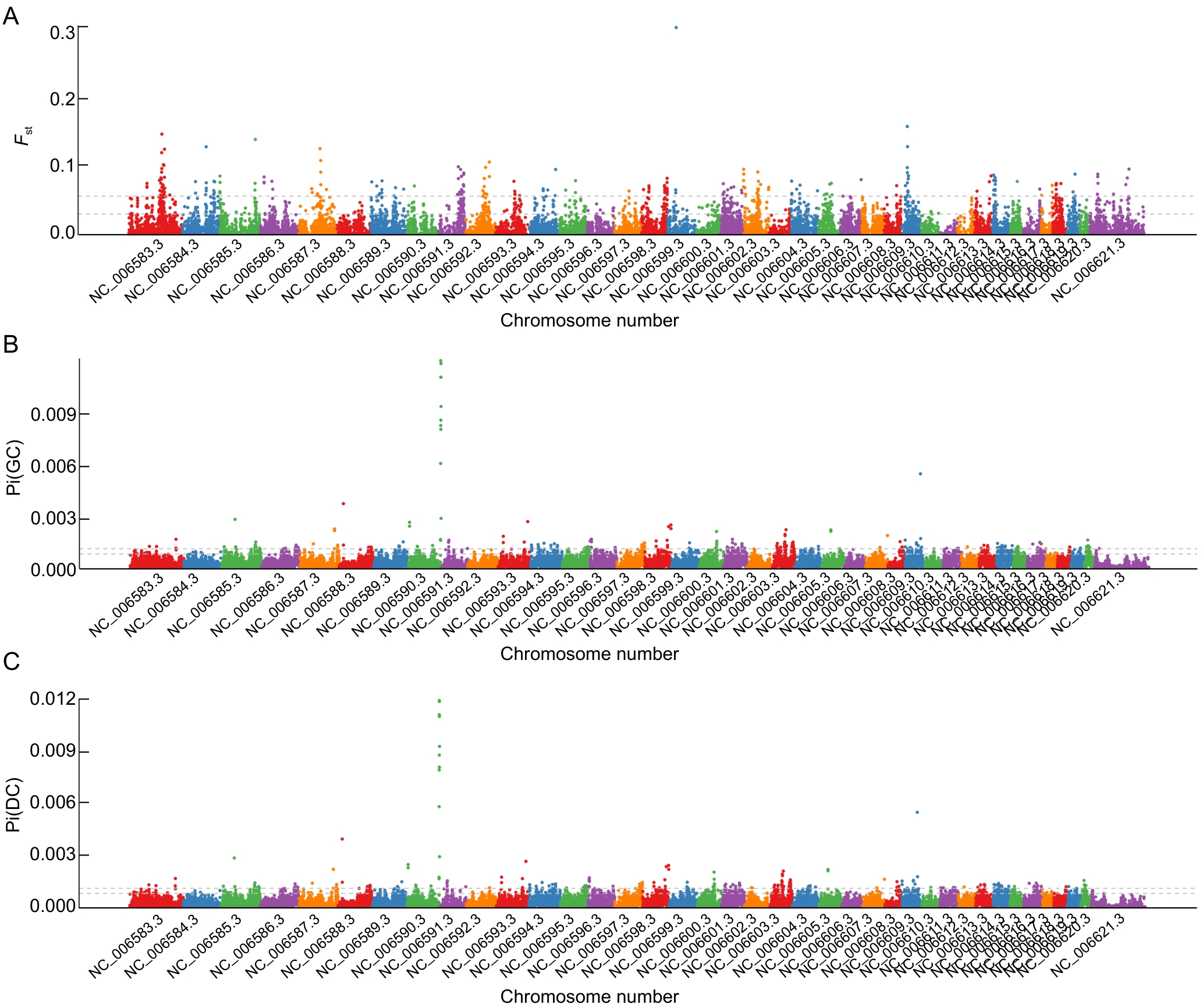
Figure 1 Fst distribution and Pi analysis results of high-litter-size and low-litter-size groups of English Springer Spaniel breeding bitches
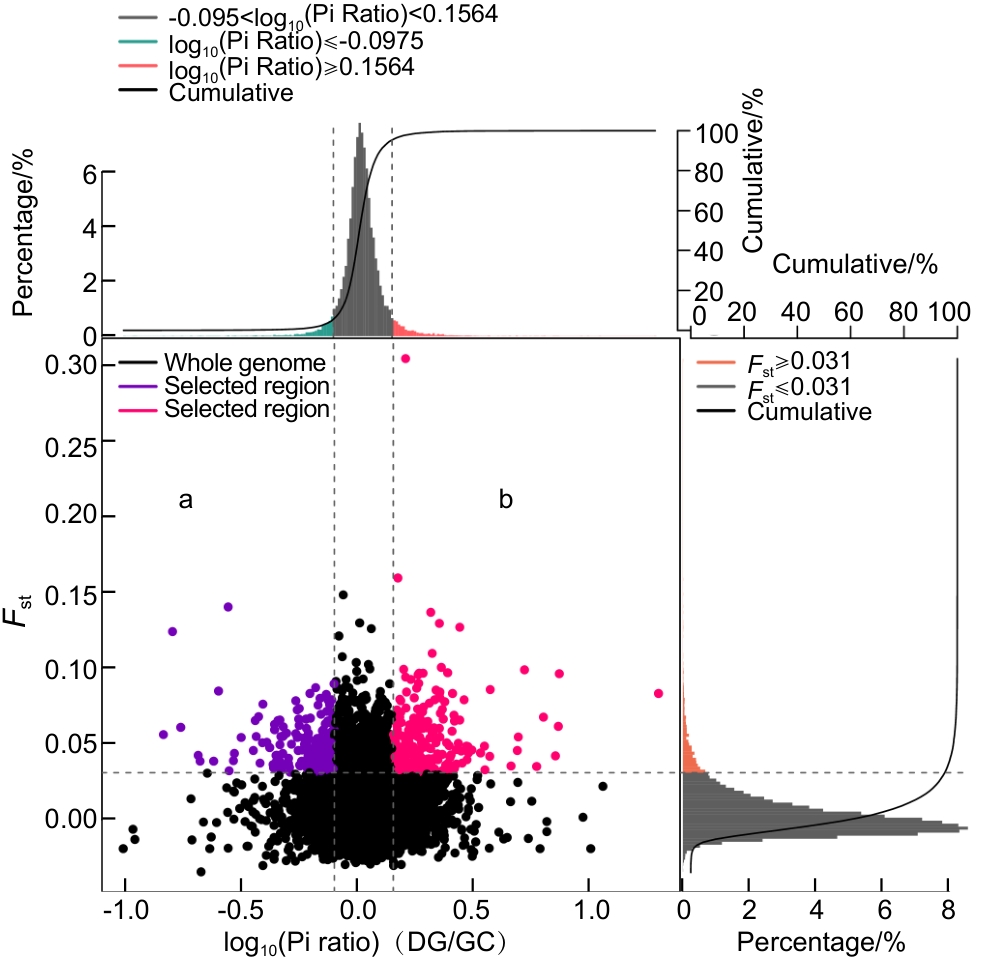
Figure 2 Selection sweep analysis results of Fst and Pi
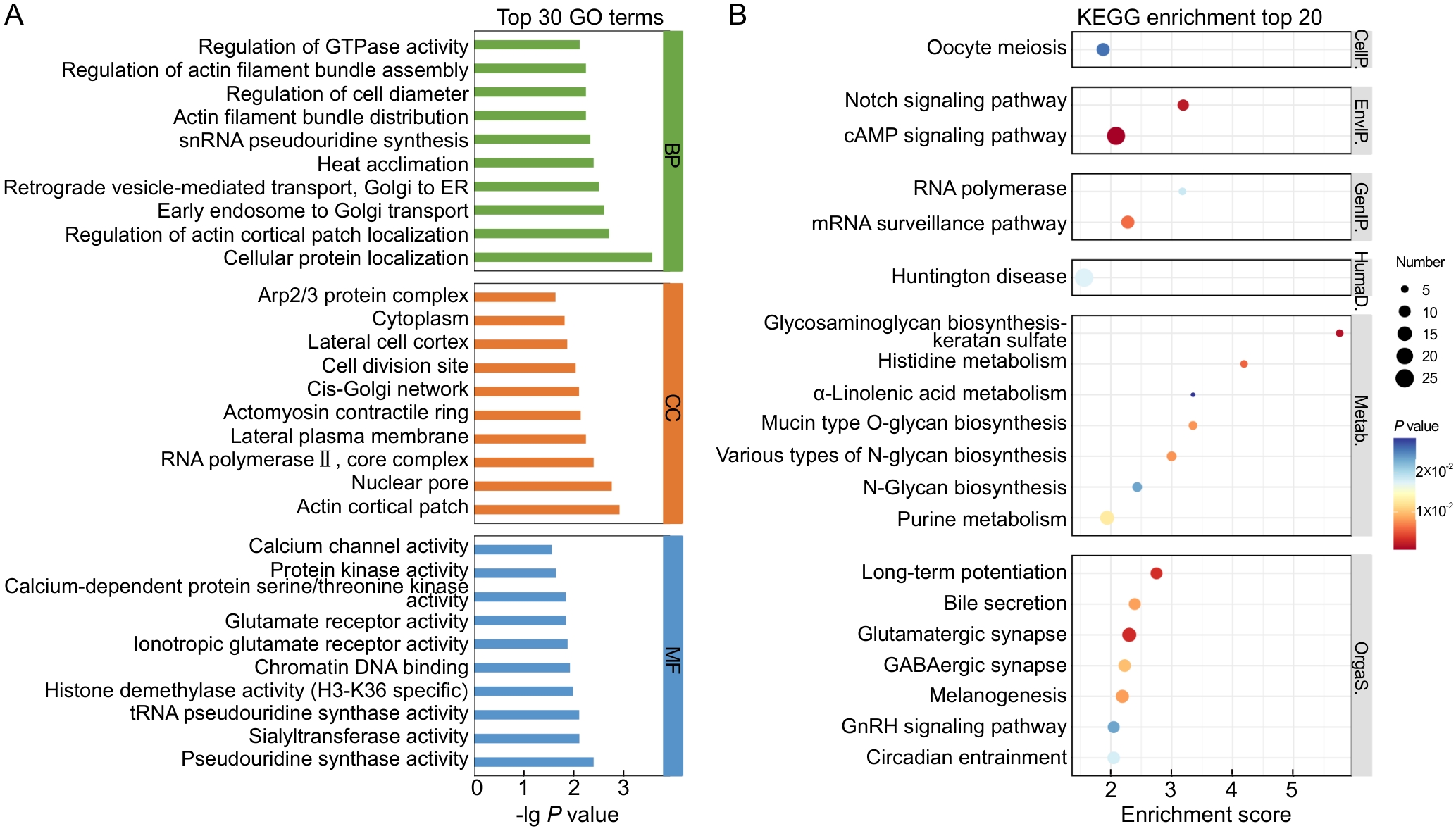
Figure 3 GO terms (A) and KEGG pathways (B) enriched for differential genes
基因 Gene | 基因所在染色体及起始位点 The chromosome and start site of the gene | 基因功能及注释 Gene function and annotation | 通路名称 Pathway name |
|---|---|---|---|
| WDR35 | Chr 17:15 000 306 | 与细胞内的纤毛发生、纤毛维持及相关信号通路调控相关 | 纤毛内运输通路、Hedgehog信号通路 |
| SMAD 7 | Chr 15:31 542 000 | 调控卵巢颗粒细胞增殖与凋亡 | 丝裂原激活的蛋白激酶信号通路 |
| RPGR | Chr X:33 060 949 | 调控视网膜感光细胞的纤毛功能和蛋白质运输 | 纤毛组装与维持通路、GTP酶信号通路 |
| RERGL | Chr 27:28 947 686 | 小GTP酶编码基因,涉及细胞增殖、分化和信号传导 | 大鼠肉瘤基因(Ras)信号通路 |
| PGRMC 2 | Chr 19:12 726 628 | 参与激素代谢、细胞应激响应的多功能基因 | 类固醇激素生物合成通路 |
| LOC482182 | Chr 13:59 333 984 | 未表征基因,可能与神经系统发育及细胞增殖调控有关 | 细胞表面信号传递 |
| GIMD1 | Chr 32:27 203 619 | 参与GTP酶活性调控,介导细胞信号转导过程,与雌性动物胚胎发育、繁殖周期调控相关 | 免疫细胞活化与存活调控 |
| COX7B 2 | Chr 13:42 746 234 | 线粒体呼吸链复合体Ⅳ(细胞色素c氧化酶)的一个亚基,参与细胞能量代谢关键过程 | 氧化磷酸化通路 |
| COX16 | Chr 8:44 007 617 | 线粒体COX复合体组装的关键辅助因子,通过调控细胞色素c氧化酶正确形成以维持线粒体呼吸功能 | 细胞色素c氧化酶、复合物组装通路 |
| BMPR 2 | Chr 37:11 386 691 | 骨形态发生蛋白受体家族的重要成员,属于丝氨酸/苏氨酸激酶受体,在细胞信号转导、胚胎发育、组织稳态及疾病发生中发挥关键作用 | 骨形态生成蛋白信号通路 |
| BMP 6 | Chr 35:7 810 492 | 可抑制颗粒细胞凋亡,促进雌激素合成,维持卵泡正常生长 | 生殖系统调控通路 |
| BICD1 | Chr 27:16 534 098 | 作为细胞内物质运输辅助因子,参与调控卵细胞成熟、受精和早期胚胎形成 | 参与囊泡介导的运输和高尔基体到内质网的逆向运输等通路 |
| SLC 9C 1 | Chr 33:16 824 626 | 溶质载体基因,与精子的运动和生育能力相关 | 离子跨膜运输通路 |
Table 4 Chromosomal loci, SNP variation annotation, and GO and KEGG enrichment analysis of candidate genes
基因 Gene | 基因所在染色体及起始位点 The chromosome and start site of the gene | 基因功能及注释 Gene function and annotation | 通路名称 Pathway name |
|---|---|---|---|
| WDR35 | Chr 17:15 000 306 | 与细胞内的纤毛发生、纤毛维持及相关信号通路调控相关 | 纤毛内运输通路、Hedgehog信号通路 |
| SMAD 7 | Chr 15:31 542 000 | 调控卵巢颗粒细胞增殖与凋亡 | 丝裂原激活的蛋白激酶信号通路 |
| RPGR | Chr X:33 060 949 | 调控视网膜感光细胞的纤毛功能和蛋白质运输 | 纤毛组装与维持通路、GTP酶信号通路 |
| RERGL | Chr 27:28 947 686 | 小GTP酶编码基因,涉及细胞增殖、分化和信号传导 | 大鼠肉瘤基因(Ras)信号通路 |
| PGRMC 2 | Chr 19:12 726 628 | 参与激素代谢、细胞应激响应的多功能基因 | 类固醇激素生物合成通路 |
| LOC482182 | Chr 13:59 333 984 | 未表征基因,可能与神经系统发育及细胞增殖调控有关 | 细胞表面信号传递 |
| GIMD1 | Chr 32:27 203 619 | 参与GTP酶活性调控,介导细胞信号转导过程,与雌性动物胚胎发育、繁殖周期调控相关 | 免疫细胞活化与存活调控 |
| COX7B 2 | Chr 13:42 746 234 | 线粒体呼吸链复合体Ⅳ(细胞色素c氧化酶)的一个亚基,参与细胞能量代谢关键过程 | 氧化磷酸化通路 |
| COX16 | Chr 8:44 007 617 | 线粒体COX复合体组装的关键辅助因子,通过调控细胞色素c氧化酶正确形成以维持线粒体呼吸功能 | 细胞色素c氧化酶、复合物组装通路 |
| BMPR 2 | Chr 37:11 386 691 | 骨形态发生蛋白受体家族的重要成员,属于丝氨酸/苏氨酸激酶受体,在细胞信号转导、胚胎发育、组织稳态及疾病发生中发挥关键作用 | 骨形态生成蛋白信号通路 |
| BMP 6 | Chr 35:7 810 492 | 可抑制颗粒细胞凋亡,促进雌激素合成,维持卵泡正常生长 | 生殖系统调控通路 |
| BICD1 | Chr 27:16 534 098 | 作为细胞内物质运输辅助因子,参与调控卵细胞成熟、受精和早期胚胎形成 | 参与囊泡介导的运输和高尔基体到内质网的逆向运输等通路 |
| SLC 9C 1 | Chr 33:16 824 626 | 溶质载体基因,与精子的运动和生育能力相关 | 离子跨膜运输通路 |
| [1] | 公安部南京警犬研究所, 江苏省实验动物协会, 实验用史宾格犬 第1部分: 遗传、微生物和寄生虫控制: DB32/T 2913.1—2016 [S/OL].(2016-03-10)[2025-09-10]. https://std.samr.gov.cn/db/search/stdDBDetailed id=91D99E4D4BE12E24E05397BE0A0A3A10. |
| Nanjing Police Dog Research Institute of the Ministry of Public Security, Jiangsu Provincial Association for Laboratory Animal Science. Experimental Springer Spaniel—Part Ⅰ: Genetics, Microbiology and Parasite Control: DB32/T 2913.1—2016 [S/OL]. (2016-03-10) [2025-09-10]. https://std.samr.gov.cn/db/search/stdDBDetailed?id=91D99E4D4BE12E24E05397BE0A0A3A10. | |
| [2] | 公安部南京警犬研究所, 江苏省实验动物协会, 实验用史宾格犬 第2部分: 饲养管理技术规范: DB32/T 2913.2—2016 [S/OL].(2016-03-10)[2025-09-10]. https://std.samr.gov.cn/db/search/stdDBDetailed id=91D99E4D6B7C2E24E05397BE0A0A3A10. |
| Nanjing Police Dog Research Institute of the Ministry of Public Security, Jiangsu Provincial Association for Laboratory Animal Science. Experimental Springer Spaniel—Part Ⅱ: Technical Specification for Feeding and Manage-ment: DB32/T 2913.2—2016 [S/OL]. (2016-03-10) [2025-09-10]. https://std.samr.gov.cn/db/search/stdDBDetailed?id=91D99 E4D6B7C2E24E05397BE0A0A3A10. | |
| [3] | LI H, DURBIN R. Fast and accurate short read alignment with Burrows-Wheeler transform[J]. Bioinformatics, 2009, 25(14):1754-1760. DOI:10.1093/bioinformatics/btp324 . |
| [4] | LI H, HANDSAKER B, WYSOKER A, et al. The sequence alignment/map format and SAMtools[J]. Bioinformatics, 2009, 25(16): 2078-2079. DOI: 10.1093/bioinformatics/btp352 . |
| [5] | WANG K, LI M, HAKONARSON H. ANNOVAR: functional annotation of genetic variants from high-throughput sequencing data[J]. Nucleic Acids Res, 2010, 38(16): e164. DOI: 10.1093/nar/gkq603 . |
| [6] | DE LOS REYES M, SONGSASEN N. New insights in canine reproduction[J]. Animals, 2021, 11(7): 2021. DOI: 10.3390/ani11072021 . |
| [7] | TORRECILHA R B P, MILANESI M, WADE C M, et al. Association of missense variants in GDF9 with litter size in Entlebucher Mountain dogs[J]. Anim Genet, 2020, 51(1): 78-86. DOI: 10.1111/age.12882 . |
| [8] | GARCIA P, ASPEE K, RAMIREZ G, et al. Influence of growth differentiation factor 9 and bone morphogenetic protein 15 on in vitro maturation of canine oocytes[J]. Reprod Domest Anim, 2019, 54(2):373-380. DOI: 10.1111/rda.13371 . |
| [9] | 刘成武. 犬繁殖性状相关候选基因: 雌激素受体基因研究进展[J]. 中国工作犬业, 2014(4): 12-13. DOI: 10.3969/j.issn.1673-0135.2014.04.003 . |
| LIU C W. Research progress of estrogen receptor gene, a candidate gene related to reproductive traits in dogs[J]. China Work Dog, 2014(4): 12-13. DOI: 10.3969/j.issn.1673-0135.2014.04.003 . | |
| [10] | LEE S H, OH H J, KIM M J, et al. Oocyte maturation-related gene expression in the canine oviduct, cumulus cells, and oocytes and effect of co-culture with oviduct cells on in vitro maturation of oocytes[J]. J Assist Reprod Genet, 2017, 34(7): 929-938. DOI: 10.1007/s10815-017-0910-x . |
| [11] | MCKENNA A, HANNA M, BANKS E, et al. The Genome Analysis Toolkit: a MapReduce framework for analyzing next-generation DNA sequencing data[J]. Genome Res, 2010, 20(9): 1297-1303. DOI: 10.1101/gr.107524.110 . |
| [12] | DANECEK P, AUTON A, ABECASIS G, et al. The variant call format and VCFtools[J]. Bioinformatics, 2011, 27(15): 2156-2158. DOI: 10.1093/bioinformatics/btr330 . |
| [13] | 刘成武, 杨敏. 德国牧羊犬FSHR基因第1外显子SNP T89C与产仔数关系研究[J]. 黑龙江畜牧兽医, 2014(17): 66-68, 230. DOI:10.13881/j.cnki.hljxmsy.2014.1038 . |
| LIU C W, YANG M. Study on the relationship between the SNP T89C in exon 1 of the FSHR gene and litter size in German shepherd dog[J]. Heilongjiang Anim Sci Vet Med, 2014(17): 66-68, 230. DOI:10.13881/j.cnki.hljxmsy.2014.1038 . | |
| [14] | 贺生中, 狄和双, 郑筱峰, 等. 贵宾犬FSHβ基因多态性与产仔数的相关性分析[J]. 江苏农业科学, 2013, 41(6): 24-26. DOI:10.15889/j.issn.1002-1302.2013.06.141 . |
| HE S Z, DI H S, ZHENG X F, et al. Correlation analysis between FSHβ gene polymorphism and litter size in poodles[J]. Jiangsu Agric Sci, 2013, 41(6): 24-26. DOI:10.15889/j.issn.1002-1302.2013.06.141 . | |
| [15] | 王丽华, 狄和双, 陈爱凤, 等. 贵宾犬ESRα基因多态性及其与繁殖性能的关系[J]. 江苏农业科学, 2013, 41(5): 28-30. DOI:10.15889/j.issn.1002-1302.2013.05.127 . |
| WANG L H, DI H S, CHEN A F, et al. Polymorphism of ESRα gene in poodle and its relationship with reproductive performance[J]. Jiangsu Agric Sci, 2013, 41(5): 28-30. DOI:10.15889/j.issn.1002-1302.2013.05.127 . | |
| [16] | 狄和双. 犬FSH和ESR基因多态性与产仔数的相关性研究[C/OL]//第16次全国犬业科技学术研讨会论文集. 2015[2025-09-10]. https://kns.cnki.net/kcms2/article/abstract v=uSrlZFhNZxJ9kR8NrEeIpQ-ffYK0U1G6vwbuhEzJJYs8m2OwyvSsLrBC1YLzrK n6DdzOZJ8fRUNtMJoDO0DP88Zau3UgkaiN7BKlVjXsHIq6mKfTjSeJeTQCPStLrz28OWH13D6MlH5h5mAGZbIJ5z63PWNHSpeIBO-WFM9Wr8NQuHhdTL_fZ4s0C5XYevMW&uniplatform=NZ KPT&language=CHS. |
| DI H S. Correlation between canine FSH and ESR gene polymorphisms and litter size[C/OL]//Proceedings of the 16th National Conference on Canine Science and Technology. 2015[2025-09-10]. https://kns.cnki.net/kcms2/article/abstractv=uSrlZFhNZxJ9kR8NrEeIpQ-ffYK0U1G6vwbuhEzJJYs8m2Ow yvSsLrBC1YLzrKn6DdzOZJ8fRUNtMJoDO0DP88Zau3UgkaiN7BKlVjXsHIq6mKfTjSeJeTQCPStLrz28OWH13D6MlH5h5mAGZbIJ5z63PWNHSpeIBO-WFM9Wr8NQuHhdTL_fZ4s0C5XYevM W&uniplatform=NZKPT&language=CHS. | |
| [17] | 屈子啸, 杨帅朋, 朱向星, 等. 基于全基因组重测序挖掘大白-长白二元母猪产仔数性状候选基因[J]. 广东农业科学, 2023, 50(3): 120-128. DOI:10.16768/j.issn.1004-874X.2023.03.014 . |
| QU Z X, YANG S P, ZHU X X, et al. Mining candidate genes for litter size traits in large white-Landrace crossbred sows based on whole genome resequencing[J]. Guangdong Agric Sci, 2023, 50(3): 120-128. DOI:10.16768/j.issn.1004-874X.2023.03.014 . | |
| [18] | 吕玲燕, 林昌华, 张胜斌, 等. 基于重测序数据的猪繁殖性状全基因组关联分析[J]. 中国畜牧杂志, 2025, 61(1): 235-241. DOI:10.19556/j.0258-7033.20231205-05 . |
| LÜ L Y, LIN C H, ZHANG S B, et al. Genome-wide association study of pig reproductive traits based on resequencing data[J]. Chin J Anim Sci, 2025, 61(1): 235-241. DOI:10.19556/j.0258-7033.20231205-05 . | |
| [19] | 李梦营, 依明·苏来曼, 李梦妮, 等. 基于全基因组重测序筛选皮山红羊和哈萨克羊繁殖性状候选基因的研究[J]. 石河子大学学报(自然科学版), 2025, 43(1): 74-80. DOI:10.13880/j.cnki.65-1174/n.2025.22.006 . |
| LI M Y, SULAIMAN Y M, LI M N, et al. Screening of candidate genes for reproductive traits in Pishan Red and Kazakh sheep based on whole genome resequencing[J]. J Shihezi Univ (Nat Sci), 2025, 43(1): 74-80. DOI:10.13880/j.cnki.65-1174/n.2025.22.006 . | |
| [20] | 徐高骁. 基于卵巢全转录组学和代谢组学筛选影响猪产仔数性状的候选基因、非编码RNA及miR-183-circTCP1轴的功能验证[D]. 咸阳: 西北农林科技大学, 2019. DOI:10.27409/d.cnki.gxbnu.2019.000054 . |
| XU G X. Based on ovarian transcriptome and metabolome,screened mRNA and non-coding RNA influence litter size of sow and verify the functions of miR-183-circTCP1 pathway[D]. Xianyang: Northwest A&F University, 2019. DOI:10.27409/d.cnki.gxbnu.2019.000054 | |
| [21] | CAGNONE G L M, TSAI T S, MAKANJI Y, et al. Restoration of normal embryogenesis by mitochondrial supplementation in pig oocytes exhibiting mitochondrial DNA deficiency[J]. Sci Rep, 2016, 6: 23229. DOI: 10.1038/srep23229 . |
| [22] | KIRILLOVA A, SMITZ J E J, SUKHIKH G T, et al. The role of mitochondria in oocyte maturation[J]. Cells, 2021, 10(9): 2484. DOI: 10.3390/cells10092484 . |
| [1] | ZHANG Jiaoling, LIN Aping, XU Shiying, PAN Dequan, CAI Yijun. Optimization and Application of Mouse Embryo Transfer Technology [J]. Laboratory Animal and Comparative Medicine, 2026, (): 1-9. |
| [2] | . [J]. Laboratory Animal and Comparative Medicine, 2026, 46(4): 611-613. |
| [3] | MA Wenjing, LIU Yanping, LI Yifan, GUO Huan, XIE Lihui, DU Longji, MA Jiali, WANG Hongping, LI Jiamin. Practice in Validity Period Management of Disinfectants, Feed, and Bedding in Laboratory Animal Facilities under Good Laboratory Practice Management System [J]. Laboratory Animal and Comparative Medicine, 2026, 46(4): 593-603. |
| [4] | WANG Lu, WANG Qingjie, YANG Chunhong, ZHANG Yijian. Application of New Approach Methodologies in Biomedical Field and Their Implementation of "3R" Principle [J]. Laboratory Animal and Comparative Medicine, 2026, 46(4): 573-582. |
| [5] | QIANG Sujing, LI Dongting, XU Jinhua, CAI Li, WEI Siyu, ZOU Jialei, DING Yuqiang. Identification and Analysis of the Klebsiella pneumoniae Species Complex in Laboratory Rats and Mice [J]. Laboratory Animal and Comparative Medicine, 2026, 46(4): 564-572. |
| [6] | LI Hongman, CHEN Yutong, SHI Yingpei, WANG Yijing, PAN Yan, XU Tong, ZHOU Yi, DENG Qiyue, LIU Xue. A New Perspective on Mental Health Assessment in Laboratory Animals: Stress Response Monitoring Based on Hair Characteristics [J]. Laboratory Animal and Comparative Medicine, 2026, 46(4): 553-563. |
| [7] | LEI Jianjun, SUO Chenhao, ZHANG He. Resveratrol Alleviates Blood‑Brain Barrier Damage in Cerebral Ischemia‑Reperfusion Rat Models through Modulation of the CCL3/CCR5 Signaling Pathway [J]. Laboratory Animal and Comparative Medicine, 2026, 46(4): 487-497. |
| [8] | LI Chunyang, LIU Xingchen, LI Yuzhuo, LU Yong, WANG Yan, GAO Changshan, NIE Yanhong, BIAN Xinyan, HU Chao, ZHU Jiaqiao, SUN Qiang. Generation of Cynomolgus and Rhesus Monkey Models Carrying the BMPR1BFecB Variant [J]. Laboratory Animal and Comparative Medicine, 2026, 46(4): 467-475. |
| [9] | LIU Liang, CHEN Bin, MEN Li, ZHANG Huan, LIU Jinzhou, LIU Keliang, LI Yangyou, DUAN Jiahui, YAN Jintai, YANG Guolin, JIN Bo. Serving National Strategies and the Chengdu-Chongqing Biomedical Industry: Innovative Layout and Practical Pathways of Undergraduate Education in Laboratory Animal Science [J]. Laboratory Animal and Comparative Medicine, 2026, (): 1-12. |
| [10] | YANG Ran, FENG Jiwei, MA Fei, ZHANG Yu, LIU Zhiwei, JIIN Lilun. Fraxetin Inhibits Ferroptosis and Alleviates Cartilage Damage in Osteoarthritis Rat Through Nrf2/HO-1 Signaling Pathway [J]. Laboratory Animal and Comparative Medicine, 2026, (): 1-12. |
| [11] | AI Xiufeng, ZHANG Lizong, FANG Mingsun, LÜ Dongying, CHEN Chu, CAI Zhaowei, WANG Dejun. Analysis of Differences in the Intestinal Flora of Rats and Mice after Drinking Chlorinated Water Based on 16S rRNA Sequencing [J]. Laboratory Animal and Comparative Medicine, 2026, 46(3): 437-445. |
| [12] | ZHOU Yimin, ZHANG Xinyu, YANG Jianuo, LIU Mengjia, SI Cancan, YE Hailü, SUN Wenchao, LAN Tian. Development of a Triplex TaqMan Quantitative PCR Method for Simultaneous Detection of MHV, MPV, and Reo-3 [J]. Laboratory Animal and Comparative Medicine, 2026, 46(3): 408-415. |
| [13] | . [J]. Laboratory Animal and Comparative Medicine, 2026, 46(3): 464-466. |
| [14] | CHEN Lin, ZHANG Housen, AI Man, QI Chongyang. Research on the High-Quality Development Path of Laboratory Animal Management in Jiangsu Province Empowered by Digital Transformation [J]. Laboratory Animal and Comparative Medicine, 2026, 46(3): 426-436. |
| [15] | LI Longxue, WAN Chongfan, ZHANG Qi, LEI Ruting, WANG Xiaoyue, CHENG Leyan, LAI Qi, LIU Ronghua, LIU Xuan, XU Tielong. Molecular Mechanisms of Qingfei Paidu Decoction in the Prevention and Treatment of Acute Lung Injury in Mice Based on miRNA Sequencing [J]. Laboratory Animal and Comparative Medicine, 2026, 46(3): 311-320. |
| Viewed | ||||||
|
Full text |
|
|||||
|
Abstract |
|
|||||
