


Laboratory Animal and Comparative Medicine ›› 2025, Vol. 45 ›› Issue (6): 784-793.DOI: 10.12300/j.issn.1674-5817.2025.156
• Invertebrate Laboratory Animal: Bee • Previous Articles Next Articles
LEI Linbei, WAN Xiaojuan, XIE Jing, LIU Yuxin, ZOU Jiexin, XIE Xianbing( )(
)( )
)
Received:2025-09-16
Revised:2025-12-03
Online:2025-12-25
Published:2025-12-19
Correspondence to:
XIE Xianbing
CLC Number:
LEI Linbei,WAN Xiaojuan,XIE Jing,et al. Applications, Advantages, and Challenges of Germ-Free Bees in Biomedical Research[J]. Laboratory Animal and Comparative Medicine, 2025, 45(6): 784-793. DOI: 10.12300/j.issn.1674-5817.2025.156.
Add to citation manager EndNote|Ris|BibTeX
URL: https://www.slarc.org.cn/dwyx/EN/10.12300/j.issn.1674-5817.2025.156
项目 Aspect | 幼虫 Larva | 羽化成蜂 Newly emerged adult | 主要区别 Key differences |
|---|---|---|---|
总体功能 Overall function | 主要用于吸收液体饲料,以供快速生长 | 消化和吸收花粉、花蜜等多样食物,并进行能量代谢 | 成蜂肠道功能更复杂,代谢能力增强 |
口器与咽部 Mouthparts and pharynx | 吸食型,仅适用于液体饲料 | 咀嚼-吸吮式口器,可处理固体花粉和花蜜 | 不同结构与食性相适应 |
前肠 Foregut | 简单管状,无明显膨大 | 前端形成蜜囊,具有幽门瓣调控功能 | 成蜂具储蜜与携蜜功能 |
中肠 Midgut | 壁薄、上皮简单,主要吸收液态营养 | 上皮发达、具绒毛及多种消化酶 | 成蜂消化与吸收效率显著提高 |
后肠 Hindgut | 短而简单,无直肠垫结构 | 具有发达的直肠垫,可重吸收水分 | 可适应成蜂外出期间保留粪便的需要 |
马氏管 Malpighian tubules | 发育不完全或数量较少 | 完全发育,参与排泄与渗透调节 | 成蜂排泄系统完善 |
肠道菌群 Gut microbiota | 近乎无菌;蜂王浆具有抗菌性 | 通过群体接触获得核心菌群 | 成蜂建立稳定肠道菌群 |
Table 1 Major differences in the digestive system between adult bees and larvae
项目 Aspect | 幼虫 Larva | 羽化成蜂 Newly emerged adult | 主要区别 Key differences |
|---|---|---|---|
总体功能 Overall function | 主要用于吸收液体饲料,以供快速生长 | 消化和吸收花粉、花蜜等多样食物,并进行能量代谢 | 成蜂肠道功能更复杂,代谢能力增强 |
口器与咽部 Mouthparts and pharynx | 吸食型,仅适用于液体饲料 | 咀嚼-吸吮式口器,可处理固体花粉和花蜜 | 不同结构与食性相适应 |
前肠 Foregut | 简单管状,无明显膨大 | 前端形成蜜囊,具有幽门瓣调控功能 | 成蜂具储蜜与携蜜功能 |
中肠 Midgut | 壁薄、上皮简单,主要吸收液态营养 | 上皮发达、具绒毛及多种消化酶 | 成蜂消化与吸收效率显著提高 |
后肠 Hindgut | 短而简单,无直肠垫结构 | 具有发达的直肠垫,可重吸收水分 | 可适应成蜂外出期间保留粪便的需要 |
马氏管 Malpighian tubules | 发育不完全或数量较少 | 完全发育,参与排泄与渗透调节 | 成蜂排泄系统完善 |
肠道菌群 Gut microbiota | 近乎无菌;蜂王浆具有抗菌性 | 通过群体接触获得核心菌群 | 成蜂建立稳定肠道菌群 |
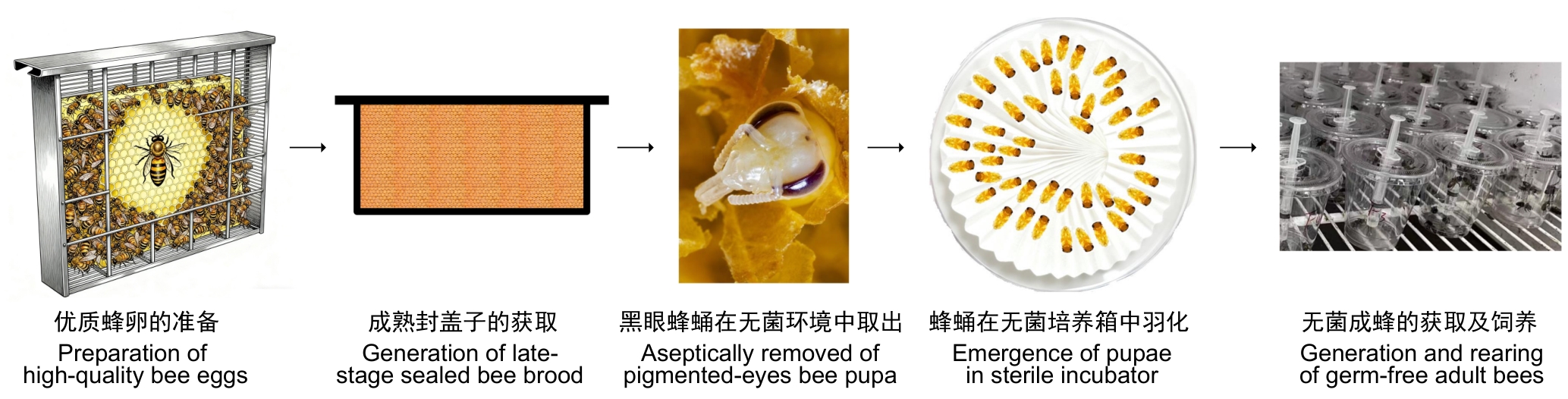
Figure 1 Diagrams of germ-free bee model construction
| [1] | 秦川, 魏泓, 谭毅, 等. 实验动物学(第2版)[M]. 北京: 人民卫生出版社, 2021. |
| QIN C, WEI H, TAN Y, et al. Laboratory animal science[M]. 2nd ed. Beijing: People's Health Publishing House, 2021. | |
| [2] | 中华人民共和国中央人民政府网. 习近平主持中共中央政治局第三十三次集体学习并发表重要讲话[EB/OL]. (2021-09-29)[2025-12-04]. . |
| The Central People's Government of the People's Republic of China website. Xi Jinping presided over the 33rd collective study session of the Political Bureau of the CPC Central Committee and delivered an important speech [EB/OL]. (2021-09-29)[2025-12-04]. . | |
| [3] | 秦川, 孔琪, 钱军, 等. 实验动物科学技术是生命科学和健康中国建设的基础支撑条件[J]. 科技导报, 2017, 35(11): 10-14. DOI: CNKI:SUN:KJDB.0.2017-11-004 . |
| QIN C, KONG Q, QIAN J, et al. Laboratory animal science and technology is strategically important to life science and health China construction[J]. Sci Technol Rev, 2017, 35(11): 10-14. DOI: CNKI:SUN:KJDB.0.2017-11-004 . | |
| [4] | 赵心刚, 卢凡, 程苹, 等. 我国实验动物资源建设的问题与展望[J]. 中国科学院院刊, 2019, 34(12): 1371-1378. DOI: 10.16418/j.issn.1000-3045.2019.12.006 . |
| ZHAO X G, LU F, CHENG P, et al. Problems and prospects of laboratory animal resources in China[J]. Bull Chin Acad Sci, 2019, 34(12): 1371-1378. DOI: 10.16418/j.issn.1000-3045.2019.12.006 . | |
| [5] | 陈俊, 江舒文. 进口实验动物那些事儿[J]. 中国海关, 2020(5): 44-45. |
| CHEN J, JIANG S W. Those things about importing experimental animals[J]. China Cust, 2020(5): 44-45. | |
| [6] | O'BRIEN T J, BARLOW I L FERIANI L, et al. High-throughput tracking enables systematic phenotyping and drug repurposing in C. elegans disease models[J]. Elife, 2025: 1-17. DOI: 10.7554/eLife.92491 . |
| [7] | HUANG Z Y, BIAN G W, XI Z Y, et al. Genes important for survival or reproduction in Varroa destructor identified by RNAi[J]. Insect Sci, 2019, 26(1): 68-75. DOI: 10.1111/1744-7917.12513 . |
| [8] | BOUKRAA L. Bee products: the rediscovered antibiotics[J]. Anti Infect Agents, 2015, 13(1): 36-41. DOI: 10.2174/2211352513666150318233855 . |
| [9] | CALDERONE N W. Insect pollinated crops, insect pollinators and US agriculture: trend analysis of aggregate data for the period 1992-2009[J]. PLoS One, 2012, 7(5): e37235. DOI: 10.1371/journal.pone.0037235 . |
| [10] | GIURFA M, MENZEL R. Human spatial representation derived from a honeybee compass[J]. Trends Cogn Sci, 2003, 7(2): 59-60. DOI: 10.1016/s1364-6613(02)00044-x . |
| [11] | IHLE K E, RUEPPELL O, HUANG Z Y, et al. Genetic architecture of a hormonal response to gene knockdown in honey bees[J]. J Hered, 2015, 106(2): 155-165. DOI: 10.1093/jhered/esu086 . |
| [12] | 罗照亮. 蜜蜂授粉助力绿色农业——记蓬勃发展中的北京市蜜蜂授粉产业[J]. 中国蜂业, 2023, 74(6): 36-37. DOI: 10.3969/j.issn.0412-4367.2023.06.018 . |
| LUO Z L. Bee pollination helps green agriculture: The booming bee pollination industry in Beijing[J]. Apic China, 2023, 74(6): 36-37. DOI: 10.3969/j.issn.0412-4367.2023.06.018 . | |
| [13] | MORSE R A, CALDERONE N W. The value of honey bees as pollinators of U.S[EB/OL]. (2003-06-13)[2025-12-04]. . |
| [14] | LIU J H, LIAO C H, LI Z, et al. Synergistic resistance of honeybee (Apis mellifera) and their gut microorganisms to fluvalinate stress[J]. Pestic Biochem Physiol, 2024, 201: 105865. DOI: 10.1016/j.pestbp.2024.105865 . |
| [15] | NIEH J C, ENDLER M, RUBANOV A, et al. Immune priming of honey bees protects against a major microsporidian pathogen[J]. Pest Manag Sci, 2025, 81(12): 7939-7949. DOI: 10.1002/ps.70106 . |
| [16] | MARGOTTA J W, MANCINELLI G E, BENITO A A, et al. Effects of flight on gene expression and aging in the honey bee brain and flight muscle[J]. Insects, 2013, 4(1): 9-30. DOI: 10.3390/insects4010009 . |
| [17] | FENG Y, WEI R K, CHEN Q L, et al. Host specificity and cophylogeny in the "animal-gut bacteria-phage" tripartite system[J]. NPJ Biofilms Microbiomes, 2024, 10: 1-12. DOI: 10.1038/s41522-024-00557-x . |
| [18] | MÜNCH D, AMDAM G V, WOLSCHIN F. Ageing in a eusocial insect: molecular and physiological characteristics of life span plasticity in the honey bee[J]. Funct Ecol, 2008, 22(3): 407-421. DOI: 10.1111/j.1365-2435.2008.01419.x . |
| [19] | ZHANG Z J, MU X H, SHI Y, et al. Distinct roles of honeybee gut bacteria on host metabolism and neurological processes[J]. Microbiol Spectr, 2022, 10(2): 1-15. DOI: 10.1128/spectrum. 02438-21 . |
| [20] | LANG H Y, DUAN H J, WANG J N, et al. Specific strains of honeybee gut Lactobacillus stimulate host immune system to protect against pathogenic Hafnia alvei [J]. Microbiol Spectr, 2022, 10(1): 1-15. DOI: 10.1128/spectrum.01896-21 . |
| [21] | HUANG J, ZHANG Z, FENG W, et al. Food wanting is mediated by transient activation of dopaminergic signaling in the honey bee brain[J]. Science, 2022, 376(6592): 508-512. DOI: 10.1126/science.abn9920 . |
| [22] | DONG S H, LIN T, NIEH J C, et al. Social signal learning of the waggle dance in honey bees[J]. Science, 2023, 379(6636): 1015-1018. DOI: 10.1126/science.ade1702 . |
| [23] | POWELL J E, MARTINSON V G, URBAN-MEAD K, et al. Routes of acquisition of the gut microbiota of the honey bee Apis mellifera [J]. Appl Environ Microbiol, 2014, 80(23): 7378-7387. DOI: 10.1128/AEM.01861-14 . |
| [24] | 陈盛禄. 中国蜜蜂学[M]. 北京: 中国农业出版社, 2001. |
| CHEN S L. The Apicultural Science in China[M]. Beijing: China Agriculture Press, 2001. | |
| [25] | LOZUPONE C A, STOMBAUGH J I, GORDON J I, et al. Diversity, stability and resilience of the human gut microbiota[J]. Nature, 2012, 489(7415): 220-230. DOI: 10.1038/nature11550 . |
| [26] | SPILLMAN E C, SHEPHERD A K, KUANG M C, et al. Gut microbial metabolites link dietary history to appetite regulation[J]. J Neurogenet, 2025: 1-10. DOI: 10.1080/01677063. 2025.2548783 . |
| [27] | KNOP M, TREITZ C, BETTENDORF S, et al. Mitochondrial sirtuin 4 shapes the intestinal microbiota of Drosophila by controlling lysozyme expression[J]. Anim Microbiome, 2025, 7(1): 1-17. DOI: 10.1186/s42523-025-00431-x . |
| [28] | RIVERA D E, POIRIER K, MOORE S, et al. Dynamics of gut colonization by commensal and pathogenic bacteria that attach to the intestinal epithelium[J]. NPJ Biofilms Microbiomes, 2025, 11(1): 1-15. DOI: 10.1038/s41522-025-00696-9 . |
| [29] | LI Y, BAI R J, ZHU Y, et al. Genetic variation in gut microbe as a key regulator of host social behavior in C. elegans [J]. Gut Microbes, 2025, 17(1): 1-13. DOI: 10.1080/19490976.2025.2490828 . |
| [30] | DOUGLAS A E. The Drosophila model for microbiome research[J]. Lab Anim, 2018, 47(6): 157-164. DOI: 10.1038/s41684-018-0065-0 . |
| [31] | DIRKSEN P, MARSH S A, BRAKER I, et al. The native microbiome of the nematode Caenorhabditis elegans: gateway to a new host-microbiome model[J]. BMC Biol, 2016, 14(1): 1-16. DOI: 10.1186/s12915-016-0258-1 . |
| [32] | MENG Y J, ZHANG X, ZHAI Y F, et al. Identification of the mutual gliding locus as a factor for gut colonization in non-native bee hosts using the ARTP mutagenesis[J]. Microbiome, 2024, 12(1): 1-17. DOI: 10.1186/s40168-024-01813-0 . |
| [33] | HUANG Q, LARIVIERE P J, POWELL J E, et al. Engineered gut symbiont inhibits microsporidian parasite and improves honey bee survival[J]. Proc Natl Acad Sci USA, 2023, 120(25): 1-6. DOI: 10.1073/pnas.2220922120 . |
| [34] | LANG H Y, WANG H, WANG H Q, et al. Engineered symbiotic bacteria interfering Nosema redox system inhibit microsporidia parasitism in honeybees[J]. Nat Commun, 2023, 14(1): 1-12. DOI: 10.1038/s41467-023-38498-2 . |
| [35] | EVANS J D, ARONSTEIN K, CHEN Y P, et al. Immune pathways and defence mechanisms in honey bees Apis mellifera [J]. Insect Mol Biol, 2006, 15(5): 645-656. DOI: 10.1111/j.1365-2583.2006.00682.x . |
| [36] | WU J Q, LANG H Y, MU X H, et al. Honey bee genetics shape the strain-level structure of gut microbiota in social transmission[J]. Microbiome, 2021, 9(1): 1-19. DOI: 10.1186/s40168-021-01174-y . |
| [37] | TANG J B, ZUO W L, GUO L Z, et al. Synergistic pectin deconstruction is a prerequisite for mutualistic interactions between honeybee gut bacteria[J]. Nat Commun, 2024, 15(1): 1-16. DOI: 10.1038/s41467-024-51365-y . |
| [38] | KWONG W K, MORAN N A. Gut microbial communities of social bees[J]. Nat Rev Microbiol, 2016, 14(6): 374-384. DOI: 10.1038/nrmicro.2016.43 . |
| [39] | EMERY O, SCHMIDT K, ENGEL P. Immune system stimulation by the gut symbiont Frischella perrara in the honey bee (Apis mellifera)[J]. Mol Ecol, 2017, 26(9): 2576-2590. DOI: 10.1111/mec.14058 . |
| [40] | ZHENG H, POWELL J E, STEELE M I, et al. Honeybee gut microbiota promotes host weight gain via bacterial metabolism and hormonal signaling[J]. Proc Natl Acad Sci USA, 2017, 114(18): 4775-4780. DOI: 10.1073/pnas.1701819114 . |
| [41] | LI W F, EVANS J D, LI J H, et al. Spore load and immune response of honey bees naturally infected by Nosema ceranae [J]. Parasitol Res, 2017, 116(12): 3265-3274. DOI: 10.1007/s00436-017-5630-8 . |
| [42] | BLOT N, VEILLAT L, ROUZÉ R, et al. Glyphosate, but not its metabolite AMPA, alters the honeybee gut microbiota[J]. PLoS One, 2019, 14(4): 1-16. DOI: 10.1371/journal.pone.0215466 . |
| [43] | HAN B F, HU J W, YANG C F, et al. Lactobacillus Firm-5-derived succinate prevents honeybees from having diabetes-like symptoms[J]. Proc Natl Acad Sci USA, 2024, 121(36): 1-11. DOI: 10.1073/pnas.2405410121 . |
| [44] | JIN M J, BARRON A B, HE S Y, et al. Bombella intestini: a probiotic honeybee(Apis mellifera)gut bacterium[J]. J Insect Physiol, 2025, 164: 104836. DOI: 10.1016/j.jinsphys.2025.104836 . |
| [45] | ZHONG Z P, MU X H, LANG H Y, et al. Gut symbiont-derived anandamide promotes reward learning in honeybees by activating the endocannabinoid pathway[J]. Cell Host Microbe, 2024, 32(11): 1944-1958, e1-e7. DOI: 10.1016/j.chom.2024.09.013 . |
| [46] | MINAHAN D, GOREN M, SHAFIR S. Unbalanced dietary omega-6: 3 ratio affects onset of nursing and nurse–larvae interactions by honey bees, Apis mellifera [J]. Anim Behav, 2024, 213: 235-246. DOI: 10.1016/j.anbehav.2024.05.007 . |
| [47] | RAYMANN K, BOBAY L M, MORAN N A. Antibiotics reduce genetic diversity of core species in the honeybee gut microbiome[J]. Mol Ecol, 2018, 27(8): 2057-2066. DOI: 10.1111/mec.14434 . |
| [48] | SBAGHDI T, GARNEAU J R, YERSIN S, et al. The response of the honey bee gut microbiota to Nosema ceranae is modulated by the probiotic Pediococcus acidilactici and the neonicotinoid thiamethoxam[J]. Microorganisms, 2024, 12(1): 1-14. DOI: 10.3390/microorganisms12010192 . |
| [49] | SHI J L, ZHANG Y H, LIU J H, et al. Larval antibiotic exposure causes persistent impacts on honeybees across life stages via metabolic succession[J]. J Hazard Mater, 2025, 497: 139628. DOI: 10.1016/j.jhazmat.2025.139628 . |
| [50] | ZHANG Z J, MU X H, CAO Q N, et al. Antibiotic exposure alters the honeybee gut microbiota and may interfere with the honeybee behavioral caste transition[J]. Insect Sci, 2025, 32(1): 260-276. DOI: 10.1111/1744-7917.13374 . |
| [51] | NOWAK A, SZCZUKA D, GÓRCZYŃSKA A, et al. Characteri-zation of Apis mellifera gastrointestinal microbiota and lactic acid bacteria for honeybee protection-a review[J]. Cells, 2021, 10(3): 701. DOI: 10.3390/cells10030701 . |
| [52] | HARIPRASATH K, MOHANKUMAR S, SUDHA M, et al. The role of honeybee gut and honey microbiome in sustainable bee and human health[J]. J Pure Appl Microbiol, 2025, 19(1): 19-33. DOI: 10.22207/jpam.19.1.03 . |
| [53] | 谢建芸. 东方田鼠作为一种实验动物新资源的研究进展报告[J]. 实验动物与比较医学, 2023, 43(5): 482-491. DOI: 10.12300/j.issn.1674-5817.2023.114 . |
| XIE J Y. Research progress report on Microtus fortis as a new resource of laboratory animal[J]. Lab Anim Comp Med, 2023, 43(5): 482-491. DOI: 10.12300/j.issn.1674-5817.2023.114 . | |
| [54] | 杜小燕, 刘云波. 中国实验动物资源鉴定与评价工作进展分析[J]. 实验动物与比较医学, 2024, 44(5): 469-474. DOI: 10.12300/j.issn.1674-5817.2024.050 . |
| DU X Y, LIU Y B. Analysis of the progress in identification and evaluation of laboratory animal resources in China[J]. Lab Anim Comp Med, 2024, 44(5): 469-474. DOI: 10.12300/j.issn.1674-5817.2024.050 . |
| [1] | LI Hongman, CHEN Yutong, SHI Yingpei, WANG Yijing, PAN Yan, XU Tong, ZHOU Yi, DENG Qiyue, LIU Xue. A New Perspective on Mental Health Assessment in Laboratory Animals: Stress Response Monitoring Based on Hair Characteristics [J]. Laboratory Animal and Comparative Medicine, 2026, 46(4): 553-563. |
| [2] | HE Miao, ZHANG Xuxing, WU Gang, ZHOU Yi, RAO Hao, HU Xiangyu. Analysis of Animal Models of Lumbar Spinal Stenosis Based on Clinical Characteristics of Traditional Chinese and Western Medicine [J]. Laboratory Animal and Comparative Medicine, 2026, 46(4): 541-552. |
| [3] | MA Wenjing, LIU Yanping, LI Yifan, GUO Huan, XIE Lihui, DU Longji, MA Jiali, WANG Hongping, LI Jiamin. Practice in Validity Period Management of Disinfectants, Feed, and Bedding in Laboratory Animal Facilities under Good Laboratory Practice Management System [J]. Laboratory Animal and Comparative Medicine, 2026, 46(4): 593-603. |
| [4] | LI Zifa, LIU Shan, SUN Wei, ZHAO Feng, WEI Sheng, LI Qin, XU Kaiyong. Reflections on Building a Science-Education Integration System for Laboratory Animal Science: A Case Study of Shandong University of Traditional Chinese Medicine [J]. Laboratory Animal and Comparative Medicine, 2026, 46(4): 604-610. |
| [5] | WANG Lu, WANG Qingjie, YANG Chunhong, ZHANG Yijian. Application of New Approach Methodologies in Biomedical Field and Their Implementation of "3R" Principle [J]. Laboratory Animal and Comparative Medicine, 2026, 46(4): 573-582. |
| [6] | PAN Linqin, DENG Xiangliang, LUO Yunxia. Advances in Integrative Translational Research on Animal Models of Ischemic Stroke in Traditional Chinese and Western Medicine [J]. Laboratory Animal and Comparative Medicine, 2026, 46(3): 344-356. |
| [7] | CHEN Bing, XIE Xiaojie, TAO Tifu, WANG Jingdong, ZOU Yixing. Research on the Current Situation and Countermeasures for Training and Education of Laboratory Animal Practitioners in Sichuan Province [J]. Laboratory Animal and Comparative Medicine, 2026, 46(3): 456-463. |
| [8] | BU Yu, HOU Jinting, LI Yuanyuan, SHA Jingtao, XIE Chenlu, WANG Wengang, SUN Xingwei. A Review and Evaluation of Integrated Disease and Syndrome Animal Models for Hemorrhoids in Traditional Chinese and Western Medicine [J]. Laboratory Animal and Comparative Medicine, 2026, 46(3): 357-366. |
| [9] | WANG Xiuran, LI Hao, CHEN Zhengtao, YU Yang, ZHANG Suying, TAO Ru, WANG Kezhou. Innovation and Practice in the Construction of "Three-in-one" Talent Training Systems for Laboratory Animal Professionals in Medical Colleges [J]. Laboratory Animal and Comparative Medicine, 2026, 46(3): 446-455. |
| [10] | CHEN Lin, ZHANG Housen, AI Man, QI Chongyang. Research on the High-Quality Development Path of Laboratory Animal Management in Jiangsu Province Empowered by Digital Transformation [J]. Laboratory Animal and Comparative Medicine, 2026, 46(3): 426-436. |
| [11] | LIU Yishu, CAI Liping. Analysis of Current Practices and Exploration of Alternative Technologies in Use of Laboratory Animals for Minimally Invasive Surgery Education and Training [J]. Laboratory Animal and Comparative Medicine, 2026, 46(2): 279-287. |
| [12] | WANG Ying, JI Wentao, XU Shaoqiong, CHEN Guoyuan, FENG Jie, WU Baojin. Monitoring and Analysis of Environmental Microbial Contamination in Laboratory Animal Barrier Facilities [J]. Laboratory Animal and Comparative Medicine, 2026, 46(2): 222-230. |
| [13] | Committee of Experts on Medical Animal Experiments, Chinese Research Hospital Association , Committee of Regenerative Medicine Branch, Chinese Medicinal Biotech Association , HAN Fabin, CHEN Lin, CHEN Zhiguo, LU Ming, LI Yingjun. Guidelines for Selecting Preclinical Animal Models for Drugs and Stem Cell Therapies for Parkinson Disease (2026 Edition) [J]. Laboratory Animal and Comparative Medicine, 2026, 46(2): 153-177. |
| [14] | LI Hui. Advances in Animal Models for Biolinguistic Research [J]. Laboratory Animal and Comparative Medicine, 2026, 46(2): 297-305. |
| [15] | YANG Lin, JIN Meng, WU Hanqing, LI Shun, ZHOU Xiaohui. Establishment and Preliminary Analysis of an AG6 Mouse Encephalopathy Model Induced by Vaccinia Virus Tiantan Strain Infection [J]. Laboratory Animal and Comparative Medicine, 2026, 46(1): 3-10. |
| Viewed | ||||||
|
Full text |
|
|||||
|
Abstract |
|
|||||
