




Laboratory Animal and Comparative Medicine
• XXXX XXXX •
ZHANG Jiaoling( ), LIN Aping, XU Shiying, PAN Dequan, CAI Yijun()(
 )
)
Online:2026-09-04
Correspondence to:
CAI Yijun
CLC Number:
ZHANG Jiaoling,LIN Aping,XU Shiying,et al. Optimization and Application of Mouse Embryo Transfer Technology[J]. Laboratory Animal and Comparative Medicine. DOI: 10.12300/j.issn.1674-5817.2026.069.
Add to citation manager EndNote|Ris|BibTeX
URL: https://www.slarc.org.cn/dwyx/EN/10.12300/j.issn.1674-5817.2026.069
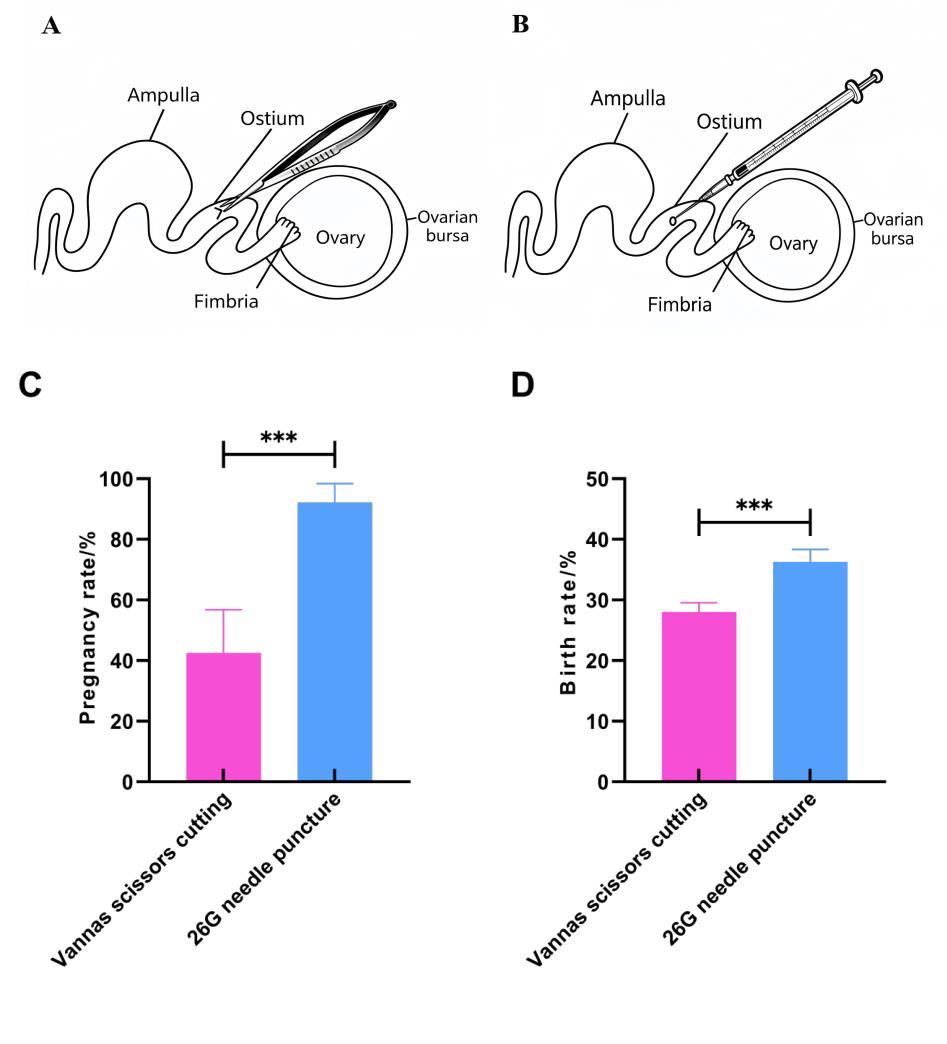
Figure 1 Comparison of two oviduct incision methods (Vannas scissors cutting vs 26G needle puncture) on pregnancy rate and pup birth rate of pseudopregnant ICR mice during embryo transfer
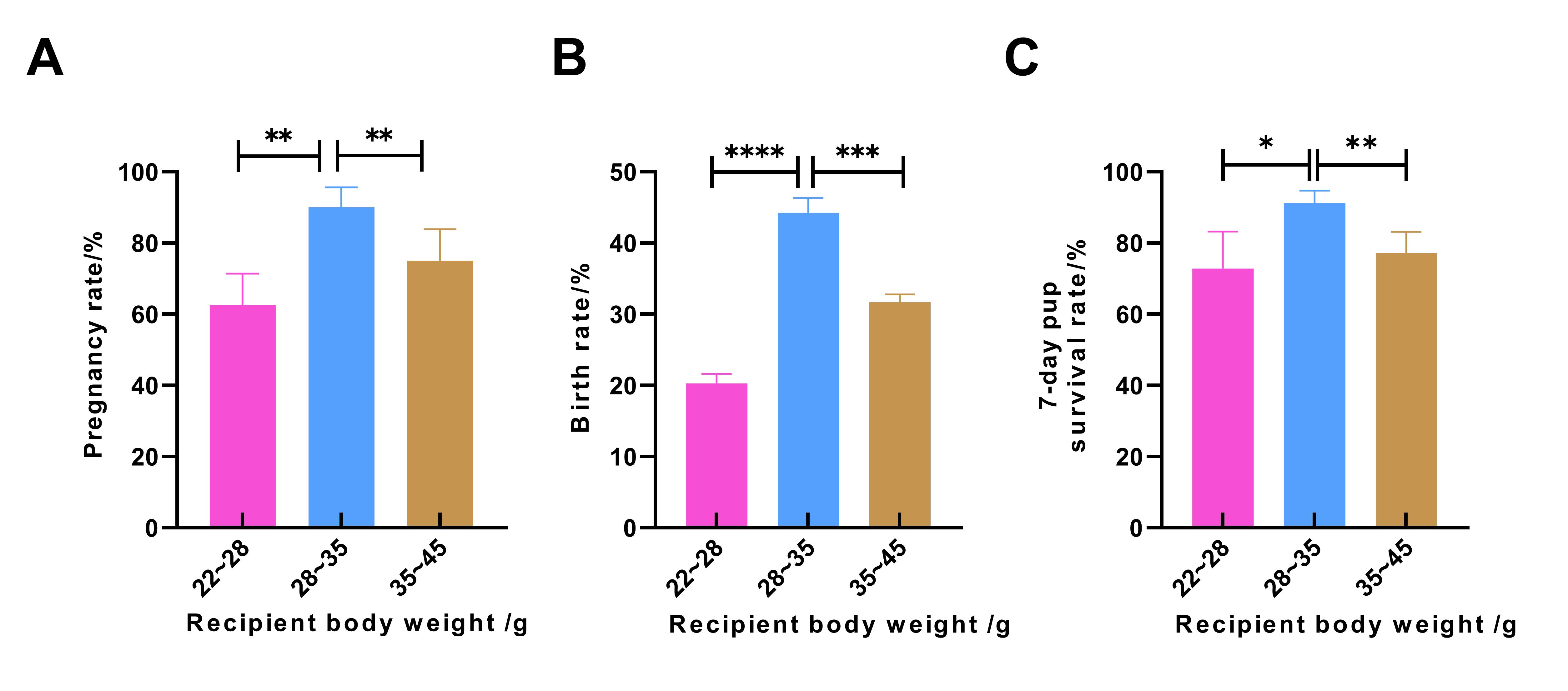
Figure 2 Effects of ICR pseudopregnant recipients with different body weight ranges on pregnancy rate, pup birth rate and 7-day-old pup survival rate following embryo transfer
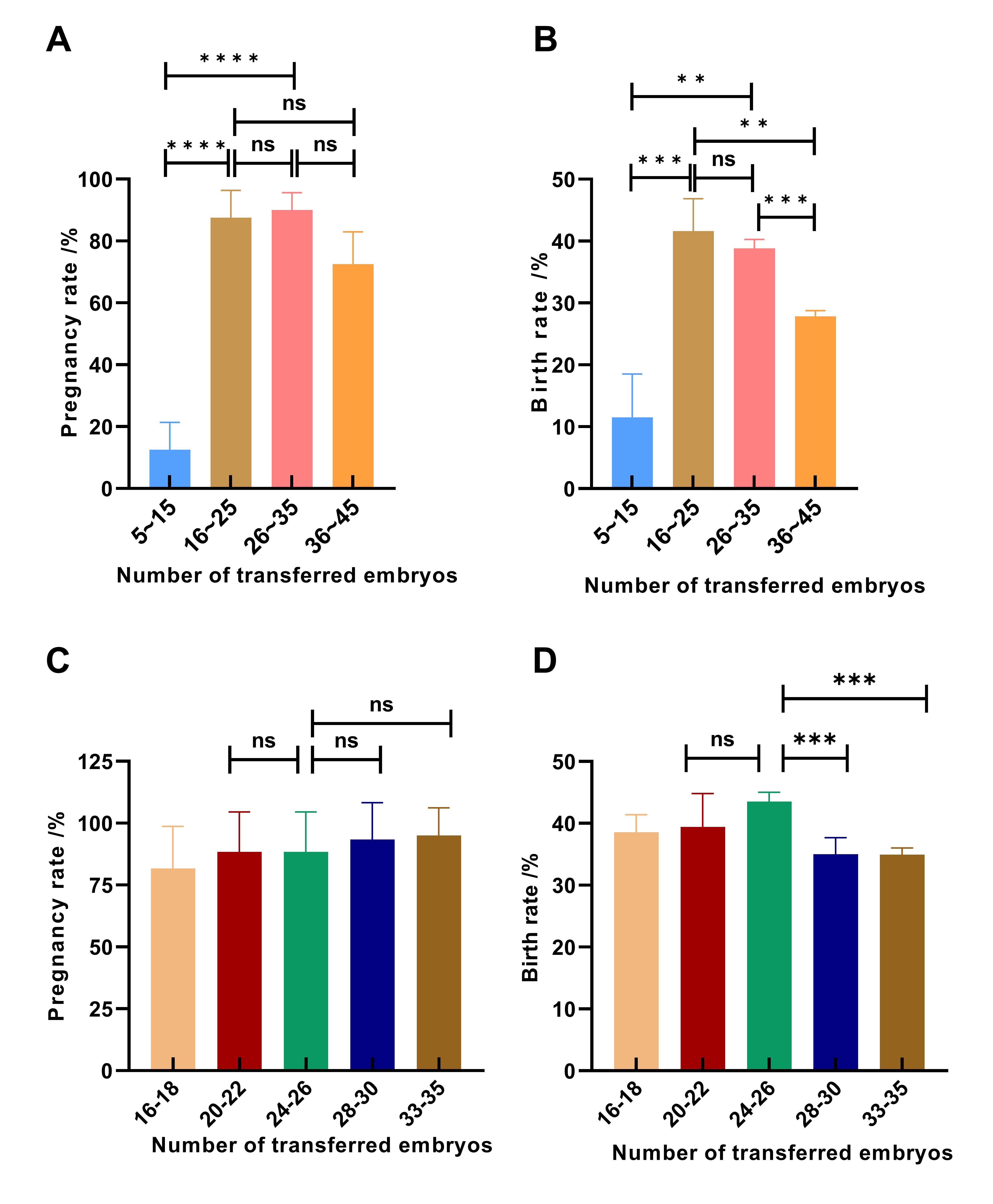
Figure 3 Effects of transferring different numbers of 2-cell embryos in a single operation on pregnancy rate and pup birth rate of pseudopregnant ICR mice
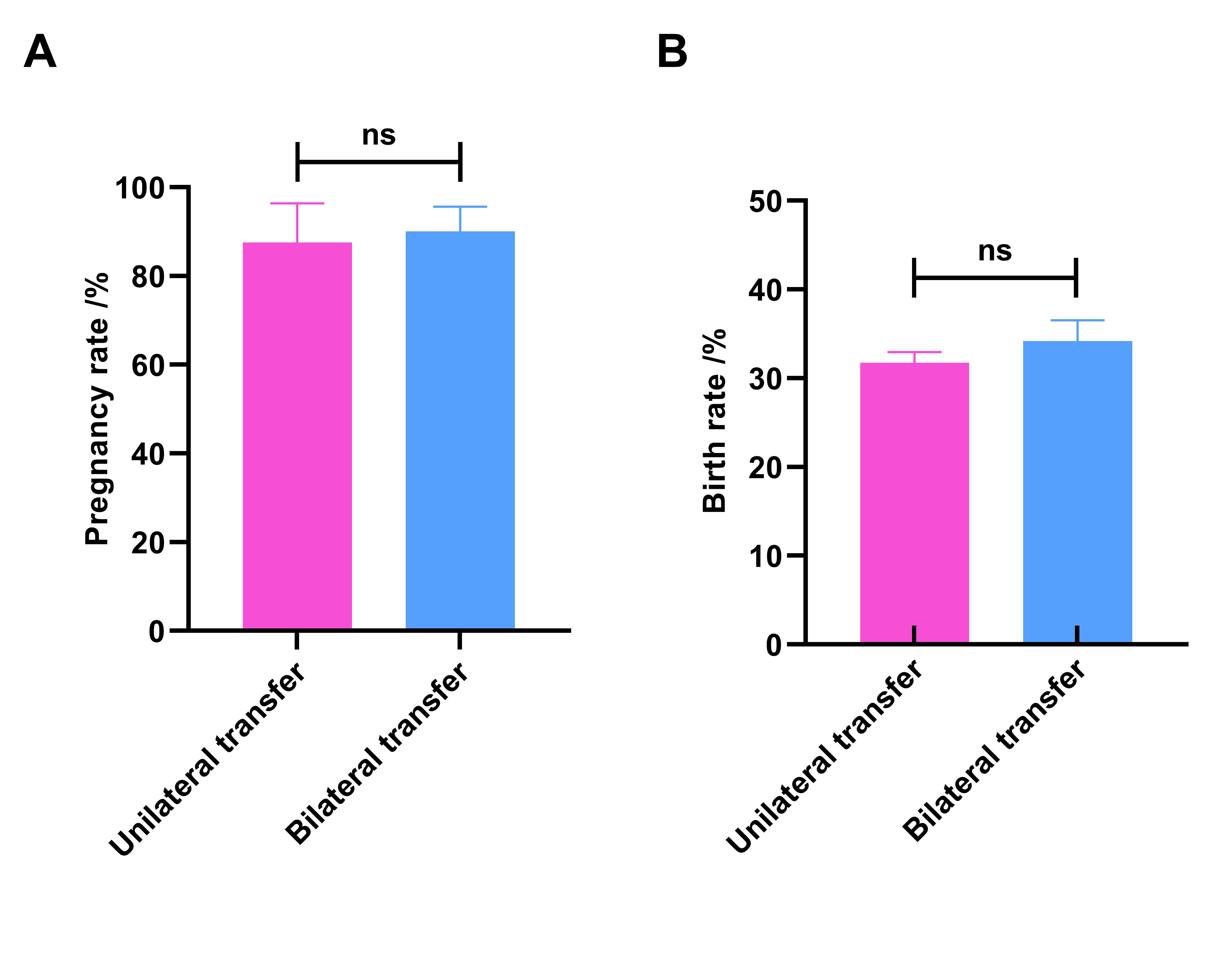
Figure 4 Comparison of pregnancy rate and pup birth rate between unilateral and bilateral oviduct embryo transfer in pseudopregnant ICR mice
| [1] | TARKOWSKI A K. Experiments on the development of isolated blastomeres of mouse eggs[J]. Nature, 1959, 184: 1286-1287. DOI: 10.1038/1841286a0 . |
| [2] | 刘伟, 陶芳标, 黄德武, 等. 应用胚胎移植技术培育SPF级小鼠的研究进展[J]. 河北联合大学学报(医学版), 2013, 15(1): 30-32. DOI: 10.3969/j.issn.1008-6633.2013.01.018.LIU W , |
| [3] | 王超. 基因修饰小鼠制备常用技术[M]. 北京: 中国农业大学出版社, 2013: 21. |
| TAO F B, HUANG D W, et al. Research progress in cultivating SPF mice by embryo transfer technology[J]. J Hebei United Univ (Health Sci), 2013, 15(1): 30-32. DOI: 10.3969/j.issn.1008-6633.2013.01.018 .WANG C. Common techniques for the preparation of genetically modified mice[M]. Beijing: China Agricultural University Press, 2013: 21. | |
| [4] | XUE Y M, LING C, ZHENG H X, et al. Supplementation with oviductal EVs from the estrus, metestrus, and diestrus stages improved developmental competence of IVF mouse embryos[J]. Sci Rep, 2025, 15: 23376. DOI: 10.1038/s41598-025-07195-z . |
| [5] | KORCHIVAIA E, IVANOVA A, VOLODYAEV I, et al. Comparison of preimplantation mouse embryos with different genetic backgrounds as models for evaluating human embryo culture media composition[J]. Reprod Sci, 2024, 31(12): 3688-3696. DOI: 10.1007/s43032-024-01726-1 . |
| [6] | YOSHIMI K, KUNO A, YAMAUCHI Y, et al. Genome editing using type I-E CRISPR-Cas3 in mice and rat zygotes[J]. Cell Rep Methods, 2024, 4(8): 100833. DOI: 10.1016/j.crmeth.2024.100833 . |
| [7] | SAKURAI T, TAKEI N, WEI Y X, et al. Efficient genome editing of two-cell mouse embryos via modified CRISPR/Cas electroporation[J]. Sci Rep, 2024, 14: 30347. DOI: 10.1038/s41598-024-81198-0 . |
| [8] | MONCAUT N. Streamlining mouse genome editing by integrating AAV repair template delivery and CRISPR-Cas electroporation[J]. Lab Anim, 2024, 53(5): 115-116. DOI: 10.1038/s41684-024-01363-w . |
| [9] | BOUCHAREB A, BIGGS D, ALGHADBAN S, et al. Increasing knockin efficiency in mouse zygotes by transient hypothermia[J]. CRISPR J, 2024, 7(2): 111-119. DOI: 10.1089/crispr.2023.0077 . |
| [10] | IWATA S, NAGAHARA M, IDO R, et al. A Recql5 mutant facilitates complex CRISPR/Cas9-mediated chromosomal engineering in mouse zygotes[J]. Genetics, 2024, 227(2): iyae054. DOI: 10.1093/genetics/iyae054 . |
| [11] | 聂永强, 王朝霞. 高校基因编辑小鼠一站式服务平台建设的探索与实践: 以上海交通大学为例[J]. 实验动物与比较医学, 2025, 45(5): 642-648. DOI: 10.12300/j.issn.1674-5817.2025.036 . |
| NIE Y Q, WANG Z X. Exploration and practice of building a one-stop service platform for gene-edited mice in university animal centers: a case study of Shanghai Jiao Tong University[J]. Lab Anim Comp Med, 2025, 45(5): 642-648. DOI: 10.12300/j.issn.1674-5817.2025.036 . | |
| [12] | 王芊芊, 陶斯珏, 卫振, 等. 利用辅助生殖技术挽救基因修饰小鼠的实例分析[J]. 实验动物与比较医学, 2025, 45(1): 79-86. DOI: 10.12300/j.issn.1674-5817.2024.107 . |
| WANG Q Q, TAO S J, WEI Z, et al. A case study of using assisted reproductive technology to rescue genetically modified mice with reproductive disorder phenotypes[J]. Lab Anim Comp Med, 2025, 45(1): 79-86. DOI: 10.12300/j.issn.1674-5817.2024.107 . | |
| [13] | PELTIER M, RASPA M, PUTTI S, et al. Cryopreservation at-80 ℃ impacts sperm integrity and fertility in a mouse strain-dependent manner[J]. Theriogenology, 2025, 245: 117523. DOI: 10.1016/j.theriogenology.2025.117523 . |
| [14] | KOÇAK G, YILDIZ C. The effects of ferulic acid, tryptophan, and L-glutamine on the cryopreservation of mouse spermatozoa[J]. Biopreserv Biobank, 2024, 22(3): 286-293. DOI: 10.1089/bio.2023.0067 . |
| [15] | IGONINA T N, RAKHMANOVA T A, OMELCHENKO A N, et al. Effects of stearic acid on the embryo cryopreservation in mouse[J]. Cryo Letters, 2024, 45(1): 28-35. |
| [16] | CRISPO M, MEIKLE M N, RÜLICKE T. Cryopreservation of valuable mouse and rat lines[M]//Rodent Quality Control: Genes and Bugs: Monitoring Health and Genetics of Laboratory Animals. Cham: Springer International Publishing, 2024:97-112. DOI: 10.1007/978-3-031-59103-7_6 . |
| [17] | HODGSON T, LANE H, HORSLER H, et al. An improved vitrification protocol for the fast and safe storage of mouse oocytes[J]. Biol Reprod, 2025, 113(6): 1355-1363. DOI: 10.1093/biolre/ioaf215 . |
| [18] | XU S Y, LEI Y, WEI M L, et al. Transparent alumina ceramics-based microfluidic chip enables on-chip cryopreservation for mouse oocyte[J]. Adv Funct Mater, 2025, 35(33): 2503296. DOI: 10.1002/adfm.202503296 . |
| [19] | YANG L D, YANG Z S, GUO X M, et al. Research progress on novel bionic cryoprotectants in gamete and embryo cryopreservation[J]. Front Vet Sci, 2026, 13: 1797831. DOI: 10.3389/fvets.2026.1797831 . |
| [20] | CHEN S Q, ZHANG M Z, LI L, et al. Loss of methylation of H19-imprinted gene derived from assisted reproductive technologies can be mitigated by cleavage-stage embryo transfer in mice[J]. J Assist Reprod Genet, 2019, 36(11): 2259-2269. DOI: 10.1007/s10815-019-01575-x . |
| [21] | GOH B T, SMITH G W, SAMARASINGHE L, et al. Penicillin concentrations in serum and cerebrospinal fluid after intramuscular injection of aqueous procaine penicillin 0.6 MU with and without probenecid[J]. Sex Transm Infect, 1984, 60(6): 371-373. DOI: 10.1136/sti.60.6.371 . |
| [22] | 熊文静, 母丹丹, 任静, 等. C57BL/6J小鼠胚胎单侧和双侧移植的比较研究[J]. 实验动物科学, 2025, 42(6): 55-59. DOI: 10.3969/j.issn.1006-6179.2025.06.009 . |
| XIONG W J, MU D D, REN J, et al. Comparison of unilateral and bilateral embryo transfer in C57BL/6J mice[J]. Lab Anim Sci, 2025, 42(6): 55-59. DOI: 10.3969/j.issn.1006-6179.2025.06.009 . | |
| [23] | 王倩, 刘亮亮. 小鼠体外受精代孕鼠体重和饲料对其生产的影响[J]. 中南农业科技, 2023, 44(8): 251-253. DOI: 10.3969/j.issn.1007-273X.2023.08.058 . |
| WANG Q, LIU L L. Effects of body weight and feed on the production of surrogate mice in vitro fertilization[J]. South Cent Agric Sci Technol, 2023, 44(8): 251-253. DOI: 10.3969/j.issn.1007-273X.2023.08.058 . | |
| [24] | 桂飞, 杨伟伟, 孙筱品, 等. 小鼠胚胎移植影响因素的初步探索[J]. 实验动物与比较医学, 2020, 40(6): 483-488. DOI: 10.3969/j.issn.1674-5817.2020.06.004 . |
| GUI F, YANG W W, SUN X P, et al. Preliminary study on the influencing factors of mouse embryo transfer[J]. Lab Anim Comp Med, 2020, 40(6): 483-488. DOI: 10.3969/j.issn.1674-5817.2020.06.004 . | |
| [25] | 陈通克, 陈锡文. 利用体外受精-胚胎移植技术对ALK3基因敲除小鼠进行保种鉴定[J]. 江西畜牧兽医杂志, 2011(1): 11-13. DOI: 10.3969/j.issn.1004-2342.2011.01.005.CHEN T K , |
| ZHANG J F, HAO J J, XU Q L, et al. Effect of various factors on mouse oocytes in vitro fertilization[J]. J Domest Anim Ecol, 2021, 42(3): 38-42. DOI: 10.3969/j.issn.1673-1182.2021.03.007 .CHEN X W. In vitro fertilization-embryo transfer technique was used to identify the species of ALK3 knockout mice[J]. Jiangxi Journal of Animal Husbandry & Veterinary Medicine, 2011(1): 11-13. DOI: 10.3969/j.issn.1004-2342.2011.01.005 . | |
| 张景锋, 郝京京, 徐秋良, 等. 多种因素对小鼠卵母细胞体外受精效果影响的分析[J]. 家畜生态学报, 2021, 42(3): 38-42. DOI: 10.3969/j.issn.1673-1182.2021.03.007 . | |
| [27] | NAGY A, et al. Manipulating the mouse embryo[M]. Cold Spring Harbor, NY: Cold Spring Harbor Laboratory Press, 2003. |
| [28] | 于天飞, 徐兴军, 杨晓杰, 等. 动物胚胎工程研究进展[J]. 生物学教学, 2011, 36(8): 2-4. DOI: 10.3969/j.issn.1004-7549.2011.08.001 . |
| YU T F, XU X J, YANG X J, et al. Research progress of animal embryo engineering[J]. Biol Teach, 2011, 36(8): 2-4. DOI: 10.3969/j.issn.1004-7549.2011.08.001 . | |
| [29] | 杜凯, 李文光, 吴德国, 等. 小鼠胚胎移植技术优化及对巨细胞病毒净化研究[J]. 实验动物科学, 2019, 36(5): 31-34. DOI: 10.3969/j.issn.1006-6179.2019.05.006 . |
| DU K, LI W G, WU D G, et al. Optimization of mouse embryo transfer technology and purification of cytomegalovirus[J]. Lab Anim Sci, 2019, 36(5): 31-34. DOI: 10.3969/j.issn.1006-6179.2019.05.006 . | |
| [30] | DORSCH M, WITTUR I, GARRELS W. Success of embryo transfer in mice with freshly collected and cryopreserved two-cell embryos with different genetic backgrounds correlated with the number of transferred embryos: a 5-year retrospective analysis[J]. Lab Anim, 2019, 53(6): 577-586. DOI: 10.1177/0023677219832922 . |
| [31] | 杜淼, 陈芳华, 战大伟. 不同遗传背景小鼠输卵管移植效率的研究[J]. 实验动物科学, 2022, 39(4): 44-46. DOI: 10.3969/j.issn.1006-6179.2022.04.009 . |
| DU M, CHEN F H, ZHAN D W. Study on the efficiency of tubal transplantation in mice with different genetic backgrounds[J]. Lab Anim Sci, 2022, 39(4): 44-46. DOI: 10.3969/j.issn.1006-6179.2022.04.009 . |
| [1] | ZHAO Yulei, HAN Bingbing, WANG Xingxin, YANG Guangjian, WANG Yajie, TANG Xiaoyong. Progress in Disease-Syndrome-Integrated Mouse Models of Lung Cancer [J]. Laboratory Animal and Comparative Medicine, 2026, 46(4): 531-540. |
| [2] | GONG Zhiqun, RAO Xiwu, ZHANG Tianyi, WU Rongchen, YE Mingnan, JIANG Chunxi, WANG Sumei, ZHU Yanjuan, CHAI Xiaoshu. Construction and Evaluation of Mouse Models Simulating Immune Checkpoint Inhibitor-Associated Pneumonitis [J]. Laboratory Animal and Comparative Medicine, 2026, 46(4): 498-506. |
| [3] | ZHOU Yimin, ZHANG Xinyu, YANG Jianuo, LIU Mengjia, SI Cancan, YE Hailü, SUN Wenchao, LAN Tian. Development of a Triplex TaqMan Quantitative PCR Method for Simultaneous Detection of MHV, MPV, and Reo-3 [J]. Laboratory Animal and Comparative Medicine, 2026, 46(3): 408-415. |
| [4] | HE Jiaqi, ZHOU Yuanyuan, NIE Yongqiang, WANG Zhaoxia, XU Wangjie. Establishment and Multidimensional Pathological Evaluations of a Cigarette Smoke Exposure-Induced Chronic Obstructive Pulmonary Disease Mouse Model [J]. Laboratory Animal and Comparative Medicine, 2026, 46(1): 11-19. |
| [5] | XU Bo, CHEN Tairen, FANG Qian, WU Ji. Research on Spatiotemporal Gene Expression Profiles and Repair Mechanisms of Spinal Cord Compression and Hemisection Spinal Cord Injury Mouse Models [J]. Laboratory Animal and Comparative Medicine, 2026, 46(1): 32-45. |
| [6] | CAO Xingxin, LI Aiyi, HOU Jinghan, LI Mingxue, LI Yanyan, JIN Weihua, YANG Fengmei, DUAN Suqin, HE Zhanlong. Meta-Analysis of Animal Experiments on Astragali Radix or Its Ingredients for Acute Pancreatitis [J]. Laboratory Animal and Comparative Medicine, 2025, 45(5): 561-573. |
| [7] | GONG Leilei, WANG Xiaoxia, FENG Xuewei, LI Xinlei, ZHAO Han, ZHANG Xueyan, FENG Xin. A Mouse Model and Mechanism Study of Premature Ovarian Insufficiency Induced by Different Concentrations of Cyclophosphamide [J]. Laboratory Animal and Comparative Medicine, 2025, 45(4): 403-410. |
| [8] | JIANG Juan, SONG Ning, LIAN Wenbo, SHAO Congcong, GU Wenwen, SHI Yan. Comparison of Histopathological and Molecular Pathological Phenotypes in Mouse Models of Intrauterine Adhesions Induced by Two Concentrations of Ethanol Perfusion [J]. Laboratory Animal and Comparative Medicine, 2025, 45(4): 393-402. |
| [9] | LUO Lianlian, YUAN Yanchun, WANG Junling, SHI Guangsen. Advances in Mouse Models of Amyotrophic Lateral Sclerosis [J]. Laboratory Animal and Comparative Medicine, 2025, 45(3): 290-299. |
| [10] | PAN Qianjia, GE Junyi, HU Nan, HUA Fei, GU Min. Differential Analysis of Oral Microbiota in db/db Mouse Model of Type 2 Diabetes Utilizing 16S rRNA Sequencing [J]. Laboratory Animal and Comparative Medicine, 2025, 45(2): 147-157. |
| [11] | WANG Qianqian, TAO Sijue, WEI Zhen, JIN Huihui, LIU Ping, WANG Lie. A Case Study of Using Assisted Reproductive Technology to Rescue Genetically Modified Mice with Reproductive Disorder Phenotypes [J]. Laboratory Animal and Comparative Medicine, 2025, 45(1): 79-86. |
| [12] | ZHAO He, ZHANG Fan, XIAO Yuzhou, AN Xuefang, ZHANG Tao, LI Li. Preliminary Diagnosis and Characterization of a Spontaneous Immature Testicular Teratoma in an Interferon Receptor-Deficient Mouse Model [J]. Laboratory Animal and Comparative Medicine, 2024, 44(6): 691-694. |
| [13] | Yongqiang NIE, Zhaoxia WANG. Rescue Technology and Its Application of Endangered Gene-Edited Mice [J]. Laboratory Animal and Comparative Medicine, 2023, 43(6): 636-640. |
| [14] | Ying HUANG, Siyu WEI, Li CAI, Sujing QIANG, Dongting LI, Yuqiang DING. Microbiological Monitoring Analysis of Laboratory Rats and Mice from Vendors: Department of Laboratory Animal Science of Fudan University as an Example [J]. Laboratory Animal and Comparative Medicine, 2023, 43(4): 347-354. |
| [15] | Xue WANG, Yonghe HU. Analysis of Common Types and Construction Elements of Diabetic Mouse Models [J]. Laboratory Animal and Comparative Medicine, 2023, 43(4): 415-421. |
| Viewed | ||||||
|
Full text |
|
|||||
|
Abstract |
|
|||||
