
Laboratory Animal and Comparative Medicine ›› 2026, Vol. 46 ›› Issue (3): 367-377.DOI: 10.12300/j.issn.1674-5817.2025.150
• Quality Control of Laboratory Animals • Previous Articles Next Articles
LI Heling1, QIAN Ziyao1, QIN Gangmin2, JIANG Debing2, ZHANG Yanqiong2, JIN Wenzheng2, WANG Hong1,2( )(
)( )
)
Received:2025-09-16
Revised:2025-12-02
Online:2026-06-25
Published:2026-06-19
Contact:
WANG Hong
CLC Number:
LI Heling,QIAN Ziyao,QIN Gangmin,et al. Isolation, Identification and Biological Characteristics Analysis of Citrobacter freundii from Cynomolgus Monkey (Macaca fascicularis)[J]. Laboratory Animal and Comparative Medicine, 2026, 46(3): 367-377. DOI: 10.12300/j.issn.1674-5817.2025.150.
Add to citation manager EndNote|Ris|BibTeX
URL: https://www.slarc.org.cn/dwyx/EN/10.12300/j.issn.1674-5817.2025.150
引物名称 Primer name | 引物序列(5'→3') Primer sequence (5'→3') | 退火温度/℃ Annealing temperature/℃ | 预期长度/bp Expected length/bp | |
|---|---|---|---|---|
| 16S rRNA | F: AGAGTTTGATCCTGGCTCAG | R: CGGTTACCTTGTTACGACTT | 55.0 | 1 500 |
| cfa | F: TCCAGCGCATTCA | R: TCCAGCCTTCGGCAAACG | 60.5 | 100 |
| ureABC | F: ATGGAACTGACTCCCAGAG | R: TCAAAACAGAAAATAGCGTTGCGCC | 56.5 | 2 328 |
| ureD | F: CCGCAAGAGGACGTTTGC | R: CCGACCCAGGGATGATGT | 60.0 | 459 |
| ureE | F: ACCCAACGCCTTGACCAC | R: AGGATTTGCAGCGGAACG | 63.7 | 293 |
| ureF | F: TGGAAATCGGCTGGGTGA | R: CCCGACTGCGTTCTTCATC | 65.0 | 210 |
| ureG | F: ATCAGCGCATTCTCACCG | R: CAATAATCGTCGCCAGACC | 53.2 | 438 |
Table 1 Primer sequences of 16S rRNA and major virulence genes of Citrobacter freundii
引物名称 Primer name | 引物序列(5'→3') Primer sequence (5'→3') | 退火温度/℃ Annealing temperature/℃ | 预期长度/bp Expected length/bp | |
|---|---|---|---|---|
| 16S rRNA | F: AGAGTTTGATCCTGGCTCAG | R: CGGTTACCTTGTTACGACTT | 55.0 | 1 500 |
| cfa | F: TCCAGCGCATTCA | R: TCCAGCCTTCGGCAAACG | 60.5 | 100 |
| ureABC | F: ATGGAACTGACTCCCAGAG | R: TCAAAACAGAAAATAGCGTTGCGCC | 56.5 | 2 328 |
| ureD | F: CCGCAAGAGGACGTTTGC | R: CCGACCCAGGGATGATGT | 60.0 | 459 |
| ureE | F: ACCCAACGCCTTGACCAC | R: AGGATTTGCAGCGGAACG | 63.7 | 293 |
| ureF | F: TGGAAATCGGCTGGGTGA | R: CCCGACTGCGTTCTTCATC | 65.0 | 210 |
| ureG | F: ATCAGCGCATTCTCACCG | R: CAATAATCGTCGCCAGACC | 53.2 | 438 |
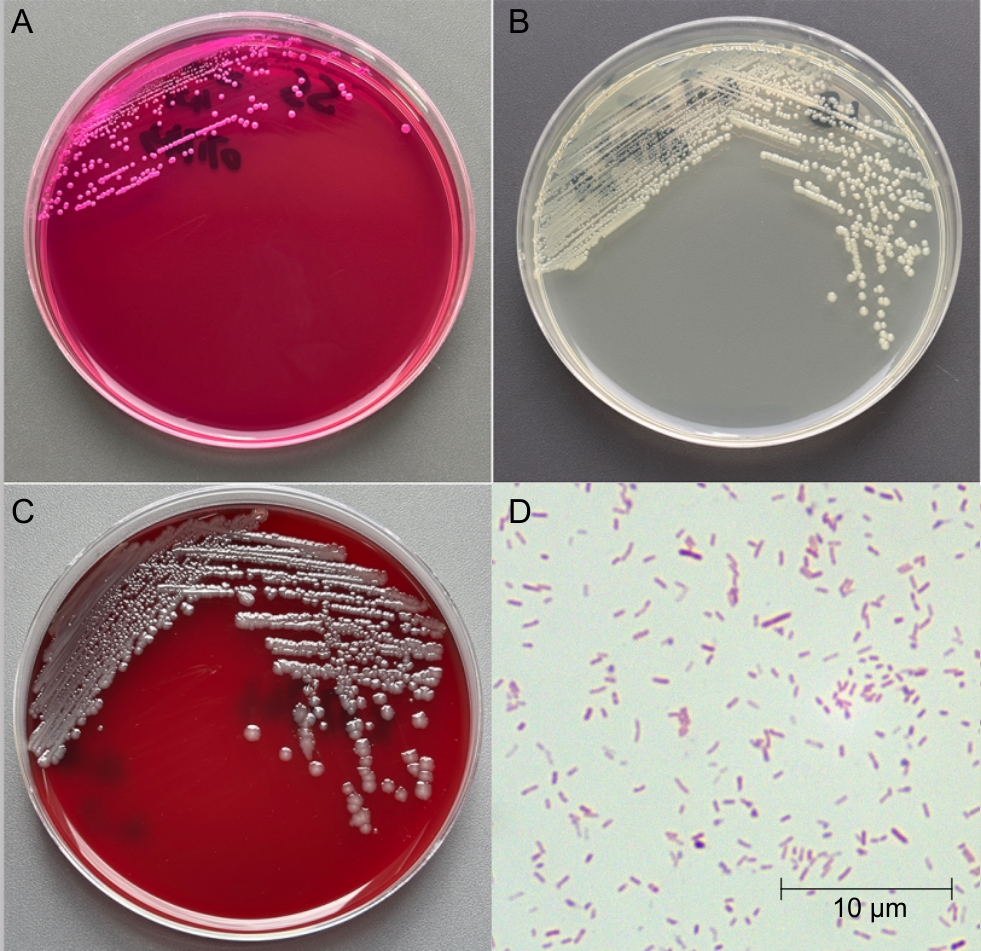
Figure 1 Morphological characteristics of the isolated strain from cynomolgus monkey anal swab samples
检测项目 Test items | 结果 Results | 标准菌株 Reference strains |
|---|---|---|
| 甘露醇试验 Mannitol test | + | + |
| 硫化氢试验 H2S test | + | ± |
| 苯丙氨酸试验 Phenylalanine test | - | - |
| 葡萄糖酸盐试验 Gluconate test | - | - |
| 吲哚试验 Indigo test | - | ± |
| VP试验 Voges Proskauer test | - | - |
| 甲基红试验 Methyl red test | + | + |
| 枸橼酸盐试验 Citrate test | + | ± |
| 脲酶试验 Urease test | - | ± |
| 葡萄糖产气试验 Glucose gas production test | + | ± |
| 赖氨酸试验 Lysine test | - | - |
| 鸟氨酸试验 Ornithine test | - | ± |
| 棉子糖试验 Raffinose test | + | ± |
| 山梨醇试验 Sorbitol test | + | ± |
| 侧金盏花醇试验 Adonitol test | - | - |
| 木糖试验 Xylose test | + | ± |
Table 2 Biochemical test results of the isolated strain MF071743
检测项目 Test items | 结果 Results | 标准菌株 Reference strains |
|---|---|---|
| 甘露醇试验 Mannitol test | + | + |
| 硫化氢试验 H2S test | + | ± |
| 苯丙氨酸试验 Phenylalanine test | - | - |
| 葡萄糖酸盐试验 Gluconate test | - | - |
| 吲哚试验 Indigo test | - | ± |
| VP试验 Voges Proskauer test | - | - |
| 甲基红试验 Methyl red test | + | + |
| 枸橼酸盐试验 Citrate test | + | ± |
| 脲酶试验 Urease test | - | ± |
| 葡萄糖产气试验 Glucose gas production test | + | ± |
| 赖氨酸试验 Lysine test | - | - |
| 鸟氨酸试验 Ornithine test | - | ± |
| 棉子糖试验 Raffinose test | + | ± |
| 山梨醇试验 Sorbitol test | + | ± |
| 侧金盏花醇试验 Adonitol test | - | - |
| 木糖试验 Xylose test | + | ± |
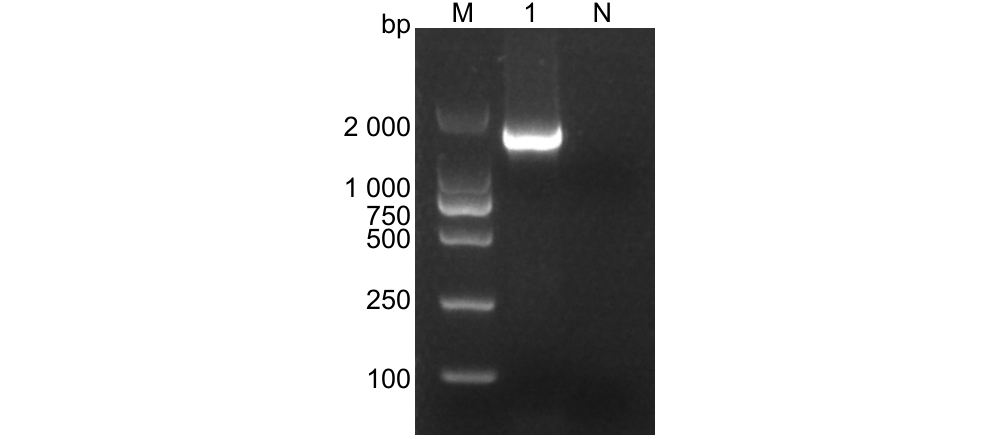
Figure 2 PCR amplification of the 16S rRNA gene of the strain isolated from cynomolgus monkey feces
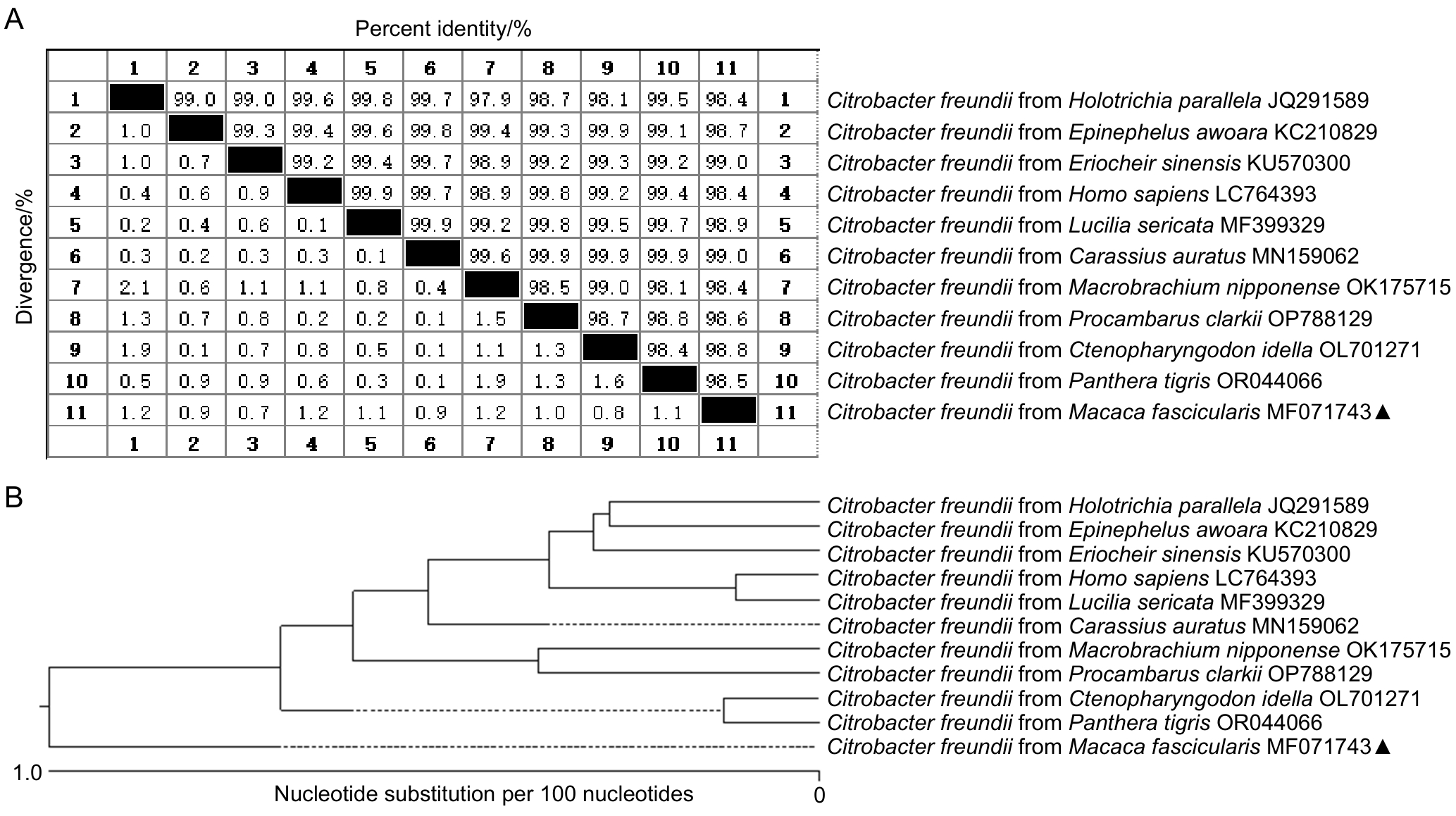
Figure 3 Homology comparison between the isolated strain MF071743 and Citrobacter freundii from different sources (A) and a phylogenetic tree based on 16S rRNA sequences(B)
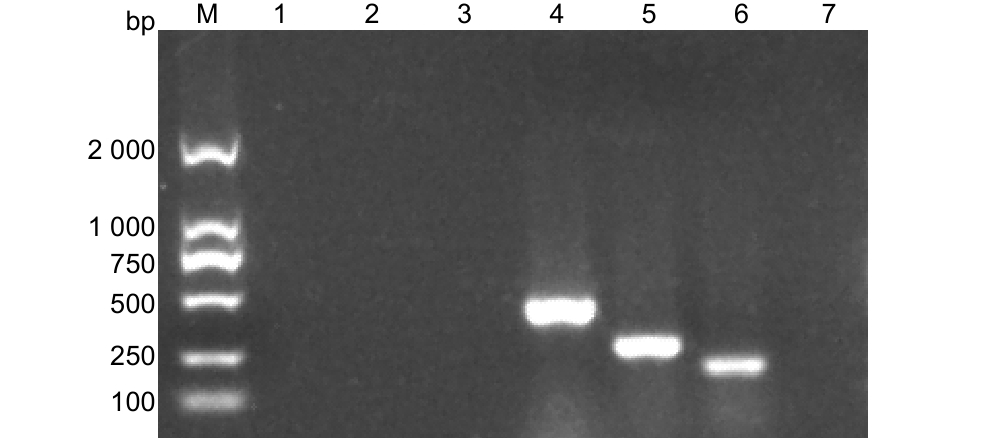
Figure 4 PCR amplification results of major virulence genes of Citrobacter freundii
药物 Drug | 药物含量/(µg·片-1) Drug dose /(µg·disc-1) | 抑菌圈直径/mm Inhibition zone diameter/mm | 判定结果 Assessment result | 判定标准/mm Judgement standard/mm | ||
|---|---|---|---|---|---|---|
| R | I | S | ||||
| 头孢曲松 Ceftriaxone | 30 | 30 | S | ≤13 | 14~22 | ≥23 |
| 阿米卡星 Amikacin | 30 | 24 | S | ≤14 | 15~16 | ≥17 |
| 庆大霉素 Gentamicin | 10±2.5 | 19 | S | ≤12 | 13~14 | ≥15 |
| 氨苄西林 Ampicillin | 10 | 10 | R | ≤13 | 14~16 | ≥17 |
| 头孢唑啉 Cefazolin | 30 | 7 | R | ≤14 | 15~17 | ≥18 |
| 头孢他啶 Ceftazidime | 30 | 26 | S | ≤17 | 18~20 | ≥21 |
| 左氧氟沙星 Levofloxacin | 5 | 28 | S | ≤13 | 14~16 | ≥17 |
| 万古霉素 Vancomycin | 30 | 7 | R | ≤9 | 10~11 | ≥12 |
| 复方磺胺甲𫫇唑 Co-trimoxazole | 23.75 | 24 | S | ≤10 | 11~15 | ≥16 |
| 环丙沙星 Ciprofloxacin | 5 | 29 | S | ≤15 | 16~20 | ≥21 |
| 诺氟沙星 Norfloxacin | 10 | 27 | S | ≤12 | 13~16 | ≥17 |
| 红霉素 Erythromycin | 15 | 7 | R | ≤13 | 14~22 | ≥23 |
| 利福平 Rifampicin | 5 | 7 | I | ≤6 | 7~9 | ≥10 |
| 阿莫西林 Amoxicillin | 10 | 10 | S | ≤5 | 6~9 | ≥10 |
| 呋喃唑酮 Furazolidone | 300 | 18 | S | ≤5 | 6~9 | ≥10 |
| 林可霉素 Lincomycin | 2 | 7 | I | ≤5 | 6~11 | ≥12 |
| 多黏菌素B Polymyxin B | 300 | 13 | S | ≤8 | 9~11 | ≥12 |
| 头孢哌酮 Cefoperazone | 75 | 31 | S | ≤15 | 16~20 | ≥21 |
| 头孢氨苄 Cephalexin | 30 | 7 | R | ≤13 | 14~16 | ≥17 |
| 氧氟沙星 Ofloxacin | 5 | 28 | S | ≤12 | 13~15 | ≥16 |
| 杆菌肽 Bacitracin | 0.04 | 7 | I | ≤6 | 7~9 | ≥10 |
| 亚胺培南 Imipenem | 10 | 23 | S | ≤19 | 20~22 | ≥23 |
| 美罗培南 Meropenem | 10 | 28 | S | ≤19 | 20~22 | ≥23 |
| 阿奇霉素 Azithromycin | 15 | 18 | S | ≤12 | – | ≥13 |
Table 3 Drug susceptibility test results of the isolated strain of Citrobacter freundii
药物 Drug | 药物含量/(µg·片-1) Drug dose /(µg·disc-1) | 抑菌圈直径/mm Inhibition zone diameter/mm | 判定结果 Assessment result | 判定标准/mm Judgement standard/mm | ||
|---|---|---|---|---|---|---|
| R | I | S | ||||
| 头孢曲松 Ceftriaxone | 30 | 30 | S | ≤13 | 14~22 | ≥23 |
| 阿米卡星 Amikacin | 30 | 24 | S | ≤14 | 15~16 | ≥17 |
| 庆大霉素 Gentamicin | 10±2.5 | 19 | S | ≤12 | 13~14 | ≥15 |
| 氨苄西林 Ampicillin | 10 | 10 | R | ≤13 | 14~16 | ≥17 |
| 头孢唑啉 Cefazolin | 30 | 7 | R | ≤14 | 15~17 | ≥18 |
| 头孢他啶 Ceftazidime | 30 | 26 | S | ≤17 | 18~20 | ≥21 |
| 左氧氟沙星 Levofloxacin | 5 | 28 | S | ≤13 | 14~16 | ≥17 |
| 万古霉素 Vancomycin | 30 | 7 | R | ≤9 | 10~11 | ≥12 |
| 复方磺胺甲𫫇唑 Co-trimoxazole | 23.75 | 24 | S | ≤10 | 11~15 | ≥16 |
| 环丙沙星 Ciprofloxacin | 5 | 29 | S | ≤15 | 16~20 | ≥21 |
| 诺氟沙星 Norfloxacin | 10 | 27 | S | ≤12 | 13~16 | ≥17 |
| 红霉素 Erythromycin | 15 | 7 | R | ≤13 | 14~22 | ≥23 |
| 利福平 Rifampicin | 5 | 7 | I | ≤6 | 7~9 | ≥10 |
| 阿莫西林 Amoxicillin | 10 | 10 | S | ≤5 | 6~9 | ≥10 |
| 呋喃唑酮 Furazolidone | 300 | 18 | S | ≤5 | 6~9 | ≥10 |
| 林可霉素 Lincomycin | 2 | 7 | I | ≤5 | 6~11 | ≥12 |
| 多黏菌素B Polymyxin B | 300 | 13 | S | ≤8 | 9~11 | ≥12 |
| 头孢哌酮 Cefoperazone | 75 | 31 | S | ≤15 | 16~20 | ≥21 |
| 头孢氨苄 Cephalexin | 30 | 7 | R | ≤13 | 14~16 | ≥17 |
| 氧氟沙星 Ofloxacin | 5 | 28 | S | ≤12 | 13~15 | ≥16 |
| 杆菌肽 Bacitracin | 0.04 | 7 | I | ≤6 | 7~9 | ≥10 |
| 亚胺培南 Imipenem | 10 | 23 | S | ≤19 | 20~22 | ≥23 |
| 美罗培南 Meropenem | 10 | 28 | S | ≤19 | 20~22 | ≥23 |
| 阿奇霉素 Azithromycin | 15 | 18 | S | ≤12 | – | ≥13 |
| [1] | 陈少锋, 王河, 赵湘培. 食蟹猴在慢性病动物模型药理研究应用中的进展[J]. 药学研究, 2020, 39(9): 536-539. DOI: 10.13506/j.cnki.jpr.2020.09.009 . |
| CHEN S F, WANG H, ZHAO X P. Advances in pharmacology of Cynomolgus monkeys in animal models of chronic diseases[J]. J Pharm Res, 2020, 39(9): 536-539. DOI: 10.13506/j.cnki.jpr.2020.09.009 . | |
| [2] | 王弘义, 麻秀珍, 赵国明, 等. 食蟹猴沙门氏菌和志贺氏菌带菌情况调查[J]. 中国兽医科技, 1997(8): 43-44. DOI: 10.16656/j.issn.1673-4696.1997.08.030 . |
| WANG H Y, MA X Z, ZHAO G M, et al. Investigation on Salmonella and Shigella in Macaca fascicularis[J]. Chin J Vet Sci Technol, 1997(8): 43-44. DOI: 10.16656/j.issn.1673-4696.1997.08.030 . | |
| [3] | 谢永平, 贺会利, 庞彬辉. 患腹泻症状食蟹猴寄生虫和致病菌鉴定与诊断[J]. 安徽农业科学, 2023, 51(2): 104-107. DOI: 10.3969/j.issn.0517-6611.2023.02.026 . |
| XIE Y P, HE H L, PANG B H. Identification and diagnosis of parasites and pathogenic bacteria in Macaca fascicularis with diarrhea symptoms[J]. J Anhui Agric Sci, 2023, 51(2): 104-107. DOI: 10.3969/j.issn.0517-6611.2023.02.026 . | |
| [4] | 邱索平, 凌华枢, 陈文. 食蟹猴肠道志贺氏菌的分离和鉴定[J]. 安徽农业科学, 2007, 35(33): 10730, 10736. DOI: 10.13989/j.cnki.0517-6611.2007.33.116 . |
| QIU S P, LING H S, CHEN W. Isolation and identification of Shigella from the intestinal tract of Macaca fascicularis [J]. J Anhui Agric Sci, 2007, 35(33): 10730, 10736. DOI: 10.13989/j.cnki.0517-6611.2007.33.116 . | |
| [5] | HE Y, YUAN X D, LI J L, et al. Citrobacter freundii caused head ulcer disease and immune response in juvenile Procambarus clarkii [J]. Fishes, 2025, 10(2): 70. DOI: 10.3390/fishes10020070 . |
| [6] | LESKI T A, TAITT C R, BANGURA U, et al. Finished genome sequence of the highly multidrug-resistant human urine isolate Citrobacter freundii strain SL151[J]. Genome Announc, 2016, 4(6): e01225-e01216. DOI: 10.1128/genomeA. 01225-16 . |
| [7] | LIU L Y, CHEN D L, LIU L Q, et al. Genetic diversity, multidrug resistance, and virulence of Citrobacter freundii from diarrheal patients and healthy individuals[J]. Front Cell Infect Microbiol, 2018, 8: 233. DOI: 10.3389/fcimb.2018.00233 . |
| [8] | YANAGAWA Y, HIRANO Y, MATSUMOTO N, et al. A case of emphysematous pyelonephritis induced by Citrobacter freundii infection[J]. J Emerg Trauma Shock, 2013, 6(4): 287. DOI: 10.4103/0974-2700.120380 . |
| [9] | DOMINGOS M O, FRANZOLIN M R, DOS ANJOS M T, et al. The influence of environmental bacteria in freshwater stingray wound-healing[J]. Toxicon, 2011, 58(2): 147-153. DOI: 10.1016/j.toxicon.2011.04.016 . |
| [10] | FERNÁNDEZ A, VELA A I, ANDRADA M, et al. Citrobacter freundii septicemia in a stranded newborn cuvier's beaked whale (Ziphius cavirostris)[J]. J Wildl Dis, 2011, 47(4): 1043-1046. DOI: 10.7589/0090-3558-47.4.1043 . |
| [11] | 刘乃瑜, 王至诚, 何宏港, 等. 鳖源柠檬酸杆菌属新种的分离鉴定与多位点序列[J]. 水产学报, 2023, 47(3): 203-214. DOI: 10.11964/jfc.20210612924 . |
| LIU N Y, WANG Z C, HE H G, et al. Identification and multilocus sequence analysis of a novel species of Citrobacter isolated from diseased Pelodiscus sinensis[J]. J Fish China, 2023, 47(3): 203-214. DOI: 10.11964/jfc.20210612924 . | |
| [12] | 唐海波, 陈凤莲, 饶桂波, 等. 竹鼠源弗氏柠檬酸杆菌的分离鉴定及致病性分析[J]. 畜牧兽医学报, 2017, 48(5): 922-929. DOI: 10.11843/j.issn.0366-6964.2017.05.017 . |
| TANG H B, CHEN F L, RAO G B, et al. Isolation and identification of Citrobacter freundii from the diseased bamboo rats and analysis of the pathogenicity of the isolate[J]. Chin J Anim Vet Sci, 2017, 48(5): 922-929. DOI: 10.11843/j.issn.0366-6964.2017.05.017 . | |
| [13] | 徐静, 冯永其, 段俊堂, 等. 1株灰鹦鹉源弗氏柠檬酸杆菌的分离鉴定及系统发育分析[J]. 中国兽医杂志, 2020, 56(12): 60-61. |
| XU J, FENG Y Q, DUAN J T, et al. Isolation, identification and phylogenetic analysis of a Citrobacter freundii strain from grey parrot[J]. Chin J Vet Med, 2020, 56(12): 60-61. | |
| [14] | BARNES L A, CHERRY W B. A group of paracolon organisms having apparent pathogenicity[J]. Am J Public Health Nations Health, 1946, 36(5): 481-483. |
| [15] | 许国洋, 付文贵, 付利芝, 等. 弗氏柠檬酸杆菌的鉴定及其药敏试验[J]. 动物医学进展, 2024, 45(4): 92-96. DOI: 10.16437/j.cnki.1007-5038.2024.04.010 . |
| XU G Y, FU W G, FU L Z, et al. Identification and drug sensitivity test of Citrobacter freundii [J]. Prog Vet Med, 2024, 45(4): 92-96. DOI: 10.16437/j.cnki.1007-5038.2024.04.010 . | |
| [16] | 孙洋, 郭学军, 周博, 等. 东北虎出血性腹泻病原分离与鉴定[J]. 中国兽医杂志, 2008, 44(9): 89-90. DOI: 10.3969/j.issn.0529-6005.2008.09.024 . |
| SUN Y, GUO X J, ZHOU B, et al. Isolation and identification of pathogens causing hemorrhagic diarrhea in Siberian tiger[J]. Chin J Vet Med, 2008, 44(9): 89-90. DOI: 10.3969/j.issn.0529-6005.2008.09.024 . | |
| [17] | 雷静, 练耕宁, 牟平, 等. 从犊牛腹泻病料中分离到两株弗劳地枸橼酸盐杆菌的报告[J]. 中国奶牛, 2007(7): 33-34. DOI: 10.3969/j.issn.1004-4264.2007.07.014 . |
| LEI J, LIAN G N, MOU P, et al. Report on Two strains of Citrobacter freundii isolated from calves with diarrhea[J]. China Dairy Cattle, 2007(7): 33-34. DOI: 10.3969/j.issn.1004-4264.2007.07.014 . | |
| [18] | 周勤, 郭光远. 弗劳地枸橼酸杆菌引起的猕猴腹泻[J]. 上海实验动物科学, 2004, 24(1): 39-40. DOI: 10.3969/j.issn.1674-5817.2004.01.011 . |
| ZHOU Q, GUO G Y. Identification of Citrobacter freundii caused diarrhea in Rhesus monkey[J]. Shanghai Lab Anim Sci, 2004, 24(1): 39-40. DOI: 10.3969/j.issn.1674-5817.2004.01.011 . | |
| [19] | LOGANATHAN M, THANGAVELU R, PUSHPAKANTH P, et al. First report of rhizome rot of banana caused by Klebsiella variicola in India[J]. Plant Dis, 2021, 105(7): 2011. DOI: 10.1094/pdis-10-20-2316-pdn . |
| [20] | 肖宁, 孔令严, 周昊, 等. 克氏原螯虾病原弗氏柠檬酸杆菌的分离鉴定及其药敏与黏附特性[J]. 水产学报, 2016, 40(6): 946-955. DOI: 10.11964/jfc.20150910088 . |
| XIAO N, KONG L Y, ZHOU H, et al. Isolation and identification of Citrobacter freundii from diseased Procambarus clarkii and its antibiotics susceptibility and adhesion characteristics[J]. J Fish China, 2016, 40(6): 946-955. DOI: 10.11964/jfc.20150910088 . | |
| [21] | 东秀珠, 蔡妙英. 常见细菌系统鉴定手册[M]. 北京: 科学出版社, 2001: 156-158. |
| DONG X Z, CAI M Y. Manual for Systematic Identification of Common Bacteria[M]. Beijing: Science Press, 2001: 156-158. | |
| [22] | 李雨琪, 许静茹, 朱智豪, 等. 五株华南虎源弗氏柠檬酸杆菌的分离鉴定及其生物学特性研究[J]. 中国兽医科学, 2024, 54(1): 70-78. DOI: 10.16656/j.issn.1673-4696.2024.0018 . |
| LI Y Q, XU J R, ZHU Z H, et al. Isolation, identification and biological characteristics of five strains of Citrobacter fredii from South China tiger[J]. Chin Vet Sci, 2024, 54(1): 70-78. DOI: 10.16656/j.issn.1673-4696.2024.0018 . | |
| [23] | 黄莉萍, 安莉丽, 李芳, 等. 中华鳖弗氏柠檬酸杆菌的鉴定及病理组织观察[J]. 浙江农业学报, 2020, 32(7): 1176-1186. DOI: 10.3969/j.issn.1004-1524.2020.07.06 . |
| HUANG L P, AN L L, LI F, et al. Identification and pathological observation of Citrobacter freundii from Pelodiscus sinensis [J]. Acta Agric Zhejiangensis, 2020, 32(7): 1176-1186. DOI: 10.3969/j.issn.1004-1524.2020.07.06 . | |
| [24] | THANIGAIVEL S, VIJAYAKUMAR S, GOPINATH S, et al. In vivo and in vitro antimicrobial activity of Azadirachta indica (Lin) against Citrobacter freundii isolated from naturally infected Tilapia (Oreochromis mossambicus)[J]. Aquaculture, 2015, 437: 252-255. DOI: 10.1016/j.aquaculture.2014.12.008 . |
| [25] | ANDERSON M T, MITCHELL L A, ZHAO L L, et al. Citrobacter freundii fitness during bloodstream infection[J]. Sci Rep, 2018, 8(1): 1-14. DOI: 10.1038/s41598-018-30196-0 . |
| [26] | 刘会胜, 赵战勤, 薛云, 等. 羊源致病性弗氏柠檬酸杆菌的分离与鉴定[J]. 畜牧兽医学报, 2015, 46(9): 1593-1599. DOI: 10.11843/j.issn.0366-6964.2015.09.014 . |
| LIU H S, ZHAO Z Q, XUE Y, et al. Isolation and identification of Citrobacter freundii from the diseased small tail Han sheep[J]. Chin J Anim Vet Sci, 2015, 46(9): 1593-1599. DOI: 10.11843/j.issn.0366-6964.2015.09.014 . | |
| [27] | SCHMIDT H, MONTAG M, BOCKEMÜHL J, et al. Shiga-like toxin Ⅱ-related cytotoxins in Citrobacter freundii strains from humans and beef samples[J]. Infect Immun, 1993, 61(2): 534-543. DOI: 10.1128/iai.61.2.534-543.1993 . |
| [28] | GUARINO A, GIANNELLA R, THOMPSON M R. Citrobacter freundii produces an 18-amino-acid heat-stable enterotoxin identical to the 18-amino-acid Escherichia coli heat-stable enterotoxin (ST Ia)[J]. Infect Immun, 1989, 57(2): 649-652. DOI: 10.1128/iai.57.2.649-652.1989 . |
| [29] | 李华, 邢殿楼, 白国福, 等. 弗氏柠檬酸杆菌对河蟹致病性的研究[J]. 水生生物学报, 2001, 25(3): 217-223. DOI: 10.3321/j.issn: 1000-3207.2001.03.003 . |
| LI H, XING D L, BAI G F, et al. Studies on disease of mitten crab caused by Citrobacter freudii[J]. Acta Hydrobiol Sin, 2001, 25(3): 217-223. DOI: 10.3321/j.issn: 1000-3207.2001.03.003 . | |
| [30] | 阎斌伦, 张晓君, 梁利国, 等. 三疣梭子蟹病原弗氏柠檬酸杆菌的分离鉴定及定居因子抗原基因检测[J]. 水产学报, 2012, 36(3): 391-398. DOI: 10.3724/SP.J.1231.2012.27122 . |
| YAN B L, ZHANG X J, LIANG L G, et al. Detection of cfa gene and isolation and identification of the pathogen Citrobacter freundii isolated from Portunus trituberculatus [J]. J Fish China, 2012, 36(3): 391-398. DOI: 10.3724/SP.J.1231.2012.27122 . | |
| [31] | 李常挺, 王乐平, 陶立, 等. 1株鹅源柠檬酸杆菌的分离鉴定及多位点序列分型研究[J]. 黑龙江畜牧兽医, 2023(22): 69-75, 141-142. DOI: 10.13881/j.cnki.hljxmsy.2022.11.0176 . |
| LI C T, WANG L P, TAO L, et al. Isolation and identification of one strain of goose-derived Citrobacter and study on its multiple-site sequence typing[J]. Heilongjiang Anim Sci Vet Med, 2023(22): 69-75, 141-142. DOI: 10.13881/j.cnki.hljxmsy.2022.11.0176 . | |
| [32] | GRAHL M V C, UBERTI A F, BROLL V, et al. Proteus mirabilis urease: unsuspected non-enzymatic properties relevant to pathogenicity[J]. Int J Mol Sci, 2021, 22(13): 1-17. DOI: 10.3390/ijms22137205 . |
| [33] | 肖双燕, 韦冬冬, 刘明珠, 等. 广西地区美国牛蛙源弗氏柠檬酸杆菌的分离鉴定、耐药性及组织病理[J]. 水产学报, 2024, 48(5): 118-130. DOI: 10.11964/jfc.20230413973 . |
| XIAO S Y, WEI D D, LIU M Z, et al. Isolation, identification, drug resistance and histopathology of Citrobacter freundii from bullfrog(Rana catesbeiana) in Guangxi[J]. J Fish China, 2024, 48(5): 118-130. DOI: 10.11964/jfc.20230413973 . | |
| [34] | DEAL E N, MICEK S T, RITCHIE D J, et al. Predictors of in-hospital mortality for bloodstream infections caused by Enterobacter species or Citrobacter freundii [J]. Pharmaco-therapy, 2007, 27(2): 191-199. DOI: 10.1592/phco. 27.2.191 . |
| [35] | LIU L H, WANG N Y, WU A Y, et al. Citrobacter freundii bacteremia: Risk factors of mortality and prevalence of resistance genes[J]. J Microbiol Immunol Infect, 2018, 51(4): 565-572. DOI: 10.1016/j.jmii.2016.08.016 . |
| [36] | 中华人民共和国国家卫生健康委员会. 抗菌药物临床应用指导原则(2015年版):国卫办医发〔2015〕43号[A/OL]. 2015-08-27. . |
| National Health Commission of the People's Republic of China. Guidelines for clinical application of antibacterial agents (2015 edition): Document No. 43 (2015) of the Medical Administration of the General Office of the National Health and Family Planning Commission[A/OL]. 2015-08-27. . | |
| [37] | 张冬星, 康元环, 田佳鑫, 等. 团头鲂致病性弗氏柠檬酸杆菌的分离鉴定及药敏试验[J]. 中国兽医科学, 2016, 46(12): 1589-1595. DOI: 10.16656/j.issn.1673-4696.2016.12.018 . |
| ZHANG D X, KANG Y H, TIAN J X, et al. Isolation, identification and drug susceptibility of the pathogenic Citrobacter freundii from Megalobrama amblycephala [J]. Chin Vet Sci, 2016, 46(12): 1589-1595. DOI: 10.16656/j.issn.1673-4696.2016.12.018 . | |
| [38] | 陈绮梨, 常藕琴, 张德峰, 等. 加州鲈源弗氏柠檬酸杆菌的分离鉴定及耐药性分析[J]. 南方农业学报, 2021, 52(2): 465-474. DOI: 10.3969/j.issn.2095-1191.2021.02.023 . |
| CHEN Q L, CHANG O Q, ZHANG D F, et al. Isolation, identification and drug resistance analysis of Citrobacter freundii from Micropterus salmoides [J]. J South Agric, 2021, 52(2): 465-474. DOI: 10.3969/j.issn.2095-1191.2021.02.023 . |
| [1] | WANG Chenjuan, YANG Lingyan, WANG Lipeng, SUN Xueping, LI Jingwen, GUO Lianxiang, RONG Rong, SHI Changjun. Diagnosis of an Outbreak of Canine Distemper in Cynomolgus Monkeys in an Experimental Monkey Farm in 2019 [J]. Laboratory Animal and Comparative Medicine, 2025, 45(3): 360-367. |
| [2] | WEI Yanye, SHEN Guo, ZHANG Pengfei, SHI Songping, HU Jiahao, ZHANG Xuzhe, HUA Huiyuan, HUA Guanyang, LU Hongzheng, ZENG Yong, JI Feng, WEI Zhumei. Dynamic Monitoring and Correlation Analysis of General Body Indicators, Blood Glucose, and Blood Lipid in Obese Cynomolgus Monkeys [J]. Laboratory Animal and Comparative Medicine, 2025, 45(1): 30-36. |
| [3] | Ping YANG, Li CUI, Cheng YU, Zhiyue WEN. Effects of Bevacizumab Injection on the Skin Wound Healing in Cynomolgus Monkeys [J]. Laboratory Animal and Comparative Medicine, 2023, 43(1): 21-29. |
| [4] | Zhumei WEI, Guo SHEN, Zhenming LI, Yong ZENG, Feng JI, Jihong YANG. Measurement and Analysis of Bone Mineral Content and Bone Mineral Density in Healthy Cynomolgus Monkeys at Different Ages [J]. Laboratory Animal and Comparative Medicine, 2022, 42(5): 409-415. |
| [5] | GAO Shiping, LI Feng, ZHA Sifan. High-fat Diet Induced Cynomolgus Monkey Model of Non-alcoholic Fatty Liver Disease [J]. Laboratory Animal and Comparative Medicine, 2020, 40(2): 123-127. |
| [6] | LI Liang-shun, PAN Shi-you, ZHI Yuan-fang, BAI shuai-zhou, SUN Jian-hua, GONG Li-kun, REN Jin. Diagnosis and Treatment for Intussusceptions in One Case of Cynomolgus Monkey [J]. Laboratory Animal and Comparative Medicine, 2019, 39(3): 236-238. |
| [7] | WANG Xuan, WANG Wen-guang, LI Na, YUAN Yuan, ZHANG Zhi-cheng, SUN Xiao-mei. Isolation and Identification of Spinal Astrocytes from Tree Shrews [J]. Laboratory Animal and Comparative Medicine, 2019, 39(1): 15-20. |
| [8] | WEI Zhu-mei, YANG Bo, LI Zhen-ming, HUAN Yin-hua, SU Ke-long, YANG Ji-hong. Continuous Monitoring on Blood Glucose and Insulin Levels in Obesity and Diabetes Cynomolgus Monkeys [J]. Laboratory Animal and Comparative Medicine, 2015, 35(5): 394-397. |
| [9] | YANG Bo, WEI Zhu-mei, DENG Xin-ning, HE Nai-zhi, YIN Feng-ri, LI Zhen-ming, YANG Ji-hong. Established Method of Measurement for Gastrocnemius Volume in Cynomolgus Monkeys by MRI Detection [J]. Laboratory Animal and Comparative Medicine, 2014, 34(4): 314-318. |
| [10] | SANG Chuan-lan, DUO Hai-gang, ZHANG Yong-Bin, CHEN Jia, Rao Jun-hua. Preliminary Probe of Detection of Simian Varicella Virus Antibodies in Cynomolgus Monkey [J]. Laboratory Animal and Comparative Medicine, 2012, 32(5): 446-448. |
| [11] | SHI Qiao-juan, LI wei, SA Xiao-ying. Application of Cynomolgus Monkey in Medical Science [J]. Laboratory Animal and Comparative Medicine, 2012, 32(4): 358-365. |
| [12] | ZENG Xian-cheng, JI Long-feng, ZHANG Ling-li, YAN Dong-ming, ZHOU Chao, JIANG Zi-rui, PAN Xue-ying, CHANG Yan, MA Jing. Determination of Cortisol in Plasma of Cynomolgus Monkeys by LC-MS/MS and Stress Monitoring [J]. Laboratory Animal and Comparative Medicine, 2011, 31(6): 441-446. |
| [13] | MA Nan-hua1,LI Zong-qiang2,QIN Jian1,ZHENG Li-ping1,ZHU Xu1,HUANG Sheng-xian1,XIE Li-ping3. Changes of Serum Levels of Estrogen and Progestogen during Menstrual Cycle in Normal Female Cynomolgus Monkeys [J]. Laboratory Animal and Comparative Medicine, 2008, 28(2): 106-109. |
| Viewed | ||||||
|
Full text |
|
|||||
|
Abstract |
|
|||||
