


Laboratory Animal and Comparative Medicine ›› 2026, Vol. 46 ›› Issue (4): 467-475.DOI: 10.12300/j.issn.1674-5817.2026.122
• Animal Models of Human Diseases • Next Articles
LI Chunyang1, LIU Xingchen1, LI Yuzhuo1, LU Yong1,2, WANG Yan1, GAO Changshan1, NIE Yanhong1,2, BIAN Xinyan1, HU Chao4, ZHU Jiaqiao4, SUN Qiang1,2,3( )
)
Received:2026-06-25
Revised:2026-07-24
Online:2026-08-25
Published:2026-08-22
Correspondence to:
SUN Qiang
CLC Number:
LI Chunyang,LIU Xingchen,LI Yuzhuo,et al. Generation of Cynomolgus and Rhesus Monkey Models Carrying the BMPR1BFecB Variant[J]. Laboratory Animal and Comparative Medicine, 2026, 46(4): 467-475. DOI: 10.12300/j.issn.1674-5817.2026.122.
Add to citation manager EndNote|Ris|BibTeX
URL: https://www.slarc.org.cn/dwyx/EN/10.12300/j.issn.1674-5817.2026.122
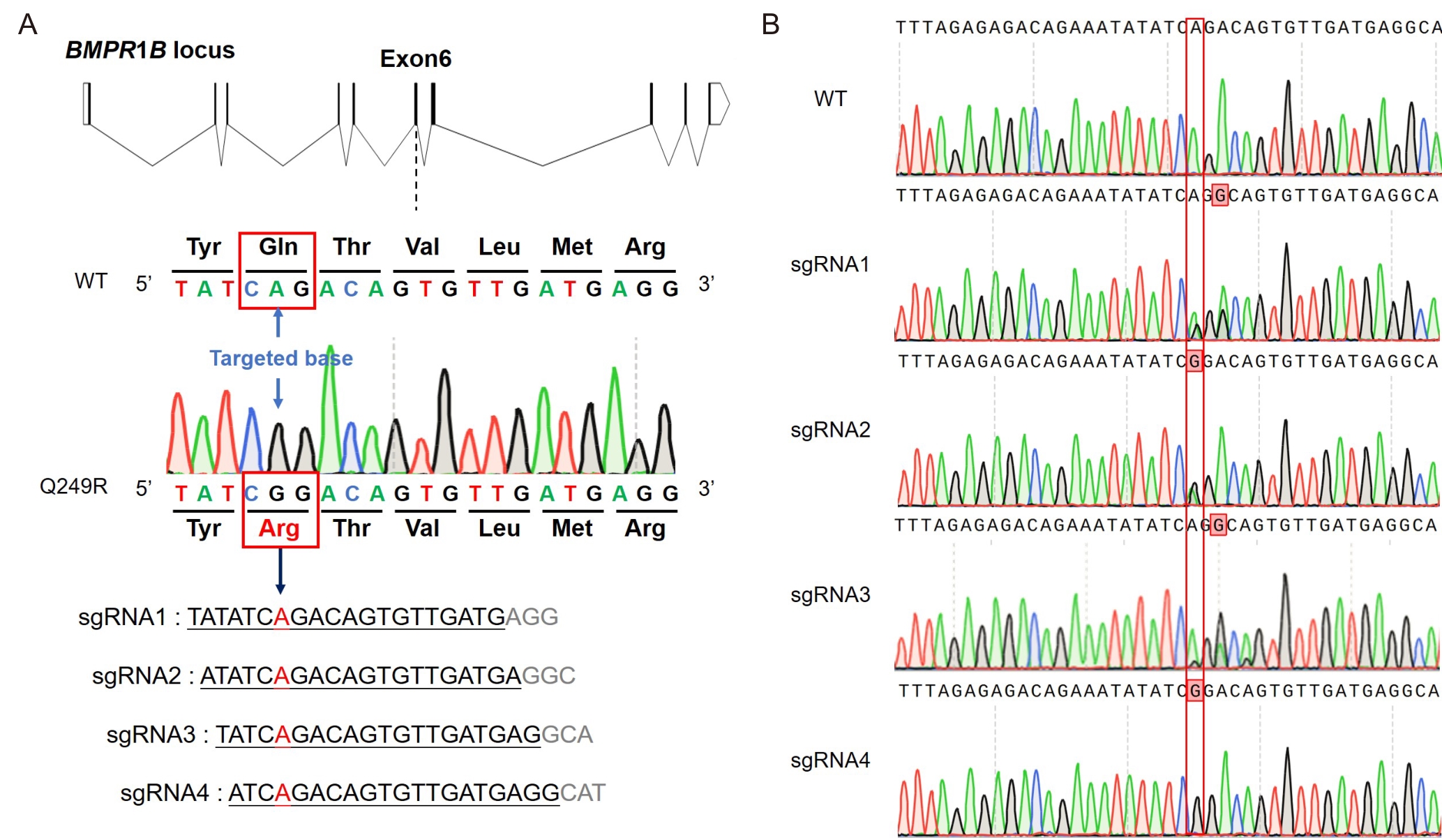
Figure 1 Design and screening of sgRNAs targeting the c.746A>G locus in BMPR1B gene
sgRNA编号 sgRNA ID | 编辑物种 Edited species | 靶位点编辑效率/% Target-site editing efficiency/% | 纯合编辑效率/% Homozygous editing efficiency/% | 旁位编辑 Bystander editing |
|---|---|---|---|---|
| sgRNA1 | MFA | 28.57 | 0.00 | Yes |
| sgRNA2 | MFA | 70.00 | 0.00 | No |
| sgRNA3 | MFA | 0.00 | 0.00 | Yes |
| sgRNA4 | MFA | 100.00 | 55.56 | No |
| sgRNA4 | MMU | 100.00 | 91.67 | No |
Table 1 Base-editing efficiencies of different sgRNAs in monkey embryos obtained by microinjection
sgRNA编号 sgRNA ID | 编辑物种 Edited species | 靶位点编辑效率/% Target-site editing efficiency/% | 纯合编辑效率/% Homozygous editing efficiency/% | 旁位编辑 Bystander editing |
|---|---|---|---|---|
| sgRNA1 | MFA | 28.57 | 0.00 | Yes |
| sgRNA2 | MFA | 70.00 | 0.00 | No |
| sgRNA3 | MFA | 0.00 | 0.00 | Yes |
| sgRNA4 | MFA | 100.00 | 55.56 | No |
| sgRNA4 | MMU | 100.00 | 91.67 | No |
物种 Species | 移植胚胎数/枚 Transferred embryos | 移植受体数/只 Surrogates | 妊娠母体 数/只 Pregnancies | 妊娠率/% Pregnancy rate/% | 胎儿数/只 Fetuses | 活产数/只 Live births | 活产率/% Live birth rate/% | 存活数/只 Surviving offspring | 编辑数/只 Edited offspring | 编辑效率/% Editing efficiency/% |
|---|---|---|---|---|---|---|---|---|---|---|
| MFA | 73 | 32 | 8 | 25.00 | 9 | 9 | 100.00 | 8 | 8 | 100.00 |
| MMU | 228 | 58 | 13 | 22.41 | 16 | 10 | 62.50 | 9 | 8 | 88.89 |
Table 2 Embryo transfer and pregnancy outcomes for BMPR1BFecB gene-edited embryos
物种 Species | 移植胚胎数/枚 Transferred embryos | 移植受体数/只 Surrogates | 妊娠母体 数/只 Pregnancies | 妊娠率/% Pregnancy rate/% | 胎儿数/只 Fetuses | 活产数/只 Live births | 活产率/% Live birth rate/% | 存活数/只 Surviving offspring | 编辑数/只 Edited offspring | 编辑效率/% Editing efficiency/% |
|---|---|---|---|---|---|---|---|---|---|---|
| MFA | 73 | 32 | 8 | 25.00 | 9 | 9 | 100.00 | 8 | 8 | 100.00 |
| MMU | 228 | 58 | 13 | 22.41 | 16 | 10 | 62.50 | 9 | 8 | 88.89 |
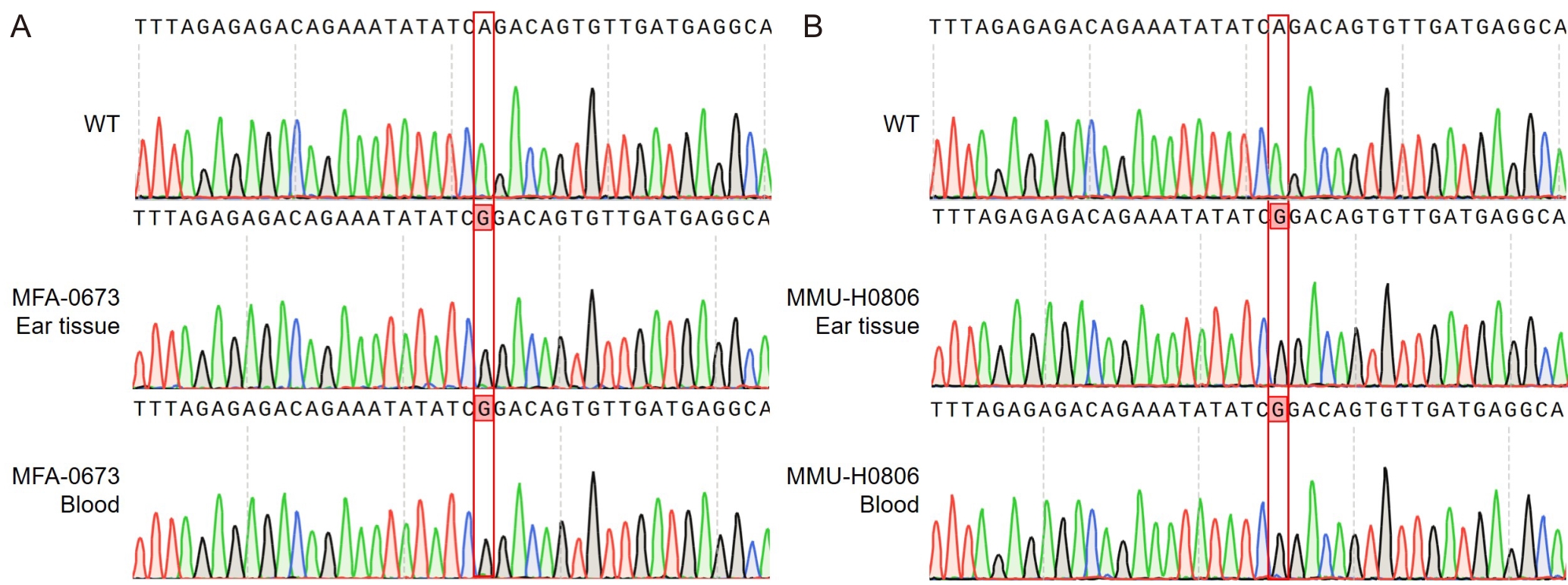
Figure 2 Representative genotypes of newborn BMPR1BFecB gene-edited monkeys
动物编号 Animal ID | 性别 Sex | 基因型 Genotype | 个体嵌合率/% Mosaicism rate/% |
|---|---|---|---|
| 0673 | Male | Hom | 100.00 |
| 0677 | Male | Hom | 100.00 |
| 0684 | Male | Hom | 100.00 |
| 0687 | Female | Hom | 100.00 |
| 0689 | Female | Mos | 75.36 |
| 0693 | Male | Mos | 97.18 |
| 0782 | Female | Mos | 92.50 |
| 0783 | Female | Hom | 100.00 |
| H0507 | Male | Mos | 62.77 |
| H0509 | Male | Mos | 52.34 |
| H0611 | Male | Mos | 88.51 |
| H0813 | Male | WT | 0.00 |
| H0815 | Male | Mos | 48.65 |
| H0806 | Female | Hom | 100.00 |
| H0819 | Male | Hom | 100.00 |
| H0823 | Male | Mos | 67.95 |
| H0911 | Male | Mos | 41.59 |
Table 3 Mosaic ratios in surviving BMPR1BFecB gene-edited monkeys
动物编号 Animal ID | 性别 Sex | 基因型 Genotype | 个体嵌合率/% Mosaicism rate/% |
|---|---|---|---|
| 0673 | Male | Hom | 100.00 |
| 0677 | Male | Hom | 100.00 |
| 0684 | Male | Hom | 100.00 |
| 0687 | Female | Hom | 100.00 |
| 0689 | Female | Mos | 75.36 |
| 0693 | Male | Mos | 97.18 |
| 0782 | Female | Mos | 92.50 |
| 0783 | Female | Hom | 100.00 |
| H0507 | Male | Mos | 62.77 |
| H0509 | Male | Mos | 52.34 |
| H0611 | Male | Mos | 88.51 |
| H0813 | Male | WT | 0.00 |
| H0815 | Male | Mos | 48.65 |
| H0806 | Female | Hom | 100.00 |
| H0819 | Male | Hom | 100.00 |
| H0823 | Male | Mos | 67.95 |
| H0911 | Male | Mos | 41.59 |
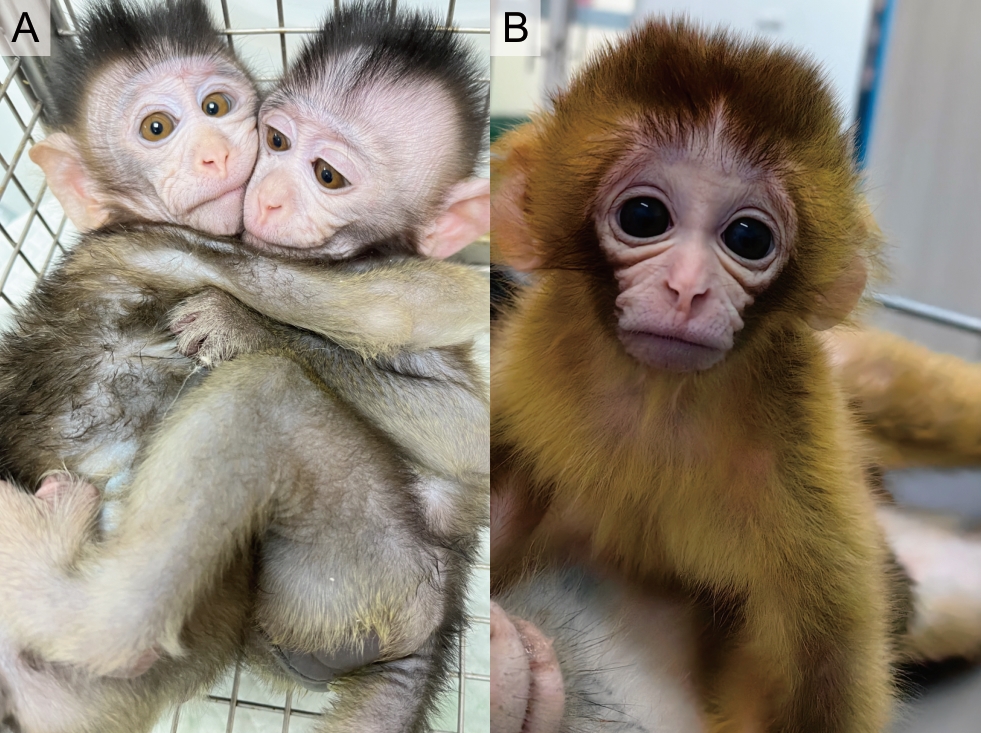
Figure 3 Healthy surviving BMPR1BFecB gene-edited monkeys
| [1] | 孙强. 中国实验猴产业的历史、现状、挑战与机遇[J]. 实验动物与比较医学, 2024, 44(4): 343-356. DOI: 10.12300/j.issn.1674-5817.2024.112 . |
| SUN Q. History, current status, challenges and opportunities of laboratory monkey industry in China[J]. Lab Anim Comp Med, 2024, 44(4): 343-356. DOI: 10.12300/j.issn.1674-5817.2024.112 . | |
| [2] | National Center for Biotechnology Information. BMPR1B bone morphogenetic protein receptor type 1B [Homo sapiens (human)][DB/OL]. [2026-07-06]. . |
| [3] | SHIMASAKI S, MOORE R K, ERICKSON G F, et al. The role of bone morphogenetic proteins in ovarian function[J]. Reprod Suppl, 2003, 61: 323-337. DOI: 10.1530/biosciprocs.5.024 . |
| [4] | EDSON M A, NALAM R L, CLEMENTI C, et al. Granulosa cell-expressed BMPR1A and BMPR1B have unique functions in regulating fertility but act redundantly to suppress ovarian tumor development[J]. Mol Endocrinol, 2010, 24(6): 1251-1266. DOI: 10.1210/me.2009-0461 . |
| [5] | WILSON T, WU X Y, JUENGEL J L, et al. Highly prolific booroola sheep have a mutation in the intracellular kinase domain of bone morphogenetic protein IB receptor (ALK-6) that is expressed in both oocytes and granulosa cells[J]. Biol Reprod, 2001, 64(4): 1225-1235. DOI: 10.1095/biolreprod64. 4.1225 . |
| [6] | MULSANT P, LECERF F, FABRE S, et al. Mutation in bone morphogenetic protein receptor-IB is associated with increased ovulation rate in Booroola Mérino ewes[J]. Proc Natl Acad Sci U S A, 2001, 98(9): 5104-5109. DOI: 10.1073/pnas.091577598 . |
| [7] | DAVIS G H. Major genes affecting ovulation rate in sheep[J]. Genet Sel Evol, 2005, 37(1): S11-S23. DOI: 10.1186/1297-9686-37-S1-S11 . |
| [8] | Online Mendelian Inheritance in Animals. Fecundity, BMPR1B-related in Ovis aries (sheep)[DB/OL]. . |
| [9] | WANG X Y, GUO X F, HE X Y, et al. Effects of FecB mutation on estrus, ovulation, and endocrine characteristics in small tail Han sheep[J]. Front Vet Sci, 2021, 8: 709737. DOI: 10.3389/fvets.2021.709737 . |
| [10] | ZHOU S W, DING Y G, LIU J, et al. Highly efficient generation of sheep with a defined FecBB mutation via adenine base editing[J]. Genet Sel Evol, 2020, 52(1): 35. DOI: 10.1186/s12711-020-00554-6 . |
| [11] | ZHANG X M, QIU M Y, HAN B, et al. Generation and propagation of high fecundity gene edited fine wool sheep by CRISPR/Cas9[J]. Sci Rep, 2025, 15: 2557. DOI: 10.1038/s41598-025-86592-w . |
| [12] | SUN Q, DONG J, YANG W T, et al. Efficient reproduction of cynomolgus monkey using pronuclear embryo transfer technique[J]. Proc Natl Acad Sci U S A, 2008, 105(35): 12956-12960. DOI: 10.1073/pnas.0805639105 . |
| [13] | HUANG T P, HEINS Z J, MILLER S M, et al. High-throughput continuous evolution of compact Cas9 variants targeting single-nucleotide-pyrimidine PAMs[J]. Nat Biotechnol, 2023, 41(1): 96-107. DOI: 10.1038/s41587-022-01410-2 . |
| [14] | LU Z Y, HE S T, JIANG J, et al. Base-edited cynomolgus monkeys mimic core symptoms of STXBP1 encephalopathy[J]. Mol Ther, 2022, 30(6): 2163-2175. DOI: 10.1016/j.ymthe. 2022.03.001 . |
| [1] | LI Heling, QIAN Ziyao, QIN Gangmin, JIANG Debing, ZHANG Yanqiong, JIN Wenzheng, WANG Hong. Isolation, Identification and Biological Characteristics Analysis of Citrobacter freundii from Cynomolgus Monkey (Macaca fascicularis) [J]. Laboratory Animal and Comparative Medicine, 2026, 46(3): 367-377. |
| [2] | WANG Chenjuan, YANG Lingyan, WANG Lipeng, SUN Xueping, LI Jingwen, GUO Lianxiang, RONG Rong, SHI Changjun. Diagnosis of an Outbreak of Canine Distemper in Cynomolgus Monkeys in an Experimental Monkey Farm in 2019 [J]. Laboratory Animal and Comparative Medicine, 2025, 45(3): 360-367. |
| [3] | WEI Yanye, SHEN Guo, ZHANG Pengfei, SHI Songping, HU Jiahao, ZHANG Xuzhe, HUA Huiyuan, HUA Guanyang, LU Hongzheng, ZENG Yong, JI Feng, WEI Zhumei. Dynamic Monitoring and Correlation Analysis of General Body Indicators, Blood Glucose, and Blood Lipid in Obese Cynomolgus Monkeys [J]. Laboratory Animal and Comparative Medicine, 2025, 45(1): 30-36. |
| [4] | ZHU Chan, ZHANG Dongliang, ZHAO Deli, SHI Xueqin, QIAN Lei, ZHANG Xuan, JIN Yan, DUAN Wei, QI Ruocheng, LIU Chaohua, YANG Xuekang, HAN Juntao, PAN Dengke. Perioperative Animal Care for Xenotransplantation from Genetically Edited Pigs to Monkeys [J]. Laboratory Animal and Comparative Medicine, 2024, 44(5): 495-501. |
| [5] | Ping YANG, Li CUI, Cheng YU, Zhiyue WEN. Effects of Bevacizumab Injection on the Skin Wound Healing in Cynomolgus Monkeys [J]. Laboratory Animal and Comparative Medicine, 2023, 43(1): 21-29. |
| [6] | Zhumei WEI, Guo SHEN, Zhenming LI, Yong ZENG, Feng JI, Jihong YANG. Measurement and Analysis of Bone Mineral Content and Bone Mineral Density in Healthy Cynomolgus Monkeys at Different Ages [J]. Laboratory Animal and Comparative Medicine, 2022, 42(5): 409-415. |
| [7] | Xibin XU, Qing ZHU, En ZHANG. Nursing Practice and Discussion of Electrode Implantation into Cerebral Cortex of Rhesus Monkey [J]. Laboratory Animal and Comparative Medicine, 2022, 42(2): 166-170. |
| [8] | GAO Shiping, LI Feng, ZHA Sifan. High-fat Diet Induced Cynomolgus Monkey Model of Non-alcoholic Fatty Liver Disease [J]. Laboratory Animal and Comparative Medicine, 2020, 40(2): 123-127. |
| [9] | LI Liang-shun, PAN Shi-you, ZHI Yuan-fang, BAI shuai-zhou, SUN Jian-hua, GONG Li-kun, REN Jin. Diagnosis and Treatment for Intussusceptions in One Case of Cynomolgus Monkey [J]. Laboratory Animal and Comparative Medicine, 2019, 39(3): 236-238. |
| [10] | WANG Bao-tian, YANG Li, TIAN Ke-yin, WU De, TANG Jiu-lai. Progress on Application of Rhesus Monkeys in Human Nervous and Mental Diseases Research [J]. Laboratory Animal and Comparative Medicine, 2016, 36(2): 148-151. |
| [11] | WEI Zhu-mei, YANG Bo, LI Zhen-ming, HUAN Yin-hua, SU Ke-long, YANG Ji-hong. Continuous Monitoring on Blood Glucose and Insulin Levels in Obesity and Diabetes Cynomolgus Monkeys [J]. Laboratory Animal and Comparative Medicine, 2015, 35(5): 394-397. |
| [12] | XU Wen-mang, LI Xia, HE Zhan-long, LI Tao, ZHAO Xi-long, WANG Yuan-yuan, DAI Fang, LIU Qiang-gao, CAI Lin, PAN Xin-yan, YANG Ju-lun. Study on Comparative Histology of Digestive Glands in 6 Species of Laboratory Animals [J]. Laboratory Animal and Comparative Medicine, 2014, 34(6): 454-462. |
| [13] | YANG Bo, WEI Zhu-mei, DENG Xin-ning, HE Nai-zhi, YIN Feng-ri, LI Zhen-ming, YANG Ji-hong. Established Method of Measurement for Gastrocnemius Volume in Cynomolgus Monkeys by MRI Detection [J]. Laboratory Animal and Comparative Medicine, 2014, 34(4): 314-318. |
| [14] | WANG Yuan-yuan, XU Wen-mang, LI Xia, LI Tao, DAI Fang, YANG Ju-lun, SONG Shu-ling, LIU Qiang-gao. Comparison on Histology of Cardiovascular System in 6 Species of Laboratory Animals [J]. Laboratory Animal and Comparative Medicine, 2014, 34(3): 199-204. |
| [15] | XING Feng-ying, YAN Guo-feng, YANG Wei-min, CHEN Xue-jin, LI Yao. Determination of Physiological Parameters in Juvenile Rhesus Monkeys [J]. Laboratory Animal and Comparative Medicine, 2013, 33(4): 310-314. |
| Viewed | ||||||
|
Full text |
|
|||||
|
Abstract |
|
|||||
