
Laboratory Animal and Comparative Medicine ›› 2026, Vol. 46 ›› Issue (4): 553-563.DOI: 10.12300/j.issn.1674-5817.2025.166
• Quality Control of Laboratory Animals • Previous Articles Next Articles
LI Hongman1, CHEN Yutong1, SHI Yingpei1, WANG Yijing1, PAN Yan1, XU Tong1, ZHOU Yi1, DENG Qiyue1( ), LIU Xue2()
Received:2025-09-30
Revised:2025-11-30
Online:2026-08-25
Published:2026-08-22
Correspondence to:
DENG Qiyue, LIU Xue
CLC Number:
LI Hongman,CHEN Yutong,SHI Yingpei,et al. A New Perspective on Mental Health Assessment in Laboratory Animals: Stress Response Monitoring Based on Hair Characteristics[J]. Laboratory Animal and Comparative Medicine, 2026, 46(4): 553-563. DOI: 10.12300/j.issn.1674-5817.2025.166.
Add to citation manager EndNote|Ris|BibTeX
URL: https://www.slarc.org.cn/dwyx/EN/10.12300/j.issn.1674-5817.2025.166
受影响的研究领域 Research fields affected | 机制 Mechanisms | 受影响的研究方向 Research directions affected | 偏差示例 Example deviation | 参考文献 References |
|---|---|---|---|---|
Neuroscience | (1) (2) (3) | (1) (2) (3) | (1) (2) (3) | |
Immunology | (1) (2) | (1) (2) | (1) (2) | |
Pharmacology | (1) | (1) (2) | (1) (2) | |
(1) (2) | (1) (2) | (1) (2) | ||
(1) (2) (3) (4) | (1) (2) (3) | (1) (2) (3) | ||
(1) (2) (3) | (1) (2) | (1) (2) |
Table 1 Research areas affected by stress in laboratory animals
受影响的研究领域 Research fields affected | 机制 Mechanisms | 受影响的研究方向 Research directions affected | 偏差示例 Example deviation | 参考文献 References |
|---|---|---|---|---|
Neuroscience | (1) (2) (3) | (1) (2) (3) | (1) (2) (3) | |
Immunology | (1) (2) | (1) (2) | (1) (2) | |
Pharmacology | (1) | (1) (2) | (1) (2) | |
(1) (2) | (1) (2) | (1) (2) | ||
(1) (2) (3) (4) | (1) (2) (3) | (1) (2) (3) | ||
(1) (2) (3) | (1) (2) | (1) (2) |
参数 Parameters | 表现 Manifestations | 相关机制 Related mechanisms | 参考文献 References | |
|---|---|---|---|---|
| [ | ||||
| [ | ||||
| [ | ||||
| [ | ||||
| [ | ||||
| 毛发强度和弹性降低 | [ | |||
| [ | ||||
| [ | ||||
| 糖代谢、氨基酸代谢等代谢途径发生改变 | [ | |||
| [ | ||||
Table 2 Changes in hair characteristics and levels of substances in the hair of laboratory animals caused by stress
参数 Parameters | 表现 Manifestations | 相关机制 Related mechanisms | 参考文献 References | |
|---|---|---|---|---|
| [ | ||||
| [ | ||||
| [ | ||||
| [ | ||||
| [ | ||||
| 毛发强度和弹性降低 | [ | |||
| [ | ||||
| [ | ||||
| 糖代谢、氨基酸代谢等代谢途径发生改变 | [ | |||
| [ | ||||
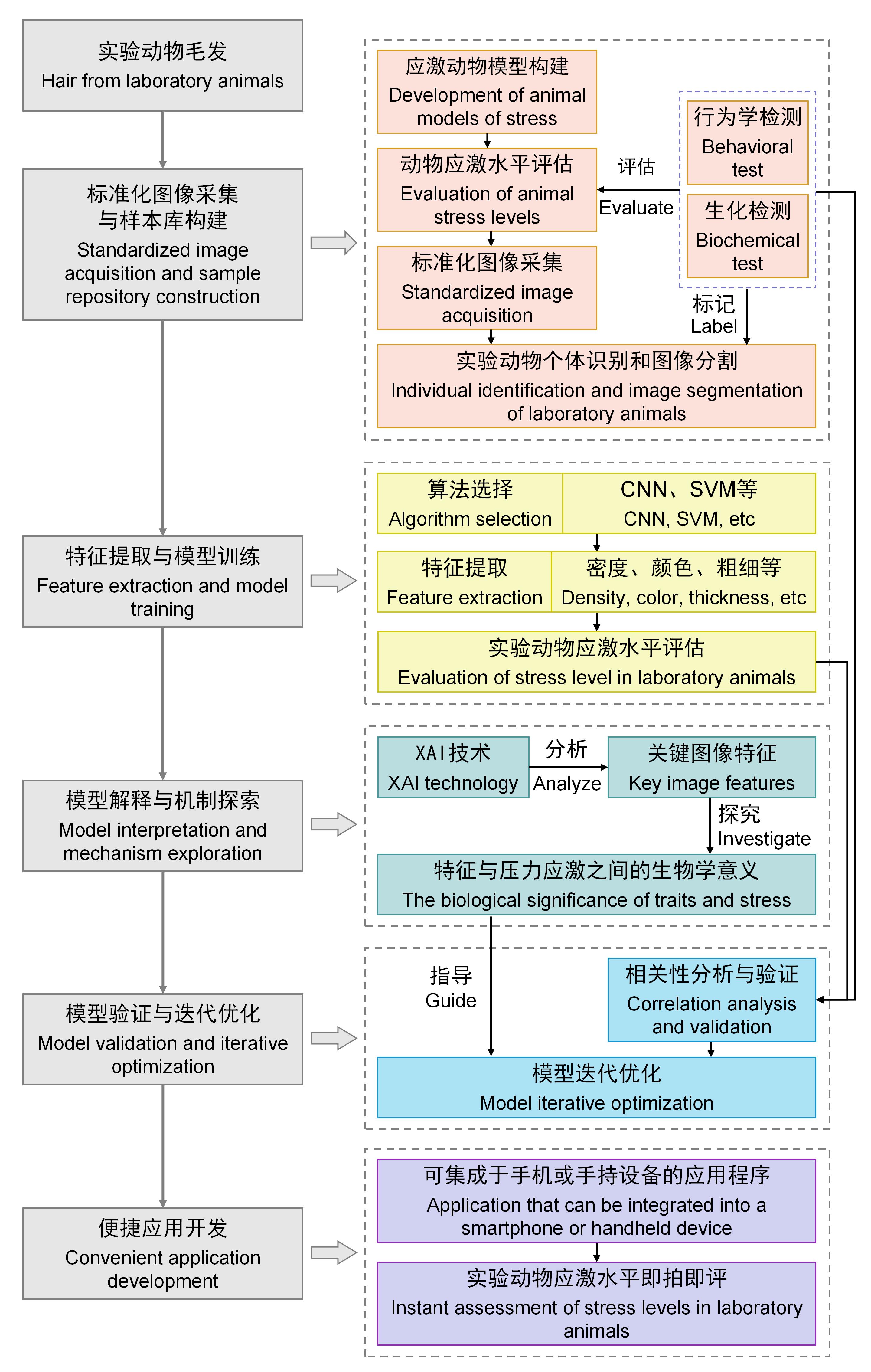
Figure 1 Technical pathway for stress monitoring in laboratory animals based on hair characteristics
| [1] | 张静, 刘苗苗, 唐倩倩, 等. 实验动物质量保障体系和服务体系建设[J]. 实验动物科学, 2023, 40(4): 62-68. DOI: 10.3969/j.issn.1006-6179.2023.04.012 . |
| ZHANG J, LIU M M, TANG Q Q, et al. Construction of laboratory animal quality assurance and service system[J]. Lab Anim Sci, 2023, 40(4): 62-68. DOI: 10.3969/j.issn.1006-6179.2023.04.012 . | |
| [2] | GONZÁLEZ-PARDO H, ARIAS J L, VALLEJO G, et al. Environmental enrichment effects after early stress on behavior and functional brain networks in adult rats[J]. PLoS One, 2019, 14(12): e0226377. DOI: 10.1371/journal.pone.0226377 . |
| [3] | TONHAJZEROVA I, MESTANIK M. New perspectives in the model of stress response[J]. Physiol Res, 2017, 66(): S173-S185. DOI: 10.33549/physiolres.933674 . |
| [4] | SHI D D, WANG L P, LI X M, et al. Biological mechanisms of stress-related mental disorders[J]. Sci Sin-Vitae, 2025, 55(7): 1361-1372. DOI: 10.1360/ssv-2024-0346 . |
| [5] | PENG X Q, MAO Y F, TAI Y J, et al. Characterization of anxiety-like behaviors and neural circuitry following chronic moderate noise exposure in mice[J]. Environ Health Perspect, 2023, 131(10): 107004. DOI: 10.1289/EHP12532 . |
| [6] | YANG M, LUO Y, HAO X Z, et al. Effects of high temperature and high humidity stress on the negative feedback regulation of hippocampus on HPA axis in rats[J]. Neuro Endocrinol Lett, 2021, 42(5): 312-320. |
| [7] | HENDERSON L J, SMULDERS T V, ROUGHAN J V. Identifying obstacles preventing the uptake of tunnel handling methods for laboratory mice: an international thematic survey[J]. PLoS One, 2020, 15(4): e0231454. DOI: 10.1371/journal.pone.0231454 . |
| [8] | BRAGA-DIAS A C, CARDENAS OTERO S J, CAVALCANTE OLIVEIRA M K, et al. Social isolation induces sex-differentiated sensory-emotional pain responses and oxytocinergic receptors alterations in mice[J]. Eur J Pain, 2025, 29(8): e70106. DOI: 10.1002/ejp.70106 . |
| [9] | QIN Y H, JIANG X F, LI W, et al. Chronic mild stress leads to aberrant glucose energy metabolism in depressed Macaca fascicularis models[J]. Psychoneuroendocrinology, 2019, 107: 59-69. DOI: 10.1016/j.psyneuen.2019.05.007 . |
| [10] | BALAKIN E, YURKU K, IVANOV M, et al. Regulation of stress-induced immunosuppression in the context of neuroendocrine, cytokine, and cellular processes[J]. Biology, 2025, 14(1): 76 DOI: 10.3390/biology14010076 . |
| [11] | WALTHER L M, WIRTZ P H. Physiological reactivity to acute mental stress in essential hypertension—a systematic review[J]. Front Cardiovasc Med, 2023, 10: 1215710. DOI: 10.3389/fcvm.2023.1215710 . |
| [12] | LIGHTMAN S L, BIRNIE M T, CONWAY-CAMPBELL B L. Dynamics of ACTH and cortisol secretion and implications for disease[J]. Endocr Rev, 2020, 41(3): bnaa002. DOI: 10.1210/endrev/bnaa002 . |
| [13] | BEUSCHLEIN F, ELSE T, BANCOS I, et al. European society of endocrinology and endocrine society joint clinical guideline: diagnosis and therapy of glucocorticoid-induced adrenal insufficiency[J]. J Clin Endocrinol Metab, 2024, 109(7): 1657-1683. DOI: 10.1210/clinem/dgae250 . |
| [14] | OBEAGU E I. Stress, neutrophils, and immunity: a dynamic interplay[J]. Ann Med Surg, 2025, 87(6): 3573-3585. DOI: 10. 1097/MS9.0000000000003304 . |
| [15] | ODAKA H, ADACHI N, NUMAKAWA T. Impact of glucocorticoid on neurogenesis[J]. Neural Regen Res, 2017, 12(7): 1028-1035. DOI: 10.4103/1673-5374.211174 . |
| [16] | KRASNER H, ONG C V, HEWITT P, et al. From stress to synapse: the neuronal atrophy pathway to mood dysregulation[J]. Int J Mol Sci, 2025, 26(7): 3219. DOI: 10.3390/ijms26073219 . |
| [17] | KOKKOSIS A G, MADEIRA M M, HAGE Z, et al. Chronic psychosocial stress triggers microglial-/ macrophage-induced inflammatory responses leading to neuronal dysfunction and depressive-related behavior[J]. Glia, 2024, 72(1): 111-132. DOI: 10.1002/glia.24464 . |
| [18] | SHERIDAN J F, FENG N G, BONNEAU R H, et al. Restraint stress differentially affects anti-viral cellular and humoral immune responses in mice[J]. J Neuroimmunol, 1991, 31(3): 245-255. DOI: 10.1016/0165-5728(91)90046-a . |
| [19] | XIA Z C, WEI H Y, DUAN J J, et al. Chronic unpredicted mild stress-induced depression alter saxagliptin pharmacokinetics and CYP450 activity in GK rats[J]. PeerJ, 2016, 4: e1611. DOI: 10.7717/peerj.1611 . |
| [20] | SAUL A N, OBERYSZYN T M, DAUGHERTY C, et al. Chronic stress and susceptibility to skin cancer[J]. J Natl Cancer Inst, 2005, 97(23): 1760-1767. DOI: 10.1093/jnci/dji401 . |
| [21] | LEI Y R, LIAO F H, TIAN Y C, et al. Investigating the crosstalk between chronic stress and immune cells: implications for enhanced cancer therapy[J]. Front Neurosci, 2023, 17: 1321176. DOI: 10.3389/fnins.2023.1321176 . |
| [22] | YANG H, XIA L, CHEN J, et al. Stress-glucocorticoid-TSC22D3 axis compromises therapy-induced antitumor immunity[J]. Nat Med, 2019, 25(9): 1428-1441. DOI: 10.1038/s41591-019-0566-4 . |
| [23] | DEMORI I, GRASSELLI E. The role of the stress response in metabolic dysfunction-associated fatty liver disease: a psychoneuroendocrineimmunology-based perspective[J]. Nutrients, 2023, 15(3): 795. DOI: 10.3390/nu15030795 . |
| [24] | ALONGE M M, GREVILLE L J S, MA X H, et al. Acute restraint stress rapidly impacts reproductive neuroendocrinology and downstream gonad function in big brown bats (Eptesicus fuscus)[J]. J Exp Biol, 2023, 226(19): jeb245592. DOI: 10.1242/jeb.245592 . |
| [25] | CUNNINGHAM A M, WALKER D M, RAMAKRISHNAN A, et al. Sperm transcriptional state associated with paternal transmission of stress phenotypes[J]. J Neurosci, 2021, 41(29): 6202-6216. DOI: 10.1523/JNEUROSCI.3192-20.2021 . |
| [26] | SCHUBERT C, LAMBERTZ M, NELESEN R A, et al. Effects of stress on heart rate complexity: a comparison between short-term and chronic stress[J]. Biol Psychol, 2009, 80(3): 325-332. DOI: 10.1016/j.biopsycho.2008.11.005 . |
| [27] | MADISON A A, SHROUT M R, WILSON S J, et al. "I'm Ready This Time": Investigating physiological and emotional habituation to repetitive social stress[J]. Ann Behav Med, 2025, 59(1): kaaf009. DOI: 10.1093/abm/kaaf009 . |
| [28] | YANG X, GONG R, QIN L W, et al. Trafficking of NMDA receptors is essential for hippocampal synaptic plasticity and memory consolidation[J]. Cell Rep, 2022, 40(7): 111217. DOI: 10.1016/j.celrep.2022.111217 . |
| [29] | GENIS-MENDOZA A D, JUÁREZ-ROJOP I E, ESCOBAR-CHAN Y M, et al. Increased depressive-like, anxiety-like, and perseverative-like behavior in binge eating model in juvenile rats[J]. Nutrients, 2024, 16(9): 1275. DOI: 10.3390/nu16091275 . |
| [30] | ATAALLAHI M, NEJAD J G, PARK K H. Selection of appropriate biomatrices for studies of chronic stress in animals: a review[J]. J Anim Sci Technol, 2022, 64(4): 621-639. DOI: 10.5187/jast.2022.e38 . |
| [31] | 孙世光, 刘健, 鹿岩, 等. 昆明小鼠强迫游泳实验与悬尾实验抑郁模型相关性[J]. 中国药理学与毒理学杂志, 2014, 28(1): 107-112. DOI: 10.3867/j.issn.1000-3002.2014.01.016 . |
| SUN S G, LIU J, LU Y, et al. Correlation between forced swimming test and tail suspension test in Kunming mice[J]. Chin J Pharmacol Toxicol, 2014, 28(1): 107-112. DOI: 10.3867/j.issn.1000-3002.2014.01.016 . | |
| [32] | ALQURASHI G K, HINDI E A, ZAYED M A, et al. The impact of chronic unpredictable mild stress-induced depression on spatial, recognition and reference memory tasks in mice: behavioral and histological study[J]. Behav Sci, 2022, 12(6): 166. DOI: 10.3390/bs12060166 . |
| [33] | BERRIO J P, HESTEHAVE S, KALLIOKOSKI O. Reliability of sucrose preference testing following short or no food and water deprivation-a Systematic Review and Meta-Analysis of rat models of chronic unpredictable stress[J]. Transl Psychiatry, 2024, 14: 39. DOI: 10.1038/s41398-024-02742-0 . |
| [34] | RINGSEIS R, MARSCHALL M J M, GRUNDMANN S M, et al. Effect of Hermetia illucens fat, compared with that of soybean oil and palm oil, on hepatic lipid metabolism and plasma metabolome in healthy rats[J]. Animals, 2023, 13(21): 3356. DOI: 10.3390/ani13213356 . |
| [35] | CALABRESE F, GUIDOTTI G, MOLTENI R, et al. Stress-induced changes of hippocampal NMDA receptors: modulation by duloxetine treatment[J]. PLoS One, 2012, 7(5): e37916. DOI: 10.1371/journal.pone.0037916 . |
| [36] | PANDEY S, HAN W Y, LI J, et al. Reversing anxiety by targeting a stress-responsive signaling pathway[J]. Proc Natl Acad Sci USA, 2024, 121(31): e2400078121. DOI: 10.1073/pnas. 2400078121 . |
| [37] | EPHRAIM A J. On sudden or rapid whitening of the hair[J]. Arch Dermatol, 1959, 79(2): 228-236. DOI: 10.1001/archderm. 1959.01560140090013 . |
| [38] | ZHANG B, MA S, RACHMIN I, et al. Hyperactivation of sympathetic nerves drives depletion of melanocyte stem cells[J]. Nature, 2020, 577(7792): 676-681. DOI: 10.1038/s41586-020-1935-3 . |
| [39] | WANG X H, LIN Y M, YAN L C, et al. Intensive stress impedes hair follicle growth through triggering cell cycle arrest of hair follicle stem cells[J]. FASEB J, 2025, 39(5): e70460. DOI: 10.1096/fj.202403343R . |
| [40] | STALDER T, STEUDTE-SCHMIEDGEN S, ALEXANDER N, et al. Stress-related and basic determinants of hair csortisol in humans: a meta-analysis[J]. Psychoneuroendocrinology, 2017, 77: 261-274. DOI: 10.1016/j.psyneuen.2016.12.017 . |
| [41] | SHARPLEY C F, MCFARLANE J R, SLOMINSKI A. Stress-linked Cortisol concentrations in hair: what we know and what we need to know[J]. Rev Neurosci, 2011, 23(1): 111-121. DOI: 10.1515/RNS.2011.058 . |
| [42] | QUIST S R, QUIST J. Keep quiet-how stress regulates hair follicle stem cells[J]. Signal Transduct Target Ther, 2021, 6: 364. DOI: 10.1038/s41392-021-00772-4 . |
| [43] | JI S F, ZHU Z Y, SUN X Y, et al. Functional hair follicle regeneration: an updated review[J]. Signal Transduct Target Ther, 2021, 6: 66. DOI: 10.1038/s41392-020-00441-y . |
| [44] | HINDS J A, SANCHEZ E R. The role of the hypothalamus–pituitary-adrenal (HPA) axis in test-induced anxiety: assessments, physiological responses, and molecular details[J]. Stresses, 2022, 2(1): 146-155. DOI: 10.3390/stresses2010011 . |
| [45] | OWECKA B, TOMASZEWSKA A, DOBRZENIECKI K, et al. The hormonal background of hair loss in non-scarring alopecias[J]. Biomedicines, 2024, 12(3): 513. DOI: 10.3390/biomedicines 12030513 . |
| [46] | PANG S L, WU H L, WANG Q, et al. Chronic stress suppresses the expression of cutaneous hypothalamic-pituitary-adrenocortical axis elements and melanogenesis[J]. PLoS One, 2014, 9(5): e98283. DOI: 10.1371/journal.pone.0098283 . |
| [47] | TRUEB R. Oxidative stress in ageing of hair[J]. Int J Trichol, 2009, 1(1): 6. DOI: 10.4103/0974-7753.51923 . |
| [48] | WANG X W, CAI C Q, LIANG Q C, et al. Integrated transcriptomics and metabolomics analyses of stress-induced murine hair follicle growth inhibition[J]. Front Mol Biosci, 2022, 9: 781619. DOI: 10.3389/fmolb.2022.781619 . |
| [49] | HARRIS M L, FUFA T D, PALMER J W, et al. A direct link between MITF, innate immunity, and hair graying[J]. PLoS Biol, 2018, 16(5): e2003648. DOI: 10.1371/journal.pbio.2003648 . |
| [50] | LIU N, WANG L H, GUO L L, et al. Chronic restraint stress inhibits hair growth via substance P mediated by reactive oxygen species in mice[J]. PLoS One, 2013, 8(4): e61574. DOI: 10.1371/journal.pone.0061574 . |
| [51] | AHN D, KIM H, LEE B, et al. Psychological stress-induced pathogenesis of alopecia areata: autoimmune and apoptotic pathways[J]. Int J Mol Sci, 2023, 24(14): 11711. DOI: 10.3390/ijms241411711 . |
| [52] | CHOI S, ZHANG B, MA S, et al. Corticosterone inhibits GAS6 to govern hair follicle stem-cell quiescence[J]. Nature, 2021, 592(7854): 428-432. DOI: 10.1038/s41586-021-03417-2 . |
| [53] | CHEN L J, YU Q, GUO F Y, et al. Neurotensin counteracts hair growth inhibition induced by chronic restraint stress[J]. Exp Dermatol, 2024, 33(1): e14990. DOI: 10.1111/exd.14990 . |
| [54] | HADSHIEW I M, FOITZIK K, ARCK P C, et al. Burden of hair loss: stress and the underestimated psychosocial impact of telogen effluvium and androgenetic alopecia[J]. J Invest Dermatol, 2004, 123(3): 455-457. DOI: 10.1111/j.0022-202X.2004. 23237.x . |
| [55] | ZHANG K X, BAI X F, YUAN Z P, et al. Cellular nanofiber structure with secretory activity-promoting characteristics for multicellular spheroid formation and hair follicle regeneration[J]. ACS Appl Mater Interfaces, 2020, 12(7): 7931-7941. DOI: 10.1021/acsami.9b21125 . |
| [56] | KIM D H, OH S H, CHANG B S. Effects of excessive bleaching on hair: comparative analysis of external morphology and internal microstructure[J]. Appl Microsc, 2024, 54(1): 11. DOI: 10.1186/s42649-024-00104-0 . |
| [57] | 吴晓淋, 徐平, 张亚莉, 等. 人体特征的头发代谢组学及蛋白质组学研究进展[J]. 生物工程学报, 2022, 38(10): 3638-3647. DOI: 10.13345/j.cjb.220526 . |
| WU X L, XU P, ZHANG Y L, et al. Distinguishing human characteristics based on hair metabolomics and proteomics: a review[J]. Chin J Biotechnol, 2022, 38(10): 3638-3647. DOI: 10.13345/j.cjb.220526 . | |
| [58] | CHEN Y, GUO J, XING S P, et al. Global-scale metabolomic profiling of human hair for simultaneous monitoring of endogenous metabolome, short- and long-term exposome[J]. Front Chem, 2021, 9: 674265. DOI: 10.3389/fchem.2021.674265 . |
| [59] | POZEBON D, SCHEFFLER G L, DRESSLER V L. Elemental hair analysis: a review of procedures and applications[J]. Anal Chim Acta, 2017, 992: 1-23. DOI: 10.1016/j.aca.2017.09.017 . |
| [60] | KEMPSON I M, LOMBI E. Hair analysis as a biomonitor for toxicology, disease and health status[J]. Chem Soc Rev, 2011, 40(7): 3915-3940. DOI: 10.1039/c1cs15021a . |
| [61] | SICORELLO M, SPRENGER J C, STÖRKEL L M, et al. Demonstrating the potential of untargeted hair proteomics for personalized biomarkers in stress-associated disorders[J]. Psychoneuroendocrinology, 2026, 184: 107684. DOI: 10.1016/j.psyneuen.2025.107684 . |
| [62] | LAMA N, KASMI R, HAGERTY J R, et al. ChimeraNet: U-Net for hair detection in dermoscopic skin lesion images[J]. J Digit Imaging, 2023, 36(2): 526-535. DOI: 10.1007/s10278-022-00740-6 . |
| [63] | URBAN G, FEIL N, CSUKA E, et al. Combining deep learning with optical coherence tomography imaging to determine scalp hair and follicle counts[J]. Lasers Surg Med, 2021, 53(1): 171-178. DOI: 10.1002/lsm.23324 . |
| [64] | ABBAS Q, GARCIA I F, EMRE CELEBI M, et al. A feature-preserving hair removal algorithm for dermoscopy images[J]. Skin Res Technol, 2013, 19(1): e27-e36. DOI: 10.1111/j.1600-0846.2011.00603.x . |
| [65] | GAO M, WANG Y, XU H P, et al. Deep learning-based trichoscopic image analysis and quantitative model for predicting basic and specific classification in male androgenetic alopecia[J]. Acta Derm Venereol, 2022, 102: 564. DOI: 10.2340/actadv.v101.564 . |
| [66] | SUN Y K, HUO P J, WANG Y J, et al. Automatic monitoring system for individual dairy cows based on a deep learning framework that provides identification via body parts and estimation of body condition score[J]. J Dairy Sci, 2019, 102(11): 10140-10151. DOI: 10.3168/jds.2018-16164 . |
| [67] | CHU F, ANEX D S, JONES A D, et al. Automated analysis of scanning electron microscopic images for assessment of hair surface damage[J]. R Soc Open Sci, 2020, 7(1): 191438. DOI: 10.1098/rsos.191438 . |
| [1] | XU Haochen, LE Qingqing, HE Xiwen, CAI Bing, YANG Longhe. Evaluation of the Efficacy of an Eye-Protective Compound Formula on the Retina in a Mouse Model of Blue Light-Induced Damage [J]. Laboratory Animal and Comparative Medicine, 2026, 46(5): 650-659. |
| [2] | CHEN Bing, XIE Xiaojie, TAO Tifu, WANG Jingdong, ZOU Yixing. Research on the Current Situation and Countermeasures for Training and Education of Laboratory Animal Practitioners in Sichuan Province [J]. Laboratory Animal and Comparative Medicine, 2026, 46(3): 456-463. |
| [3] | LI Jiafei, ZHANG Zhenhao, WANG Shuo, TIAN Ge, WEN Shuang, YAN Yuxue, CUI Ran, YE Zhen, CUI Yongchun. Effects of Autonomic Neuromodulators on Atrial Electrical Remodeling and Histopathological Changes in a Rat Model of Atrial Fibrillation [J]. Laboratory Animal and Comparative Medicine, 2026, 46(3): 321-331. |
| [4] | WANG Ying, JI Wentao, XU Shaoqiong, CHEN Guoyuan, FENG Jie, WU Baojin. Monitoring and Analysis of Environmental Microbial Contamination in Laboratory Animal Barrier Facilities [J]. Laboratory Animal and Comparative Medicine, 2026, 46(2): 222-230. |
| [5] | XIAO Fangping, XIONG Lijuan, JIA Bo, LIU Huan, LUO Yongbing, WAN Xiaorong. Analysis of Microbiological and Parasitic Testing Results for Laboratory Animals in Jiangxi Province, 2020-2024 [J]. Laboratory Animal and Comparative Medicine, 2026, 46(1): 119-126. |
| [6] | LIU Chang, XIANG Xuesong, HE Huihuang, CHEN Xiaoqing, QIU Wenhong. Establishment and Evaluation of an Oxidative Stress Model of Atopic Dermatitis Induced by 2,4-dinitrofluorobenzene [J]. Laboratory Animal and Comparative Medicine, 2026, 46(1): 46-54. |
| [7] | LIU Wentao, LUO Yanhong, LONG Yongxia, LUO Qihui, CHEN Zhengli, LIU Lida. Common Environmental Problems and Testing Experiences in Laboratory Animal Facilities in Sichuan Province [J]. Laboratory Animal and Comparative Medicine, 2025, 45(4): 483-489. |
| [8] | SHEN Huangyi, HUANG Yufei, YANG Yunpeng. Research Progress on Characteristics Analysis of Gut Microbiota and Its Sex Differences in Laboratory Animals [J]. Laboratory Animal and Comparative Medicine, 2025, 45(3): 349-359. |
| [9] | TAN Dengxu, MA Yifan, LIU Ke, ZHANG Yanying, SHI Changhong. Reshaping Intercellular Interactions: Empowering the Exploration of Disease Mechanisms and Therapies Using Organoid Co-Culture Models [J]. Laboratory Animal and Comparative Medicine, 2025, 45(3): 309-317. |
| [10] | XU Shengye, HUANG Junfeng, CHEN Yihang, CHANG Liangtang. Design of a Capture Stress-Free Marmoset Monkey Chair Device for Experiments and Its Preliminary Application [J]. Laboratory Animal and Comparative Medicine, 2025, 45(1): 67-72. |
| [11] | LIU Lida, CHEN Bing, XIE Na, LIU Li, ZHUANG Siqi, ZOU Yixing. Survey Report Analysis on Parasitic and Microbial Quality of Laboratory Animals in Sichuan Province, 2017-2023 [J]. Laboratory Animal and Comparative Medicine, 2024, 44(6): 654-660. |
| [12] | LIU Yishu, CAI Liping. Advances and Challenges of Using Experimental Pigs in Da Vinci Surgical Robot Training [J]. Laboratory Animal and Comparative Medicine, 2024, 44(6): 667-674. |
| [13] | CHEN Bing, ZOU Yixing, WANG Jingdong. Analysis on Current Status and Countermeasures for Laboratory Animal Management in Sichuan Province Based on Administrative Licensing [J]. Laboratory Animal and Comparative Medicine, 2024, 44(5): 560-566. |
| [14] | ZHAO Yong. Three Dimensions of Animal Experiment Ethics: Analysis Based on Value of Life, Animal Welfare, and Risk Prevention [J]. Laboratory Animal and Comparative Medicine, 2024, 44(4): 445-454. |
| [15] | DENG Shaochang, LIN Danrong, LIANG Chujun, LEI Weiqiao, YANG Jinchun, ZHAO Weibo. Analysis of Institutional Characteristics and Implementation of Guangdong Province Laboratory Animals Ordinance in the Past Decade [J]. Laboratory Animal and Comparative Medicine, 2024, 44(4): 455-462. |
| Viewed | ||||||
|
Full text |
|
|||||
|
Abstract |
|
|||||
