



Laboratory Animal and Comparative Medicine ›› 2025, Vol. 45 ›› Issue (6): 663-675.DOI: 10.12300/j.issn.1674-5817.2025.147
• Invertebrate Laboratory Animal: Fruit fly • Previous Articles Next Articles
DENG Xianming( ), WANG Fei()(
 )
)
Received:2025-09-05
Revised:2025-12-03
Online:2025-12-25
Published:2025-12-19
Correspondence to:
WANG Fei
CLC Number:
DENG Xianming,WANG Fei. Research Progress on Drosophila Electron Microscopy Connectome Database and Functional Analysis of Related Neural Circuits[J]. Laboratory Animal and Comparative Medicine, 2025, 45(6): 663-675. DOI: 10.12300/j.issn.1674-5817.2025.147.
Add to citation manager EndNote|Ris|BibTeX
URL: https://www.slarc.org.cn/dwyx/EN/10.12300/j.issn.1674-5817.2025.147
数据库 Databases | 访问网页 Web accesses | 注释情况 Annotation notes | 参考文献 References |
|---|---|---|---|
一龄幼虫中枢神经系统电子显微镜连接组 (L1 CNS) L1 larval central nervous system (CNS) electron microscopy connectome | https://l1em.catmaid.virtualflybrain.org | 人工追踪所有神经元,共3 016个神经元 | [ |
成年雌蝇全脑电子显微镜连接组 (FAFB) Female full adult fly brain electron microscopy connectome | https://fafb.catmaid.virtualflybrain.org | 稀疏注释数据库 | [ |
FAFB的FlyWire完整注释版 FlyWire fully-annotated version of FAFB | https://codex.flywire.ai/ dataset=fafb | 密集注释数据库,共139 255个神经元 | [ |
成年雌蝇半脑电子显微镜连接组 (Hemibrain) Female adult fly hemibrain electron microscopy connectome | https://neuprint.janelia.org | 密集注释数据库,共约25 000个神经元 | [ |
成年雌蝇腹神经索电子显微镜连接组 (FANC) Female adult fly nerve cord electron microscopy connectome | https://fanc.catmaid.virtualflybrain.org | 密集注释数据库,共约14 600个神经元 | [ |
成年雄蝇腹神经索电子显微镜连接组 (MANC) Male adult fly nerve cord electron microscopy connectome | https://neuprint.janelia.org https://codex.flywire.ai/ dataset=manc | 密集注释数据库,共约23 000个神经元 | [ |
成年雌蝇脑及神经索电子显微镜连接组 (BANC) Female adult fly brain and nerve cord electron microscopy connectome | https://codex.flywire.ai/ dataset=banc | 密集注释数据库,共约115 151个神经元 | [ |
成年雄蝇中枢神经系统电子显微镜连接组 (maleCNS) Male adult fly CNS electron microscopy connectome | https://male-cns.janelia.org https://neuprint.janelia.org | 密集注释数据库,共约166 000个神经元 | [ |
Table 1 Resource information of Drosophila melanogaster electron microscopy connectome database
数据库 Databases | 访问网页 Web accesses | 注释情况 Annotation notes | 参考文献 References |
|---|---|---|---|
一龄幼虫中枢神经系统电子显微镜连接组 (L1 CNS) L1 larval central nervous system (CNS) electron microscopy connectome | https://l1em.catmaid.virtualflybrain.org | 人工追踪所有神经元,共3 016个神经元 | [ |
成年雌蝇全脑电子显微镜连接组 (FAFB) Female full adult fly brain electron microscopy connectome | https://fafb.catmaid.virtualflybrain.org | 稀疏注释数据库 | [ |
FAFB的FlyWire完整注释版 FlyWire fully-annotated version of FAFB | https://codex.flywire.ai/ dataset=fafb | 密集注释数据库,共139 255个神经元 | [ |
成年雌蝇半脑电子显微镜连接组 (Hemibrain) Female adult fly hemibrain electron microscopy connectome | https://neuprint.janelia.org | 密集注释数据库,共约25 000个神经元 | [ |
成年雌蝇腹神经索电子显微镜连接组 (FANC) Female adult fly nerve cord electron microscopy connectome | https://fanc.catmaid.virtualflybrain.org | 密集注释数据库,共约14 600个神经元 | [ |
成年雄蝇腹神经索电子显微镜连接组 (MANC) Male adult fly nerve cord electron microscopy connectome | https://neuprint.janelia.org https://codex.flywire.ai/ dataset=manc | 密集注释数据库,共约23 000个神经元 | [ |
成年雌蝇脑及神经索电子显微镜连接组 (BANC) Female adult fly brain and nerve cord electron microscopy connectome | https://codex.flywire.ai/ dataset=banc | 密集注释数据库,共约115 151个神经元 | [ |
成年雄蝇中枢神经系统电子显微镜连接组 (maleCNS) Male adult fly CNS electron microscopy connectome | https://male-cns.janelia.org https://neuprint.janelia.org | 密集注释数据库,共约166 000个神经元 | [ |
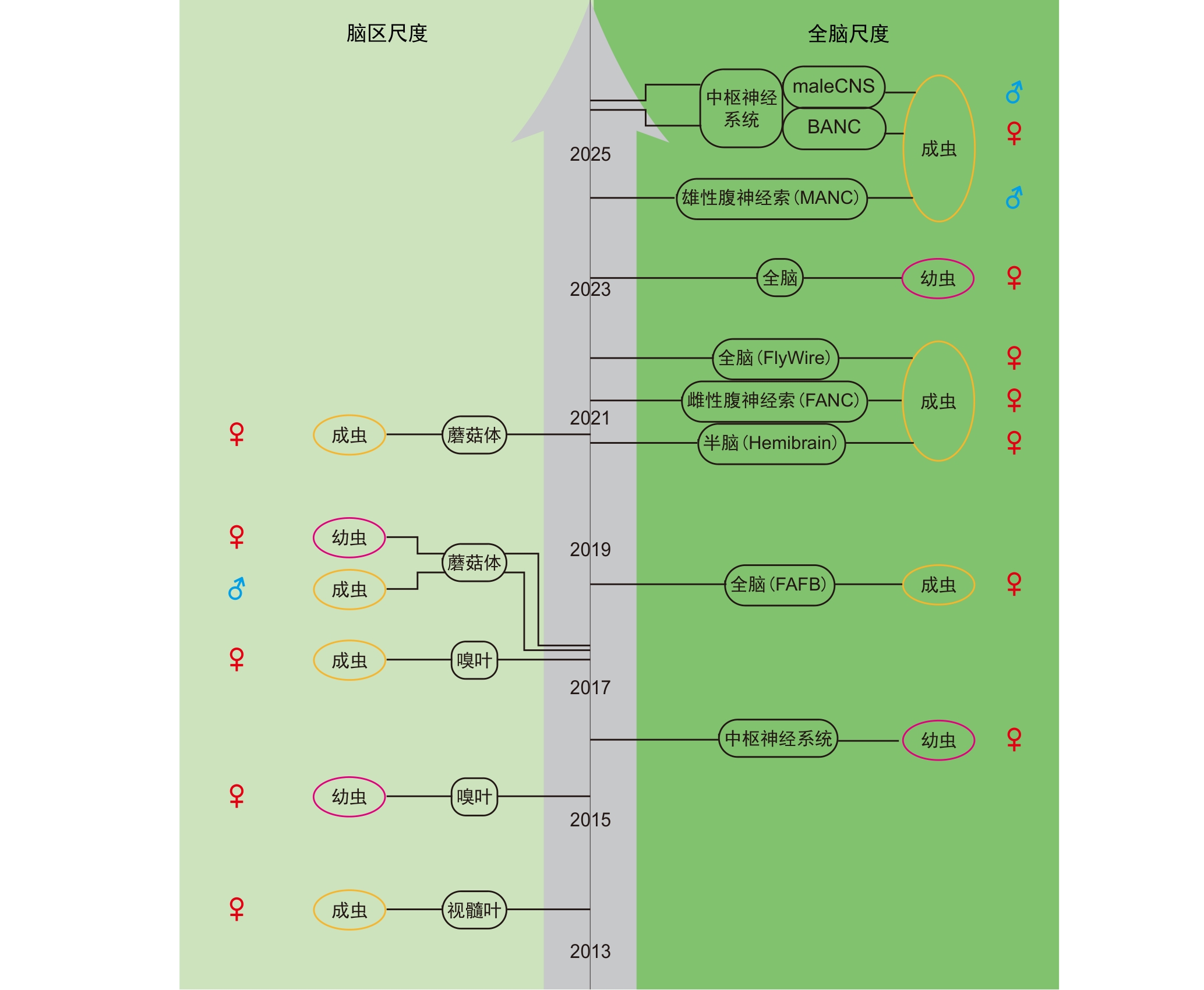
Figure 1 Development history of Drosophila melanogaster electron microscopy connectome database
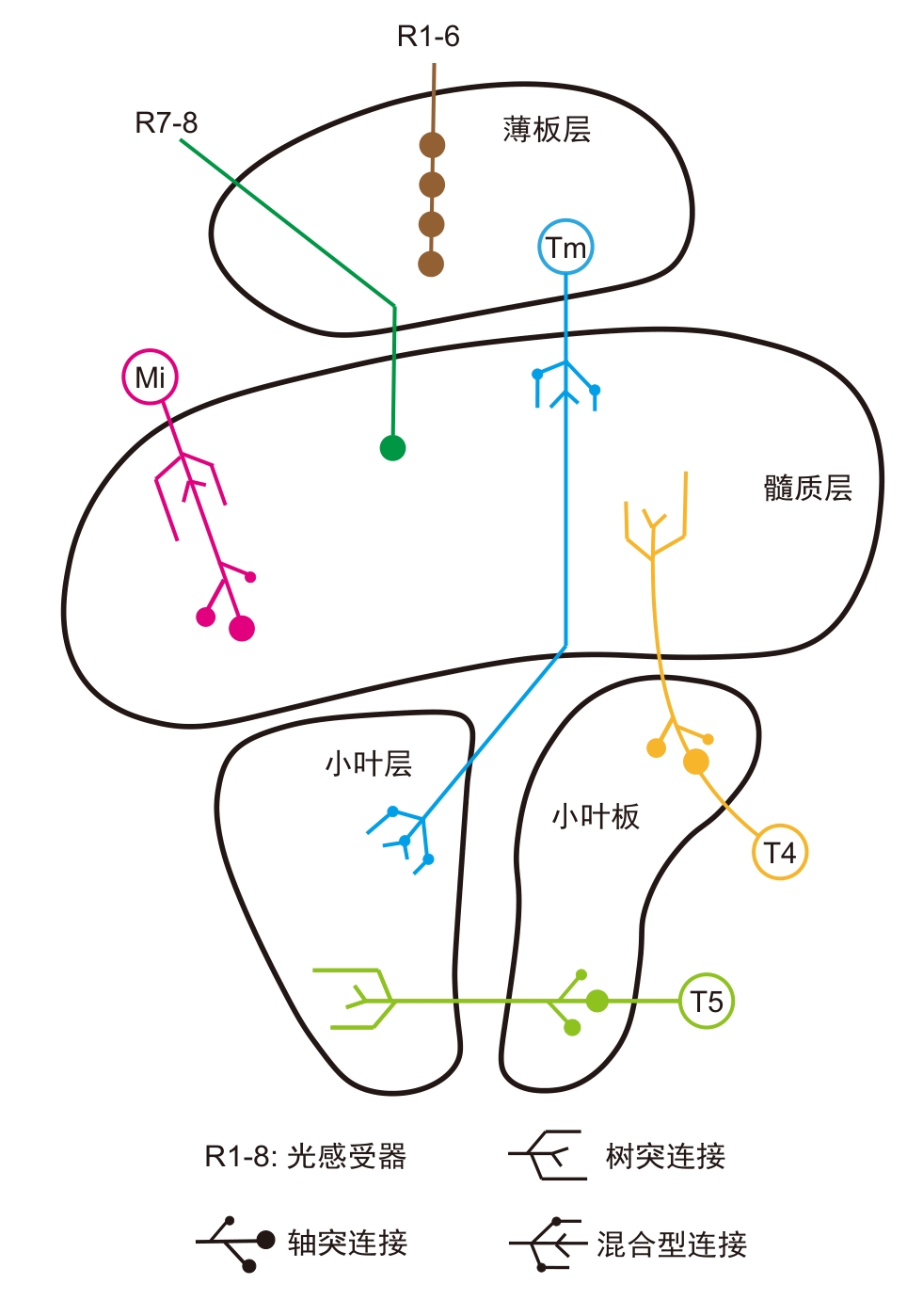
Figure 2 Structure of Drosophila melanogaster optic lobe and types of visual neurons related to motion detection and color perception (adapted from reference [
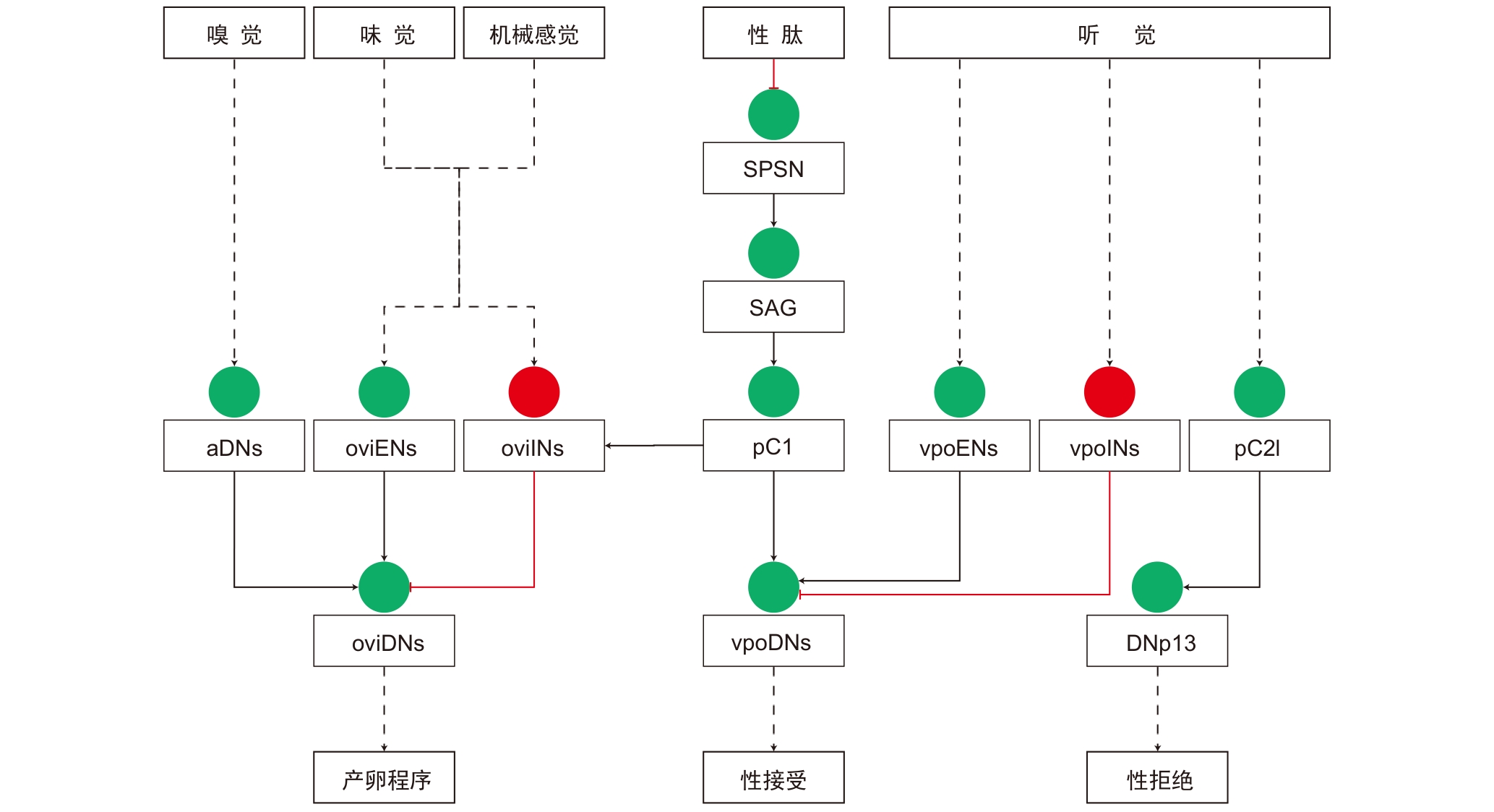
Figure 3 Neural circuits of mating and egg-laying decisions in female Drosophila
| [1] | SCHLEGEL P, YIN Y J, BATES A S, et al. Whole-brain annotation and multi-connectome cell typing of Drosophila [J]. Nature, 2024, 634(8032):139-152. DOI: 10.1038/s41586-024-07686-5 . |
| [2] | ASINOF S K, CARD G M. Neural control of naturalistic behavior choices[J]. Annu Rev Neurosci, 2024, 47(1): 369-388. DOI: 10.1146/annurev-neuro-111020-094019 . |
| [3] | PAREKH R, ASCOLI G A. Neuronal morphology goes digital: a research hub for cellular and system neuroscience[J]. Neuron, 2013, 77(6):1017-1038. DOI: 10.1016/j.neuron.2013. 03.008 . |
| [4] | FEINBERG E H, VANHOVEN M K, BENDESKY A, et al. GFP Reconstitution Across Synaptic Partners (GRASP) defines cell contacts and synapses in living nervous systems[J]. Neuron, 2008, 57(3):353-363. DOI: 10.1016/j.neuron.2007. 11.030 . |
| [5] | LILLVIS J L, OTSUNA H, DING X Y, et al. Rapid reconstruction of neural circuits using tissue expansion and light sheet microscopy[J]. eLife, 2022, 11: e81248. DOI: 10.7554/eLife. 81248 . |
| [6] | LICHTMAN J W, SANES J R. Ome sweet ome: what can the genome tell us about the connectome?[J]. Curr Opin Neurobiol, 2008, 18(3): 346-353. DOI: 10.1016/j.conb. 2008. 08.010 . |
| [7] | SCHNEIDER-MIZELL C M, GERHARD S, LONGAIR M, et al. Quantitative neuroanatomy for connectomics in Drosophila [J]. eLife, 2016, 5: e12059. DOI: 10.7554/eLife.12059 . |
| [8] | CARDONA A, SAALFELD S, PREIBISCH S, et al. An integrated micro- and macroarchitectural analysis of the Drosophila brain by computer-assisted serial section electron microscopy[J]. PLoS Biol, 2010, 8(10): e1000502. DOI: 10.1371/journal.pbio.1000502 . |
| [9] | LEE T J, KUMAR A, BALWANI A H, et al. Large-scale neuroanatomy using LASSO: loop-based automated serial sectioning operation[J]. PLoS One, 2018, 13(10): e0206172. DOI: 10.1371/journal.pone.0206172 . |
| [10] | SULOWAY C, PULOKAS J, FELLMANN D, et al. Automated molecular microscopy: the new Leginon system[J]. J Struct Biol, 2005, 151(1):41-60. DOI: 10.1016/j.jsb.2005.03.010 . |
| [11] | LU Z Y, XU C S, HAYWORTH K J, et al. En bloc preparation of Drosophila brains enables high-throughput FIB-SEM connectomics[J]. Front Neural Circuits, 2022, 16:917251. DOI: 10.3389/fncir.2022.917251 . |
| [12] | PLAZA S M, CLEMENTS J, DOLAFI T, et al. neuPrint: an open access tool for EM connectomics[J]. Front Neuroinform, 2022, 16:896292. DOI: 10.3389/fninf.2022.896292 . |
| [13] | DORKENWALD S, MCKELLAR C E, MACRINA T, et al. FlyWire: online community for whole-brain connectomics[J]. Nat Methods, 2022, 19(1):119-128. DOI: 10.1038/s41592-021-01330-0 . |
| [14] | DORKENWALD S, SCHNEIDER-MIZELL C M, BRITTAIN D, et al. CAVE: connectome annotation versioning engine[J]. Nat Methods, 2025, 22(5):1112-1120. DOI: 10.1038/s41592-024-02426-z . |
| [15] | CARDONA A, SAALFELD S, SCHINDELIN J, et al. TrakEM2 software for neural circuit reconstruction[J]. PLoS One, 2012, 7(6): e38011. DOI: 10.1371/journal.pone.0038011 . |
| [16] | BATES A S, MANTON J D, JAGANNATHAN S R, et al. The natverse, a versatile toolbox for combining and analysing neuroanatomical data[J]. eLife, 2020, 9: e53350. DOI: 10.7554/eLife.53350 . |
| [17] | SAALFELD S, CARDONA A, HARTENSTEIN V, et al. CATMAID: collaborative annotation toolkit for massive amounts of image data[J]. Bioinformatics, 2009, 25(15):1984-1986. DOI: 10.1093/bioinformatics/btp266 . |
| [18] | ECKSTEIN N, BATES A S, CHAMPION A, et al. Neurotransmitter classification from electron microscopy images at synaptic sites in Drosophila melanogaster [J]. Cell, 2024, 187(10):2574-2594.e23. DOI: 10.1016/j.cell.2024.03.016 . |
| [19] | BUHMANN J, SHERIDAN A, MALIN-MAYOR C, et al. Automatic detection of synaptic partners in a whole-brain Drosophila electron microscopy data set[J]. Nat Methods, 2021, 18(7):771-774. DOI: 10.1038/s41592-021-01183-7 . |
| [20] | TAKEMURA S Y, BHARIOKE A, LU Z Y, et al. A visual motion detection circuit suggested by Drosophila connectomics[J]. Nature, 2013, 500(7461):175-181. DOI: 10.1038/nature12450 . |
| [21] | TAKEMURA S Y, XU C S, LU Z Y, et al. Synaptic circuits and their variations within different columns in the visual system of Drosophila [J]. Proc Natl Acad Sci USA, 2015, 112(44):13711-13716. DOI: 10.1073/pnas.1509820112 . |
| [22] | OHYAMA T, SCHNEIDER-MIZELL C M, FETTER R D, et al. A multilevel multimodal circuit enhances action selection in Drosophila [J]. Nature, 2015, 520(7549):633-639. DOI: 10.1038/nature14297 . |
| [23] | BERCK M E, KHANDELWAL A, CLAUS L, et al. The wiring diagram of a glomerular olfactory system[J]. eLife, 2016, 5: e14859. DOI: 10.7554/eLife.14859 . |
| [24] | SCHLEGEL P, TEXADA M J, MIROSCHNIKOW A, et al. Synaptic transmission parallels neuromodulation in a central food-intake circuit[J]. eLife, 2016, 5: e16799. DOI: 10.7554/eLife.16799 . |
| [25] | TOBIN W F, WILSON R I, LEE W A. Wiring variations that enable and constrain neural computation in a sensory microcircuit[J]. eLife, 2017, 6: e24838. DOI: 10.7554/eLife. 24838 . |
| [26] | TAKEMURA S Y, ASO Y, HIGE T, et al. A connectome of a learning and memory center in the adult Drosophila brain[J]. eLife, 2017, 6: e26975. DOI: 10.7554/elife.26975 . |
| [27] | EICHLER K, LI F, LITWIN-KUMAR A, et al. The complete connectome of a learning and memory centre in an insect brain[J]. Nature, 2017, 548(7666):175-182. DOI: 10.1038/nature 23455 . |
| [28] | GERHARD S, ANDRADE I, FETTER R D, et al. Conserved neural circuit structure across Drosophila larval development revealed by comparative connectomics[J]. eLife, 2017, 6: e29089. DOI: 10.7554/eLife.29089 . |
| [29] | ZHENG Z H, LAURITZEN J S, PERLMAN E, et al. A complete electron microscopy volume of the brain of adult Drosophila melanogaster [J]. Cell, 2018, 174(3):730-743.e22. DOI: 10.1016/j.cell.2018.06.019 . |
| [30] | SCHEFFER L K, XU C S, JANUSZEWSKI M, et al. A connectome and analysis of the adult Drosophila central brain[J]. eLife, 2020, 9: e57443. DOI: 10.7554/eLife.57443 . |
| [31] | MAISAK M S, HAAG J, AMMER G, et al. A directional tuning map of Drosophila elementary motion detectors[J]. Nature, 2013, 500(7461):212-216. DOI: 10.1038/nature12320 . |
| [32] | WINDING M, PEDIGO B D, BARNES C L, et al. The connectome of an insect brain[J]. Science, 2023, 379(6636): eadd9330. DOI: 10.1126/science.add9330 . |
| [33] | LIN A, YANG R Z, DORKENWALD S, et al. Network statistics of the whole-brain connectome of Drosophila [J]. Nature, 2024, 634(8032):153-165. DOI: 10.1038/s41586-024-07968-y . |
| [34] | SEUNG H S. Predicting visual function by interpreting a neuronal wiring diagram[J]. Nature, 2024, 634(8032):113-123. DOI: 10.1038/s41586-024-07953-5 . |
| [35] | SHIU P K, STERNE G R, SPILLER N, et al. A Drosophila computational brain model reveals sensorimotor processing[J]. Nature, 2024, 634(8032):210-219. DOI: 10.1038/s41586-024-07763-9 . |
| [36] | BATES A S, PHELPS J S, KIM M, et al. Distributed control circuits across a brain-and-cord connectome[J]. bioRxiv, 2025. DOI: 10.1101/2025.07.31.667571. DOI: 10.1101/2025.07. 31.667571 . |
| [37] | TASTEKIN I, DE HAAN VICENTE I, BERESFORD R J, et al. From sensory detection to motor action: the comprehensive Drosophila taste-feeding connectome[J]. bioRxiv, 2025. DOI: 10.1101/2025.08.25.671814 . |
| [38] | BERG S, BECKETT I R, COSTA M, et al. Sexual dimorphism in the complete connectome of the Drosophila male central nervous system[J]. bioRxiv, 2025. DOI: 10.1101/2025.10.09. 680999 . |
| [39] | TAKEMURA S Y, HAYWORTH K J, HUANG G B, et al. A connectome of the male Drosophila ventral nerve cord[J]. bioRxiv, 2023. DOI: 10.1101/2023.06.05.543757 . |
| [40] | AZEVEDO A, LESSER E, PHELPS J S, et al. Connectomic reconstruction of a female Drosophila ventral nerve cord[J]. Nature, 2024, 631(8020):360-368. DOI: 10.1038/s41586-024-07389-x . |
| [41] | NERN A, LOESCHE F, TAKEMURA S Y, et al. Connectome-driven neural inventory of a complete visual system[J]. Nature, 2025, 641(8065):1225-1237. DOI: 10.1038/s41586-025-08746-0 . |
| [42] | FISCHBACH K F, DITTRICH A P M. The optic lobe of Drosophila melanogaster. I. A Golgi analysis of wild-type structure[J]. Cell Tissue Res, 1989, 258(3): 441-475. DOI: 10.1007/BF00218858 . |
| [43] | KIM S, CASSIDY J J, YANG B Y, et al. Hexagonal patterning of the insect compound eye: facet area variation, defects, and disorder[J]. Biophys J, 2016, 111(12):2735-2746. DOI: 10.1016/j.bpj.2016.11.004 . |
| [44] | SHARKEY C R, BLANCO J, LEIBOWITZ M M, et al. The spectral sensitivity of Drosophila photoreceptors[J]. Sci Rep, 2020, 10(1): 18242. DOI: 10.1038/s41598-020-74742-1 . |
| [45] | CURRIER T A, PANG M M, CLANDININ T R. Visual processing in the fly, from photoreceptors to behavior[J]. Genetics, 2023, 224(2): iyad064. DOI: 10.1093/genetics/iyad064 . |
| [46] | TAKEMURA S Y, NERN A, CHKLOVSKII D B, et al. The comprehensive connectome of a neural substrate for 'ON' motion detection in Drosophila [J]. eLife, 2017, 6: e24394. DOI: 10.7554/eLife.24394 . |
| [47] | SHINOMIYA K, HUANG G, LU Z Y, et al. Comparisons between the ON- and OFF-edge motion pathways in the Drosophila brain[J]. eLife, 2019, 8: e40025. DOI: 10.7554/eLife.40025 . |
| [48] | SHINOMIYA K, NERN A, MEINERTZHAGEN I A, et al. Neuronal circuits integrating visual motion information in Drosophila melanogaster [J]. Curr Biol, 2022, 32(16):3529-3544.e2. DOI: 10.1016/j.cub.2022.06.061 . |
| [49] | CHRISTENSON M P, SANZ DIEZ A, HEATH S L, et al. Hue selectivity from recurrent circuitry in Drosophila [J]. Nat Neurosci, 2024, 27(6):1137-1147. DOI: 10.1038/s41593-024-01640-4 . |
| [50] | SCHLEGEL P, BATES A S, STÜRNER T, et al. Information flow, cell types and stereotypy in a full olfactory connectome[J]. eLife, 2021, 10: e66018. DOI: 10.7554/eLife.66018 . |
| [51] | ZHENG Z H, LI F, FISHER C, et al. Structured sampling of olfactory input by the fly mushroom body[J]. Curr Biol, 2022, 32(15):3334-3349.e6. DOI: 10.1016/j.cub.2022.06.031 . |
| [52] | KIM H, HORIGOME M, ISHIKAWA Y, et al. Wiring patterns from auditory sensory neurons to the escape and song-relay pathways in fruit flies[J]. J Comp Neurol, 2020, 528(12):2068-2098. DOI: 10.1002/cne.24877 . |
| [53] | BAKER C A, MCKELLAR C, PANG R, et al. Neural network organization for courtship-song feature detection in Drosophila [J]. Curr Biol, 2022, 32(15):3317-3333.e7. DOI: 10.1016/j.cub.2022.06.019 . |
| [54] | DEUTSCH D, CLEMENS J, THIBERGE S Y, et al. Shared song detector neurons in Drosophila male and female brains drive sex-specific behaviors[J]. Curr Biol, 2019, 29(19):3200-3215.e5. DOI: 10.1016/j.cub.2019.08.008 . |
| [55] | MATSLIAH A, YU S C, KRUK K, et al. Neuronal parts list and wiring diagram for a visual system[J]. Nature, 2024, 634(8032):166-180. DOI: 10.1038/s41586-024-07981-1 . |
| [56] | ARANHA M M, VASCONCELOS M L. Deciphering Drosophila female innate behaviors[J]. Curr Opin Neurobiol, 2018, 52:139-148. DOI: 10.1016/j.conb.2018.06.005 . |
| [57] | BUSSELL J J, YAPICI N, ZHANG S X, et al. Abdominal-B neurons control Drosophila virgin female receptivity[J]. Curr Biol, 2014, 24(14): 1584-1595. DOI: 10.1016/j.cub.2014.06.011 . |
| [58] | VON PHILIPSBORN A C. Neuroscience: the female art of saying no. Curr Biol, 2020, 30(19): R1080-R1083. DOI: 10.1016/j.cub.2020.08.023 . |
| [59] | WANG K Y, WANG F, FORKNALL N, et al. Neural circuit mechanisms of sexual receptivity in Drosophila females[J]. Nature, 2021, 589(7843): 577-581. DOI: 10.1038/s41586-020-2972-7 . |
| [60] | WANG F, WANG K Y, FORKNALL N, et al. Circuit and behavioral mechanisms of sexual rejection by Drosophila females[J]. Curr Biol, 2020, 30(19): 3749-3760.e3. DOI: 10.1016/j.cub.2020.07.083 . |
| [61] | STÜRNER T, BROOKS P, SERRATOSA CAPDEVILA L, et al. Comparative connectomics of Drosophila descending and ascending neurons[J]. Nature, 2025, 643(8070): 158-172. DOI: 10.1038/s41586-025-08925-z . |
| [62] | ZHOU C, PAN Y F, ROBINETT C C, et al. Central brain neurons expressing doublesex regulate female receptivity in Drosophila [J]. Neuron, 2014, 83(1): 149-163. DOI: 10.1016/j.neuron.2014.05.038 . |
| [63] | KUBLI E. Sex-peptides: seminal peptides of the Drosophila male[J]. Cell Mol Life Sci CMLS, 2003, 60(8): 1689-1704. DOI: 10.1007/s00018-003-3052 . |
| [64] | LIU H F, KUBLI E. Sex-peptide is the molecular basis of the sperm effect inDrosophila melanogaster [J]. Proc Natl Acad Sci U S A, 2003, 100(17): 9929-9933. DOI: 10.1073/pnas. 1631700100 . |
| [65] | YANG C H, RUMPF S, XIANG Y, et al. Control of the postmating behavioral switch in Drosophila females by internal sensory neurons[J]. Neuron, 2009, 61(4): 519-526. DOI: 10.1016/j.neuron.2008.12.021 . |
| [66] | YAPICI N, KIM Y J, RIBEIRO C, et al. A receptor that mediates the post-mating switch in Drosophila reproductive behaviour[J]. Nature, 2008, 451(7174): 33-37. DOI: 10.1038/nature06483 . |
| [67] | HÄSEMEYER M, YAPICI N, HEBERLEIN U, et al. Sensory neurons in the Drosophila genital tract regulate female reproductive behavior[J]. Neuron, 2009, 61(4): 511-518. DOI: 10.1016/j.neuron.2009.01.009 . |
| [68] | KUBLI E, BOPP D. Sexual behavior: how sex peptide flips the postmating switch of female flies. Curr Biol, 2012, 22(13): R520-R522. DOI: 10.1016/j.cub.2012.04.058 . |
| [69] | CHAPMAN T, BANGHAM J, VINTI G, et al. The sex peptide of Drosophila melanogaster: female post-mating responses analyzed by using RNA interference[J]. Proc Natl Acad Sci U S A, 2003, 100(17): 9923-9928. DOI: 10.1073/pnas.1631635100 . |
| [70] | FENG K, PALFREYMAN M T, HÄSEMEYER M, et al. Ascending SAG neurons control sexual receptivity of Drosophila females[J]. Neuron, 2014, 83(1): 135-148. DOI: 10.1016/j.neuron.2014. 05.017 . |
| [71] | CHIU H, ROBIE A A, BRANSON K, et al. Cell type-specific contributions to a persistent aggressive internal state in female Drosophila [J]. eLife, 2025, 12: RP88598. DOI: 10.7554/elife.88598 . |
| [72] | SCHRETTER C E, ASO Y, ROBIE A A, et al. Cell types and neuronal circuitry underlying female aggression in Drosophila [J]. eLife, 2020, 9: e58942. DOI: 10.7554/eLife.58942 . |
| [73] | DEUTSCH D, PACHECO D, ENCARNACION-RIVERA L, et al. The neural basis for a persistent internal state in Drosophila females[J]. eLife, 2020, 9: e59502. DOI: 10.7554/eLife.59502 . |
| [74] | WANG F, WANG K Y, FORKNALL N, et al. Neural circuitry linking mating and egg laying in Drosophila females[J]. Nature, 2020, 579(7797): 101-105. DOI: 10.1038/s41586-020-2055-9 . |
| [75] | VIJAYAN V, WANG Z, CHANDRA V, et al. An internal expectation guides Drosophila egg-laying decisions[J]. Sci Adv, 2022, 8(43): 19. DOI:10.1126/sciadv.abn3852 . |
| [76] | YANG C H, BELAWAT P, HAFEN E, et al. Drosophila egg-laying site selection as a system to study simple decision-making processes[J]. Science, 2008, 319(5870): 1679-1683. DOI: 10.1126/science.1151842 . |
| [77] | VIJAYAN V, WANG F, WANG K Y, et al. A rise-to-threshold process for a relative-value decision[J]. Nature, 2023, 619(7970): 563-571. DOI: 10.1038/s41586-023-06271-6 . |
| [78] | LOUIS M, DE POLAVIEJA G. Collective behavior: social digging in Drosophila larvae[J]. Curr Biol, 2017, 27(18): R1010-R1012. DOI: 10.1016/j.cub.2017.08.023 . |
| [79] | LIN C C, PROKOP-PRIGGE K A, PRETI G, et al. Food odors trigger Drosophila males to deposit a pheromone that guides aggregation and female oviposition decisions[J]. eLife, 2015, 4: e08688. DOI: 10.7554/eLife.08688 . |
| [80] | DUMÉNIL C, WOUD D, PINTO F, et al. Pheromonal cues deposited by mated females convey social information about egg-laying sites in Drosophila melanogaster [J]. J Chem Ecol, 2016, 42(3): 259-269. DOI: 10.1007/s10886-016-0681-3 . |
| [81] | NOJIMA T, RINGS A, ALLEN A M, et al. A sex-specific switch between visual and olfactory inputs underlies adaptive sex differences in behavior[J]. Curr Biol, 2021, 31(6): 1175-1191.e6. DOI: 10.1016/j.cub.2020.12.047 . |
| [82] | VON SCHILCHER F. The role of auditory stimuli in the courtship of Drosophila melanogaster [J]. Anim Behav, 1976, 24(1): 18-26. DOI: 10.1016/s0003-3472(76)80095-4 . |
| [83] | VON SCHILCHER F. The function of pulse song and sine song in the courtship of Drosophila melanogaster [J]. Anim Behav, 1976, 24(3): 622-625. DOI: 10.1016/s0003-3472(76)80076-0 . |
| [84] | HINDMARSH STEN T, LI R F, HOLLUNDER F, et al. Male-male interactions shape mate selection in Drosophila [J]. Cell, 2025, 188(6): 1486-1503.e25. DOI: 10.1016/j.cell.2025.01.008 . |
| [85] | ROEMSCHIED F A, PACHECO D A, ARAGON M J, et al. Flexible circuit mechanisms for context-dependent song sequencing[J]. Nature, 2023, 622(7984): 794-801. DOI: 10.1038/s41586-023-06632-1 . |
| [86] | VON PHILIPSBORN A C, LIU T X, YU J Y, et al. Neuronal control of Drosophila courtship song[J]. Neuron, 2011, 69(3): 509-522. DOI: 10.1016/j.neuron.2011.01.011 . |
| [87] | KOHATSU S, KOGANEZAWA M, YAMAMOTO D. Female contact activates male-specific interneurons that trigger stereotypic courtship behavior in Drosophila [J]. Neuron, 2011, 69(3): 498-508. DOI: 10.1016/j.neuron.2010.12.017 . |
| [88] | CLOWNEY E J, IGUCHI S, BUSSELL J J, et al. Multimodal chemosensory circuits controlling male courtship in Drosophila [J]. Neuron, 2015, 87(5): 1036-1049. DOI: 10.1016/j.neuron.2015.07.025 . |
| [89] | SHIRANGI T R, STERN D L, TRUMAN J W. Motor control of Drosophila courtship song[J]. Cell Rep, 2013, 5(3): 678-686. DOI: 10.1016/j.celrep.2013.09.039 . |
| [90] | SHIRANGI T R, WONG A M, TRUMAN J W, et al. Doublesex regulates the connectivity of a neural circuit controlling Drosophila male courtship song[J]. Dev Cell, 2016, 37(6): 533-544. DOI: 10.1016/j.devcel.2016.05.012 . |
| [91] | O'SULLIVAN A, LINDSAY T, PRUDNIKOVA A, et al. Multifunctional wing motor control of song and flight[J]. Curr Biol, 2018, 28(17): 2705-2717.e4. DOI: 10.1016/j.cub.2018.06.038 . |
| [92] | LILLVIS J L, WANG K Y, SHIOZAKI H M, et al. Nested neural circuits generate distinct acoustic signals during Drosophila courtship[J]. Curr Biol, 2024, 34(4): 808-824.e6. DOI: 10.1016/j.cub.2024.01.015 . |
| [93] | SHIOZAKI H M, WANG K Y, LILLVIS J L, et al. Activity of nested neural circuits drives different courtship songs in Drosophila [J]. Nat Neurosci, 2024, 27(10): 1954-1965. DOI: 10.1038/s41593-024-01738-9 . |
| [1] | WANG Ye, WANG Lu. Drosophila melanogaster Transposons: Characterization, Regulation, and Their Role in Genome Evolution [J]. Laboratory Animal and Comparative Medicine, 2025, 45(6): 676-687. |
| [2] | CHEN Haotian, LIU Jingnan. Applications and Advances of Drosophila in Research of Obesity and Its Related Metabolic Diseases [J]. Laboratory Animal and Comparative Medicine, 2025, 45(6): 688-704. |
| [3] | WANG Mingzhu, GAO Yinghao, TAN Shuangshuang, WU Wei. Construction and Characterization of UAS-Irk3-EGFP Transgenic Drosophila Lines [J]. Laboratory Animal and Comparative Medicine, 2025, 45(6): 656-662. |
| [4] | WANG Hanyue, CHEN Jiawei, GAO Xiangbin, LUO Wei, LIU Suning. Research Overview on Corpora Cardiaca Function of Drosophila melanogaster [J]. Laboratory Animal and Comparative Medicine, 2025, 45(6): 705-718. |
| [5] | LI Huiping, GAO Hongbin, WEN Jinyin, YANG Jinchun. Construction and Preliminary Application of Animal Disease Model Digital Atlas Database Platform [J]. Laboratory Animal and Comparative Medicine, 2025, 45(3): 300-308. |
| [6] | Longmei XU, Ruling SHEN, Chun FAN, Wei WU. Generation of 12 Drosophila Transgenic Negative Control Lines Based on Site-specific ΦC31 Integrase and pUASTattB Vector [J]. Laboratory Animal and Comparative Medicine, 2023, 43(5): 541-547. |
| [7] | CHEN Ying, PAN Hua, ZHOU Guang-xing. Preliminary Establishment of Shared Database about Comparative Histology in 6 Species of Laboratory Animals [J]. Laboratory Animal and Comparative Medicine, 2014, 34(6): 463-466. |
| Viewed | ||||||
|
Full text |
|
|||||
|
Abstract |
|
|||||
