
Laboratory Animal and Comparative Medicine
• XXXX XXXX •
XIONG Wei1, WANG Yiting1, LU Yuhao2, HAN Jingyi2, WEI Xiaofeng3, LI Shenwei4, CHEN Hongjun2( )(
)( )
)
Online:2026-06-29
Correspondence to:
CHEN Hongjun
CLC Number:
XIONG Wei,WANG Yiting,LU Yuhao,et al. Establishment and Application of a Dual-Fluorescence RT-PCR Method for Detecting Mouse Pneumonia Virus[J]. Laboratory Animal and Comparative Medicine. DOI: 10.12300/j.issn.1674-5817.2026.024.
Add to citation manager EndNote|Ris|BibTeX
URL: https://www.slarc.org.cn/dwyx/EN/10.12300/j.issn.1674-5817.2026.024
名称 Name | 序列 Sequence | 扩增长度 Length |
|---|---|---|
| PVM-M正向引物PVM-M forward primer | 5'- TCTTGATAAATGCTATCATAGCT-3' | 96 bp |
| PVM-M反向引物PVM-M reverse primer | 5'-GAATTGTCACACAGAAGCTC-3' | |
| PVM-M荧光探针PVM-M fluorescent probe | 5'- FAM- CTTCGTAATCCATGTTGCCCCAGTC -BHQ1-3' | |
| PVM-F正向引物PVM-F forward primer | 5'- TGGCTAGAGCTGATAATGGC -3' | 93 bp |
| PVM-F反向引物PVM-F reverse primer | 5'- CATACCCATTGTGGATCTCA -3' | |
| PVM-F荧光探针PVM-F fluorescent probe | 5'-VIC- TGGCTCATTATCATACTTCCCGTC -BHQ1-3' |
Table 1 Primer and Probe Sequences for the PVM Dual-Fluorescence RT-PCR Method
名称 Name | 序列 Sequence | 扩增长度 Length |
|---|---|---|
| PVM-M正向引物PVM-M forward primer | 5'- TCTTGATAAATGCTATCATAGCT-3' | 96 bp |
| PVM-M反向引物PVM-M reverse primer | 5'-GAATTGTCACACAGAAGCTC-3' | |
| PVM-M荧光探针PVM-M fluorescent probe | 5'- FAM- CTTCGTAATCCATGTTGCCCCAGTC -BHQ1-3' | |
| PVM-F正向引物PVM-F forward primer | 5'- TGGCTAGAGCTGATAATGGC -3' | 93 bp |
| PVM-F反向引物PVM-F reverse primer | 5'- CATACCCATTGTGGATCTCA -3' | |
| PVM-F荧光探针PVM-F fluorescent probe | 5'-VIC- TGGCTCATTATCATACTTCCCGTC -BHQ1-3' |
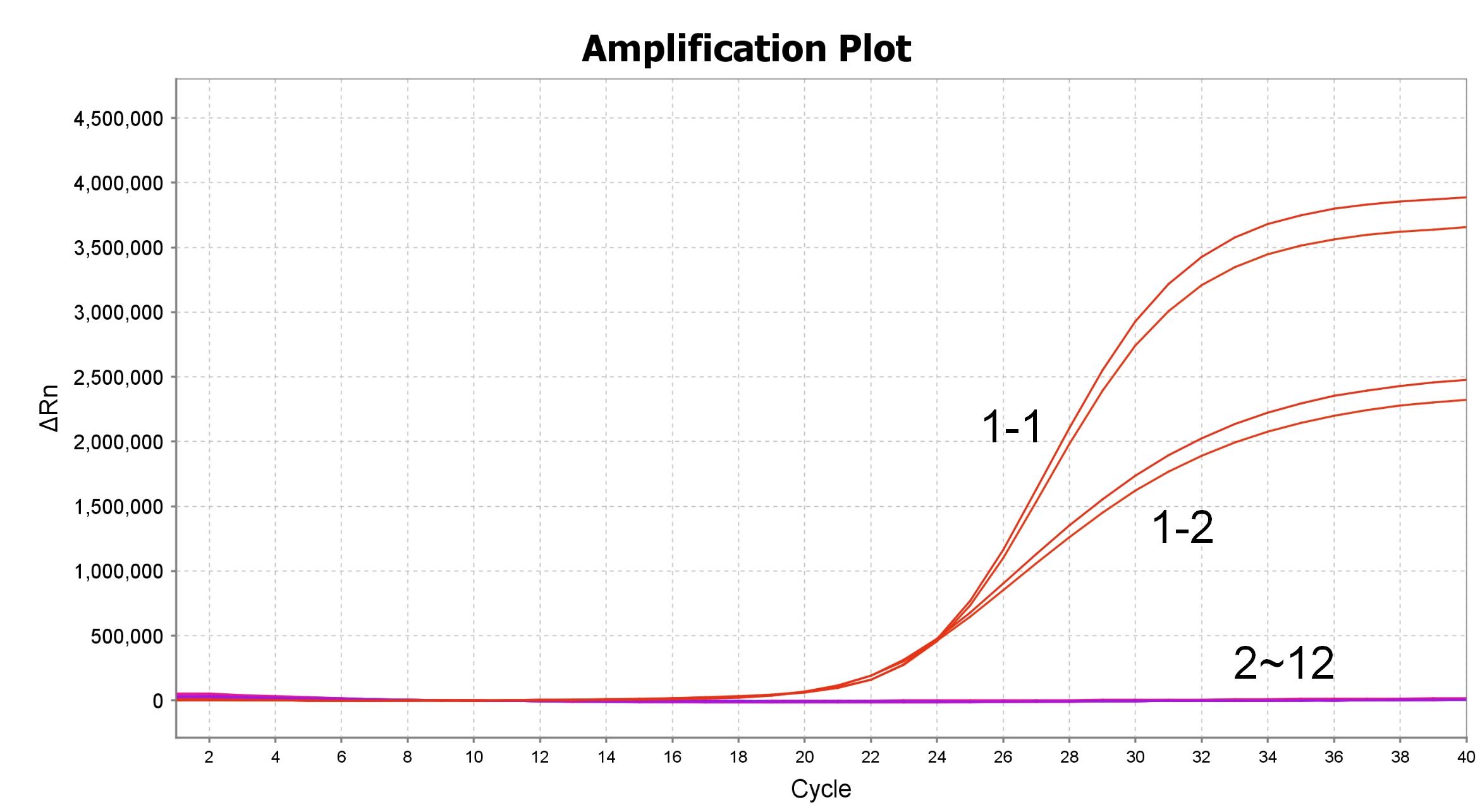
Figure 1 Specificity test of PVM duplex fluorescent RT-PCR method
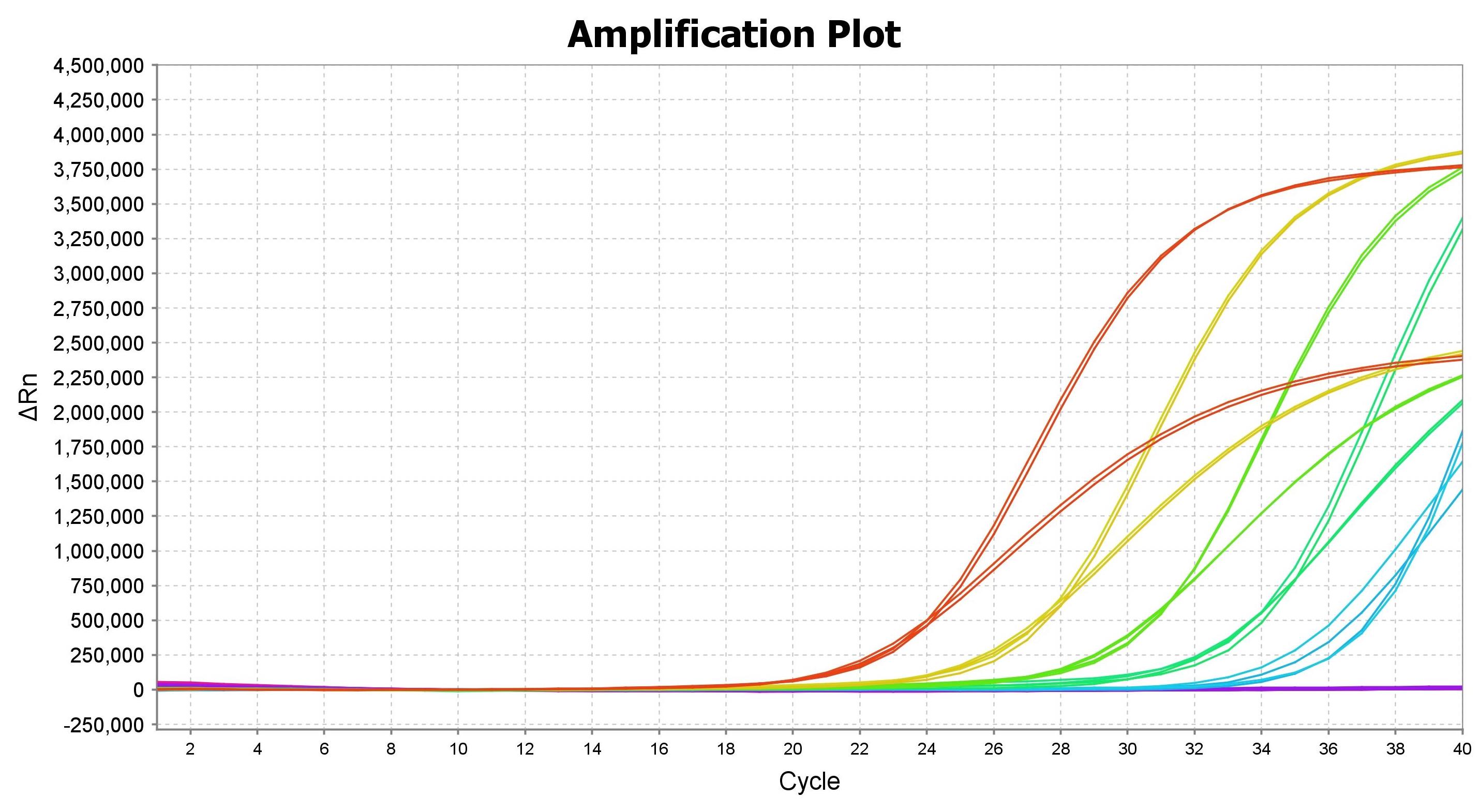
Figure 2 Sensitivity test of PVM dual-fluorescence RT-PCR method
质粒浓度(拷贝/μL) Plasmid concentration(copies/μL) | M蛋白基因(FAM通道) M protein gene (FAM channel) | F蛋白基因(VIC通道) F protein gene (VIC channel) | ||
|---|---|---|---|---|
Ct值 Ct value | 变异系数 Coefficient of Variation | Ct值 Ct value | 变异系数 Coefficient of Variation | |
| 批内(n=5) | ||||
| 105 | 21.75±0.14 | 0.66% | 21.14±0.10 | 0.46% |
| 104 | 25.03±0.20 | 0.79% | 24.26±0.18 | 0.76% |
| 103 | 28.65±0.27 | 0.93% | 27.45±0.22 | 0.82% |
| 102 | 31.93±0.32 | 1.02% | 30.92±0.32 | 1.03% |
| 批间(n=12) | ||||
| 105 | 21.89±0.19 | 0.89% | 21.54±0.27 | 1.24% |
| 104 | 25.28±0.28 | 1.12% | 24.50±0.34 | 1.40% |
| 103 | 28.82±0.28 | 0.98% | 27.58±0.32 | 1.17% |
| 102 | 32.78±0.43 | 1.31% | 31.87±0.46 | 1.44% |
Table 2 Repeatability test of PVM dual-fluorescence RT-PCR method
质粒浓度(拷贝/μL) Plasmid concentration(copies/μL) | M蛋白基因(FAM通道) M protein gene (FAM channel) | F蛋白基因(VIC通道) F protein gene (VIC channel) | ||
|---|---|---|---|---|
Ct值 Ct value | 变异系数 Coefficient of Variation | Ct值 Ct value | 变异系数 Coefficient of Variation | |
| 批内(n=5) | ||||
| 105 | 21.75±0.14 | 0.66% | 21.14±0.10 | 0.46% |
| 104 | 25.03±0.20 | 0.79% | 24.26±0.18 | 0.76% |
| 103 | 28.65±0.27 | 0.93% | 27.45±0.22 | 0.82% |
| 102 | 31.93±0.32 | 1.02% | 30.92±0.32 | 1.03% |
| 批间(n=12) | ||||
| 105 | 21.89±0.19 | 0.89% | 21.54±0.27 | 1.24% |
| 104 | 25.28±0.28 | 1.12% | 24.50±0.34 | 1.40% |
| 103 | 28.82±0.28 | 0.98% | 27.58±0.32 | 1.17% |
| 102 | 32.78±0.43 | 1.31% | 31.87±0.46 | 1.44% |
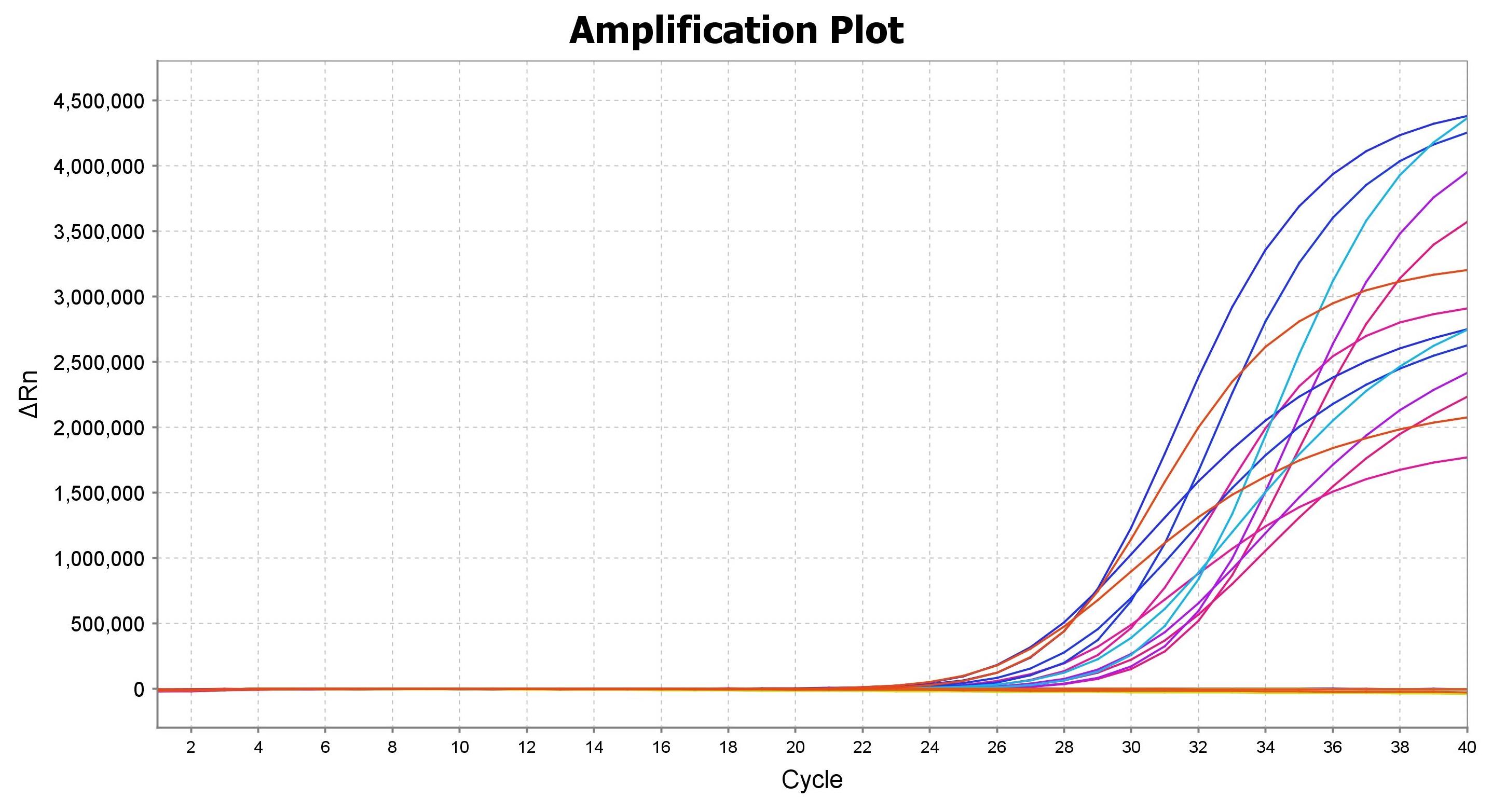
Figure 3 Detection of tissue and body fluid samples from PVM-positive mice using the dual fluorescence RT-PCR method
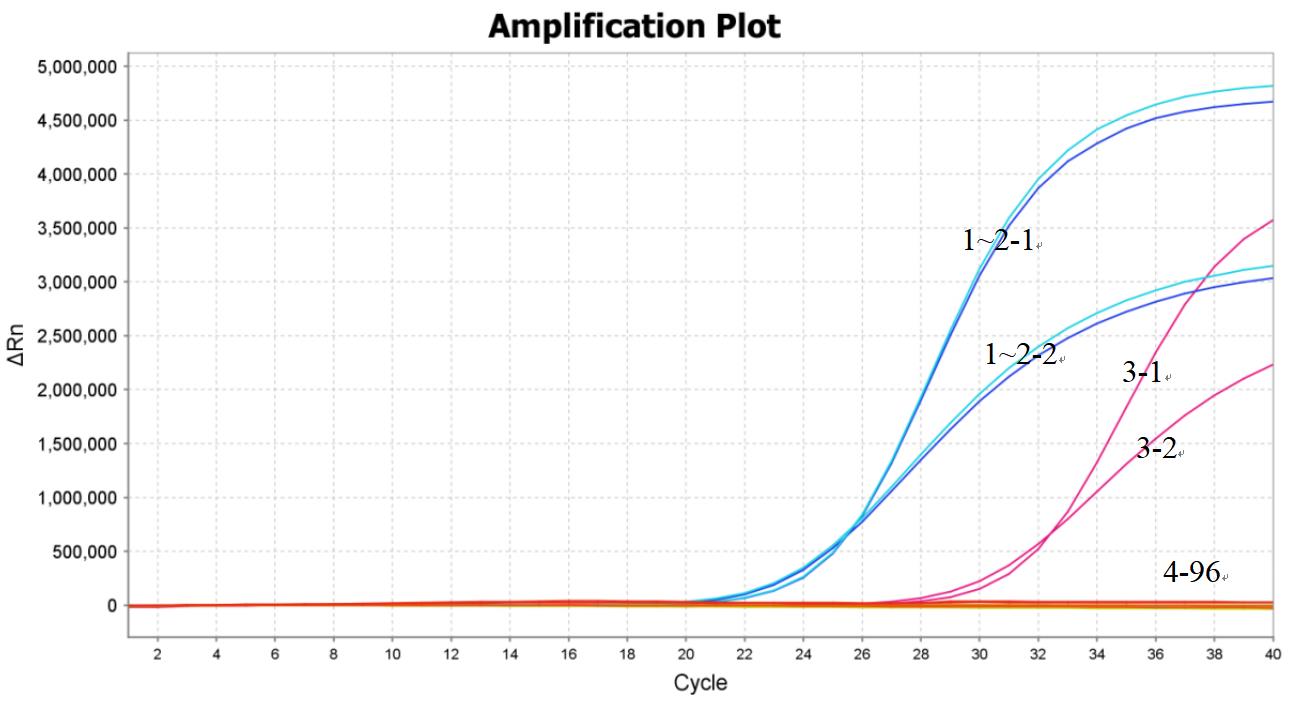
Figure 4 Detection of PVM among port field murine using duplex fluorescent RT-PCR
| [1] | LIMKAR A R, PERCOPO C M, REDES J L, et al. Persistent airway hyperresponsiveness following recovery from infection with pneumonia virus of mice[J]. Viruses, 2021, 13(5): 728. DOI: 10.3390/v13050728 . |
| [2] | QAWIEM F, YASMIN A, ARSHAD S, et al. Paramyxoviruses in rodents: a review[J]. Open Vet J, 2022, 12(6): 877. DOI: 10.5455/ovj.2022.v12.i6.14 . |
| [3] | KREMPL C D, LAMIRANDE E W, COLLINS P L. Complete sequence of the RNA genome of pneumonia virus of mice (PVM)[J]. Virus Genes, 2005, 30(2): 237-248. DOI: 10.1007/s11262-004-5631-4 . |
| [4] | 赵雅静, 宁磊, 李建平, 等. 小鼠PVM血清抗体I-ELISA检测法的建立及其应用[J]. 中国兽医科技, 2000, 30(2): 22-23. DOI: 10.3969/j.issn.1673-4696.2000.02.008 . |
| ZHAO Y J, NING L, LI J P, et al. Establishment and application of Ⅰ-ELISA for measuring PVM serum antibody in mice[J]. Chin J Vet Sci Technol, 2000, 30(2): 22-23. DOI: 10.3969/j.issn.1673-4696.2000.02.008 . | |
| [5] | 王吉, 王莎莎, 王淑菁, 等. 鼠肺炎病毒实时荧光定量聚合酶链反应方法的建立及其在新型冠状病毒感染模型用小鼠等动物检测中的应用[J]. 中国病毒病杂志, 2023, 13(4): 264-271. DOI: 10.16505/j.2095-0136.2023.4006 . |
| WANG J, WANG S S, WANG S J, et al. Establishment of Q-PCR method for pneumonia virus of mice and its application in detection of mouse and other animal models of COVID-19 infection[J]. Chin J Viral Dis, 2023, 13(4): 264-271. DOI: 10.16505/j.2095-0136.2023.4006 . | |
| [6] | 国家市场监督管理总局, 国家标准化管理委员会. 实验动物 微生物、寄生虫学等级及监测: [S]. 北京: 中国标准出版社, 2022. |
| [7] | 吴朋朋, 张彩勤, 赵勇, 等. 2017—2021年陕西省实验动物使用单位SPF级大、小鼠质量监测结果分析与评估[J]. 中国比较医学杂志, 2023, 33(1): 70-77. DOI: 10.3969/j.issn.1671-7856.2023.01.009 . |
| WU P P, ZHANG C Q, ZHAO Y, et al. Analysis and evaluation of quality monitoring results of SPF rats and mice in Shaanxi Province from 2017 to 2021[J]. Chin J Comp Med, 2023, 33(1): 70-77. DOI: 10.3969/j.issn.1671-7856.2023.01.009 . | |
| [8] | LEVY E, GILLIAUX G, SARLET M, et al. Host-strain-specific responses to pneumonia virus of mice infection: a study of lesions, viral load, and cytokine expression[J]. Viruses, 2025, 17(4): 548. DOI: 10.3390/v17040548 . |
| [9] | 国家药典委员会. 中华人民共和国药典-四部: 2020年版[M]. 北京: 中国医药科技出版社, 2020: 244-245. |
| Chinese Pharmacopoeia Commission. Pharmacopoeia of the People's Republic of China 2020 Edition Volume IV[M]. Beijing: China Medical Science Press, 2020: 244-245. | |
| [10] | 牛培华, 朱耀武, 陆柔剑, 等. 一种新型冠状病毒荧光定量PCR快速检测方法的应用评价[J]. 中华微生物学和免疫学杂志, 2021, 41(8): 588-591. DOI: 10.3760/cma.j.cn112309-20210402-00107 . |
| NIU P H, ZHU Y W, LU R J, et al. Application evaluation of a rapid fluorescence quantitative PCR method for the detection of SARS-CoV-2[J]. Chin J Microbiol Immunol, 2021, 41(8): 588-591. DOI: 10.3760/cma.j.cn112309-20210402-00107 . | |
| [11] | 周兰兰, 魏泉德, 焦亮, 等. 咽拭子和鼻拭子标本新型冠状病毒核酸检测效果分析[J]. 中华实验和临床病毒学杂志, 2021, 35(6): 710-713. DOI: 10.3760/cma.j.cn112866-20200309-00053 . |
| ZHOU L L, WEI Q D, JIAO L, et al. Detection effect of novel coronavirus nucleic acid in throat swabs and nasal swabs[J]. Chin J Exp Clin Virol, 2021, 35(6): 710-713. DOI: 10.3760/cma.j.cn112866-20200309-00053 . | |
| [12] | 许玉玲, 王海霞, 李金月, 等. 新型冠状病毒抗原检测胶体金法与核酸检测实时荧光RT-PCR方法比较[J]. 实用医学杂志, 2022, 38(7): 791-794. DOI: 10.3969/j.issn.1006-5725.2022.07.003 . |
| XU Y L, WANG H X, LI J Y, et al. Comparative analysis of colloidal gold method for SARS-CoV-2 antigen detection and Real-Time RT-PCR test[J]. J Pract Med, 2022, 38(7): 791-794. DOI: 10.3969/j.issn.1006-5725.2022.07.003 . | |
| [13] | 胡忆文, 禹思宇, 谭建锡, 等. 鼠肺炎病毒荧光定量RT-PCR检测方法的建立[J]. 湖南畜牧兽医, 2019(5): 36-39. DOI: CNKI:SUN:HNCM.0.2019-05-017 . |
| HU Y W, YU S Y, TAN J X, et al. Establishment of fluorescent quantitative RT-PCR method for detection of murine pneumonia virus[J]. Hunan J Anim Sci Vet Med, 2019(5): 36-39. DOI: CNKI:SUN:HNCM.0.2019-05-017 . | |
| [14] | 王吉, 王莎莎, 付瑞, 等. 小鼠肝炎病毒实时荧光定量PCR方法的建立及在部分啮齿类动物的应用[J]. 实验动物与比较医学, 2020, 40(2): 95-103. DOI: 10.3969/j.issn.1674-5817.2020.02.002 . |
| WANG J, WANG S S, FU R, et al. Establishment of real-time fluorescent quantitative PCR method for mouse hepatitis virus and application in some rodents[J]. Lab Anim Comp Med, 2020, 40(2): 95-103. DOI: 10.3969/j.issn.1674-5817.2020.02.002 . | |
| [15] | 王淑菁, 林欢, 付瑞, 等. 同时检测小鼠微小病毒(MVM)和小鼠细小病毒(MPV)的荧光定量PCR的建立及应用[J]. 实验动物科学, 2018, 35(4): 29-32. DOI: 10.3969/j.issn.1006-6179.2015.05.005 . |
| WANG S J, LIN H, FU R, et al. Establishment and application of the real-time PCR for detecting minute virus of mouse (MVM) and mouse parvovirus (MPV) simultaneously in laboratory mice[J]. Lab Anim Sci, 2018, 35(4): 29-32. DOI: 10.3969/j.issn.1006-6179.2015.05.005 . | |
| [16] | 扈富哥, 宫英杰, 王蕾, 等. 犬瘟热病毒和犬腺病毒2型双重TaqMan荧光定量PCR检测方法的建立[J]. 畜牧与兽医, 2024, 56(9): 91-95. |
| HU F G, GONG Y J, WANG L, et al. Development of a duplex TaqMan real-time PCR assay for simultaneous detection and differentiation of CDV and CAdV-2[J]. Anim Husb Vet Med, 2024, 56(9): 91-95. | |
| [17] | LI Y F, WU J Q, WANG C N, et al. Development of one-step multiplex real-time PCR for the detection of CHV-1, CAdV-2, and CDV[J]. Front Vet Sci, 2025, 12: 1583769. DOI: 10.3389/fvets.2025.1583769 . |
| [18] | 赵文华, 杨仕标, 高华峰, 等. 小反刍兽疫病毒及山羊痘病毒N-ITR基因二联实时荧光定量RT-PCR检测方法的建立[J]. 中国畜牧兽医, 2014, 41(3): 65-71. DOI: CNKI:SUN:GWXK.0.2014-03-019 . |
| ZHAO W H, YANG S B, GAO H F, et al. Development of the duplex real-time RT-PCR assay with TaqMan probe of N-ITR genes for detection of peste des petits ruminants virus and goat pox virus[J]. China Anim Husb Vet Med, 2014, 41(3): 65-71. DOI: CNKI:SUN:GWXK.0.2014-03-019 . | |
| [19] | 李长宇, 孙军峰, 赵冉, 等. 鹅源class I类NDV生物学特性的研究及荧光定量RT-PCR检测方法的建立[J]. 中国预防兽医学报, 2024, 46(9): 923-930. DOI: 10.3969/j.issn.1008-0589.202401005 . |
| LI C Y, SUN J F, ZHAO R, et al. Biological characteristics of a class I Newcastle disease virus isolated from goose and development of fluorescence quantitative RT-PCR assay[J]. Chin J Prev Vet Med, 2024, 46(9): 923-930. DOI: 10.3969/j.issn.1008-0589.202401005 . | |
| [20] | 梁晓珊, 宁鹏, 李小龙, 等. 牛呼吸道合胞体病毒一步法实时荧光定量PCR检测方法的建立及应用[J]. 畜牧与兽医, 2024, 56(3): 94-98. |
| LIANG X S, NING P, LI X L, et al. Establishment and application of a one-step real-time fluorescence quantitative PCR assay for bovine respiratory syncytial disease[J]. Anim Husb Vet Med, 2024, 56(3): 94-98. | |
| [21] | 佟巍, 郭智, 刘芸, 等. 口咽拭子样品在小鼠肺炎病毒病原检测中的应用[J]. 实验动物科学, 2024, 41(5): 19-22. DOI: 10.3969/j.issn.1006-6179.2024.05.004 . |
| TONG W, GUO Z, LIU Y, et al. Mice oral swab sampling application for PVM detection[J]. Lab Anim Sci, 2024, 41(5): 19-22. DOI: 10.3969/j.issn.1006-6179.2024.05.004 . |
| [1] | Yun LIU, Tingting FENG, Wei TONG, Zhi GUO, Xia LI, Qi KONG, Zhiguang XIANG. Glycyrrhizic Acid Showed Therapeutic Effects on Severe Pulmonary Damages in Mice Induced by Pneumonia Virus of Mice Infection [J]. Laboratory Animal and Comparative Medicine, 2024, 44(3): 251-258. |
| Viewed | ||||||
|
Full text |
|
|||||
|
Abstract |
|
|||||
