

Laboratory Animal and Comparative Medicine
• XXXX XXXX •
MENG Feibiao1, WANG Linyi1,2, ZHANG Wenqiang1, TANG Ruixin1, HUANG Xueying1, FANG Meirong1, YANG Wei1,2, GUO Jianmin1,2( )(
)( )
)
Online:2026-07-28
Correspondence to:
GUO Jianmin
CLC Number:
MENG Feibiao,WANG Linyi,ZHANG Wenqiang,et al. Establishment and Validation of a Guinea Pig Model of Ear Psoriasis Induced by Propranolol Hydrochloride[J]. Laboratory Animal and Comparative Medicine. DOI: 10.12300/j.issn.1674-5817.2026.011.
Add to citation manager EndNote|Ris|BibTeX
URL: https://www.slarc.org.cn/dwyx/EN/10.12300/j.issn.1674-5817.2026.011
比例 Ratio | 组分 Component | 重量(g) Weight (g) | 百分比(%) Percentage (%) |
|---|---|---|---|
| 油相Oil phase | 硬脂酸Stearic acid | 1.4 | 14 |
| 液体石蜡Liquid paraffin | 2.4 | 24 | |
| 水相Aqueous phase | 三乙醇胺Triethanolamine | 0.3 | 3 |
| 甘油Glycerol | 0.9 | 9 | |
| 蒸馏水Distilled water | 4.5 | 45 | |
| 药物Medicine | 盐酸普萘洛尔Propranolol hydrochloride | 0.5 | 5 |
| 总量Total quantity | 10 | 100 | |
Table 1 5% Propranolol Hydrochloride Formula
比例 Ratio | 组分 Component | 重量(g) Weight (g) | 百分比(%) Percentage (%) |
|---|---|---|---|
| 油相Oil phase | 硬脂酸Stearic acid | 1.4 | 14 |
| 液体石蜡Liquid paraffin | 2.4 | 24 | |
| 水相Aqueous phase | 三乙醇胺Triethanolamine | 0.3 | 3 |
| 甘油Glycerol | 0.9 | 9 | |
| 蒸馏水Distilled water | 4.5 | 45 | |
| 药物Medicine | 盐酸普萘洛尔Propranolol hydrochloride | 0.5 | 5 |
| 总量Total quantity | 10 | 100 | |
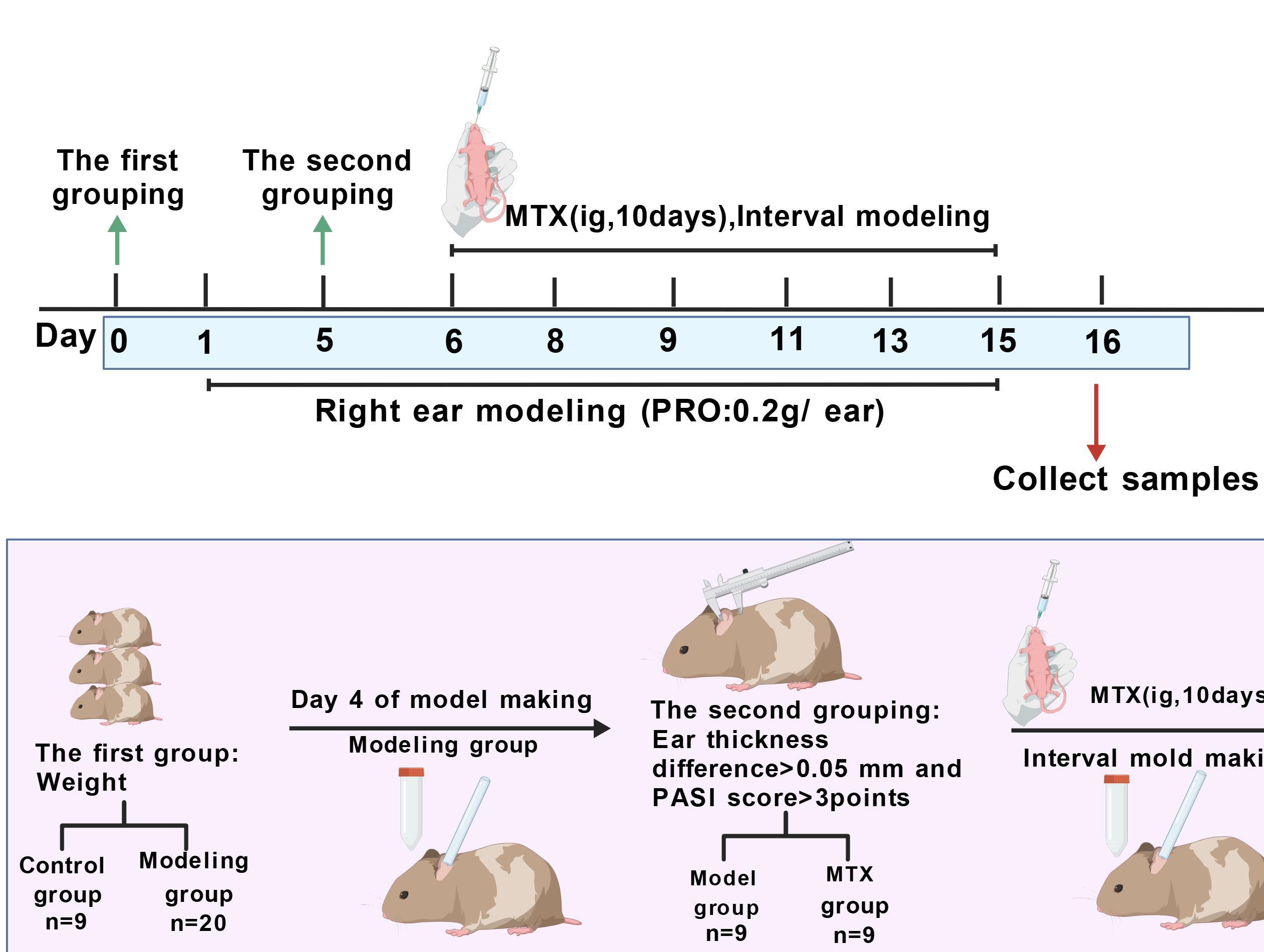
Figure 1 Schematic diagram of the experimental process
皮肤泛红程度 Degree of skin redness | 鳞屑 Scale | 增厚程度 Degree of thickening | 严重程度 Different degrees of severity | 转换评分 Conversion score |
|---|---|---|---|---|
无泛红现象 No redness at all | 耳部表面无可见鳞屑 | 未见增厚 | 无症状 | 0 |
耳部皮肤呈淡红色 The skin on the ear is a light red color. | 部分皮损表面完全或覆有鳞屑,以细微鳞屑为主 | 略有增厚,但尚属轻微范围 | 轻度 | 1 |
耳部皮肤呈红色 The skin on the ear is red. | 大多数皮损表面完全或不完全覆有鳞屑,鳞屑呈片状 | 呈中等程度增厚,变化较为显著 | 中度 | 2 |
耳部皮肤呈深红色 The skin on the ear is a deep red color | 几乎所有皮损表面覆有鳞屑,较厚成层 | 明显增厚,变化突出 | 重度 | 3 |
耳部皮肤红色极深 The skin on the ear is extremely red | 全部皮损表面均覆有鳞屑,鳞屑很厚成层 | 异常增厚,已达严重程度 | 极重度 | 4 |
Table 2 PASI Scoring Criteria
皮肤泛红程度 Degree of skin redness | 鳞屑 Scale | 增厚程度 Degree of thickening | 严重程度 Different degrees of severity | 转换评分 Conversion score |
|---|---|---|---|---|
无泛红现象 No redness at all | 耳部表面无可见鳞屑 | 未见增厚 | 无症状 | 0 |
耳部皮肤呈淡红色 The skin on the ear is a light red color. | 部分皮损表面完全或覆有鳞屑,以细微鳞屑为主 | 略有增厚,但尚属轻微范围 | 轻度 | 1 |
耳部皮肤呈红色 The skin on the ear is red. | 大多数皮损表面完全或不完全覆有鳞屑,鳞屑呈片状 | 呈中等程度增厚,变化较为显著 | 中度 | 2 |
耳部皮肤呈深红色 The skin on the ear is a deep red color | 几乎所有皮损表面覆有鳞屑,较厚成层 | 明显增厚,变化突出 | 重度 | 3 |
耳部皮肤红色极深 The skin on the ear is extremely red | 全部皮损表面均覆有鳞屑,鳞屑很厚成层 | 异常增厚,已达严重程度 | 极重度 | 4 |
病变程度 Degree of lesion | 组织学改变 Histological changes | 评分(分) Score(points) |
|---|---|---|
| 正常Normal | 未观察到组织学改变或组织结构基本正常 | 0 |
| 轻微Slight | 病理损伤范围零星可见,不构成区域性 | 0.5 |
| 轻度Mild | 灶性、多灶性或散在分布的损伤,损伤范围在100倍镜下可见1/3-1个视野 | 1 |
| 中度Moderate | 灶性、多灶性或散在分布的损伤,损伤范围在100倍镜下可见1-3个视野 | 2 |
| 重度Severe | 灶性、多灶性或散在分布的损伤,损伤范围在100倍镜下可见3个视野以上 | 3 |
Table 3 Criteria for Pathological Diagnosis, Degree of Lesion, and Semi-quantitative Scoring System
病变程度 Degree of lesion | 组织学改变 Histological changes | 评分(分) Score(points) |
|---|---|---|
| 正常Normal | 未观察到组织学改变或组织结构基本正常 | 0 |
| 轻微Slight | 病理损伤范围零星可见,不构成区域性 | 0.5 |
| 轻度Mild | 灶性、多灶性或散在分布的损伤,损伤范围在100倍镜下可见1/3-1个视野 | 1 |
| 中度Moderate | 灶性、多灶性或散在分布的损伤,损伤范围在100倍镜下可见1-3个视野 | 2 |
| 重度Severe | 灶性、多灶性或散在分布的损伤,损伤范围在100倍镜下可见3个视野以上 | 3 |
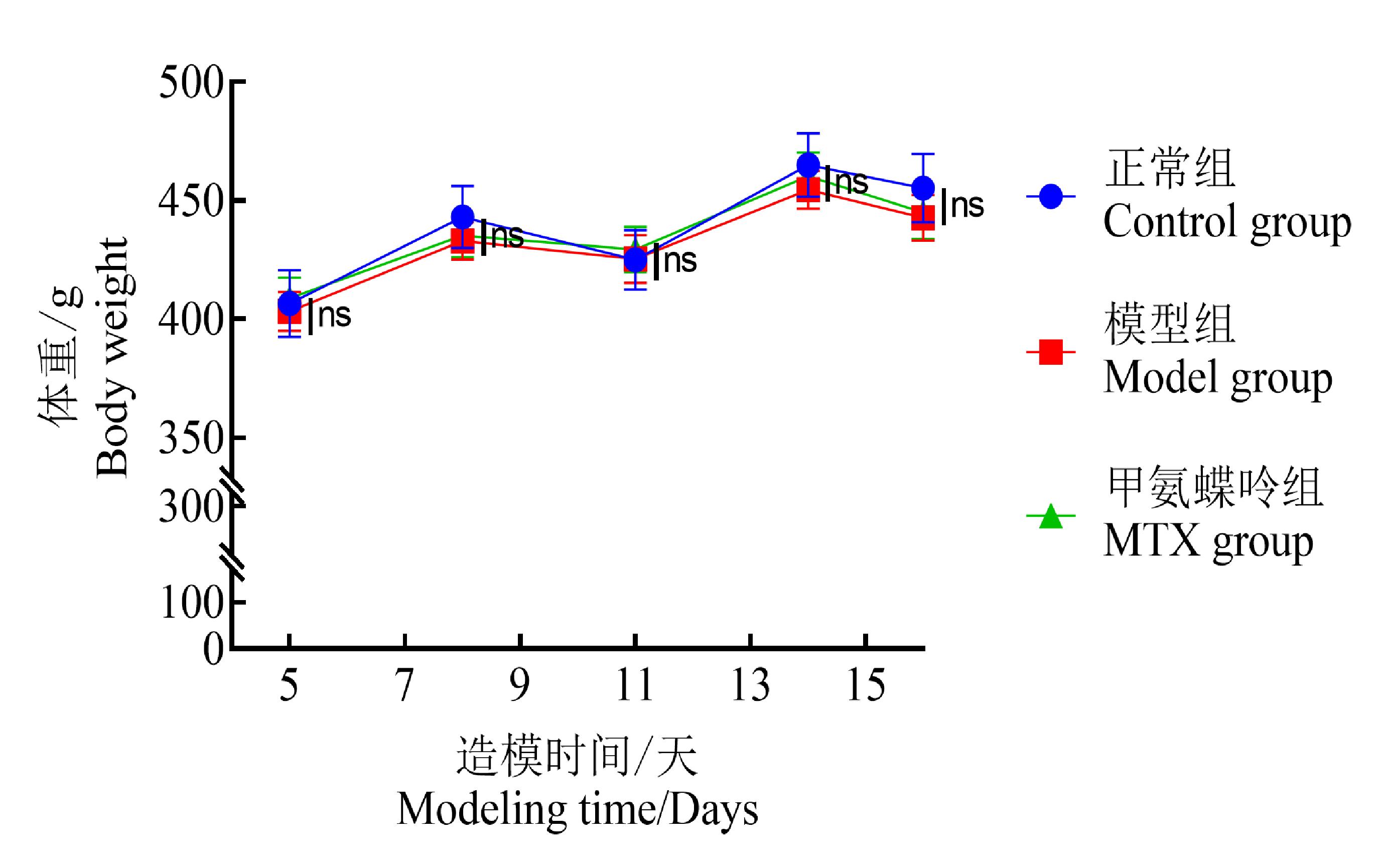
Figure 2 Body weight change trend of the guinea pig ear psoriasis model (n = 9)
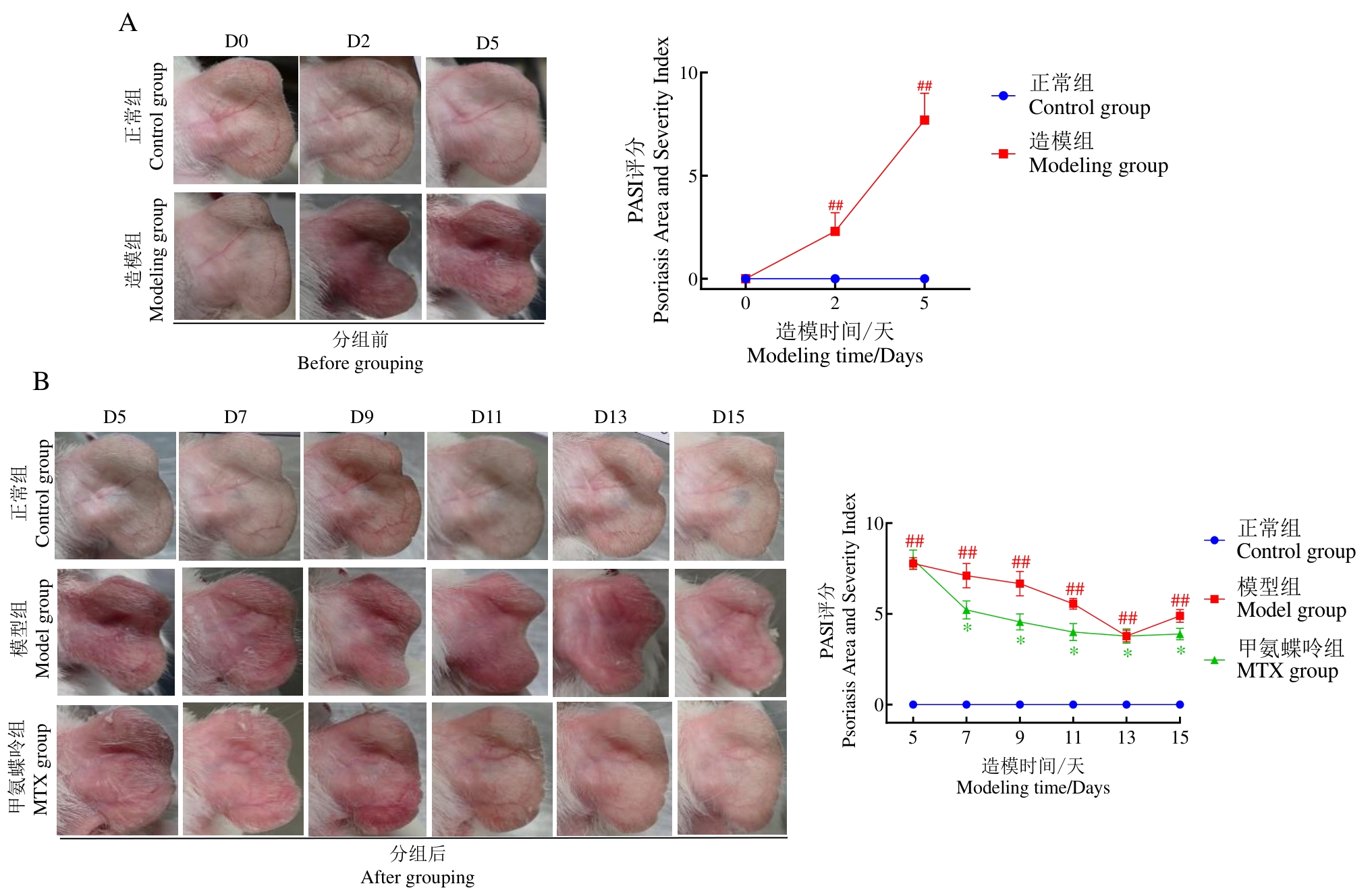
Figure 3 Observation of the skin at the ear modeling site in guinea pigs and the trend of PASI score changes(n = 9)
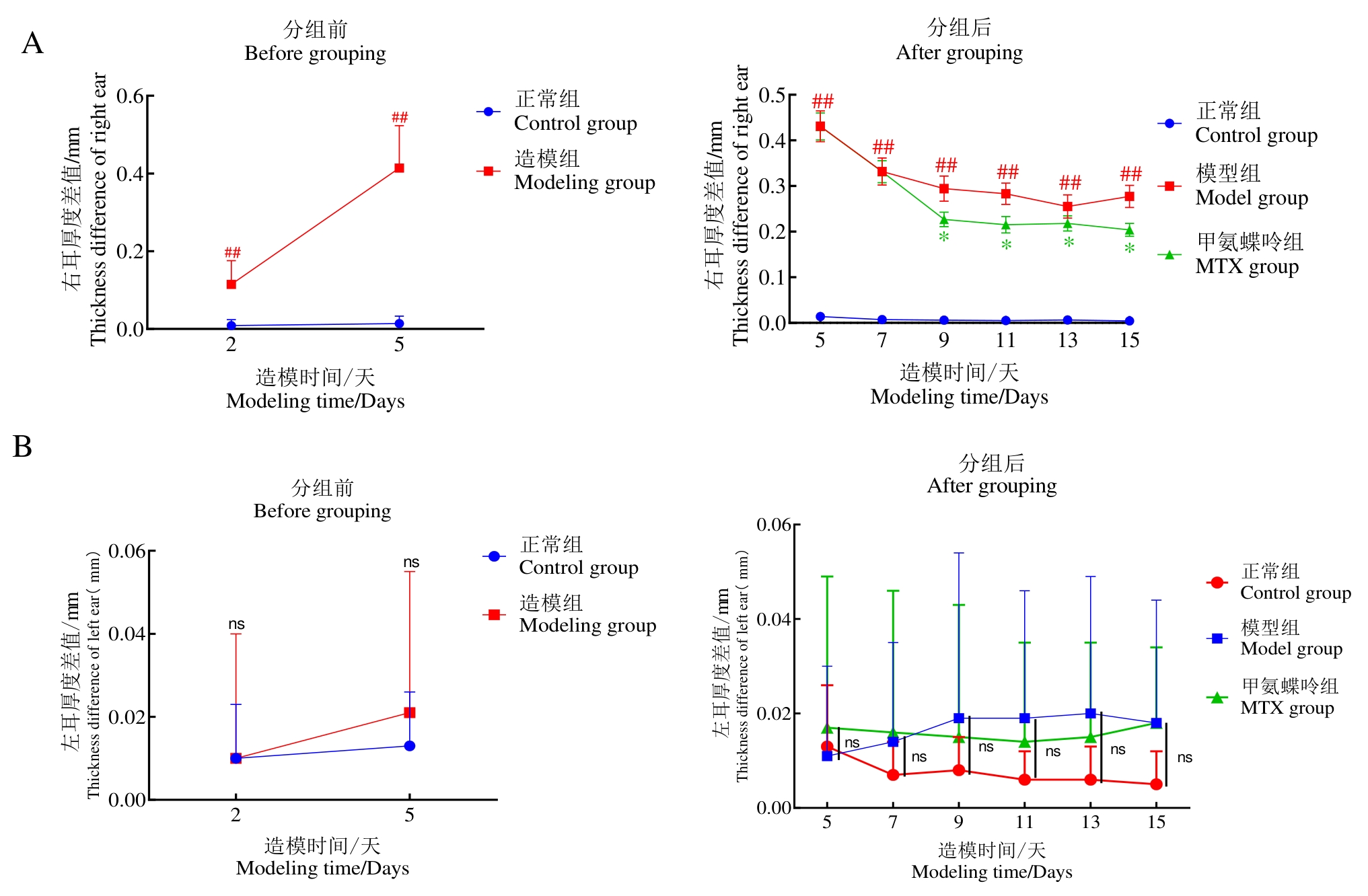
Figure 4 Changes in ear thickness during the experiment of the guinea pig ear psoriasis model
组别 Groups | 左耳片(g) Left ear(g) | 右耳片(g) Right ear(g) | 耳肿胀度(g) Ear swelling degree (g) |
|---|---|---|---|
正常组 control group | 0.0695±0.004 | 0.0669±0.0050 | 0.0004±0.0024 |
模型组 model group | 0.0713±0.002 | 0.0896±0.0052## | 0.0187±0.0040## |
甲氨蝶呤组 MTX group | 0.0702±0.004 | 0.0826±0.0056* | 0.0123±0.0051** |
Table 4 The ear swelling of the guinea pig psoriasis model
组别 Groups | 左耳片(g) Left ear(g) | 右耳片(g) Right ear(g) | 耳肿胀度(g) Ear swelling degree (g) |
|---|---|---|---|
正常组 control group | 0.0695±0.004 | 0.0669±0.0050 | 0.0004±0.0024 |
模型组 model group | 0.0713±0.002 | 0.0896±0.0052## | 0.0187±0.0040## |
甲氨蝶呤组 MTX group | 0.0702±0.004 | 0.0826±0.0056* | 0.0123±0.0051** |
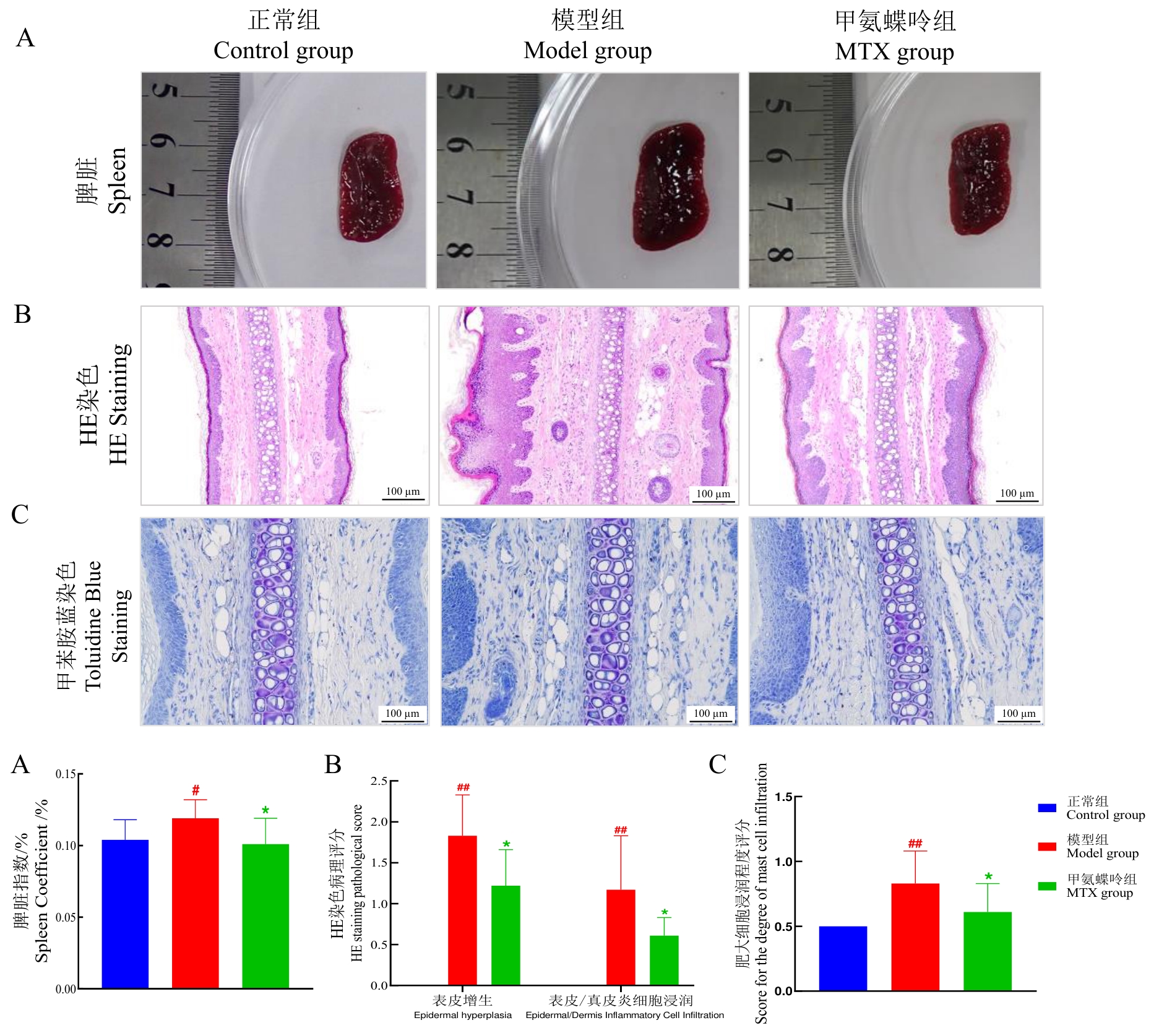
Figure 5 Spleen index, histopathological changes of ear tissue, and mast cell infiltration in the murine ear psoriasis model
| [1] | Geng R S Q, Sibbald R G. Cutaneous psoriasis: clinical aspects and treatments[J]. Adv Skin Wound Care, 2025, 38(4): 176-182. DOI: 10.1097/ASW.0000000000000243 . |
| [2] | Helm M F, Clebak K T, Critchfield L, et al. Psoriasis and papulosquamous disorders[J]. Prim Care, 2025, 52(3): 567-591. DOI: 10.1016/j.pop.2025.05.007 . |
| [3] | Chan J J. Psoriasis: an update on topical and systemic therapies[J]. Aust Prescr, 2025, 48(3): 87-92. DOI: 10.18773/austprescr.2025.026 . |
| [4] | Parab S, Doshi G. The experimental animal models in psoriasis research: a comprehensive review[J]. Int Immunopharmacol, 2023, 117: 109897. DOI: 10.1016/j.intimp.2023.109897 . |
| [5] | Tatu A L, Elisei A M, Chioncel V, et al. Immunologic adverse reactions of β-blockers and the skin[J]. Exp Ther Med, 2019, 18(2): 955-959. DOI: 10.3892/etm.2019.7504 . |
| [6] | Kim G K, del Rosso J Q. Drug-provoked psoriasis: is it drug induced or drug aggravated?: understanding pathophysiology and clinical relevance[J]. J Clin Aesthet Dermatol, 2010, 3(1): 32-38. |
| [7] | 张萌萌, 刘树民, 孙慧娟, 等. 盐酸普萘洛尔致银屑病样大鼠模型的剂量、时间及性别探讨[J]. 海南医科大学学报, 2025, 31(5): 351-359, 372. DOI: 10.13210/j.cnki.jhmu.20240830.004 . |
| Zhang Mengmeng, Liu Shumin, Sun Huijuan, et al. Exploration of dose, time and sex in a psoriasis-like rat model caused by propranolol hydrochloride[J]. J Hainan Med Univ, 2025, 31(5): 351-359, 372. DOI: 10.13210/j.cnki.jhmu.20240830.004 . | |
| [8] | Shackelford C, Long G, Wolf J, et al. Qualitative and quantitative analysis of nonneoplastic lesions in toxicology studies[J]. Toxicol Pathol, 2002, 30(1): 93-96. DOI: 10.1080/01926230252824761 . |
| [9] | Tampa M, Mitran M I, Mitran C I, et al. Psoriasis: what is new in markers of disease severity?[J]. Medicina (Kaunas), 2024, 60(2): 337. DOI: 10.3390/medicina60020337 . |
| [10] | Kshirsagar S J, Adhav P S, Laddha U D, et al. Navigating psoriasis: From immune mechanisms to natural healing approaches[J]. Int Immunopharmacol, 2025, 144: 113626. DOI: 10.1016/j.intimp.2024.113626 . |
| [11] | 李慧贤, 胡丽, 郑焱, 等. 基于全球疾病负担(GBD)大数据的中国银屑病流行病学负担分析[J]. 中国皮肤性病学杂志, 2021, 35(4): 386-392. DOI: 10.13735/j.cjdv.1001-7089.202003197 . |
| Li Huixian, Hu Li, Zheng Yan, et al. Analysis of the epidemiological burden of psoriasis in China based on the big data of global burden of disease study (GBD)[J]. Chin J Dermatovenereology, 2021, 35(4): 386-392. DOI: 10.13735/j.cjdv.1001-7089.202003197 . | |
| [12] | Shirley S N, Watson A E, Yusuf N. Pathogenesis of inflammation in skin disease: from molecular mechanisms to pathology[J]. Int J Mol Sci, 2024, 25(18): 10152. DOI: 10.3390/ijms251810152 . |
| [13] | Lin Z C, Yang S C, Tran T T P, et al. Animal models of psoriasis for novel drug discovery: a literature update[J]. Expert Opin Drug Discov, 2025, 20(9): 1193-1208. DOI: 10.1080/17460441.2025.2528959 . |
| [14] | Xi Ruofan, Nie Yiwen, Lu Hanzhi, et al. Phytochemicals from Stellera chamaejasme alleviate psoriasis by modulating the immune microenvironment via the JAK2/PI3K/AKT pathway[J]. Int Immunopharmacol, 2025, 165: 115540. DOI: 10.1016/j.intimp.2025.115540 . |
| [15] | 牛凡琪, 李炳男, 何世烨, 等. 桃红四物汤调控MAPK/NF-κB信号通路治疗大鼠银屑病的作用机理[J]. 中国皮肤性病学杂志, 2025, 39(1): 17-29. DOI: 10.13735/j.cjdv.1001-7089.202406010 . |
| Niu Fanqi, Li Bingnan, He Shiye, et al. Mechanism of Taohong Siwu decoction regulating MAPK/NF-κB signaling pathway in the treatment of psoriasis in rats[J]. Chin J Dermatovenereology, 2025, 39(1): 17-29. DOI: 10.13735/j.cjdv.1001-7089.202406010 . | |
| [16] | Vinardell M P. Methodological shortcomings in the reports of the imiquimod psoriatic model[J]. Exp Dermatol, 2022, 31(3): 299-303. DOI: 10.1111/exd.14479 . |
| [17] | 李倾, 屠佳妮, 胡佳, 等. 咪喹莫特诱导银屑病动物模型的研究进展[J]. 中国实验动物学报, 2025, 33(8): 1222-1234. DOI: 10.3969/j.issn.1005-4847.2025.08.011 . |
| Li Qing, Tu Jiani, Hu Jia, et al. Research progress on animal models of imiquimod-induced psoriasis[J]. Acta Lab Anim Sci Sin, 2025, 33(8): 1222-1234. DOI: 10.3969/j.issn.1005-4847.2025.08.011 . | |
| [18] | Awad V M, Sakhamuru S, Kambampati S, et al. Mechanisms of beta-blocker induced psoriasis, and psoriasis de novo at the cellular level[J]. Cureus, 2020, 12(7): e8964. DOI: 10.7759/cureus.8964 . |
| [19] | 伍长娟, 沈娟. 盐酸普萘洛尔造模周期对豚鼠银屑病模型的影响[J]. 承德医学院学报, 2015, 32(5): 374-376. DOI: CNKI:SUN:CDYX.0.2015-05-004 . |
| Wu Changjuan, Shen Juan. Effects of propranolol hydrochloride modeling period on guinea pig models of psoriasis[J]. J Chengde Med Coll, 2015, 32(5): 374-376. DOI: CNKI:SUN:CDYX.0.2015-05-004 . | |
| [20] | Zhao Fang, Wang Yujie, Zuo Haojie, et al. Cyclin-Dependent kinase 9 (CDK9) inhibitor Atuveciclib ameliorates Imiquimod-Induced Psoriasis-Like dermatitis in mice by inhibiting various inflammation factors via STAT3 signaling pathway[J]. Int Immunopharmacol, 2024, 129: 111652. DOI: 10.1016/j.intimp.2024.111652 . |
| [21] | Sbidian E, Chaimani A, Garcia-Doval I, et al. Systemic pharmacological treatments for chronic plaque psoriasis: a network meta-analysis[J]. Cochrane Database Syst Rev, 2022, 5(5): CD011535. DOI: 10.1002/14651858.CD011535.pub5 . |
| [22] | 杨怡冰, 乔媛媛, 李灿哲, 等. 血热证与血瘀证银屑病大鼠模型的建立及证候差异评价[J]. 世界科学技术-中医药现代化, 2025, 27(8): 2360-2372. DOI: 10.11842/wst.20240724001 . |
| Yang Yibing, Qiao Yuanyuan, Li Canzhe, et al. Establishment and evaluation of psoriasis rat model with blood-heat syndrome and blood-stasis syndrome[J]. World Sci Technol Mod Tradit Chin Med, 2025, 27(8): 2360-2372. DOI: 10.11842/wst.20240724001 . | |
| [23] | Bai Linkun, Su Yazhen, Ning Zongdi, et al. Challenges and opportunities in animal models of psoriatic arthritis[J]. Inflamm Res, 2023, 72(6): 1291-1301. DOI: 10.1007/s00011-023-01752-w . |
| [24] | 高祥, 刘宁, 葛文萍, 等. 三转基因银屑病小鼠模型建立与表型分析[J]. 中国比较医学杂志, 2015, 25(7): 11-15. DOI: 10.3969/j.issn.1671-7856.2015.07.003 . |
| Gao Xiang, Liu Ning, Ge Wenping, et al. Establishment of the psoriasis transgenic mouse model and analysis of the phenotype[J]. Chin J Comp Med, 2015, 25(7): 11-15. DOI: 10.3969/j.issn.1671-7856.2015.07.003 . | |
| [25] | 泰刚, 李洋, 杨志敏, 等. 银屑病(血热证)豚鼠复合模型的建立及评价研究[J]. 药物评价研究, 2020, 43(11): 2176-2180. DOI: 10.7501/j.issn.1674-6376.2020.11.005 . |
| Tai Gang, Li Yang, Yang Zhimin, et al. Establishment and evaluation of a compound model of psoriasis (blood heat syndrome) in guinea pigs[J]. Drug Eval Res, 2020, 43(11): 2176-2180. DOI: 10.7501/j.issn.1674-6376.2020.11.005 . |
| [1] | HE Miao, ZHANG Xuxing, WU Gang, ZHOU Yi, RAO Hao, HU Xiangyu. Analysis of Animal Models of Lumbar Spinal Stenosis Based on Clinical Characteristics of Traditional Chinese and Western Medicine [J]. Laboratory Animal and Comparative Medicine, 2026, 46(4): 541-552. |
| [2] | PAN Linqin, DENG Xiangliang, LUO Yunxia. Advances in Integrative Translational Research on Animal Models of Ischemic Stroke in Traditional Chinese and Western Medicine [J]. Laboratory Animal and Comparative Medicine, 2026, 46(3): 344-356. |
| [3] | BU Yu, HOU Jinting, LI Yuanyuan, SHA Jingtao, XIE Chenlu, WANG Wengang, SUN Xingwei. A Review and Evaluation of Integrated Disease and Syndrome Animal Models for Hemorrhoids in Traditional Chinese and Western Medicine [J]. Laboratory Animal and Comparative Medicine, 2026, 46(3): 357-366. |
| [4] | Committee of Experts on Medical Animal Experiments, Chinese Research Hospital Association , Committee of Regenerative Medicine Branch, Chinese Medicinal Biotech Association , HAN Fabin, CHEN Lin, CHEN Zhiguo, LU Ming, LI Yingjun. Guidelines for Selecting Preclinical Animal Models for Drugs and Stem Cell Therapies for Parkinson Disease (2026 Edition) [J]. Laboratory Animal and Comparative Medicine, 2026, 46(2): 153-177. |
| [5] | LI Hui. Advances in Animal Models for Biolinguistic Research [J]. Laboratory Animal and Comparative Medicine, 2026, 46(2): 297-305. |
| [6] | YANG Lin, JIN Meng, WU Hanqing, LI Shun, ZHOU Xiaohui. Establishment and Preliminary Analysis of an AG6 Mouse Encephalopathy Model Induced by Vaccinia Virus Tiantan Strain Infection [J]. Laboratory Animal and Comparative Medicine, 2026, 46(1): 3-10. |
| [7] | LIAO Wangyue, LEI Shuang, LI Xuan, GUO Min, ZHOU Ruoran. Literature Analysis and Validity Assessment for Animal Models of Attention Deficit and Hyperactive Disorder [J]. Laboratory Animal and Comparative Medicine, 2026, 46(1): 66-80. |
| [8] | CHEN Ziyi, SUN Hongyan, KANG Pinfang, WU Wenjuan. Research Advances in Construction Methods and Novel Technologies for Animal Models of Pulmonary Hypertension [J]. Laboratory Animal and Comparative Medicine, 2026, 46(1): 81-93. |
| [9] | YANG Yunrong, WU Wenyu, TAN Yue, YAN Guofeng, LI Yao, LU Jin. A Review of Methods for Establishing and Evaluating Animal Models of Stroke [J]. Laboratory Animal and Comparative Medicine, 2026, 46(1): 94-106. |
| [10] | LIU Song, MO Qianru, WANG Jin, CUI Ying, TIAN Ling. Main Biological Characteristics of Hermetia illucens L. and Its Potential Applications as a Model Organism [J]. Laboratory Animal and Comparative Medicine, 2025, 45(6): 803-809. |
| [11] | LEI Linbei, WAN Xiaojuan, XIE Jing, LIU Yuxin, ZOU Jiexin, XIE Xianbing. Applications, Advantages, and Challenges of Germ-Free Bees in Biomedical Research [J]. Laboratory Animal and Comparative Medicine, 2025, 45(6): 784-793. |
| [12] | WANG Xiaoming, MENG Chenchen, FAN Lu, LI Yanyang, ZHANG Junping, LÜ Shichao. An Overview of Strategies for Constructing Animal Models of Traditional Chinese Medicine Syndromes [J]. Laboratory Animal and Comparative Medicine, 2025, 45(5): 596-610. |
| [13] | GAO Chaoqi, ZHU Zhibo, SUN Xiandong. Application Progress and Classification Analysis of Rat Vascular Remodeling Models [J]. Laboratory Animal and Comparative Medicine, 2025, 45(5): 542-550. |
| [14] | LIU Ziqi, LI Yunying, LI Qin, LI Yuanhan, HE Fangyan, WEN Weibo. Research Progress on Animal Models of Gastric Ulcer of Spleen-Stomach Deficiency Cold Type [J]. Laboratory Animal and Comparative Medicine, 2025, 45(5): 574-585. |
| [15] | LIU Yang, CHENG Laiyang, GUO Zhongkun. Progress on Animal Models of Perimenopausal Syndrome Based on Traditional Chinese Medicine Disease-Syndrome Combination [J]. Laboratory Animal and Comparative Medicine, 2025, 45(5): 586-595. |
| Viewed | ||||||
|
Full text |
|
|||||
|
Abstract |
|
|||||
