





Laboratory Animal and Comparative Medicine ›› 2026, Vol. 46 ›› Issue (3): 397-407.DOI: 10.12300/j.issn.1674-5817.2025.143
• Animal Experimental Techniques and Methods • Previous Articles Next Articles
LIU Yishu1( ), WANG Zheng2, LAI Juan3, CAI Liping3()(
 )
)
Received:2025-09-11
Revised:2025-11-27
Online:2026-06-25
Published:2026-06-19
Correspondence to:
CAI Liping
CLC Number:
LIU Yishu,WANG Zheng,LAI Juan,et al. Feasibility Study of a Dynamic Anesthetic Strategy for Ensuring Zero Body Movement in Animals During Transcontinental Ultra-Remote Robotic Partial Nephrectomy[J]. Laboratory Animal and Comparative Medicine, 2026, 46(3): 397-407. DOI: 10.12300/j.issn.1674-5817.2025.143.
Add to citation manager EndNote|Ris|BibTeX
URL: https://www.slarc.org.cn/dwyx/EN/10.12300/j.issn.1674-5817.2025.143
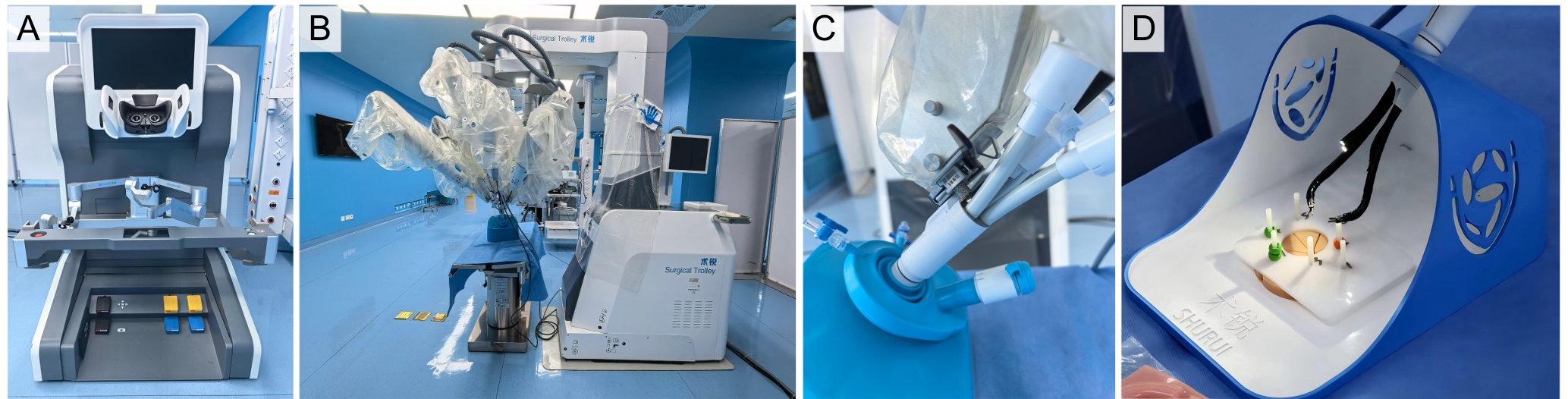
Figure 1 The SHURUI robotic system
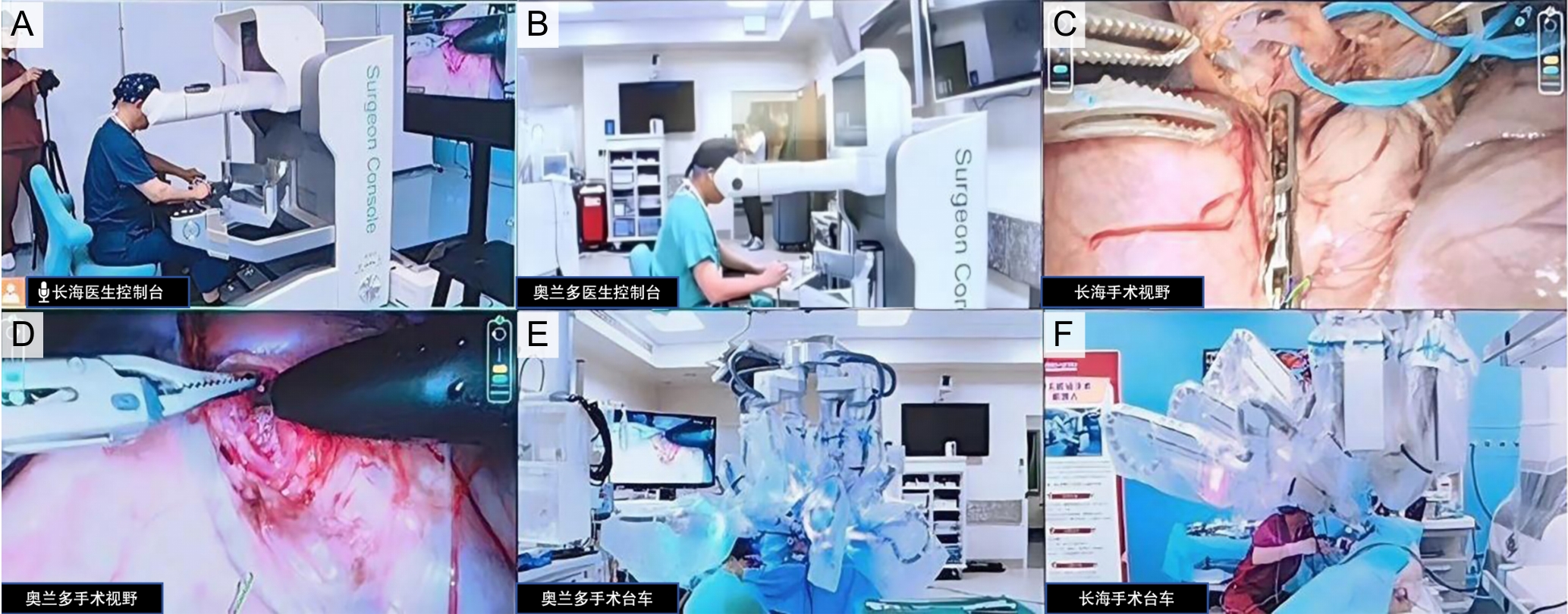
Figure 2 Screenshot of the synchronized remote surgical video feed
指标 Indicator | 刺激方法 Stimulation method | 刺激反应 Response | 记录标志 Record symbol |
|---|---|---|---|
反射活动 Reflex activity | 医用棉签轻触眼睑,观察眼睑反射 | 无反应 | - |
| 反应迟钝 | ± | ||
| 出现躲闪、眨眼或闭眼 | + | ||
| 注射器针头轻刺肛门,观察肛门反射 | 无收缩 | - | |
| 收缩微弱 | ± | ||
| 明显收缩 | + | ||
疼痛反应 Pain response | 注射器针头轻刺后肢蹄冠部皮肤 | 后肢无收缩 | - |
| 后肢收缩迟钝 | ± | ||
| 后肢明显收缩 | + |
Table 1 Reflex activity and analgesia monitoring criteria
指标 Indicator | 刺激方法 Stimulation method | 刺激反应 Response | 记录标志 Record symbol |
|---|---|---|---|
反射活动 Reflex activity | 医用棉签轻触眼睑,观察眼睑反射 | 无反应 | - |
| 反应迟钝 | ± | ||
| 出现躲闪、眨眼或闭眼 | + | ||
| 注射器针头轻刺肛门,观察肛门反射 | 无收缩 | - | |
| 收缩微弱 | ± | ||
| 明显收缩 | + | ||
疼痛反应 Pain response | 注射器针头轻刺后肢蹄冠部皮肤 | 后肢无收缩 | - |
| 后肢收缩迟钝 | ± | ||
| 后肢明显收缩 | + |
指标 Indicator | 中国上海实验室 Shanghai lab,China | 美国奥兰多实验室 Orlando lab, America |
|---|---|---|
操作医生位置 Surgeon location | 中国上海 | 美国奥兰多 |
实验动物位置 Animal location | 美国奥兰多 | 中国上海 |
网络延迟/ms Round-trip time/ms | 204.30±0.75 | 203.20±0.76 |
丢包率/% Packet loss rate/% | 0 | 0 |
并发症 Complication | 无 | 无 |
手术机器人故障 Surgical robot malfunction | 无 | 无 |
远程手术时长/min Telesurgery duration/min | 29 | 40 |
热缺血时间/min Warm ischemia/min | 0 | 18 |
主从控制权切换/次 Master-slave control switches/n | 2 | 2 |
术中出血量/mL Blood loss /mL | 50 | 25 |
动物意外体动/次 Accidental animal movement/n | 0 | 0 |
Table 2 Comparison of core operative metrics in telesurgery
指标 Indicator | 中国上海实验室 Shanghai lab,China | 美国奥兰多实验室 Orlando lab, America |
|---|---|---|
操作医生位置 Surgeon location | 中国上海 | 美国奥兰多 |
实验动物位置 Animal location | 美国奥兰多 | 中国上海 |
网络延迟/ms Round-trip time/ms | 204.30±0.75 | 203.20±0.76 |
丢包率/% Packet loss rate/% | 0 | 0 |
并发症 Complication | 无 | 无 |
手术机器人故障 Surgical robot malfunction | 无 | 无 |
远程手术时长/min Telesurgery duration/min | 29 | 40 |
热缺血时间/min Warm ischemia/min | 0 | 18 |
主从控制权切换/次 Master-slave control switches/n | 2 | 2 |
术中出血量/mL Blood loss /mL | 50 | 25 |
动物意外体动/次 Accidental animal movement/n | 0 | 0 |
| 检测指标 Indicator | T0 | T1 | T2 | T3 | T4 |
|---|---|---|---|---|---|
| 眼睑反射 Eyelid reflex | - | - | - | - | - |
| 肛门反射 Anal reflex | ± | ± | - | - | - |
| 疼痛反应 Pain response | ± | - | - | - | - |
| TOF计数 TOF count | 3 | 2 | 1 | 0 | 0 |
Table 3 Intraoperative anesthetic depth monitoring during telesurgeryNote: TOF,train-of-four; ± indicates weak/diminished reflexes or responses; - indicates absent reflexes or responses. T0-T4 represent monitoring time points. T0, before telesurgery; T1 ,10 min after the start of telesurgery; T2 ,20 min after the start of telesurgery; T3,30 min after the start of telesurgery; T4, end of telesurgery.
| 检测指标 Indicator | T0 | T1 | T2 | T3 | T4 |
|---|---|---|---|---|---|
| 眼睑反射 Eyelid reflex | - | - | - | - | - |
| 肛门反射 Anal reflex | ± | ± | - | - | - |
| 疼痛反应 Pain response | ± | - | - | - | - |
| TOF计数 TOF count | 3 | 2 | 1 | 0 | 0 |

Figure 3 Intraoperative physiological monitoring of experimental animals during remote surgery
| [1] | 孙昊, 党建红, 李月明, 等. 5G远程机器人辅助单孔腹腔镜妇科手术1例应用实践[J]. 海军医学杂志, 2025, 46(3): 268-272. DOI: 10.3969/j.issn.1009-0754.2025.03.013 . |
| SUN H, DANG J H, LI Y M, et al. 5G robot-assisted single-port laparoscopic gynecological telesurgery: a case report[J]. J Navy Med, 2025, 46(3): 268-272. DOI: 10.3969/j.issn.1009-0754.2025.03.013 . | |
| [2] | LUPTON D, MASLEN S. Telemedicine and the senses: a review[J]. Sociol Health Illn, 2017, 39(8): 1557-1571. DOI: 10.1111/1467-9566.12617 . |
| [3] | GONDAL H, ABBAS T, CHOQUETTE H, et al. Patient and physician satisfaction with telemedicine in cancer care in Saskatchewan: a cross-sectional study[J]. Curr Oncol, 2022, 29(6): 3870-3880. DOI: 10.3390/curroncol29060309 . |
| [4] | 陈劲果, 王之仕, 朱礼乐, 等. 国产手术机器人在泌尿外科中的应用与展望[J]. 机器人外科学杂志(中英文), 2025, 6(6): 916-921. DOI: 10.12180/j.issn.2096-7721.2025.06.007 . |
| CHEN J G, WANG Z S, ZHU L L, et al. Application and prospects of domestic surgical robot in urology[J]. Chin J Rob Surg, 2025, 6(6): 916-921. DOI: 10.12180/j.issn.2096-7721.2025.06.007 . | |
| [5] | CHIA D K A, SUDA K, HO W E, et al. Feasibility of long-range telesurgical robotic radical gastrectomy in a live porcine model[J]. Int J Surg, 2024, 110(12): 7720-7728. DOI: 10.1097/JS9.0000000000002151 . |
| [6] | MARESCAUX J, LEROY J, RUBINO F, et al. Transcontinental robot-assisted remote telesurgery: feasibility and potential applications[J]. Ann Surg, 2002, 235(4): 487-492. DOI: 10.1097/00000658-200204000-00005 . |
| [7] | 王晓鹏, 王艳, 马云涛, 等. 5G远程机器人辅助袖状胃切除术首例报道[J]. 中国微创外科杂志, 2025, 25(1): 46-51. DOI: 10.3969/j.issn.1009-6604.2025.01.008 . |
| WANG X P, WANG Y, MA Y T, et al. 5G remote robot-assisted sleeve gastrectomy: first case report[J]. Chin J Minim Invasive Surg, 2025, 25(1): 46-51. DOI: 10.3969/j.issn.1009-6604.2025.01.008 . | |
| [8] | LI J M, YANG X C, CHU G D, et al. Application of improved robot-assisted laparoscopic telesurgery with 5G technology in urology[J]. Eur Urol, 2023, 83(1): 41-44. DOI: 10.1016/j.eururo.2022.06.018 . |
| [9] | 代永鸿, 杨匡洋, 曾焰辉, 等. 5G远程机器人手术在骨盆骨折中的应用疗效分析[J]. 中国修复重建外科杂志, 2025, 39(4): 391-398. DOI: 10.7507/1002-1892.202501052 . |
| DAI Y H, YANG K Y, ZENG Y H, et al. Effectiveness analysis of 5G remote robotic surgery in pelvic fracture treatment[J]. Chin J Repar Reconstr Surg, 2025, 39(4): 391-398. DOI: 10.7507/1002-1892.202501052 . | |
| [10] | YE S Y, PENG D, ZHU L X, et al. 5G-remote radical prostatectomy under novel robotic systems: a prospective comparative cohort study with local surgeries[J]. Prostate Cancer Prostatic Dis, 2025. DOI: 10.1038/s41391-025-01004-4. DOI: 10.1038/s41391-025-01004-4 . |
| [11] | WANG Z, ZHANG C, WANG Y, et al. Single-port robotic telesurgery in urology: From preclinical validation to first clinical application[J]. Asian J Urol, 2025: S2214388225000 694. DOI: 10.1016/j.ajur.2025.06.002 . |
| [12] | 张超, 王正, 张宗勤, 等. 国产单孔蛇形臂机器人手术系统在零缺血肾部分切除术中的初步应用[J]. 中华泌尿外科杂志, 2022, 43(2): 132-137. DOI: 10.3760/cma.j.cn112330-20211207-00633 . |
| ZHANG C, WANG Z, ZHANG Z Q, et al. Study on the feasibility and safety of a novel single-port robotic surgical system in zero ischemic partial nephrectomy[J]. Chin J Urol, 2022, 43(2): 132-137. DOI: 10.3760/cma.j.cn112330-20211207-00633 . | |
| [13] | 国家市场监督管理总局, 国家标准化管理委员会. 实验动物 安乐死指南: GB/T 39760—2021 [S]. 北京: 中国标准出版社, 2021. |
| State Administration for Market Regulation, National Standardization Administration. Laboratory animal—Guide-lines for euthanasia: GB/T 39760—2021 [S]. Beijing: Standards Press of China, 2021. | |
| [14] | BAILEY K, BRILEY J, DUFFEE L, et al. The American college of veterinary anesthesia and analgesia small animal anesthesia and sedation monitoring guidelines 2025[J]. Vet Anaesth Analg, 2025, 52(4): 377-385. DOI: 10.1016/j.vaa.2025.03.015 . |
| [15] | 白建云, 贺峰, 贺婷, 等. 基于麻醉深度与肌松监测仪监测指导下的麻醉方式在经口腔前庭入路机器人辅助甲状腺切除患者中的应用[J]. 机器人外科学杂志(中英文), 2025, 6(4): 596-600. DOI: 10.12180/j.issn.2096-7721.2025.04.014 . |
| BAI J Y, HE F, HE T, et al. Application of anesthesia guided by anesthetic depth and neuromuscular monitoring in patients undergoing transoral vestibular robot-assisted thyroidectomy[J]. Chin J Rob Surg, 2025, 6(4): 596-600. DOI: 10.12180/j.issn.2096-7721.2025.04.014 . | |
| [16] | ALI H H, UTTING J E, GRAY T C. Quantitative assessment of residual antidepolarizing block (part Ⅰ)[J]. Br J Anaesth, 1971, 43(5): 473-477. DOI: 10.1093/bja/43.5.473 . |
| [17] | LIU H, LV Z W, ZHANG G, et al. Molecular understanding and clinical aspects of tumor-associated macrophages in the immunotherapy of renal cell carcinoma[J]. J Exp Clin Cancer Res, 2024, 43(1): 242. DOI: 10.1186/s13046-024-03164-y . |
| [18] | ROSE T L, KIM W Y. Renal cell carcinoma: a review[J]. JAMA, 2024, 332(12): 1001-1010. DOI: 10.1001/jama.2024.12848 . |
| [19] | PECORARO A, ROSIELLO G, LUZZAGO S, et al. Small renal masses with tumor size 0 to 2 cm: a SEER-based study and validation of NCCN guidelines[J]. J Natl Compr Canc Netw, 2020, 18(10): 1340-1347. DOI: 10.6004/jnccn.2020.7577 . |
| [20] | ZEUSCHNER P, GREGULETZ L, MEYER I, et al. Open versus robot-assisted partial nephrectomy: a longitudinal comparison of 880 patients over 10 years[J]. Int J Med Robot, 2021, 17(1): 1-8. DOI: 10.1002/rcs.2167 . |
| [21] | QU H C, WANG K, HU B. Meta-analysis of clinical outcomes of robot-assisted partial nephrectomy and classical open partial nephrectomy[J]. Int J Surg, 2024, 110(10): 6268-6281. DOI: 10.1097/JS9.0000000000001324 . |
| [22] | 韩松辰, 宋宇轩, 戴翔, 等. 热缺血时间对腹腔镜肾部分切除术后肾功能的影响[J]. 中华泌尿外科杂志, 2022, 43(5): 350-354. DOI: 10.3760/cma.j.cn112330-20220311-00110 . |
| HAN S C, SONG Y X, DAI X, et al. Impact of warm ischemia time during partial nephrectomy on laparoscopic post-operative renal function[J]. Chin J Urol, 2022, 43(5): 350-354. DOI: 10.3760/cma.j.cn112330-20220311-00110 . | |
| [23] | 朱艳超. 热缺血时间对后腹腔镜肾部分切除术患者肾功能的影响[J]. 现代诊断与治疗, 2018, 29(22): 3678-3679. DOI: 10.3969/j.issn.1001-8174.2018.22.050 . |
| ZHU Y C. Effect of warm ischemia time on renal function in patients undergoing retroperitoneal laparoscopic partial nephrectomy[J]. Mod Diagn Treat, 2018, 29(22): 3678-3679. DOI: 10.3969/j.issn.1001-8174.2018.22.050 . | |
| [24] | 中国抗癌协会泌尿男生殖系肿瘤专业委员会微创学组. 中国肾肿瘤腹腔镜及机器人肾部分切除术专家共识[J]. 泌尿外科杂志(电子版), 2021, 13(4): 1-5, 9. DOI: 10.3969/j.issn.1674-7410.2021.04.001 . |
| China Anti-Cancer Association GU Society Minimally Invasive Surgery Section. Chinese expert consensus on laparoscopic partial nephrectomy and robotic assisted laparoscopic partial nephrectomy for renal neoplasms[J]. J Urol Clin (Electron Version), 2021, 13(4): 1-5, 9. DOI: 10.3969/j.issn.1674-7410.2021.04.001 . | |
| [25] | GRECO F, AUTORINO R, ALTIERI V, et al. Ischemia techniques in nephron-sparing surgery: a systematic review and meta-analysis of surgical, oncological, and functional outcomes[J]. Eur Urol, 2019, 75(3): 477-491. DOI: 10.1016/j.eururo.2018.10.005 . |
| [26] | WANG Y, AI Q, SHI T P, et al. Influence of network latency and bandwidth on robot-assisted laparoscopic telesurgery: a pre-clinical experiment[J]. Chin Med J, 2025, 138(3): 325-331. DOI: 10.1097/CM9.0000000000003257 . |
| [27] | OH S S, NARVER H L. Mouse and rat anesthesia and analgesia[J]. Curr Protoc, 2024, 4(2): 1-42. DOI: 10.1002/cpz1.995 . |
| [28] | REDONDO J I, OTERO P E, MARTÍNEZ-TABOADA F, et al. Anaesthetic mortality in dogs: a worldwide analysis and risk assessment[J]. Vet Rec, 2024, 195(1): 1-13. DOI: 10.1002/vetr. 3604 . |
| [29] | GOSWAMI U, RAHMAN M M, TENG J F, et al. Structural interplay of anesthetics and paralytics on muscle nicotinic receptors[J]. Nat Commun, 2023, 14(1): 1-10. DOI: 10.1038/s41467-023-38827-5 . |
| [30] | QIU G L, WANG P, RAO J, et al. Dexmedetomidine inhibits paraventricular corticotropin-releasing hormone neurons that attenuate acute stress-induced anxiety-like behavior in mice[J]. Anesthesiology, 2024, 140(6): 1134-1152. DOI: 10.1097/ALN.0000000000004982 . |
| [31] | BARNES K, MCNAIR N A, HARRIS J A, et al. In anticipation of pain: expectancy modulates corticospinal excitability, auto-nomic response, and pain perception[J]. Pain, 2021, 162(8): 2287-2296. DOI: 10.1097/j.pain.0000000000002222 . |
| [32] | BAILEY K, BRILEY J, DUFFEE L, et al. The American college of veterinary anesthesia and analgesia small animal anesthesia and sedation monitoring guidelines 2025[J]. Vet Anaesth Analg, 2025, 52(4): 377-385. DOI: 10.1016/j.vaa.2025.03.015 . |
| [1] | LIU Yishu, CAI Liping. Advances and Challenges of Using Experimental Pigs in Da Vinci Surgical Robot Training [J]. Laboratory Animal and Comparative Medicine, 2024, 44(6): 667-674. |
| [2] | HUANG Peidi, LI Haiwen, ZHENG Huantian, LI Jian. Observation of LumianningⅡ or Ketamine Combined with Propofol in Experimental Pigs Undergoing Natural Orifice Transluminal Endoscopic Surgery#br# [J]. Laboratory Animal and Comparative Medicine, 2020, 40(3): 242-. |
| Viewed | ||||||
|
Full text |
|
|||||
|
Abstract |
|
|||||
