



Laboratory Animal and Comparative Medicine ›› 2026, Vol. 46 ›› Issue (2): 153-177.DOI: 10.12300/j.issn.1674-5817.2025.073
• Animal Models of Human Diseases • Next Articles
Committee of Experts on Medical Animal Experiments, Chinese Research Hospital Association , Committee of Regenerative Medicine Branch, Chinese Medicinal Biotech Association , HAN Fabin( )
) , CHEN Lin(), CHEN Zhiguo(), LU Ming(), LI Yingjun()
Received:2025-05-15
Revised:2025-08-15
Online:2026-04-25
Published:2026-04-18
Correspondence to:
HAN Fabin, CHEN Lin, CHEN Zhiguo, LU Ming, LI Yingjun
CLC Number:
Committee of Experts on Medical Animal Experiments, Chinese Research Hospital Association,Committee of Regenerative Medicine Branch, Chinese Medicinal Biotech Association,HAN Fabin,et al. Guidelines for Selecting Preclinical Animal Models for Drugs and Stem Cell Therapies for Parkinson Disease (2026 Edition)[J]. Laboratory Animal and Comparative Medicine, 2026, 46(2): 153-177. DOI: 10.12300/j.issn.1674-5817.2025.073.
Add to citation manager EndNote|Ris|BibTeX
URL: https://www.slarc.org.cn/dwyx/EN/10.12300/j.issn.1674-5817.2025.073
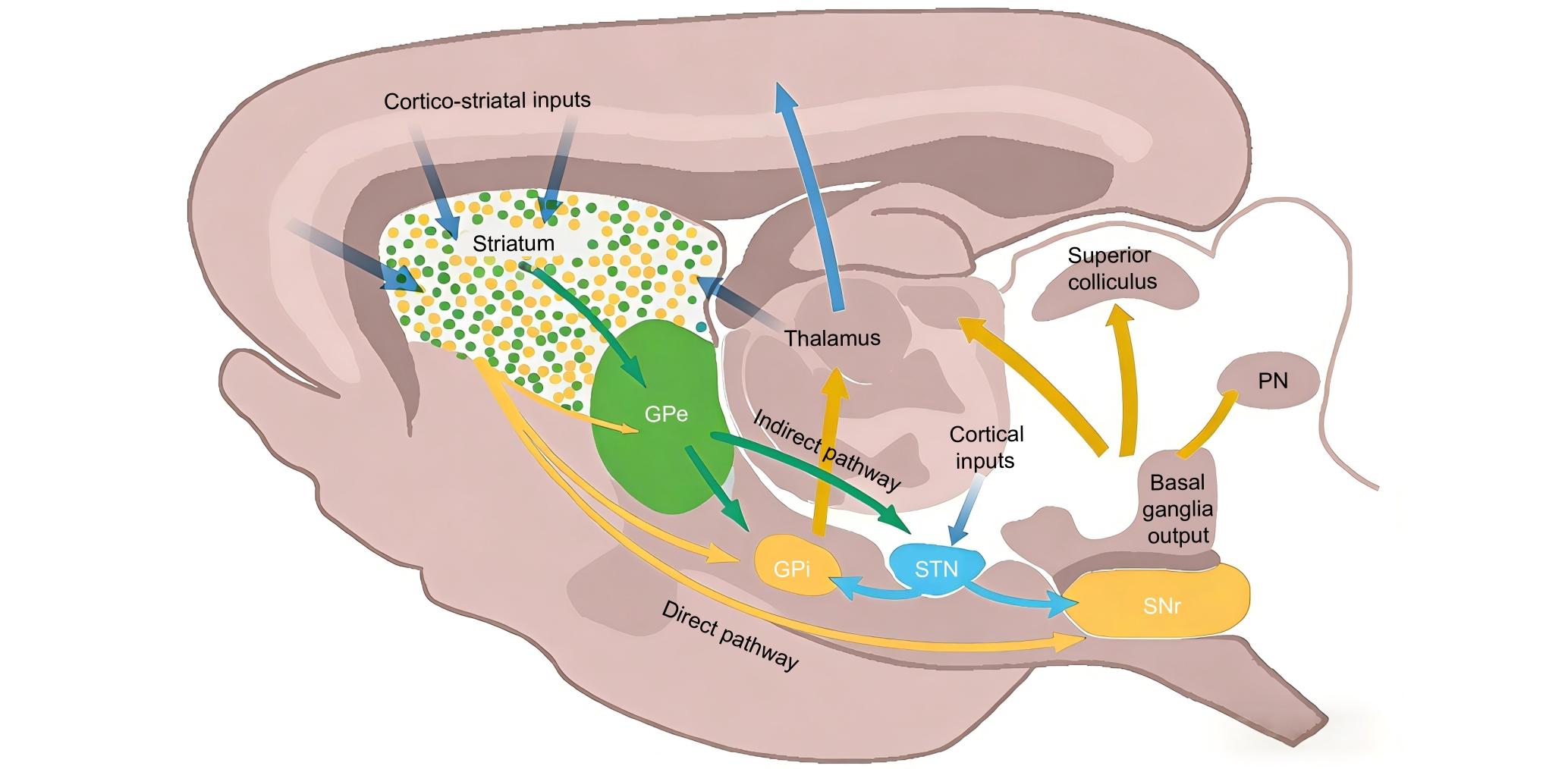
Figure 1 The projection pathway of striatal dopaminergic neurons in the direct and indirect pathways of the basal ganglia
分类 Classification | 症状 Symptom | 出现阶段 Stages of emergence | 临床表现 Clinical manifestation |
|---|---|---|---|
运动症状 Motor symptoms | 运动迟缓 | PD早期 | 自发运动普遍缓慢,手臂摆动、面部表情和手势减少,床上翻身困难,声音低沉;自主重复运动的速度和幅度逐渐降低,包括手指敲击、握力、旋前-旋后运动、脚趾敲击和足跟踩踏 |
| 肌强直 | PD早期 | 肌肉僵硬 | |
| 震颤 | PD早期 | 静止性震颤常发生于四肢、嘴唇和下颌,很少发生在头部。在以目标为导向的随意运动中,震颤幅度减少或消失;检查手部震颤时,患者处于坐位,双手放松,双臂支撑在大腿部 | |
| 步态改变 | PD早期 | 手臂摆动幅度减小,拖着一条腿,走路时姿势微弯 | |
| 姿势改变 | PD后期 | 站立时,躯干向前弯曲,双臂外展,肘部弯曲 | |
| 冻结步态 | PD后期 | 在行走开始、行走期间、转弯或接近狭窄空间时,突然或短暂地无法进行有效向前迈步 | |
| 平衡运动 | PD后期 | 站立和行走时身体不稳,容易跌倒 | |
| 构音障碍和吞咽困难 | PD后期 | 语言障碍,进食困难 | |
非运动症状 Non-motor symptoms | 嗅觉减退 | PD早期 | 多达70%患者表现为嗅觉丧失 |
| 睡眠障碍 | PD早期 | 快速眼动睡眠行为障碍,失眠,周期性肢体运动,静坐不能,白天嗜睡等 | |
| 精神科特征 | PD早期 | 明显的冷漠、焦虑、抑郁 | |
| 自主神经功能障碍 | PD早期 | 便秘,胃排空延迟,尿急或尿失禁,勃起功能障碍,直立性低血压,怕热 | |
| 轻度认知障碍 | PD早期 | 注意力和认知能力轻度下降 | |
| 疼痛和躯体感觉障碍 | PD早期 | 疼痛,感觉异常和烧灼感 | |
| 痴呆 | PD后期 | 约30%患者会出现痴呆的症状,该症状的发病率随着PD病程的发展而增加 |
Table 1 Motor and non-motor symptoms in early and late stages of Parkinson disease(PD)
分类 Classification | 症状 Symptom | 出现阶段 Stages of emergence | 临床表现 Clinical manifestation |
|---|---|---|---|
运动症状 Motor symptoms | 运动迟缓 | PD早期 | 自发运动普遍缓慢,手臂摆动、面部表情和手势减少,床上翻身困难,声音低沉;自主重复运动的速度和幅度逐渐降低,包括手指敲击、握力、旋前-旋后运动、脚趾敲击和足跟踩踏 |
| 肌强直 | PD早期 | 肌肉僵硬 | |
| 震颤 | PD早期 | 静止性震颤常发生于四肢、嘴唇和下颌,很少发生在头部。在以目标为导向的随意运动中,震颤幅度减少或消失;检查手部震颤时,患者处于坐位,双手放松,双臂支撑在大腿部 | |
| 步态改变 | PD早期 | 手臂摆动幅度减小,拖着一条腿,走路时姿势微弯 | |
| 姿势改变 | PD后期 | 站立时,躯干向前弯曲,双臂外展,肘部弯曲 | |
| 冻结步态 | PD后期 | 在行走开始、行走期间、转弯或接近狭窄空间时,突然或短暂地无法进行有效向前迈步 | |
| 平衡运动 | PD后期 | 站立和行走时身体不稳,容易跌倒 | |
| 构音障碍和吞咽困难 | PD后期 | 语言障碍,进食困难 | |
非运动症状 Non-motor symptoms | 嗅觉减退 | PD早期 | 多达70%患者表现为嗅觉丧失 |
| 睡眠障碍 | PD早期 | 快速眼动睡眠行为障碍,失眠,周期性肢体运动,静坐不能,白天嗜睡等 | |
| 精神科特征 | PD早期 | 明显的冷漠、焦虑、抑郁 | |
| 自主神经功能障碍 | PD早期 | 便秘,胃排空延迟,尿急或尿失禁,勃起功能障碍,直立性低血压,怕热 | |
| 轻度认知障碍 | PD早期 | 注意力和认知能力轻度下降 | |
| 疼痛和躯体感觉障碍 | PD早期 | 疼痛,感觉异常和烧灼感 | |
| 痴呆 | PD后期 | 约30%患者会出现痴呆的症状,该症状的发病率随着PD病程的发展而增加 |
α突触核蛋白基因 α-synuclein | 启动子 Promoter | 品种品系 Breed and strain | 多巴胺能神经元的损失率 Loss rate of dopaminergic neurons | α突触核蛋白的病理表型 Pathological phenotype of α-synuclein | 运动表型 Motor phenotype | 非运动表型 Non-motor phenotype |
|---|---|---|---|---|---|---|
| Gene fragments(1~130)[ | Thy-1 | C57BL/6J小鼠 | 约50% | 异常聚集 | 自发运动减少 | NA |
| A30P+A53T[ | Thy-1 | C57BL/6J小鼠 | 约50% | 包涵体 | 自发运动减少 | NA |
| A53T[ | PrP | C57BL/6J小鼠 | 约40% | 异常聚集 | 自发运动和在棒时间减少、步幅缩短 | NA |
| Wild type(SNCA-OVX line)[ | PrP | C57BL/6J×B6小鼠 | 约30% | 异常聚集 | 在棒时间减少,前爪步幅缩短 | 粪便重量增加 |
| Wild type[ | PrP | SD大鼠 | 约40% | 包涵体 | 自发活动和直立活动减少 | 嗅觉障碍 |
Table 2 Characteristics of transgenic mouse PD models with different α-synuclein
α突触核蛋白基因 α-synuclein | 启动子 Promoter | 品种品系 Breed and strain | 多巴胺能神经元的损失率 Loss rate of dopaminergic neurons | α突触核蛋白的病理表型 Pathological phenotype of α-synuclein | 运动表型 Motor phenotype | 非运动表型 Non-motor phenotype |
|---|---|---|---|---|---|---|
| Gene fragments(1~130)[ | Thy-1 | C57BL/6J小鼠 | 约50% | 异常聚集 | 自发运动减少 | NA |
| A30P+A53T[ | Thy-1 | C57BL/6J小鼠 | 约50% | 包涵体 | 自发运动减少 | NA |
| A53T[ | PrP | C57BL/6J小鼠 | 约40% | 异常聚集 | 自发运动和在棒时间减少、步幅缩短 | NA |
| Wild type(SNCA-OVX line)[ | PrP | C57BL/6J×B6小鼠 | 约30% | 异常聚集 | 在棒时间减少,前爪步幅缩短 | 粪便重量增加 |
| Wild type[ | PrP | SD大鼠 | 约40% | 包涵体 | 自发活动和直立活动减少 | 嗅觉障碍 |
模型类型 Model type | 建模成功时间 Time to successful model establishment | 损伤部位 Site of injury | 路易体 Lewy body | 成模检测时间 Detection time | 运动行为测试方法 Motor behavior testing method | 可重复性 Repeatability | 应用范围 Scope of application |
|---|---|---|---|---|---|---|---|
6-OHDA大鼠PD模型 6-OHDA rat PD model | 给药后1~3周内模型稳定 | 黑质致密部和纹状体 | 无 | 2~4周 | 旷场,转圈,转棒,步态运动明显减少 | 高(旋转行为与神经元损伤程度高度一致,成功率>90%) | DBS、药物、干细胞治疗干预 |
MPTP小鼠PD模型 MPTP mouse PD model | 给药后1~2周内模型稳定 | 黑质致密部和纹状体 | 无 | 2~4周 | 旷场,转棒,爬杆,步态运动明显减少 | 中(行为学测试结果可能存在个体差异) | DBS、药物、干细胞治疗干预 |
SNCA转基因大鼠PD模型 SNCA transgenic rat PD model | 3个月以上 | 根据转基因类型而定,可影响多个脑区 | 有 | 出生后数周至数月 | 旷场,转棒,步态运动减少 | 高(转基因技术可重复性强) | 基因治疗、药物干预 |
Parkin基因敲除小鼠PD模型 Parkin gene knockout mouse PD model | 3个月以上 | 根据转基因类型而定,可能影响多个脑区 | 无 | 出生后数周 | 旷场,爬杆,步态运动减少 | 高(转基因技术可重复性强) | 基因治疗、药物干预 |
Table 3 Comparison of characteristics of several commonly used rat and mouse models of Parkinson disease
模型类型 Model type | 建模成功时间 Time to successful model establishment | 损伤部位 Site of injury | 路易体 Lewy body | 成模检测时间 Detection time | 运动行为测试方法 Motor behavior testing method | 可重复性 Repeatability | 应用范围 Scope of application |
|---|---|---|---|---|---|---|---|
6-OHDA大鼠PD模型 6-OHDA rat PD model | 给药后1~3周内模型稳定 | 黑质致密部和纹状体 | 无 | 2~4周 | 旷场,转圈,转棒,步态运动明显减少 | 高(旋转行为与神经元损伤程度高度一致,成功率>90%) | DBS、药物、干细胞治疗干预 |
MPTP小鼠PD模型 MPTP mouse PD model | 给药后1~2周内模型稳定 | 黑质致密部和纹状体 | 无 | 2~4周 | 旷场,转棒,爬杆,步态运动明显减少 | 中(行为学测试结果可能存在个体差异) | DBS、药物、干细胞治疗干预 |
SNCA转基因大鼠PD模型 SNCA transgenic rat PD model | 3个月以上 | 根据转基因类型而定,可影响多个脑区 | 有 | 出生后数周至数月 | 旷场,转棒,步态运动减少 | 高(转基因技术可重复性强) | 基因治疗、药物干预 |
Parkin基因敲除小鼠PD模型 Parkin gene knockout mouse PD model | 3个月以上 | 根据转基因类型而定,可能影响多个脑区 | 无 | 出生后数周 | 旷场,爬杆,步态运动减少 | 高(转基因技术可重复性强) | 基因治疗、药物干预 |
特性 Characteristic | 猕猴 Macaque | 食蟹猴 Cynomolgus monkey | 狨猴 Marmoset |
|---|---|---|---|
MPTP敏感性(ED50值) MPTP sensitivity (ED50 value) | 猕猴对MPTP的敏感性存在个体差异。常用肌内注射MPTP的剂量从0.2 mg/kg开始,逐渐增加至0.5 mg/kg | 食蟹猴对MPTP的敏感性存在个体差异,且中老年食蟹猴对MPTP的敏感性更高。颈内动脉注射2~3 mg MPTP后辅以静脉注射(≤0.4 mg/kg) | 狨猴对MPTP的敏感性相对较低,通常需要更高的剂量(如每周0.5 mg/kg,连续5周)才能诱导出PD症状 |
行为学表型差异 Behavioral phenotype differences | 会出现静止性震颤、姿势/意向性震颤、运动迟缓、步态不稳、面部表情减少、姿势僵硬等典型症状,还可能伴有嗜睡、打哈欠、便秘、生活自理能力下降、发声减少等非典型症状 | 会出现明显的PD症状,如运动迟缓、震颤等,且症状的严重程度和进展速度因个体而异 | 会出现运动迟缓、震颤等症状,但症状的严重程度相对较低 |
成本评估 Cost assessment | 猕猴体型较大,饲养成本较高,且该动物对MPTP的敏感性存在个体差异,建模过程可能需要更多的时间和精力来调整给药方案 | 食蟹猴体型相对较小,饲养成本略低于猕猴,但其对MPTP的敏感性存在个体差异,建模过程中需要根据个体情况调整给药方案 | 狨猴体型最小,饲养成本相对较低,但需要更高的剂量才能诱导出症状,可能会增加药物成本 |
Table 4 Main characteristics of Parkinson disease models in macaques, cynomolgus monkeys, and marmosets
特性 Characteristic | 猕猴 Macaque | 食蟹猴 Cynomolgus monkey | 狨猴 Marmoset |
|---|---|---|---|
MPTP敏感性(ED50值) MPTP sensitivity (ED50 value) | 猕猴对MPTP的敏感性存在个体差异。常用肌内注射MPTP的剂量从0.2 mg/kg开始,逐渐增加至0.5 mg/kg | 食蟹猴对MPTP的敏感性存在个体差异,且中老年食蟹猴对MPTP的敏感性更高。颈内动脉注射2~3 mg MPTP后辅以静脉注射(≤0.4 mg/kg) | 狨猴对MPTP的敏感性相对较低,通常需要更高的剂量(如每周0.5 mg/kg,连续5周)才能诱导出PD症状 |
行为学表型差异 Behavioral phenotype differences | 会出现静止性震颤、姿势/意向性震颤、运动迟缓、步态不稳、面部表情减少、姿势僵硬等典型症状,还可能伴有嗜睡、打哈欠、便秘、生活自理能力下降、发声减少等非典型症状 | 会出现明显的PD症状,如运动迟缓、震颤等,且症状的严重程度和进展速度因个体而异 | 会出现运动迟缓、震颤等症状,但症状的严重程度相对较低 |
成本评估 Cost assessment | 猕猴体型较大,饲养成本较高,且该动物对MPTP的敏感性存在个体差异,建模过程可能需要更多的时间和精力来调整给药方案 | 食蟹猴体型相对较小,饲养成本略低于猕猴,但其对MPTP的敏感性存在个体差异,建模过程中需要根据个体情况调整给药方案 | 狨猴体型最小,饲养成本相对较低,但需要更高的剂量才能诱导出症状,可能会增加药物成本 |
| [1] | COSTA H N, ESTEVES A R, EMPADINHAS N, et al. Parkinson's disease: a multisystem disorder[J]. Neurosci Bull, 2023, 39(1):113-124. DOI:10.1007/s12264-022-00934-6 . |
| [2] | LEES A J, HARDY J, REVESZ T. Parkinson's disease[J]. Lancet, 2009, 373(9680):2055-2066. DOI:10.1016/S0140-6736(09)60492-X . |
| [3] | YARIBASH S, MOHAMMADI K, SANI M A. Alpha-synuclein pathophysiology in neurodegenerative disorders: a review focusing on molecular mechanisms and treatment advances in Parkinson's disease[J]. Cell Mol Neurobiol, 2025, 45(1): 30. DOI: 10.1007/s10571-025-01544-2 . |
| [4] | MORRIS H R, SPILLANTINI M G, SUE C M, et al. The pathogenesis of Parkinson's disease[J]. Lancet, 2024, 403(10423): 293-304. DOI: 10.1016/S0140-6736(23)01478-2 . |
| [5] | BARKER R A, DROUIN-OUELLET J, PARMAR M. Cell-based therapies for Parkinson disease: past insights and future potential[J]. Nat Rev Neurol, 2015, 11(9): 492-503. DOI: 10.1038/nrneurol.2015.123 . |
| [6] | FREED C R, GREENE P E, BREEZE R E, et al. Transplantation of embryonic dopamine neurons for severe Parkinson's disease[J]. N Engl J Med, 2001, 344(10):710-719. DOI: 10.1056/NEJM200103083441002 . |
| [7] | KRIKS S, SHIM J W, PIAO J H, et al. Dopamine neurons derived from human ES cells efficiently engraft in animal models of Parkinson's disease[J]. Nature, 2011, 480(7378): 547-551. DOI: 10.1038/nature10648 . |
| [8] | HAN F B, HU B Y. Stem cell therapy for Parkinson's disease[J]. Adv Exp Med Biol, 2020, 1266: 21-38. DOI: 10.1007/978-981-15-4370-8_3 . |
| [9] | SCHWEITZER J S, SONG B, HERRINGTON T M, et al. Personalized iPSC-derived dopamine progenitor cells for Parkinson's disease[J]. N Engl J Med, 2020, 382(20): 1926-1932. DOI: 10.1056/NEJMoa1915872 . |
| [10] | MORIZANE A. Cell therapy for Parkinson's disease with induced pluripotent stem cells[J]. Inflamm Regen, 2023, 43(1): 16. DOI: 10.1186/s41232-023-00269-3 . |
| [11] | KALIA L V, LANG A E. Parkinson's disease[J]. Lancet, 2015, 386(9996):896-912. DOI: 10.1016/S0140-6736(14)61393-3 . |
| [12] | TANNER C M, KAMEL F, ROSS G W, et al. Rotenone, paraquat, and Parkinson's disease[J]. Environ Health Perspect, 2011, 119(6):866-872. DOI: 10.1289/ehp.1002839 . |
| [13] | HAN F B, HU B Y. Stem cell therapy for Parkinson's disease[J]. Adv Exp Med Biol, 2020, 1266:21-38. DOI: 10.1007/978-981-15-4370-8_3 . |
| [14] | YE H, ROBAK L A, YU M G, et al. Genetics and pathogenesis of Parkinson's syndrome[J]. Annu Rev Pathol, 2023, 18:95-121. DOI: 10.1146/annurev-pathmechdis-031521-034145 . |
| [15] | JIA F Z, FELLNER A, KUMAR K R. Monogenic Parkinson's disease: genotype, phenotype, pathophysiology, and genetic testing[J]. Genes, 2022, 13(3):471. DOI: 10.3390/genes13030471 . |
| [16] | BLOEM B R, OKUN M S, KLEIN C. Parkinson's disease[J]. Lancet, 2021, 397(10291):2284-2303. DOI: 10.1016/S0140-6736(21)00218-X . |
| [17] | HAN F B, GRIMES D A, LI F, et al. Mutations in the glucocerebrosidase gene are common in patients with Parkinson's disease from Eastern Canada[J]. Int J Neurosci, 2016, 126(5):415-421. DOI: 10.3109/00207454.2015.1023436 . |
| [18] | SONG N, WANG W, CHEN C, et al. Analysis of SMPD1 gene mutations in Chinese patients with Parkinson's disease[J]. Zhonghua Yi Xue Yi Chuan Xue Za Zhi, 2018, 35(3):319-323. DOI: 10.3760/cma.j.issn.1003-9406.2018.03.003 . |
| [19] | BAEK M, CHOE Y J, BANNWARTH S, et al. TDP-43 and PINK1 mediate CHCHD10S59L mutation-induced defects in Drosophila and in vitro [J]. Nat Commun, 2021, 12(1):1924. DOI: 10.1038/s41467-021-22145-9 . |
| [20] | SONG N, WANG Y, ZHOU L X, et al. Genetic analysis of the LRP10 gene in Chinese patients with Parkinson's disease[J]. Neurol Sci, 2023, 44(3):905-912. DOI: 10.1007/s10072-022-06496-9 . |
| [21] | LIN C H, TSAI P I, LIN H Y, et al. Mitochondrial UQCRC1 mutations cause autosomal dominant Parkinsonism with polyneuropathy[J]. Brain, 2020, 143(11):3352-3373. DOI: 10. 1093/brain/awaa279 . |
| [22] | DENG H, FAN K, JANKOVIC J. The role of TMEM230 gene in Parkinson's disease[J]. J Parkinsons Dis, 2018, 8(4):469-477. DOI: 10.3233/JPD-181421 . |
| [23] | WANG X B, WHELAN E, LIU Z H, et al. Controversy of TMEM230 associated with Parkinson's disease[J]. Neuroscience, 2021, 453:280-286. DOI: 10.1016/j.neuroscience. 2020.11.004 . |
| [24] | LANG A E, LOZANO A M. Parkinson's disease[J]. N Engl J Med, 1998, 339(16):1130-1143. DOI: 10.1056/nejm19981015339 1607 . |
| [25] | GERFEN C R. Indirect-pathway neurons lose their spines in Parkinson disease[J]. Nat Neurosci, 2006, 9(2):157-158. DOI: 10.1038/nn0206-157 . |
| [26] | MCGREGOR M M, NELSON A B. Circuit mechanisms of Parkinson's disease[J]. Neuron, 2019, 101(6):1042-1056. DOI: 10.1016/j.neuron.2019.03.004 . |
| [27] | CHU H Y. Synaptic and cellular plasticity in Parkinson's disease[J]. Acta Pharmacol Sin, 2020, 41(4):447-452. DOI: 10.1038/s41401-020-0371-0 . |
| [28] | CERNERA S, EISINGER R S, WONG J K, et al. Long-term Parkinson's disease quality of life after staged DBS: STN vs GPi and first vs second lead[J]. NPJ Parkinsons Dis, 2020, 6:13. DOI: 10.1038/s41531-020-0115-3 . |
| [29] | TOLOSA E, GARRIDO A, SCHOLZ S W, et al. Challenges in the diagnosis of Parkinson's disease[J]. Lancet Neurol, 2021, 20(5):385-397. DOI: 10.1016/S1474-4422(21)00030-2 . |
| [30] | NABIZADEH F, PIRAHESH K, KHALILI E. Olfactory dysfunction is associated with motor function only in tremor-dominant Parkinson's disease[J]. Neurol Sci, 2022, 43(7):4193-4201. DOI: 10.1007/s10072-022-05952-w . |
| [31] | UEMURA N, UEMURA M T, LUK K C, et al. Cell-to-cell transmission of tau and α-synuclein[J]. Trends Mol Med, 2020, 26(10):936-952. DOI: 10.1016/j.molmed.2020.03.012 . |
| [32] | ELDEEB M A, THOMAS R A, RAGHEB M A, et al. Mitochondrial quality control in health and in Parkinson's disease[J]. Physiol Rev, 2022, 102(4):1721-1755. DOI: 10.1152/physrev.00041.2021 . |
| [33] | HU S L, TAN J Q, QIN L X, et al. Molecular chaperones and Parkinson's disease[J]. Neurobiol Dis, 2021, 160:105527. DOI: 10.1016/j.nbd.2021.105527 . |
| [34] | WANG F J, ZHANG G J, ZHAI Q F. Role and mechanism of molecular hydrogen in the treatment of Parkinson's diseases[J]. Front Neurosci, 2025, 19:1576773. DOI: 10.3389/fnins. 2025.1576773 . |
| [35] | NECHUSHTAI L, FRENKEL D, PINKAS-KRAMARSKI R. Autophagy in Parkinson's disease[J]. Biomolecules, 2023, 13(10):1435. DOI: 10.3390/biom13101435 . |
| [36] | ARAÚJO B, CARIDADE-SILVA R, SOARES-GUEDES C, et al. Neuroinflammation and Parkinson's disease—from neurode-generation to therapeutic opportunities[J]. Cells, 2022, 11(18):2908. DOI: 10.3390/cells11182908 . |
| [37] | CHIA S J, TAN E K, CHAO Y X. Historical perspective: models of Parkinson's disease[J]. Int J Mol Sci, 2020, 21(7):2464. DOI: 10.3390/ijms21072464 . |
| [38] | MUSTAPHA M, TAIB C N MAT. MPTP-induced mouse model of Parkinson's disease: a promising direction of therapeutic strategies[J]. Bosn J Basic Med Sci, 2021, 21(4):422-433. DOI: 10.17305/bjbms.2020.5181 . |
| [39] | 胡毅龙, 赵怡楠, 苗晋鑫, 等. 大小鼠帕金森病行为学评价方法概述及常用动物模型特点分析[J]. 中国实验动物学报, 2024, 32(7): 942-954. DOI: 10.3969/j.issn.1005-4847.2024.07.013 . |
| HU Y L, ZHAO Y N, MIAO J X, et al. Overview of behavioral evaluation methods of Parkinson's disease in rat and mouse and analysis of the characteristics of common animal models[J]. Acta Lab Anim Sci Sin, 2024, 32(7): 942-954. DOI: 10.3969/j.issn.1005-4847.2024.07.013 . | |
| [40] | KWON H S, KOH S H. Neuroinflammation in neurodegenerative disorders: the roles of microglia and astrocytes[J]. Transl Neurodegener, 2020, 9(1):42. DOI: 10.1186/s40035-020-00221-2 . |
| [41] | ZHANG Q S, HENG Y, MOU Z, et al. Reassessment of subacute MPTP-treated mice as animal model of Parkinson's disease[J]. Acta Pharmacol Sin, 2017, 38(10):1317-1328. DOI: 10.1038/aps.2017.49 . |
| [42] | ZENG X S, GENG W S, JIA J J. Neurotoxin-induced animal models of Parkinson disease: pathogenic mechanism and assessment[J]. ASN Neuro, 2018, 10: 1759091418777438. DOI: 10.1177/1759091418777438 . |
| [43] | SHETA R, BÉRARD M, MUSIOL D, et al. Behavioral analysis of motor and non-motor impairment in rodent models of Parkinson's disease[J]. Front Aging Neurosci, 2024, 16:1464706. DOI: 10.3389/fnagi.2024.1464706 . |
| [44] | LAL R, SINGH A, WATTS S, et al. Experimental models of Parkinson's disease: challenges and opportunities[J]. Eur J Pharmacol, 2024, 980:176819. DOI: 10.1016/j.ejphar. 2024. 176819 . |
| [45] | BAE W Y, CHOI J S, JEONG J W. The neuroprotective effects of cinnamic aldehyde in an MPTP mouse model of Parkinson's disease[J]. Int J Mol Sci, 2018, 19(2):551. DOI: 10.3390/ijms19020551 . |
| [46] | JOHNSTON T M, FOX S H. Symptomatic models of Parkinson's disease and L-DOPA-induced dyskinesia in non-human Primates[J]. Curr Top Behav Neurosci, 2015, 22:221-235. DOI: 10.1007/7854_2014_352 . |
| [47] | BHURTEL S, KATILA N, SRIVASTAV S, et al. Mechanistic comparison between MPTP and rotenone neurotoxicity in mice[J]. Neurotoxicology, 2019, 71:113-121. DOI: 10.1016/j.neuro.2018.12.009 . |
| [48] | FRANCARDO V. Modeling Parkinson's disease and treatment complications in rodents: Potentials and pitfalls of the current options[J]. Behav Brain Res, 2018, 352:142-150. DOI: 10.1016/j.bbr.2017.12.014 . |
| [49] | GUIMARÃES R P, RIBEIRO D L, DOS SANTOS K B, et al. The 6-hydroxydopamine rat model of Parkinson's disease[J]. J Vis Exp, 2021(176): e62923. DOI: 10.3791/62923 . |
| [50] | BJÖRKLUND A, DUNNETT S B. The amphetamine induced rotation test: a re-assessment of its use as a tool to monitor motor impairment and functional recovery in rodent models of Parkinson's disease[J]. J Parkinsons Dis, 2019, 9(1):17-29. DOI: 10.3233/JPD-181525 . |
| [51] | RAI S N, SINGH P. Advancement in the modelling and therapeutics of Parkinson's disease[J]. J Chem Neuroanat, 2020, 104:101752. DOI: 10.1016/j.jchemneu.2020.101752 . |
| [52] | 蒙健林, 梁健芬, 张兴博, 等. 帕金森病实验动物模型的研究进展及评价[J]. 中国实验动物学报, 2021, 29(3): 399-404. DOI: 10.3969/j.issn.1005-4847.2021.03.016 . |
| MENG J L, LIANG J F, ZHANG X B, et al. Research progress and evaluation on animal models of Parkinson' s disease[J]. Acta Lab Anim Sci Sin, 2021, 29(3): 399-404. DOI: 10.3969/j.issn.1005-4847.2021.03.016 . | |
| [53] | DOVONOU A, BOLDUC C, SOTO LINAN V, et al. Animal models of Parkinson's disease: bridging the gap between disease hallmarks and research questions[J]. Transl Neurodegener, 2023, 12(1):36. DOI: 10.1186/s40035-023-00368-8 . |
| [54] | ROCKENSTEIN E, MALLORY M, HASHIMOTO M, et al. Differential neuropathological alterations in transgenic mice expressing alpha-synuclein from the platelet-derived growth factor and Thy-1 promoters[J]. J Neurosci Res, 2002, 68(5):568-578. DOI: 10.1002/jnr.10231 . |
| [55] | CHESSELET M F, RICHTER F, ZHU C N, et al. A progressive mouse model of Parkinson's disease: the Thy1-aSyn ("line 61") mice[J]. Neurotherapeutics, 2012, 9(2):297-314. DOI: 10.1007/s13311-012-0104-2 . |
| [56] | WAKAMATSU M, ISHII A, IWATA S, et al. Selective loss of nigral dopamine neurons induced by overexpression of truncated human alpha-synuclein in mice[J]. Neurobiol Aging, 2008, 29(4):574-585. DOI: 10.1016/j.neurobiolaging. 2006.11.017 . |
| [57] | RAUSCHENBERGER L, BEHNKE J, GROTEMEYER A, et al. Age-dependent neurodegeneration and neuroinflammation in a genetic A30P/A53T double-mutated α-synuclein mouse model of Parkinson's disease[J]. Neurobiol Dis, 2022, 171:105798. DOI: 10.1016/j.nbd.2022.105798 . |
| [58] | KIM D Y, SHIN J Y, LEE J E, et al. A selective ER-phagy exerts neuroprotective effects via modulation of α-synuclein clearance in parkinsonian models[J]. Proc Natl Acad Sci USA, 2023, 120(37): e2221929120. DOI: 10.1073/pnas.2221929120 . |
| [59] | LIN X, PARISIADOU L, SGOBIO C, et al. Conditional expression of Parkinson's disease-related mutant α- synuclein in the midbrain dopaminergic neurons causes progressive neurodegeneration and degradation of transcription factor nuclear receptor related 1[J]. J Neurosci, 2012, 32(27):9248-9264. DOI: 10.1523/JNEUROSCI.1731-12.2012 . |
| [60] | RYAN B J, BENGOA-VERGNIORY N, WILLIAMSON M, et al. REST protects dopaminergic neurons from mitochondrial and α-synuclein oligomer pathology in an alpha synuclein overexpressing BAC-transgenic mouse model[J]. J Neurosci, 2021, 41(16):3731-3746. DOI: 10.1523/JNEUROSCI.1478-20.2021 . |
| [61] | NUBER S, HARMUTH F, KOHL Z, et al. A progressive dopaminergic phenotype associated with neurotoxic conversion of α-synuclein in BAC-transgenic rats[J]. Brain, 2013, 136(Pt 2):412-432. DOI: 10.1093/brain/aws358 . |
| [62] | CHANG E E S, HO P W, LIU H F, et al. LRRK2 mutant knock-in mouse models: therapeutic relevance in Parkinson's disease[J]. Transl Neurodegener, 2022, 11(1):10. DOI: 10.1186/s40035-022-00285-2 . |
| [63] | LI Y P, LIU W C, OO T F, et al. Mutant LRRK2(R1441G) BAC transgenic mice recapitulate cardinal features of Parkinson's disease[J]. Nat Neurosci, 2009, 12(7):826-828. DOI:10.1038/nn.2349 . |
| [64] | XIONG Y L, NEIFERT S, KARUPPAGOUNDER S S, et al. Robust kinase- and age-dependent dopaminergic and norepinephrine neurodegeneration in LRRK2 G2019S transgenic mice[J]. Proc Natl Acad Sci USA, 2018, 115(7):1635-1640. DOI: 10.1073/pnas.1712648115 . |
| [65] | WENG Y H, CHEN C Y, LIN K J, et al. (R1441C) LRRK2 induces the degeneration of SN dopaminergic neurons and alters the expression of genes regulating neuronal survival in a transgenic mouse model[J]. Exp Neurol, 2016, 275 (Pt 1):104-115. DOI: 10.1016/j.expneurol.2015.09.001 . |
| [66] | FERREIRA M, MASSANO J. An updated review of Parkinson's disease genetics and clinicopathological correlations[J]. Acta Neurol Scand, 2017, 135(3):273-284. DOI: 10.1111/ane.12616 . |
| [67] | LÜCKING C B, DÜRR A, BONIFATI V, et al. Association between early-onset Parkinson's disease and mutations in the parkin gene[J]. N Engl J Med, 2000, 342(21):1560-1567. DOI: 10.1056/NEJM200005253422103 . |
| [68] | ZHANG P L, CHEN Y, ZHANG C H, et al. Genetics of Parkinson's disease and related disorders[J]. J Med Genet, 2018, 55(2):73-80. DOI: 10.1136/jmedgenet-2017-105047 . |
| [69] | NODA S, SATO S, FUKUDA T, et al. Loss of Parkin contributes to mitochondrial turnover and dopaminergic neuronal loss in aged mice[J]. Neurobiol Dis, 2020, 136:104717. DOI: 10.1016/j.nbd.2019.104717 . |
| [70] | ITIER J M, IBANEZ P, MENA M A, et al. Parkin gene inactivation alters behaviour and dopamine neurotrans-mission in the mouse[J]. Hum Mol Genet, 2003, 12(18): 2277-2291. DOI: 10.1093/hmg/ddg239 . |
| [71] | PACELLI C, DE RASMO D, SIGNORILE A, et al. Mitochondrial defect and PGC-1α dysfunction in parkin-associated familial Parkinson's disease[J]. Biochim Biophys Acta, 2011, 1812(8):1041-1053. DOI: 10.1016/j.bbadis.2010.12.022 . |
| [72] | 杨辉, 左伋, 刘雯. Parkin、PINK1、DJ-1和线粒体功能障碍与帕金森病[J]. 生命科学, 2010, 22(10):1009-1012. DOI: 10.13376/j.cbls/2010.10.017 . |
| YANG H, ZUO J, LIU W. Parkin, PINK 1, DJ-1 and mitochondria dysfunction with Parkinson's disease[J]. Chin Bull Life Sci, 2010, 22(10):1009-1012. DOI: 10.13376/j.cbls/2010.10.017 . | |
| [73] | HAN R, WANG Q, XIONG X, et al. Deficiency of parkin causes neurodegeneration and accumulation of pathological α- synuclein in monkey models[J]. J Clin Invest, 2024, 134(20): e179633. DOI: 10.1172/JCI179633 . |
| [74] | PINTO M, NISSANKA N, MORAES C T. Lack of parkin anticipates the phenotype and affects mitochondrial morphology and mtDNA levels in a mouse model of Parkinson's disease[J]. J Neurosci, 2018, 38(4):1042-1053. DOI: 10.1523/JNEUROSCI.1384-17.2017 . |
| [75] | STEPHENSON S E M, AUMANN T D, TAYLOR J M, et al. Generation and characterisation of a parkin-Pacrg knockout mouse line and a Pacrg knockout mouse line[J]. Sci Rep, 2018, 8:7528. DOI: 10.1038/s41598-018-25766-1 . |
| [76] | KE M J, CHONG C M, ZHU Q, et al. Comprehensive perspectives on experimental models for Parkinson's disease[J]. Aging Dis, 2021, 12(1):223-246. DOI: 10.14336/AD.2020.0331 . |
| [77] | 李珊珊. parkin敲除小鼠中P62累积的生理意义的初步研究[D]. 天津:南开大学, 2014. DOI: 10.7666/d.Y2699170 . |
| Li S S. Preliminary study on physiological significance of P62 accumulation in parkin knockout mice[D]. Tianjin: Nankai University, 2014. DOI: 10.7666/d.Y2699170 . | |
| [78] | WANG Z T, CHAN S W, ZHAO H, et al. Outlook of PINK1/Parkin signaling in molecular etiology of Parkinson's disease, with insights into Pink1 knockout models[J]. Zool Res, 2023, 44(3):559-576. DOI:10.24272/j.issn.2095-8137.2022.406 . |
| [79] | PANICKER N, GE P, DAWSON V L, et al. The cell biology of Parkinson's disease[J]. J Cell Biol, 2021, 220(4): e202012095. DOI: 10.1083/jcb.202012095 . |
| [80] | WANG C H, KANG X J, ZHOU L, et al. Synaptotagmin-11 is a critical mediator of parkin-linked neurotoxicity and Parkinson's disease-like pathology[J]. Nat Commun, 2018, 9:81. DOI:10.1038/s41467-017-02593-y . |
| [81] | BONIFATI V, RIZZU P, VAN BAREN M J, et al. Mutations in the DJ-1 gene associated with autosomal recessive early-onset Parkinsonism[J]. Science, 2003, 299(5604):256-259. DOI:10.1126/science.1077209 . |
| [82] | XU C Y, KANG W Y, CHEN Y M, et al. DJ-1 inhibits α-synuclein aggregation by regulating chaperone-mediated autophagy[J]. Front Aging Neurosci, 2017, 9:308. DOI:10.3389/fnagi. 2017. 00308 . |
| [83] | LOPERT P, PATEL M. Brain mitochondria from DJ-1 knockout mice show increased respiration-dependent hydrogen peroxide consumption[J]. Redox Biol, 2014, 2:667-672. DOI:10.1016/j.redox.2014.04.010 . |
| [84] | HARVEY B K, WANG Y, HOFFER B J. Transgenic rodent models of Parkinson's disease[J]. Acta Neurochir Suppl, 2008, 101:89-92. DOI:10.1007/978-3-211-78205-7_15 . |
| [85] | DOLGACHEVA L P, BEREZHNOV A V, FEDOTOVA E I, et al. Role of DJ-1 in the mechanism of pathogenesis of Parkinson's disease[J]. J Bioenerg Biomembr, 2019, 51(3):175-188. DOI:10.1007/s10863-019-09798-4 . |
| [86] | CHEN W, LIU H H, LIU S J, et al. Altered prefrontal neurochemistry in the DJ-1 knockout mouse model of Parkinson's disease: complementary semi-quantitative analyses with in vivo magnetic resonance spectroscopy and MALDI-MSI[J]. Anal Bioanal Chem, 2022, 414(28):7977-7987. DOI:10.1007/s00216-022-04341-8 . |
| [87] | ANDRES-MATEOS E, PERIER C, ZHANG L, et al. DJ-1 gene deletion reveals that DJ-1 is an atypical peroxiredoxin-like peroxidase[J]. Proc Natl Acad Sci USA, 2007, 104(37):14807-14812. DOI:10.1073/pnas.0703219104 . |
| [88] | HAUSER D N, PRIMIANI C T, LANGSTON R G, et al. The polg mutator phenotype does not cause dopaminergic neurodegeneration in DJ-1-deficient mice[J]. eNeuro, 2015, 2(1): ENEURO.0075-ENEURO.0014.2015. DOI:10.1523/ENEURO. 0075-14.2015 . |
| [89] | 郭涌斐, 孙懿, 赵欣, 等. DJ-1蛋白对线粒体的功能调节在帕金森病中的作用[J]. 中国药理学通报, 2016, 32(1): 22-26. DOI:10.3969/j.issn.1001-1978.2016.01.006 . |
| GUO Y F, SUN Y, ZHAO X, et al. DJ-1 regulates the function of mitochondria in Parkinson's disease[J]. Chin Pharmacol Bull, 2016, 32(1): 22-26. DOI:10.3969/j.issn.1001-1978.2016.01.006 . | |
| [90] | 王志勇, 汤玲珍, 高天文. DJ-1抗氧化应激功能研究进展[J]. 第二军医大学学报, 2012, 33(1):88-91. DOI: 10.3724/SP.J.1008.2012.00088 . |
| WANG Z Y, TANG L Z, GAO T W. Protective effect of DJ-1 against oxidative stress: an advance[J]. Acad J Second Mil Med Univ, 2012, 33(1):88-91. DOI: 10.3724/SP.J.1008.2012.00088 . | |
| [91] | CHOI D J, AN J W, JOU I, et al. A Parkinson's disease gene, DJ-1, regulates anti-inflammatory roles of astrocytes through prostaglandin D(2) synthase expression[J]. Neurobiol Dis, 2019, 127:482-491. DOI: 10.1016/j.nbd.2019.04.003 . |
| [92] | CHEN L N, CAGNIARD B, MATHEWS T, et al. Age-dependent motor deficits and dopaminergic dysfunction in DJ-1 null mice[J]. J Biol Chem, 2005, 280(22):21418-21426. DOI: 10.1074/jbc.M413955200 . |
| [93] | 王华林, 刘冉, 纪文亮, 等. DJ-1在运动改善PD行为功能障碍中的作用研究进展[J]. 生命科学, 2022, 34(2):197-202. DOI: 10.13376/j.cbls/2022023 . |
| WANG H L, LIU R, JI W L, et al. Research progress on the role of DJ-1 in regulating PD behavioral dysfunction by exercise[J]. Chin Bull Life Sci, 2022, 34(2):197-202. DOI: 10.13376/j.cbls/2022023 . | |
| [94] | MASLIAH E, ROCKENSTEIN E, VEINBERGS I, et al. Dopaminergic loss and inclusion body formation in alpha-synuclein mice: implications for neurodegenerative disorders[J]. Science, 2000, 287(5456):1265-1269. DOI: 10.1126/science.287.5456.1265 . |
| [95] | GIANGRASSO D M, FURLONG T M, KEEFE K A. Characterization of striatum-mediated behavior and neurochemistry in the DJ-1 knock-out rat model of Parkinson's disease[J]. Neurobiol Dis, 2020, 134:104673. DOI:10.1016/j.nbd.2019.104673 . |
| [96] | GORDON J W, RUDDLE F H. Integration and stable germ line transmission of genes injected into mouse pronuclei[J]. Science, 1981, 214(4526):1244-1246. DOI: 10.1126/science. 6272397 . |
| [97] | TAYLOR T N, GREENE J G, MILLER G W. Behavioral phenotyping of mouse models of Parkinson's disease[J]. Behav Brain Res, 2010, 211(1):1-10. DOI: 10.1016/j.bbr. 2010. 03.004 . |
| [98] | WANG M, LI M, GENG X W, et al. Altered neuronal activity in the primary motor cortex and globus pallidus after dopamine depletion in rats[J]. J Neurol Sci, 2015, 348(1-2):231-240. DOI:10.1016/j.jns.2014.12.014 . |
| [99] | SHI L Q, HUANG C, LUO Q H, et al. Clioquinol improves motor and non-motor deficits in MPTP-induced monkey model of Parkinson's disease through AKT/mTOR pathway[J]. Aging, 2020, 12(10):9515-9533. DOI: 10.18632/aging.103225 . |
| [100] | 桂剑. 非人灵长类动物慢性帕金森病模型的制作[D]. 广州:南方医科大学, 2024. DOI: 10.27003/d.cnki.gojyu.2019.000709 . |
| GUI J. Production of non-human primate chronic Parkinson's disease model[D]. Guangzhou: Southern Medical University, 2024. DOI: 10.27003/d.cnki.gojyu.2019.000709 . | |
| [101] | POTTS L F, WU H, SINGH A, et al. Modeling Parkinson's disease in monkeys for translational studies, a critical analysis[J]. Exp Neurol, 2014, 256:133-143. DOI: 10.1016/j.expneurol.2013.09.014 . |
| [102] | 刘书一, 王正波. 非人灵长类帕金森动物模型中的行为学评估[J]. 中国比较医学杂志, 2023, 33(11): 96-103. DOI: 10.3969/j.issn.1671-7856.2023.11.013 . |
| LIU S Y, WANG Z B. Behavioral assessment of the Parkinson's disease model in non-human primates[J]. Chin J Comp Med, 2023, 33(11): 96-103. DOI: 10.3969/j.issn.1671-7856.2023.11.013 . | |
| [103] | MASILAMONI G J, SMITH Y. Chronic MPTP administration regimen in monkeys: a model of dopaminergic and non-dopaminergic cell loss in Parkinson's disease[J]. J Neural Transm, 2018, 125(3):337-363. DOI: 10.1007/s00702-017-1774-z . |
| [104] | HUANG B H, WU S H, WANG Z B, et al. Phosphorylated α-synuclein accumulations and lewy body-like pathology distributed in Parkinson's disease-related brain areas of aged Rhesus Monkeys treated with MPTP[J]. Neuroscience, 2018, 379:302-315. DOI: 10.1016/j.neuroscience.2018.03.026 . |
| [105] | 吕海燕, 侯广玉, 朱梅. MPTP致帕金森病动物模型的研究进展[J]. 实验动物科学, 2022, 39(4): 64-68. DOI: 10.3969/j.issn.1006-6179.2022.04.014 . |
| LYU H Y, HOU G Y, ZHU M. Advances in animal models of MPTP induced Parkinson's disease[J]. Lab Anim Sci, 2022, 39(4): 64-68. DOI: 10.3969/j.issn.1006-6179.2022.04.014 . | |
| [106] | ANDO K, INOUE T, HIKISHIMA K, et al. Measurement of baseline locomotion and other behavioral traits in a common marmoset model of Parkinson's disease established by a single administration regimen of 1-methyl-4-phenyl-1, 2, 3, 6-tetrahydropyridine: providing reference data for efficacious preclinical evaluations[J]. Behav Pharmacol, 2020, 31(1):45-60. DOI: 10.1097/FBP.0000000000000509 . |
| [107] | SATEIA M J. International classification of sleep disorders-third edition: highlights and modifications[J]. Chest, 2014, 146(5):1387-1394. DOI: 10.1378/chest.14-0970 . |
| [108] | SEO J, LEE Y, KIM B S, et al. A non-human primate model for stable chronic Parkinson's disease induced by MPTP administration based on individual behavioral quantification[J]. J Neurosci Methods, 2019, 311:277-287. DOI: 10.1016/j.jneumeth.2018.10.037 . |
| [109] | KURLAN R, KIM M H, GASH D M. Oral levodopa dose-response study in MPTP-induced hemiparkinsonian monkeys: assessment with a new rating scale for monkey Parkinsonism[J]. Mov Disord, 1991, 6(2):111-118. DOI: 10.1002/mds.870060205 . |
| [110] | FIFEL K, PIGGINS H, DEBOER T. Modeling sleep alterations in Parkinson's disease: How close are we to valid translational animal models?[J]. Sleep Med Rev, 2016, 25:95-111. DOI: 10.1016/j.smrv.2015.02.005 . |
| [111] | SOLARI N, BONITO-OLIVA A, FISONE G, et al. Understanding cognitive deficits in Parkinson's disease: lessons from preclinical animal models[J]. Learn Mem, 2013, 20(10):592-600. DOI: 10.1101/lm.032029.113 . |
| [112] | KIM R H, SMITH P D, ALEYASIN H, et al. Hypersensitivity of DJ-1-deficient mice to 1-methyl-4-phenyl-1, 2, 3, 6-tetrahydropyrindine (MPTP) and oxidative stress[J]. Proc Natl Acad Sci USA, 2005, 102(14):5215-5220. DOI: 10.1073/pnas. 0501282102 . |
| [113] | 孙涵,郭芃,俞昕何,等. 秀丽隐杆线虫作为退行性疾病模型的分子通路研究进展[J]. 实验动物与比较医学, 2025, 45(6): 738-751. DOI: 10.12300/j.issn.1674-5817.2025.134 . |
| SUN H, GUO P, YU X H,et al. Progress in Caenorhabditis elegans as a degenerative disease model for molecular pathways studying[J]. Lab Anim Comp Med, 2025, 45(6): 738-751. DOI: 10.12300/j.issn.1674-5817.2025.134 . | |
| [114] | DAWSON T M, KO H S, DAWSON V L. Genetic animal models of Parkinson's disease[J]. Neuron, 2010, 66(5):646-661. DOI: 10.1016/j.neuron.2010.04.034 . |
| [115] | SONG L K, MA K L, YUAN Y H, et al. Targeted overexpression of α-synuclein by rAAV2/1 vectors induces progressive nigrostriatal degeneration and increases vulnerability to MPTP in mouse[J]. PLoS One, 2015, 10(6): e0131281. DOI: 10.1371/journal.pone.0131281 . |
| [116] | LU X J, SONG N, WANG W, et al. Generation of integration-free human iPSC line LCPHi001-A from a Parkinson's disease patient carrying the RecNciI mutation in GBA gene[J]. Stem Cell Res, 2021, 56:102514. DOI: 10.1016/j.scr.2021.102514 . |
| [117] | VETCHINOVA A S, KAPKAEVA M R, IVANOV M V, et al. Mitochondrial dysfunction in dopaminergic neurons derived from patients with LRRK2- and SNCA-associated genetic forms of Parkinson's disease[J]. Curr Issues Mol Biol, 2023, 45(10):8395-8411. DOI: 10.3390/cimb45100529 . |
| [118] | QING X B, WALTER J, JARAZO J, et al. CRISPR/Cas9 and piggyBac-mediated footprint-free LRRK2-G2019S knock-in reveals neuronal complexity phenotypes and α-Synuclein modulation in dopaminergic neurons[J]. Stem Cell Res, 2017, 24:44-50. DOI: 10.1016/j.scr.2017.08.013 . |
| [119] | HANSS Z, BOUSSAAD I, JARAZO J, et al. Quality control strategy for CRISPR-Cas9-based gene editing complicated by a pseudogene[J]. Front Genet, 2019, 10:1297. DOI: 10.3389/fgene.2019.01297 . |
| [1] | LI Yuan, ZHANG Mei-ying. Research Progress on Autophagy with Parkinson Disease and Related Models [J]. Laboratory Animal and Comparative Medicine, 2015, 35(4): 335-340. |
| Viewed | ||||||
|
Full text |
|
|||||
|
Abstract |
|
|||||
