 ), 陆彩霞1()(
 )
), LU Caixia1()()
)
), LU Caixia1()()
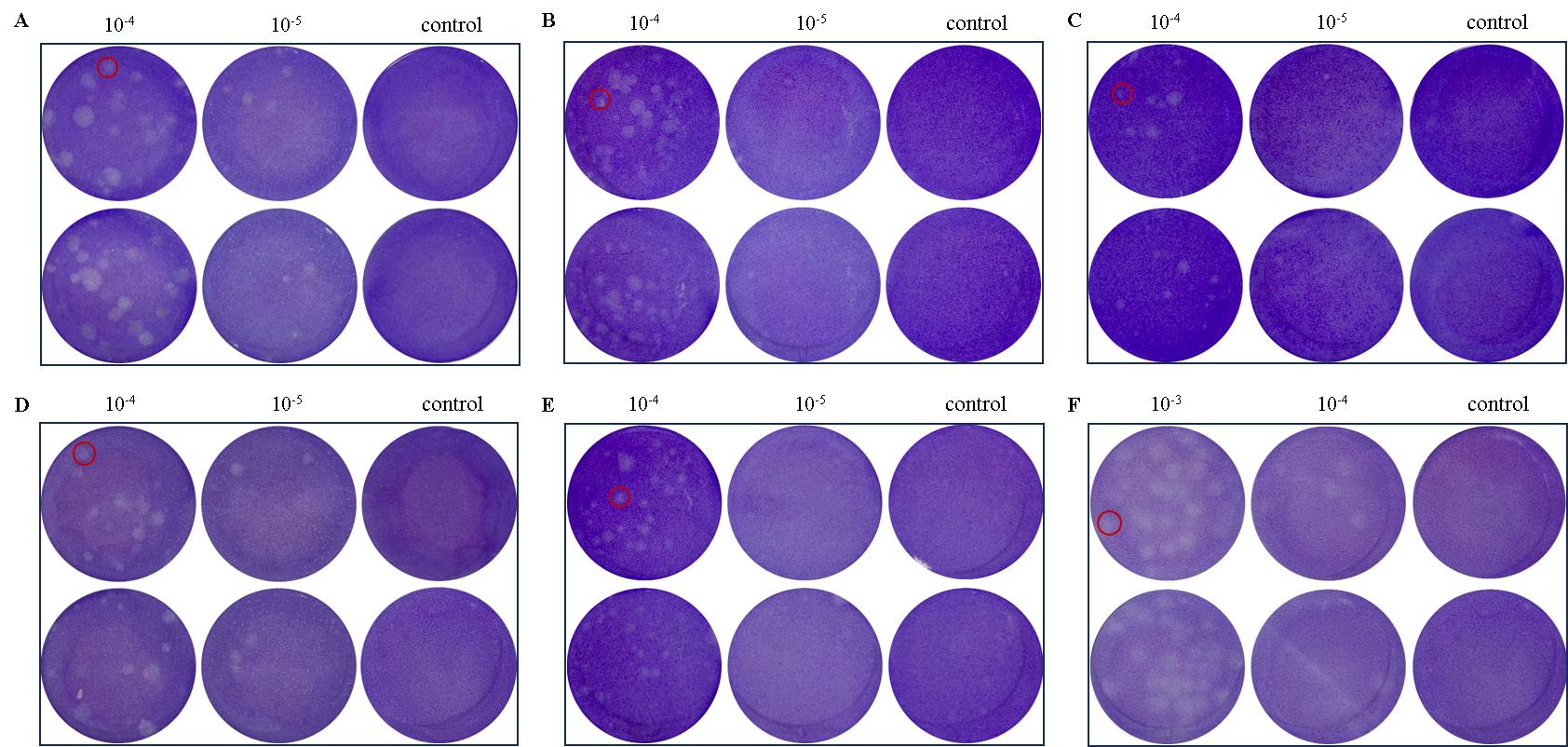
图3. 噬斑实验测定不同树鼩细胞中登革病毒的病毒滴度
Figure 3. Quantification of dengue virus (DENV) titer in tree shrew cells of different tissues via plaque assay
|
登革病毒对树鼩不同组织来源细胞的易感性及感染特性研究
|
|
刘欣1, 杞梦迪1, 王文广1, 罕园园1, 陆美丽1,2, 李娜1, 代解杰1(
), 陆彩霞1()()
|
|
Study on Susceptibility and Infection Characteristics of Dengue Virus in Cells Sourced from Different Tissues of Tree Shrews
|
|
LIU Xin1, QI Mengdi1, WANG Wenguang1, HAN Yuanyuan1, LU Meili1,2, LI Na1, DAI Jiejie1( ), LU Caixia1()()
|
|
图3. 噬斑实验测定不同树鼩细胞中登革病毒的病毒滴度 |
Figure 3. Quantification of dengue virus (DENV) titer in tree shrew cells of different tissues via plaque assay |
| |